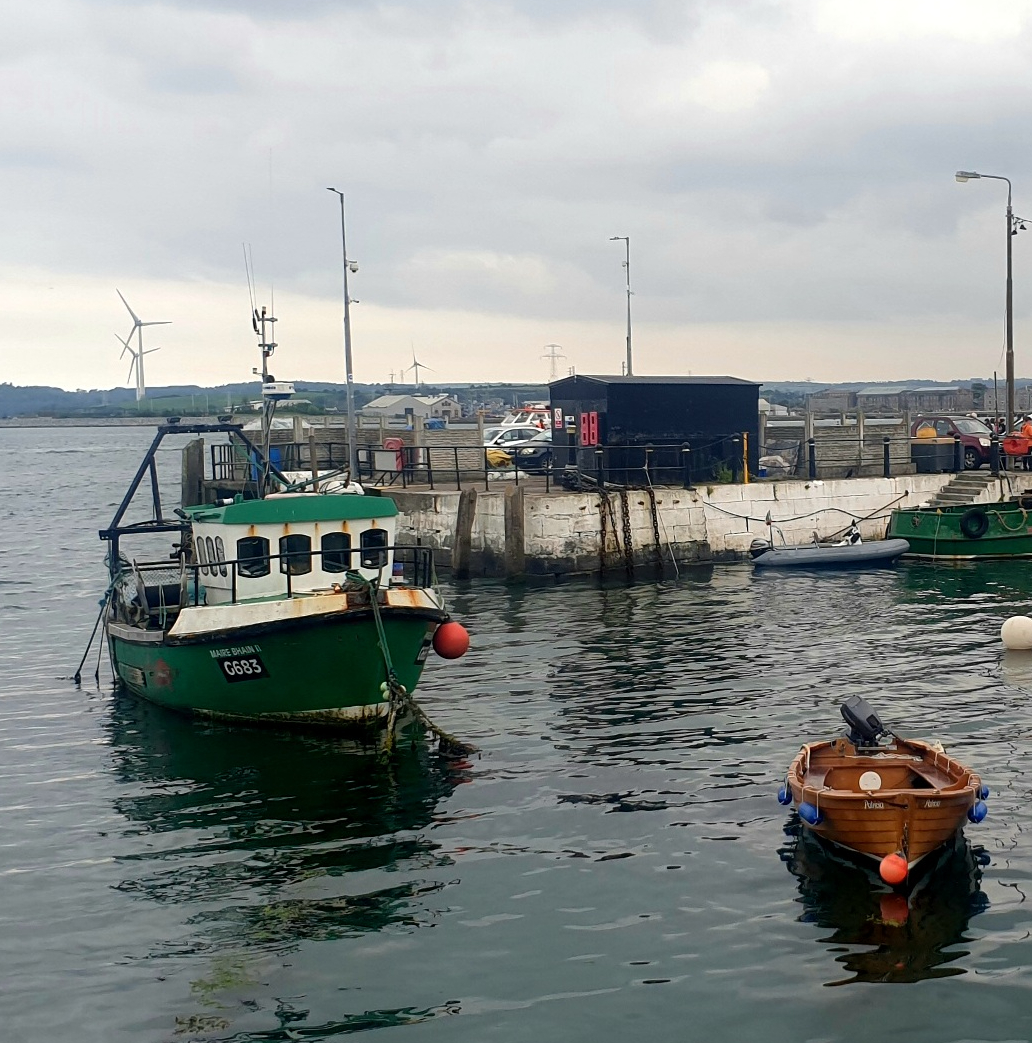
Wk 6 – Ireland Pt2

Week 6 – South Ireland – Dingle to Dublin – 20 to 26 June 2022

Mon 20 to Sun 26 June
Kenmare, Cobh, Kilkenny, Dublin

Mon 20/6 – Dingle to Kenmare – 200klm

And the sun is shining. What a difference it makes to everything as we head off.
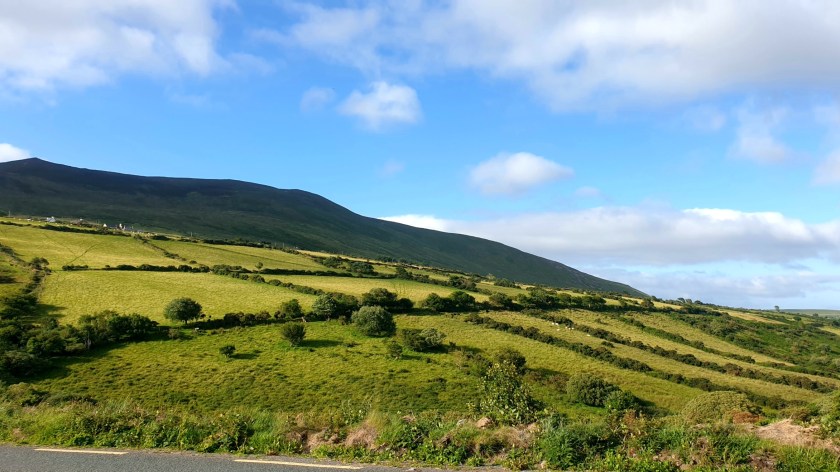

Obviously someone has a sense of humour naming this “Inch Beach”
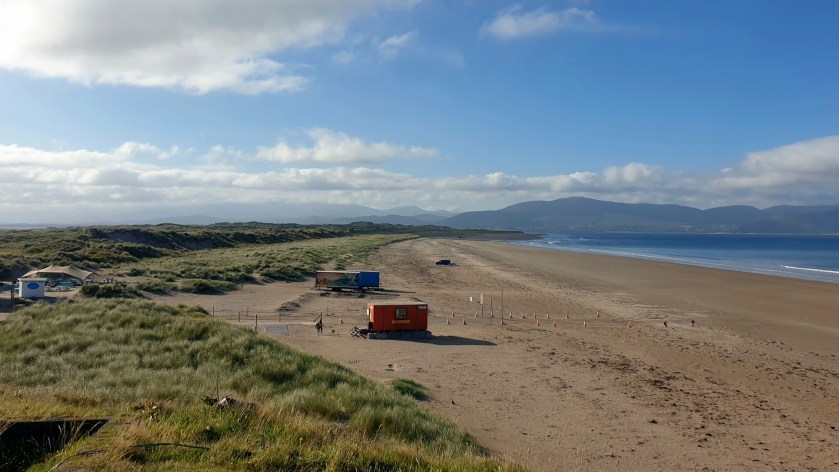
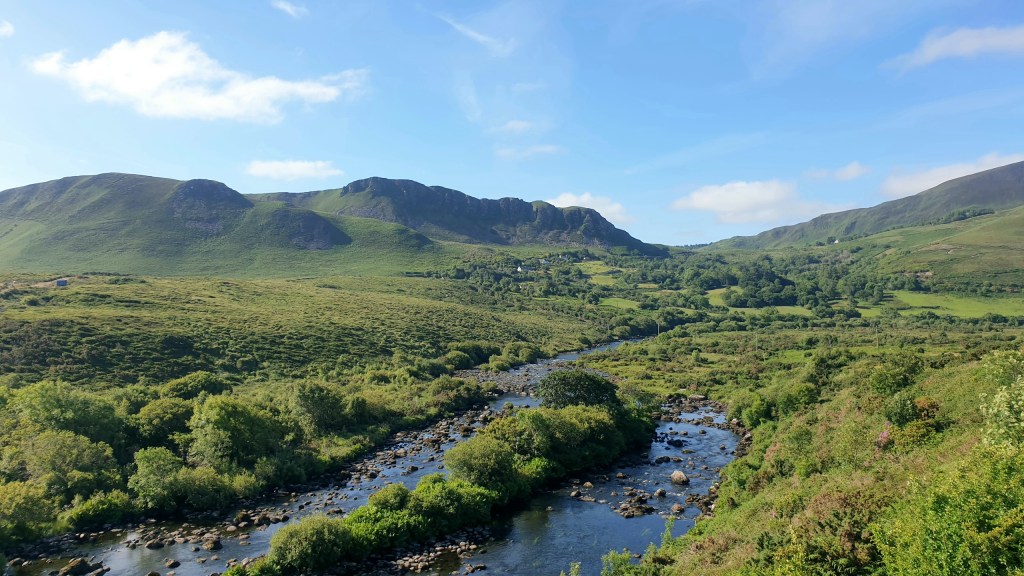
River Caragh viewing point

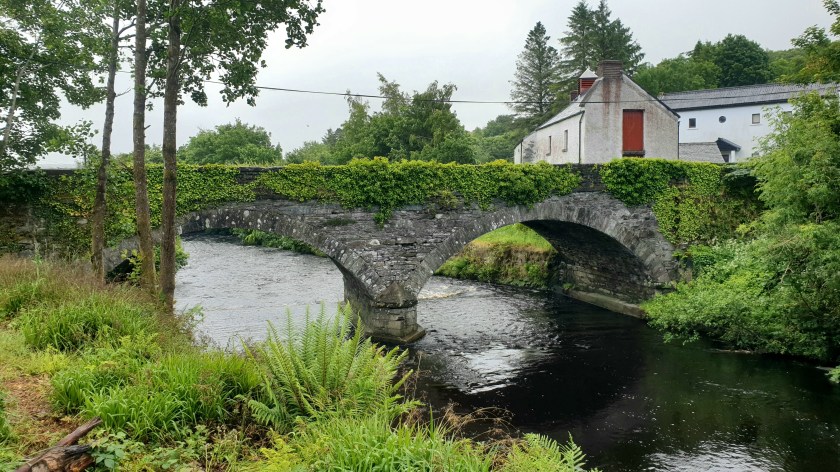
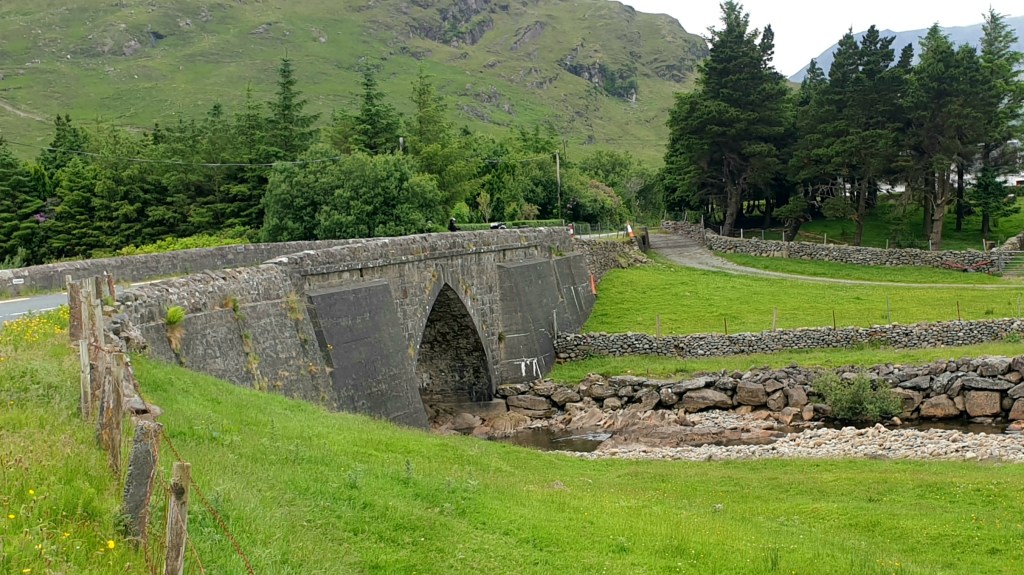
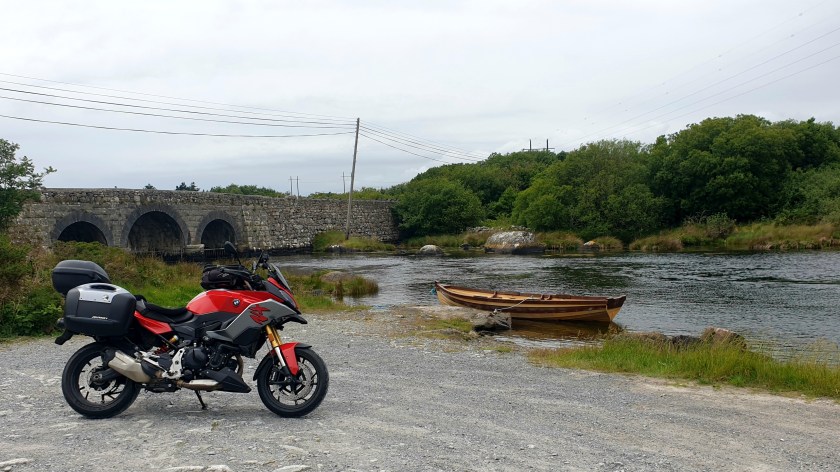
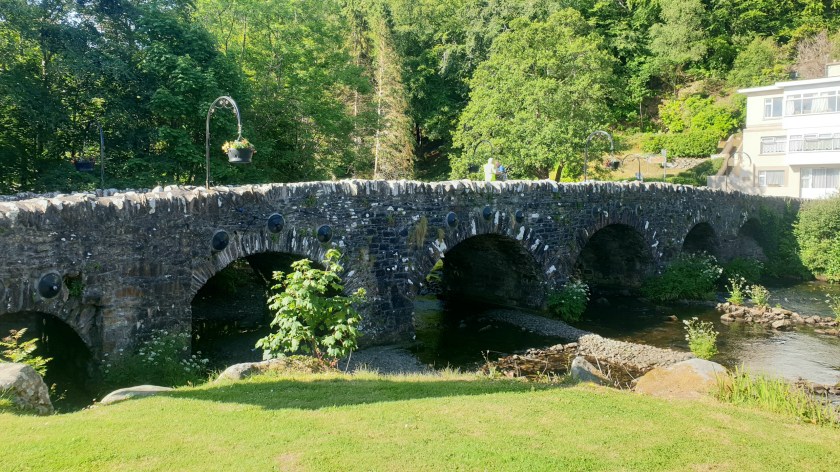
Behy Bridge at Kilnabrack Upper was built in 1862
Rossbeigh for a brew in the sunshine. There was hardly any activity so it was very nice to just sit and enjoy.

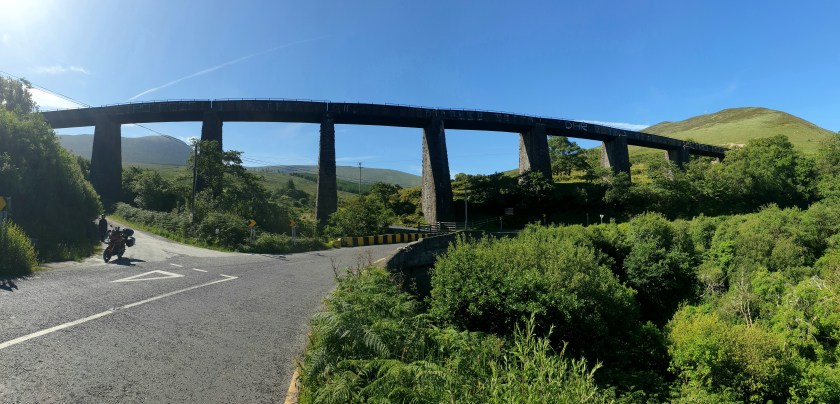
The Gleensk Rail Viaduct was opened in 1893 and closed in 1960. It has quite a curve to it.
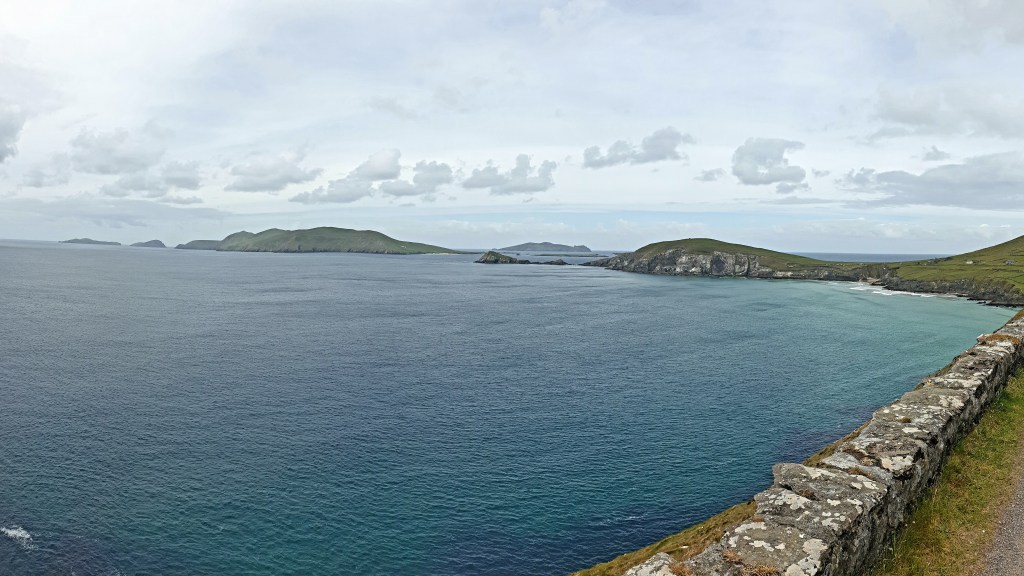
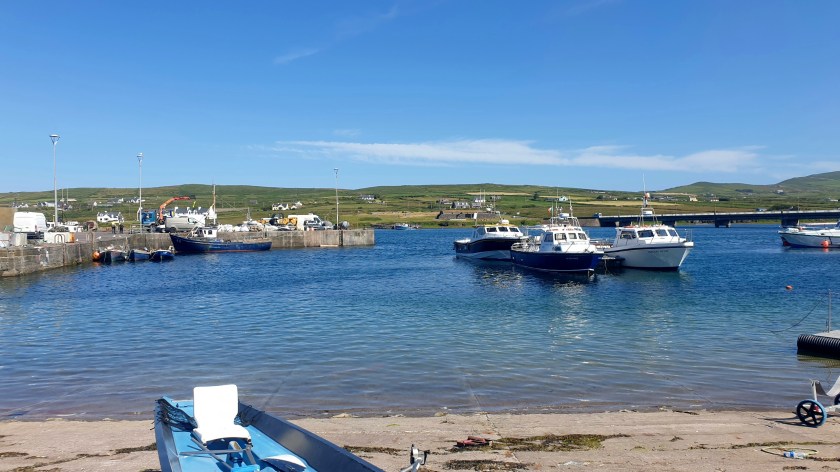
Skellig Harbour
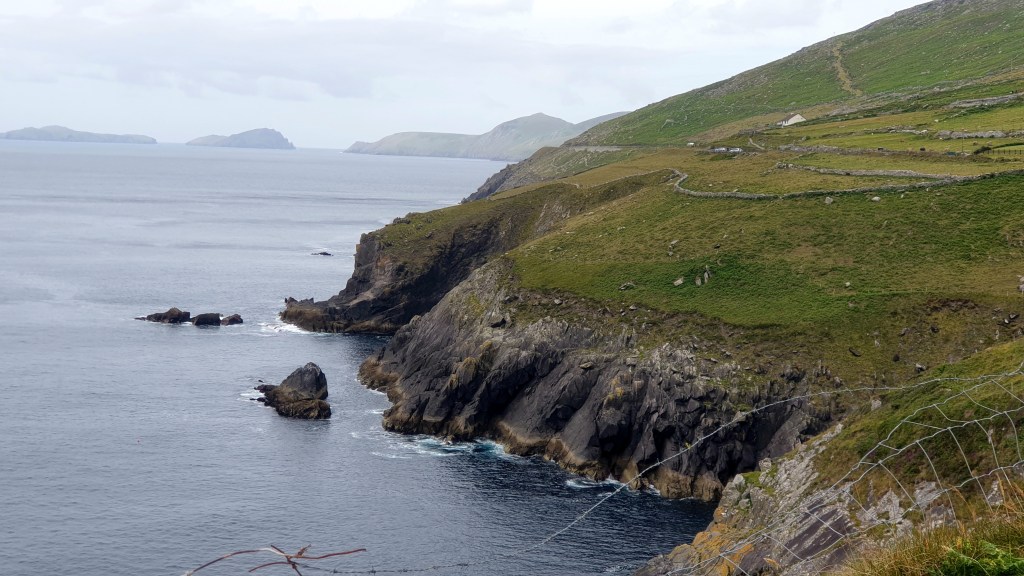
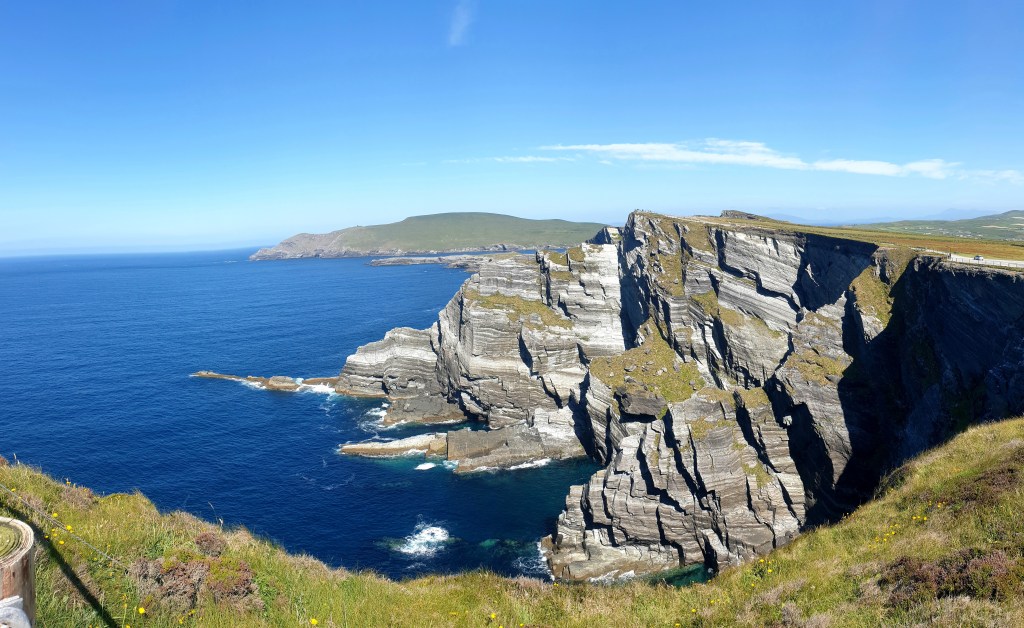
We paid our dues and took a walk to the spectacular Kerry Cliffs at Foilnageragh
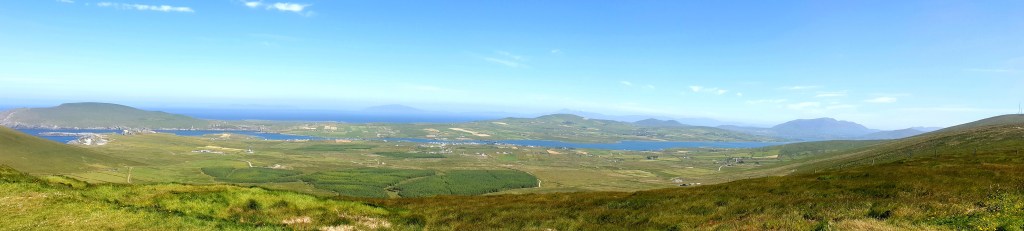
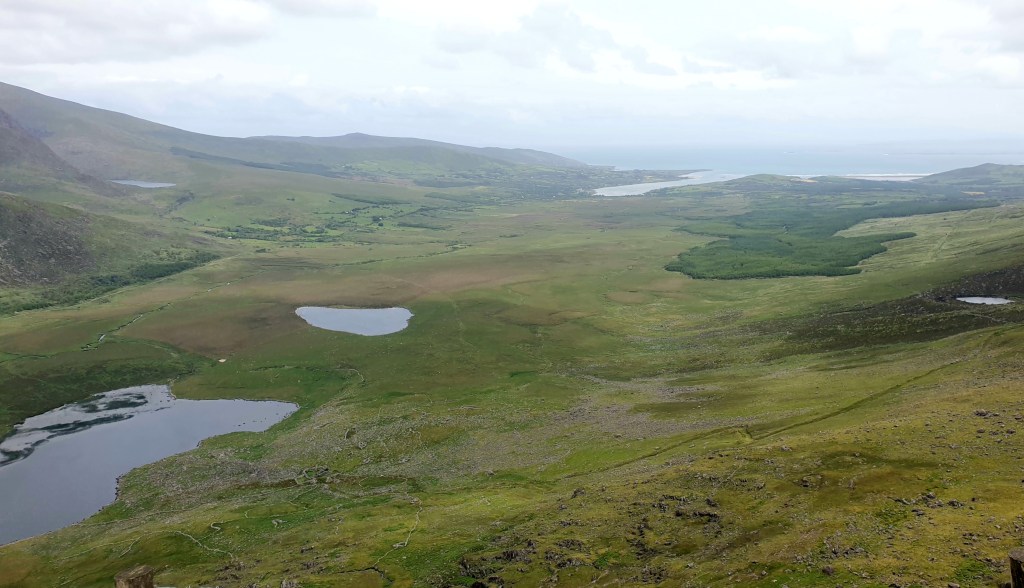
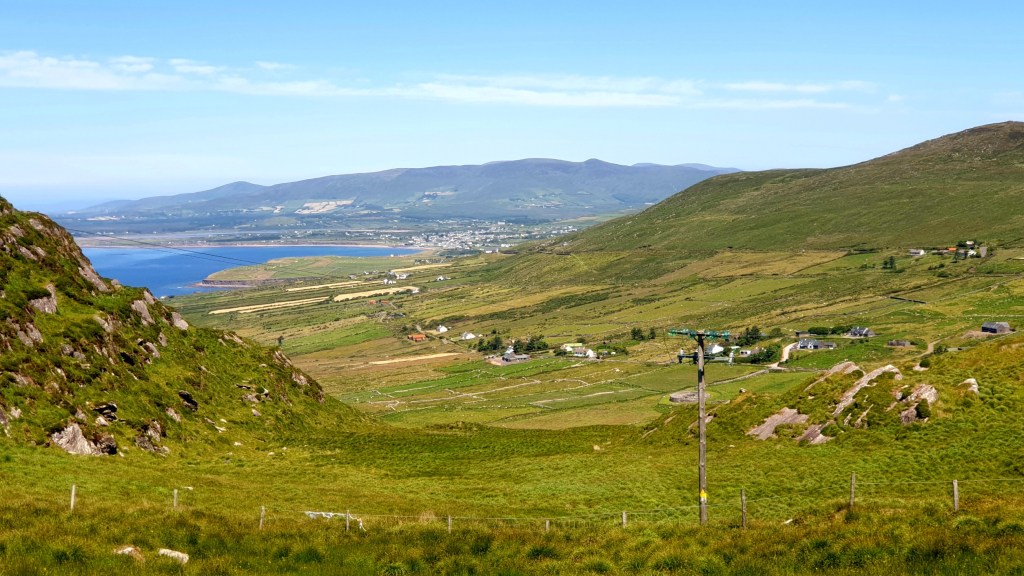
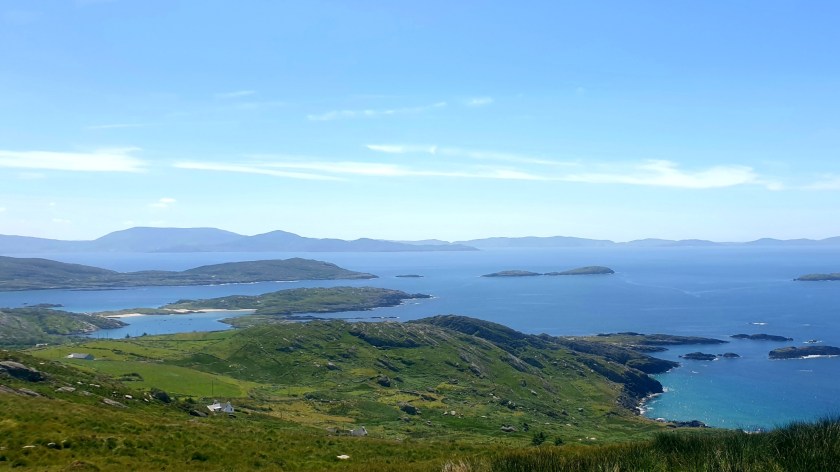
Then climbed to Cúm an Easpaig for some magnificent views back down the valley from which we’d come.
We were looking for a roadside coffee shack and thought we’d scored here at Lady Madonna Statue for Sailors Lost at Sea, but it turned out to be an ice cream vendor. So it wasn’t Friday, but …
Hordes of tourists, but a beautiful view.
Blackwater Bridge, or Puente sobre el rio Blackwater, is a double arched limestone bridge crossing a deep abyss. It was constructed in 1839 and is still in use today for all traffic. Take a closer look at those foundations.
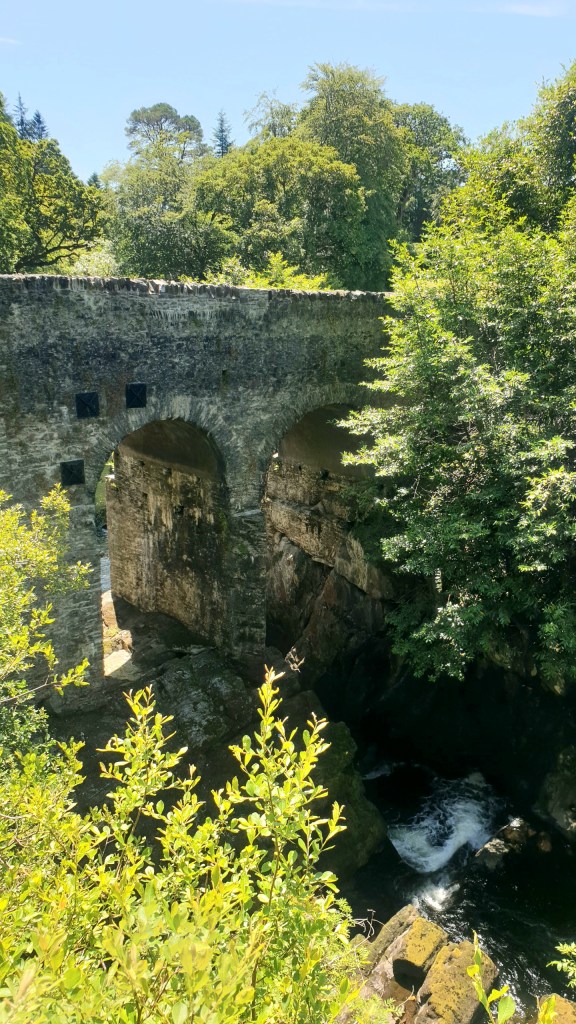
Puente sobre el rio Blackwater

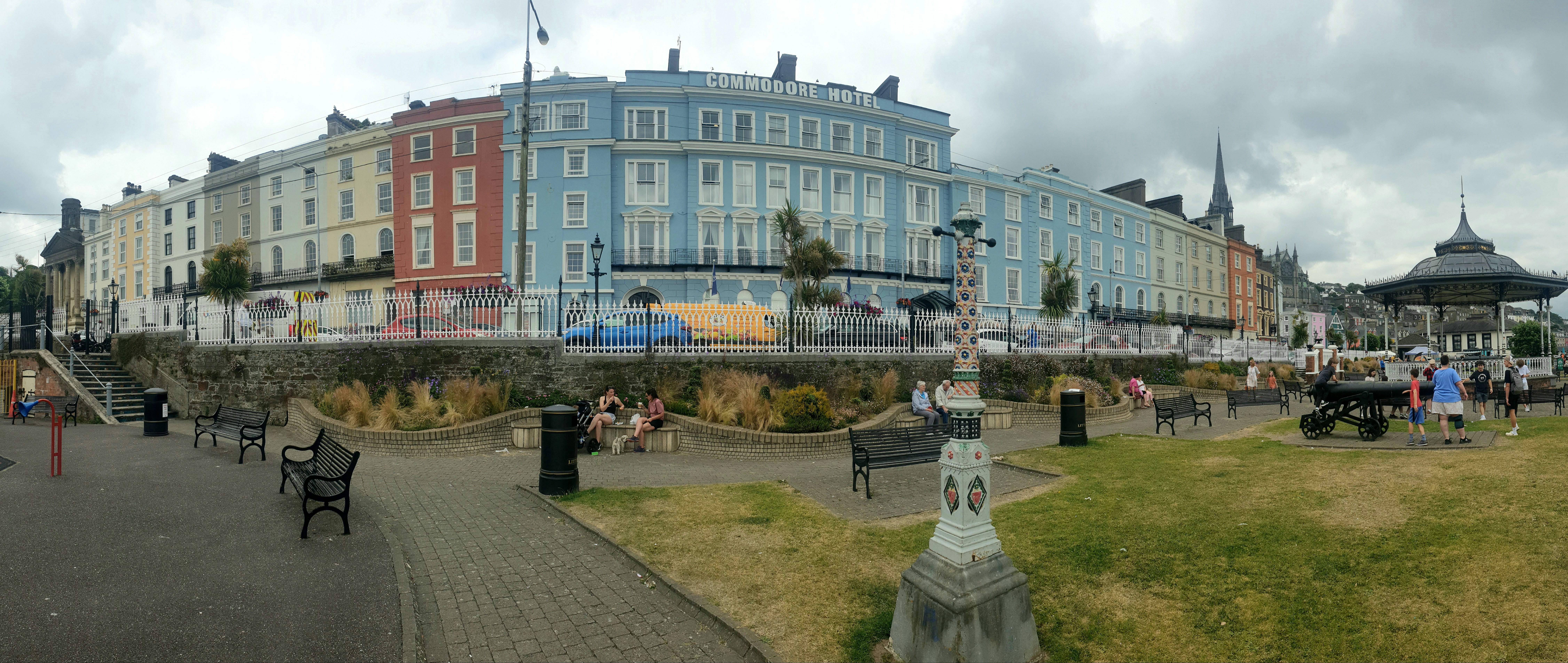
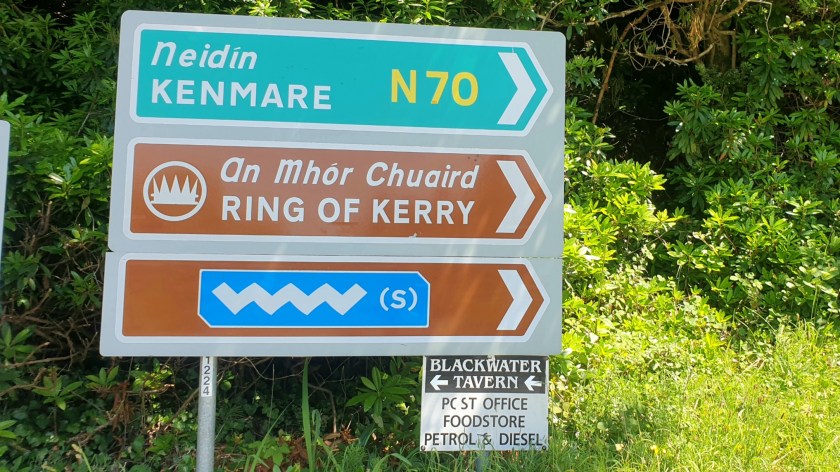
And so to Kenmare with its proliferation of Bars and Cafes.
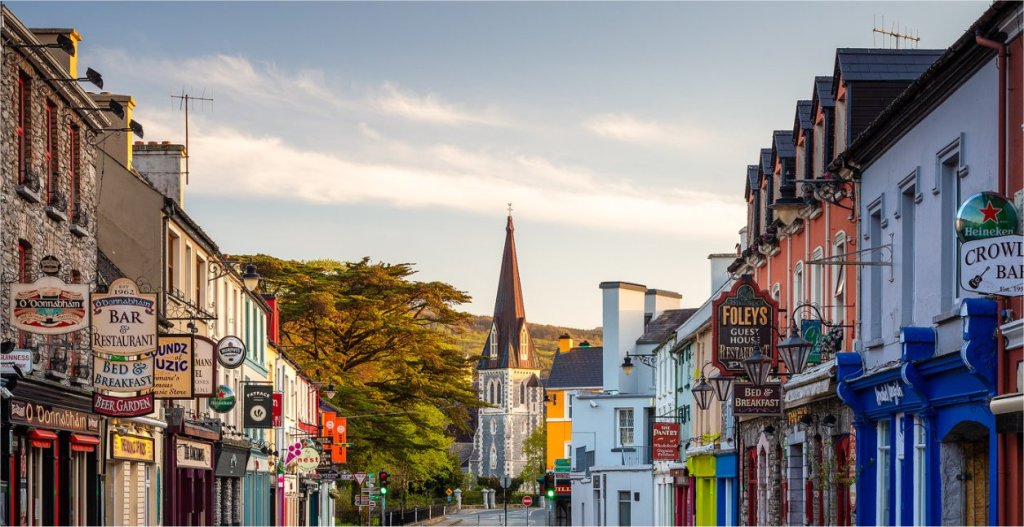
This pic taken from Facebook

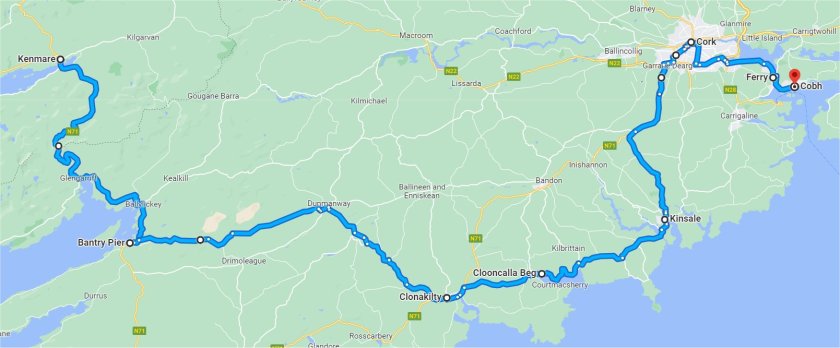
Tue 21/6 – Kenmare to Cobh – 180klm

Its raining as usual so we just covered the miles. From Bantry to Clonakilty we followed some very remote back roads through the rich rural countryside. There’s fair amount of caution called for on these very narrow roads with their hazards of local drivers, cow muck covered roads and the smell of muck covered fields from the practise of spraying said muck slurry on to the fields. This practise is fairly contentious and becoming highly regulated.

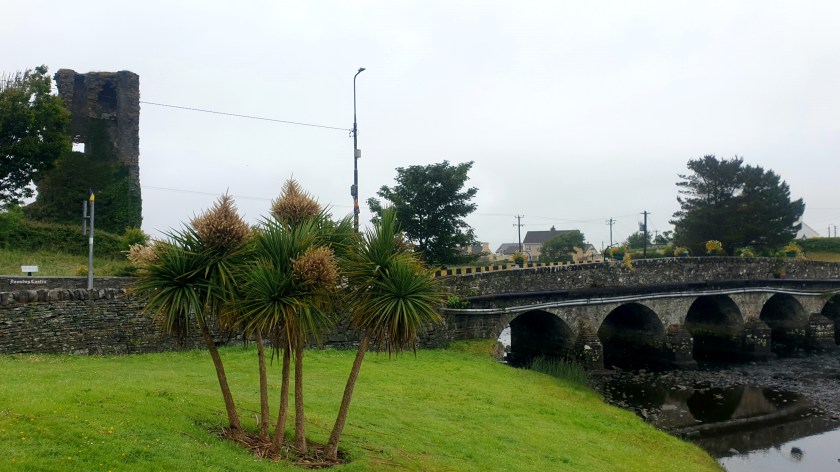
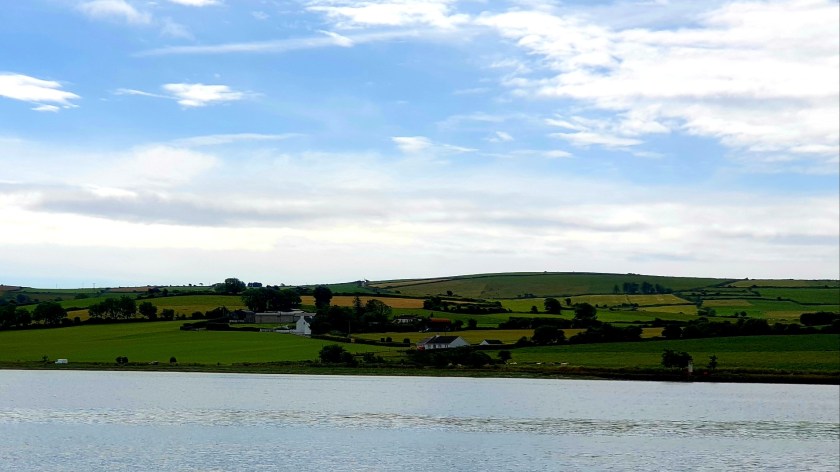
The weather cleared by the time we reached the River Arigideen
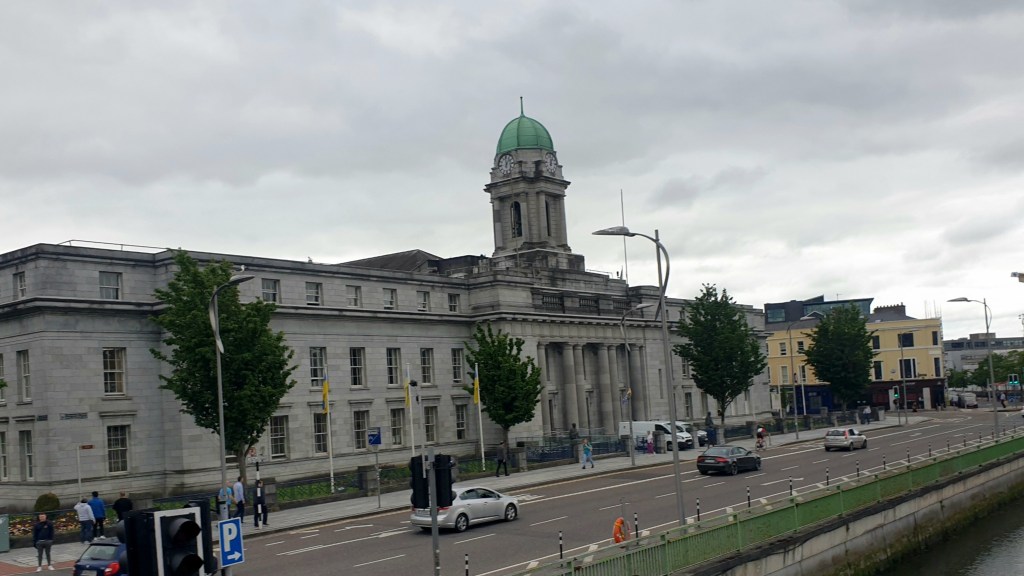
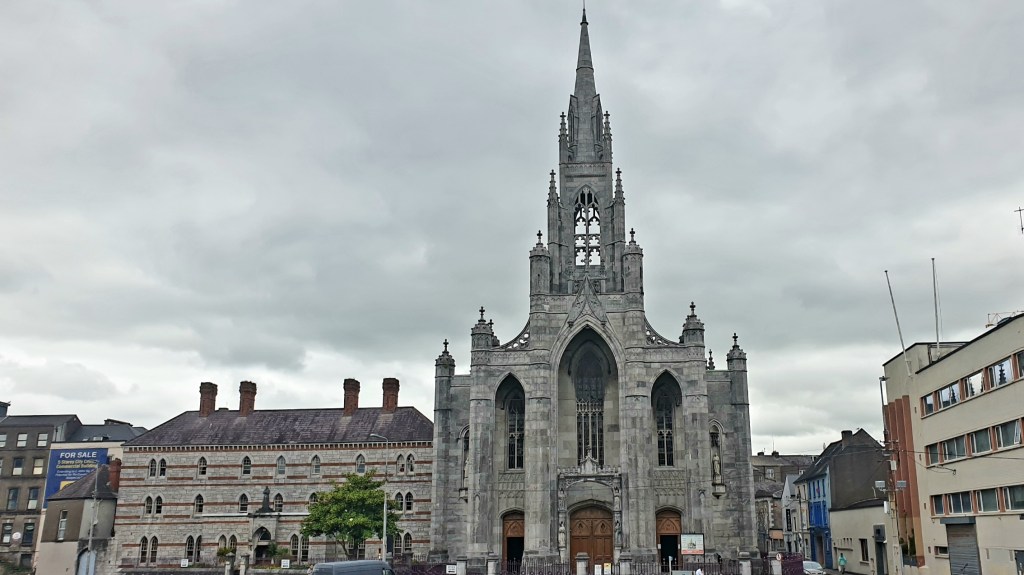
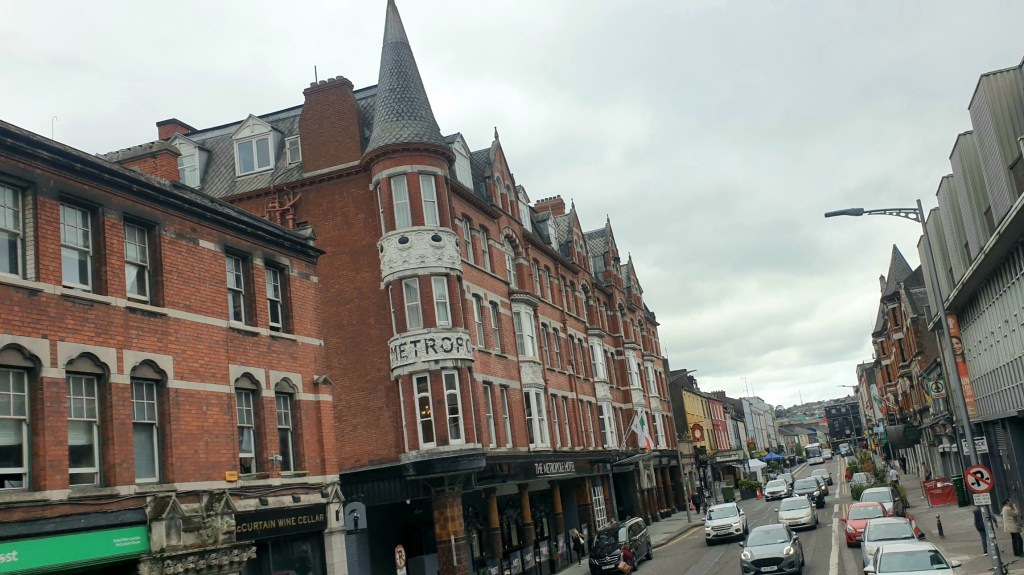
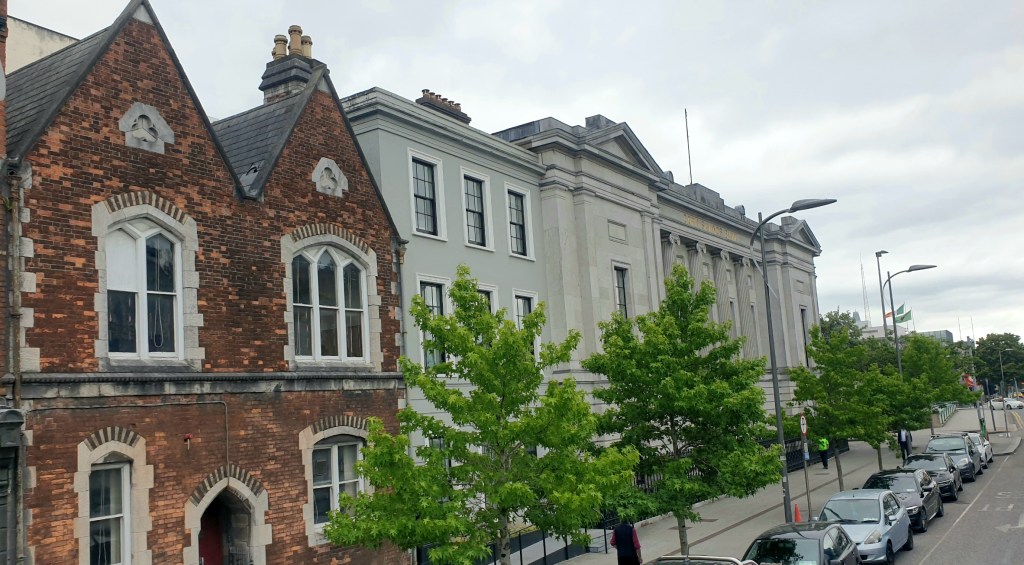
We stopped at the City of Cork and did a Hop-On-Hop-Off bus tour. Not everyone’s cup of tea but an effective way of seeing quite an amount of the city’s history and buildings in a short time.
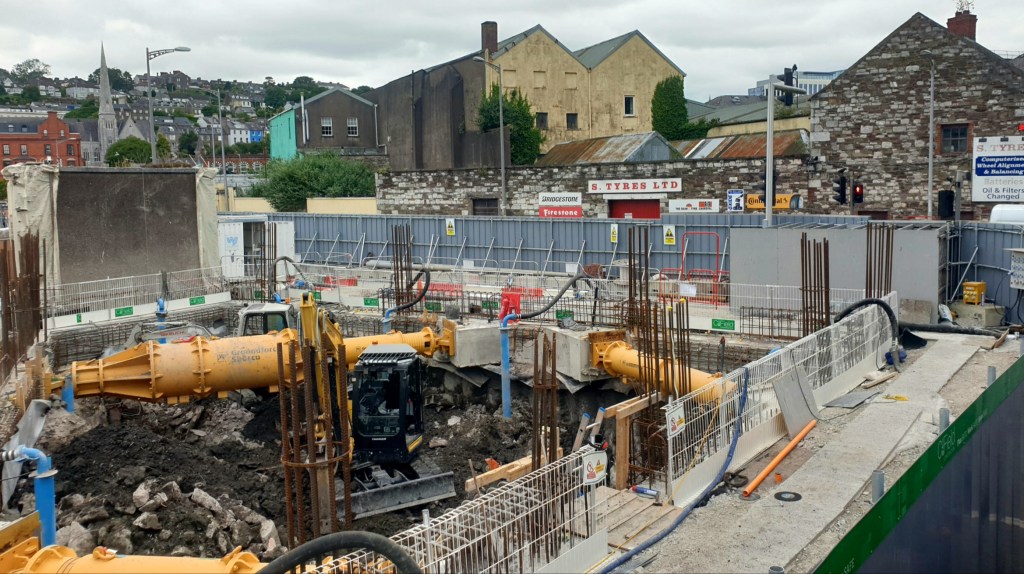
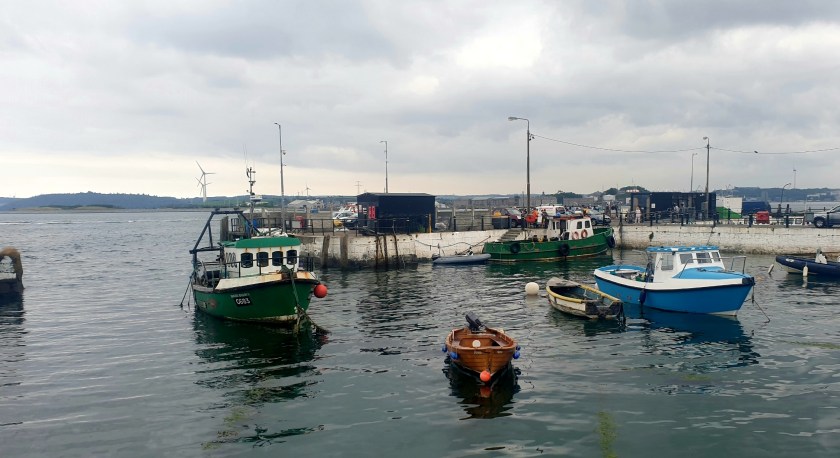
To Cobh but not before discovering we had a leak in the rear tire. Thank goodness for tyre pressure indicators. It was a small nail but a quick plug fix and all was good.

Wed 22/6 – Lay Day in Cobh
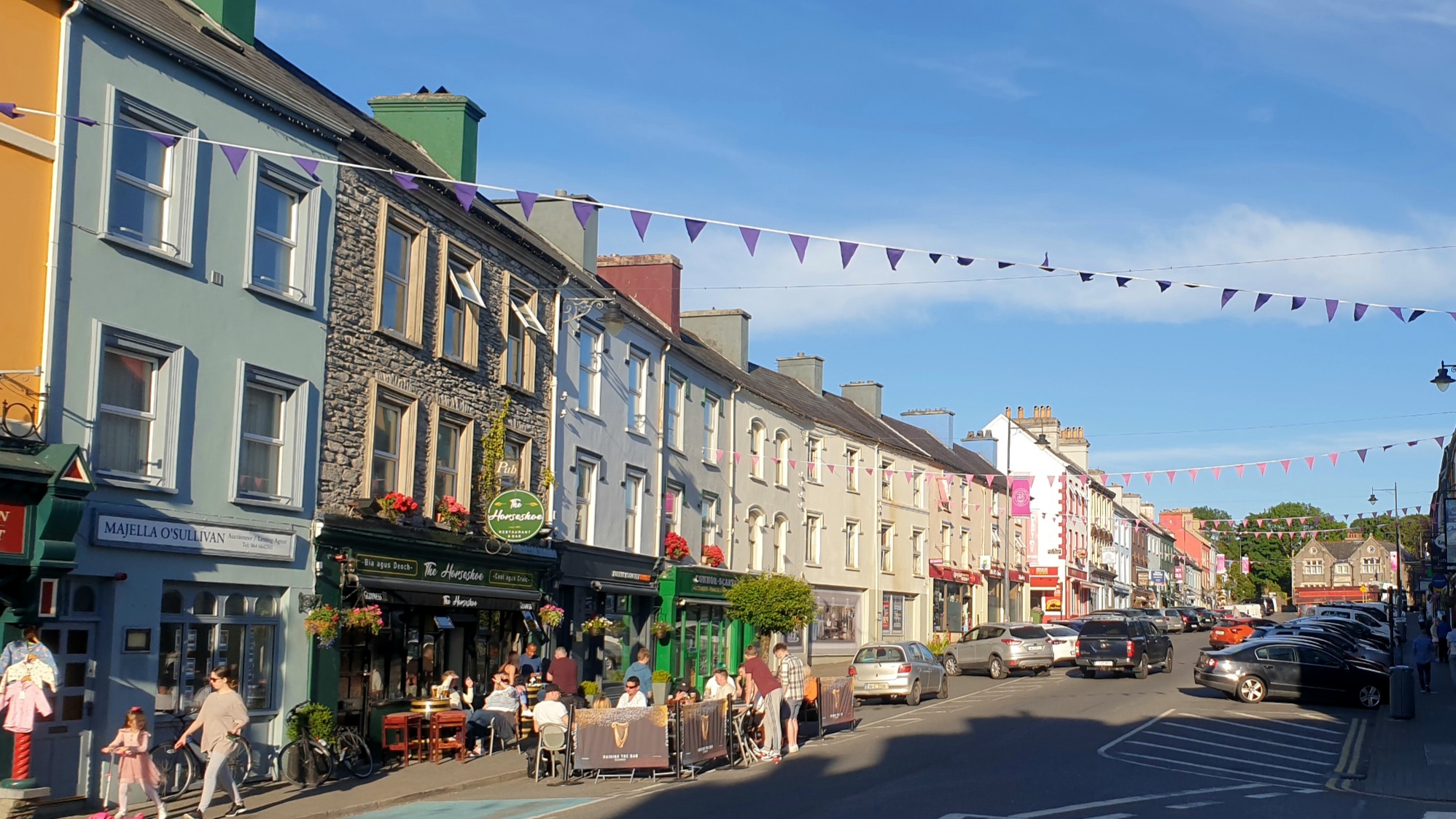
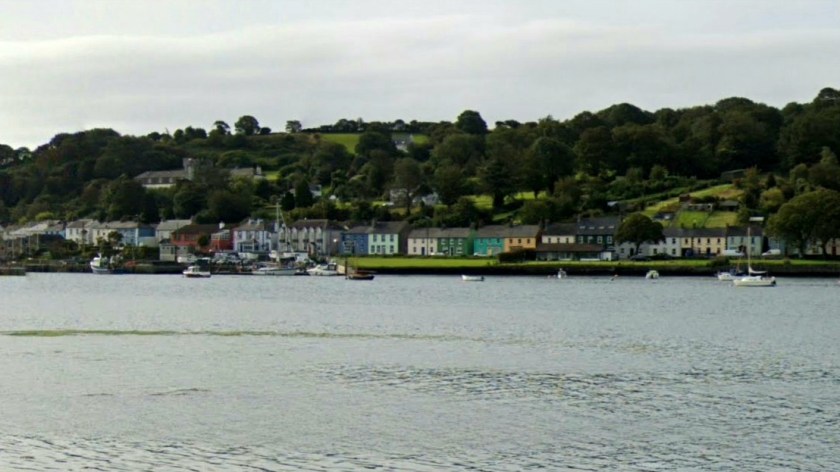
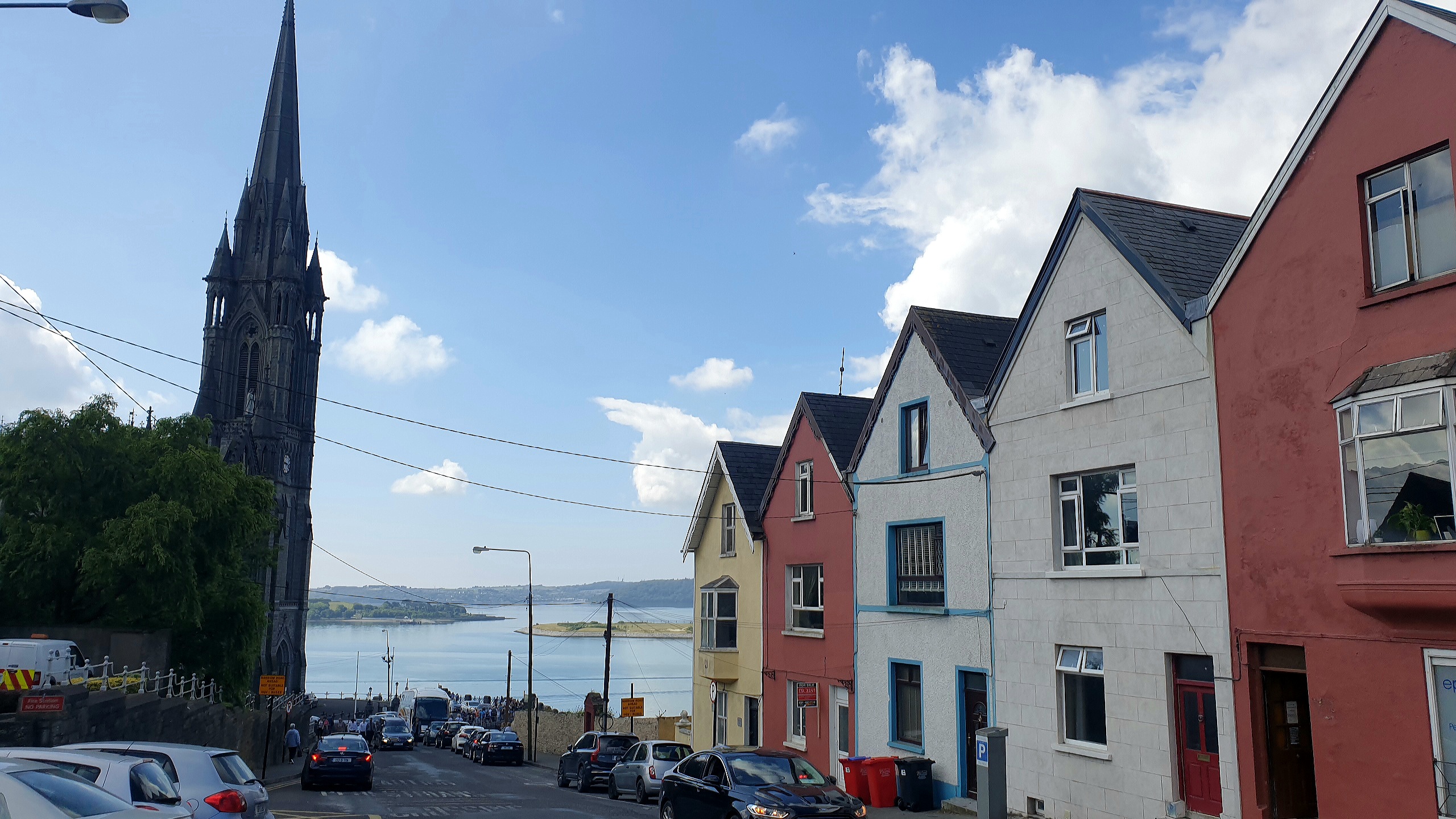
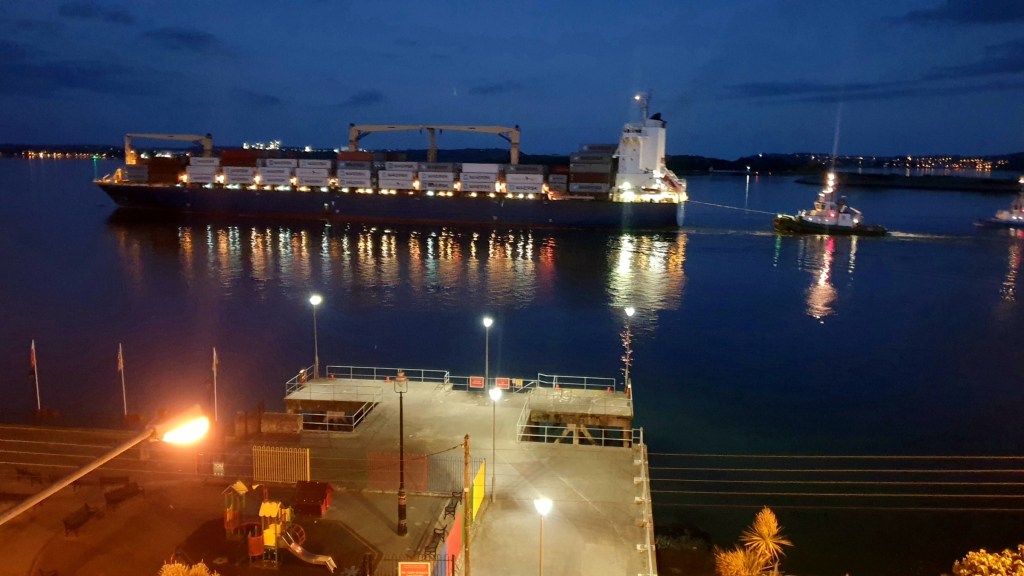
Outside our window.
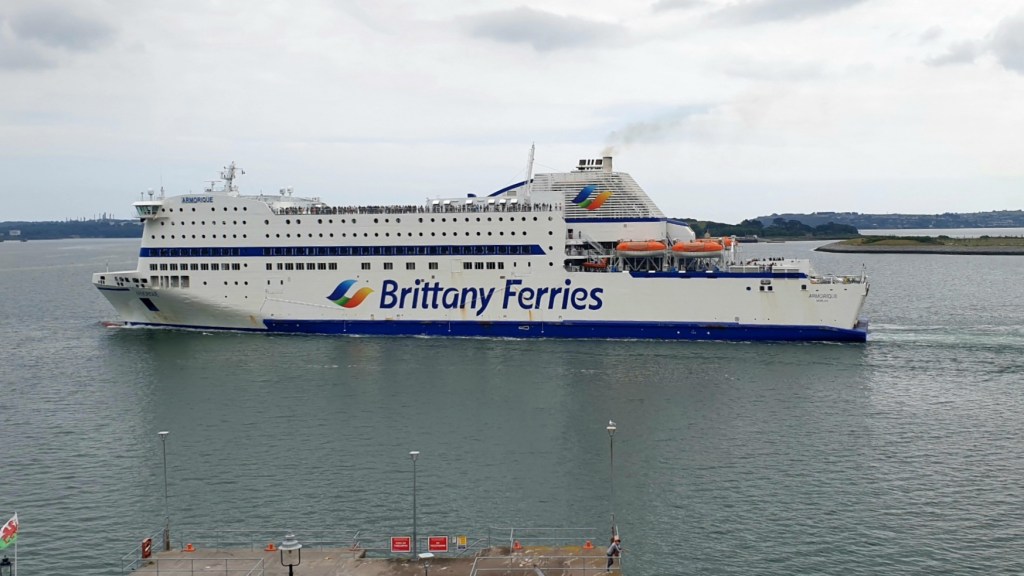
Thur 23/6 – Cobh to Kilkenny – 200klm
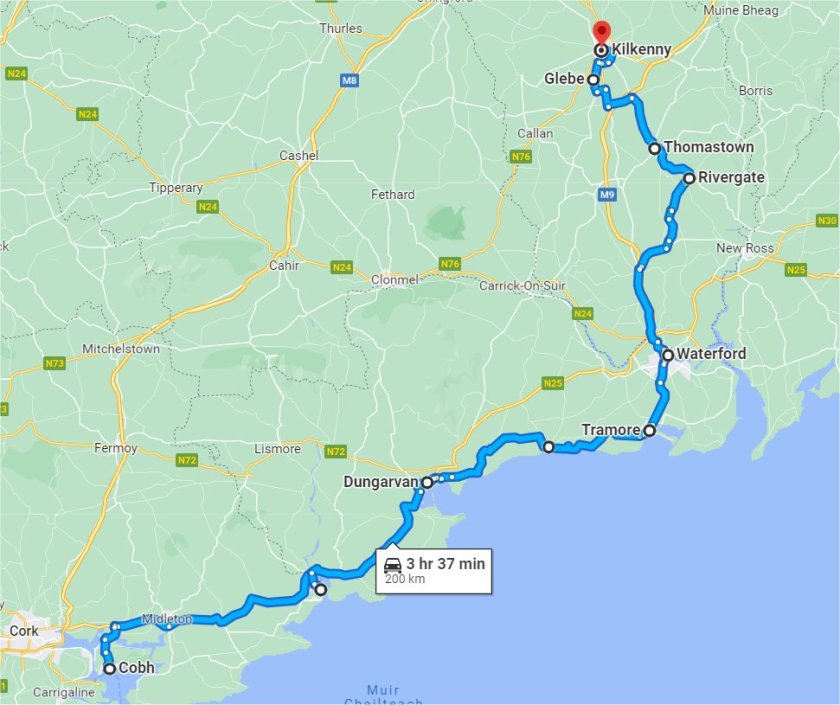
A pleasant day awaited us.
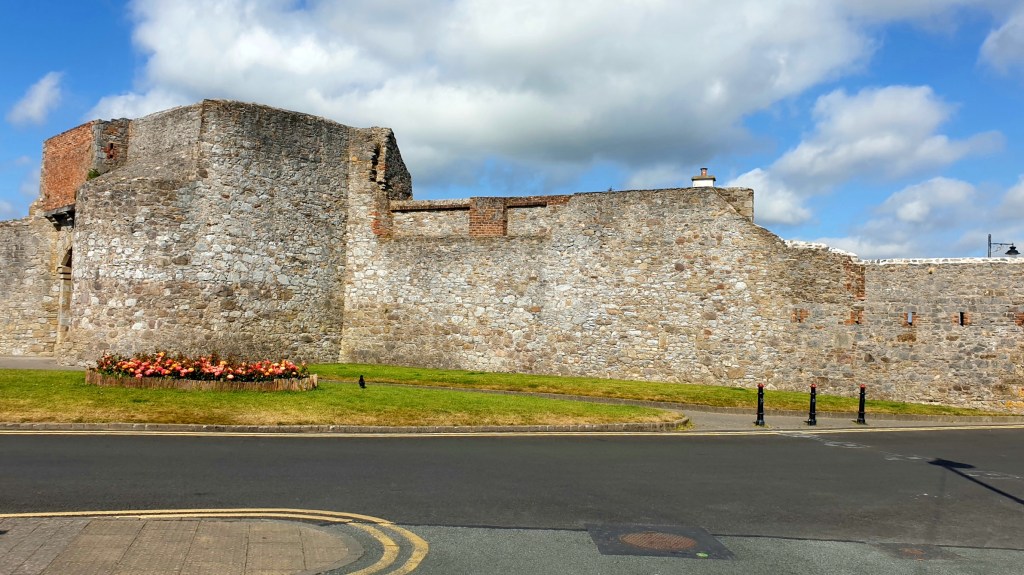
Belvelly Castle was built in the 1400s and had the usual checkered history of all such structures. However, this one has a happy ending: it was purchased and restored in 2017 at the cost A$7.5m. In the background can be seen the 5 arch Belvelly Bridge which was built in 1803.

Pretty hey.
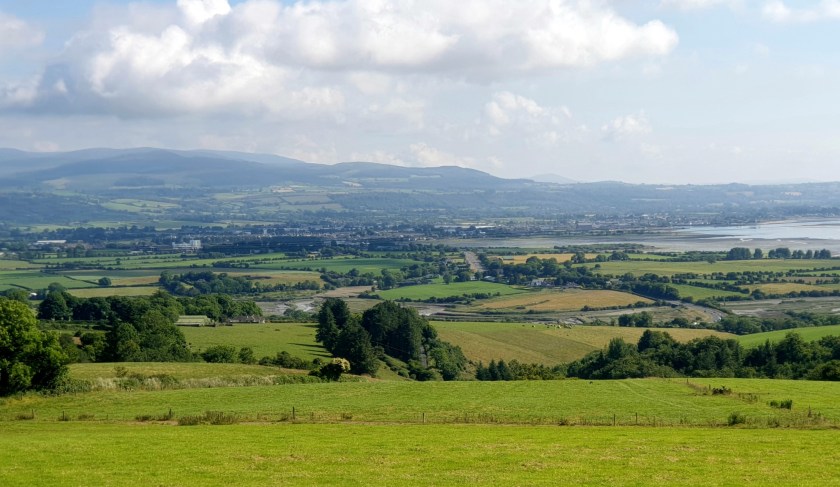
Dungarvan Castle dates from the early days of the Anglo-Norman settlement in Ireland. It was built around 1209 to safeguard the entrance to Dungarvan Harbour. It was used by the British Army and the Royal Irish Constabulary until 1922, and during the Irish Civil War was destroyed by the Anti-Treaty IRA.  It was subsequently refurbished and served as the Headquarters of the local Garda before becoming a museum.

And so on to Waterford with its myriad of one way streets, but a delightful town.
We parked on the footpath and had a brew across from Reginalds Tower. Originally the site of a wooden Viking fort in 915, this stone tower actually owes its existence to the Anglo-Normans who rebuilt it around 1200. It is Ireland’s oldest civic building and has has been in continuous use for over 800 years.

Some more remote back roads brought us to Inistioge with it’s beautiful ten-arch bridge over the River Nore which was built in 1763.
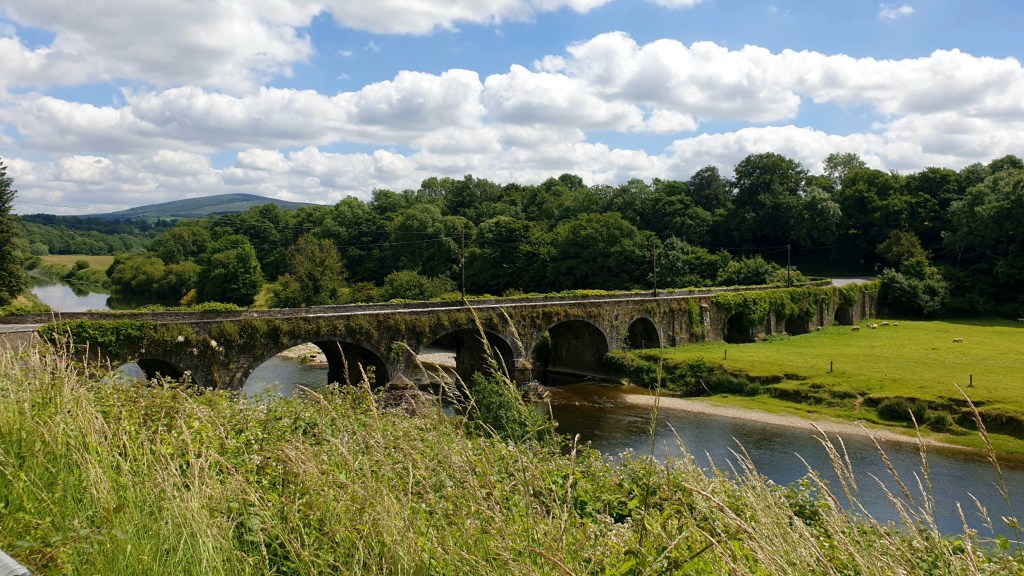
There are summer flowers everywhere which brings great colour.
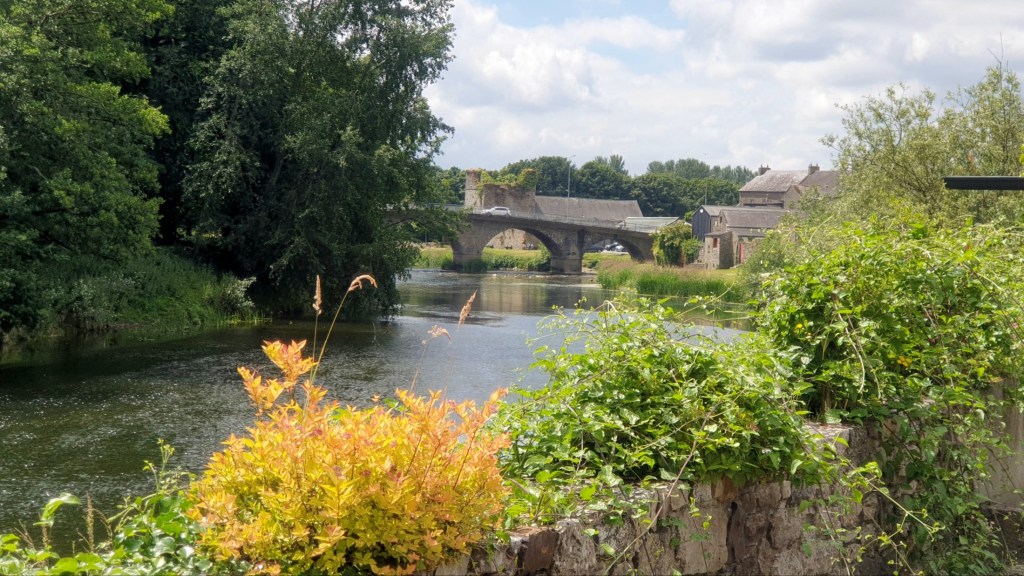
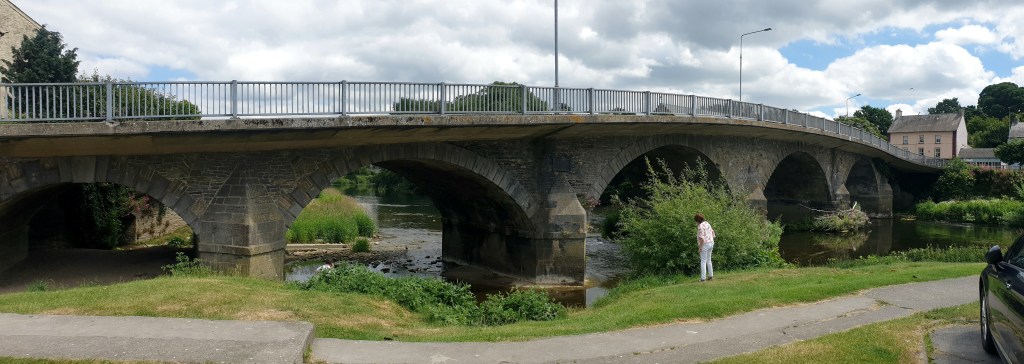
Thomastown has a nice five-arch bridge over the River Nore built 1792.

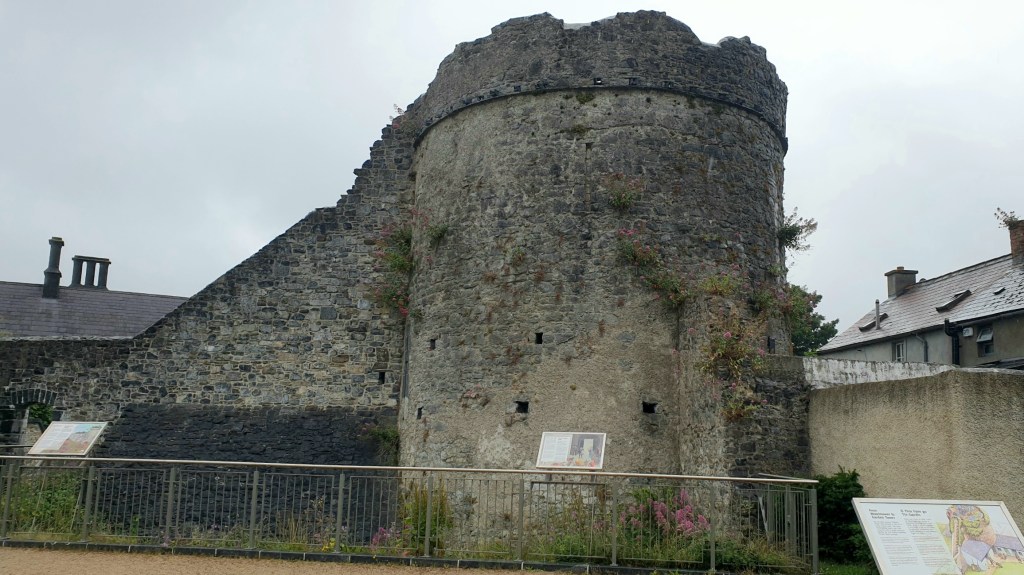
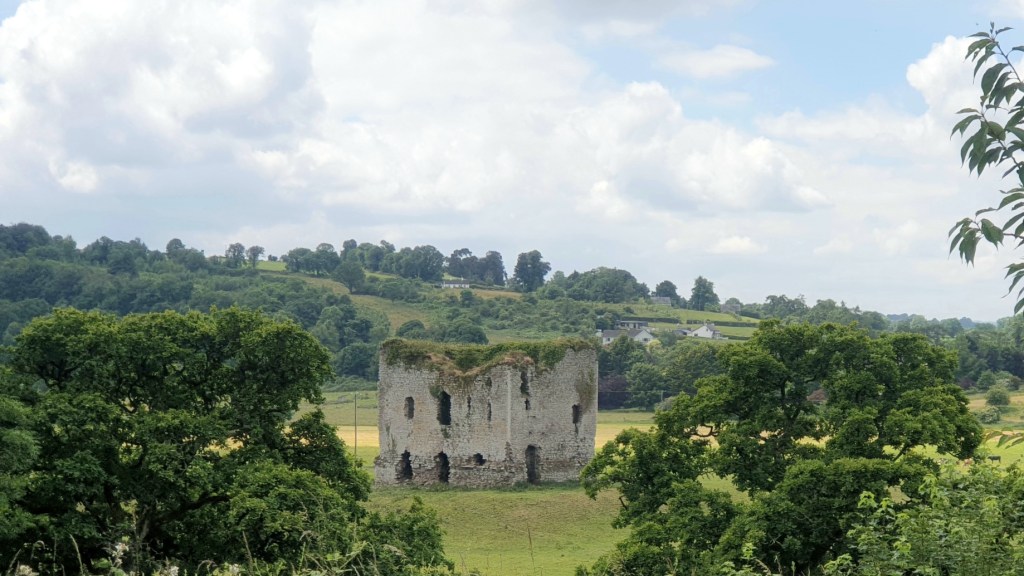
Just short of Kilkenny is Kells Priory which was founded in 1193. Its most striking features is a collection of medieval tower houses spaced at intervals along and within walls which enclose a site of just over 12,000 m2. These give it the appearance more of a fortress than of a place of worship
Fri 24/6 – Lay Day in Kilkenny

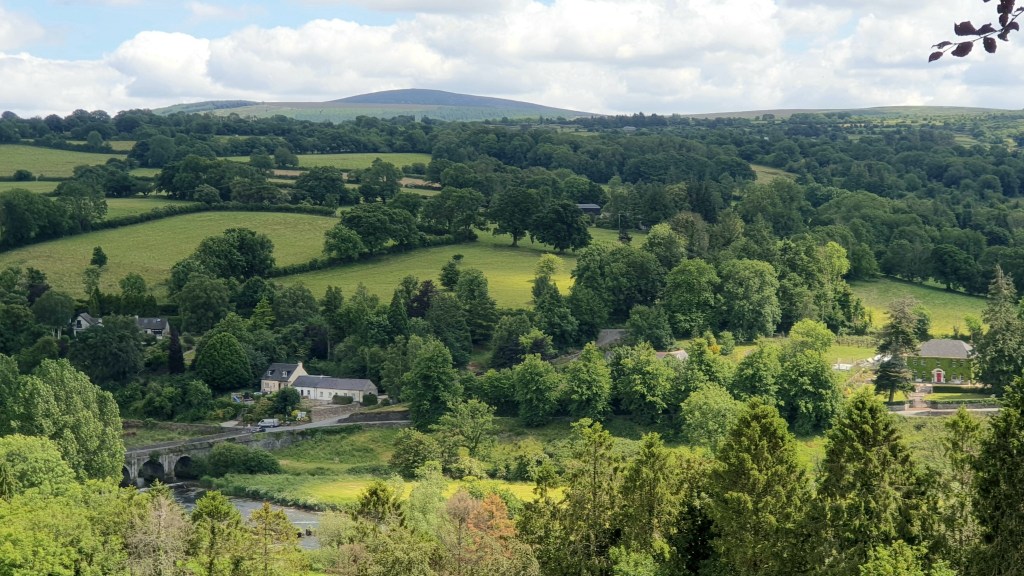
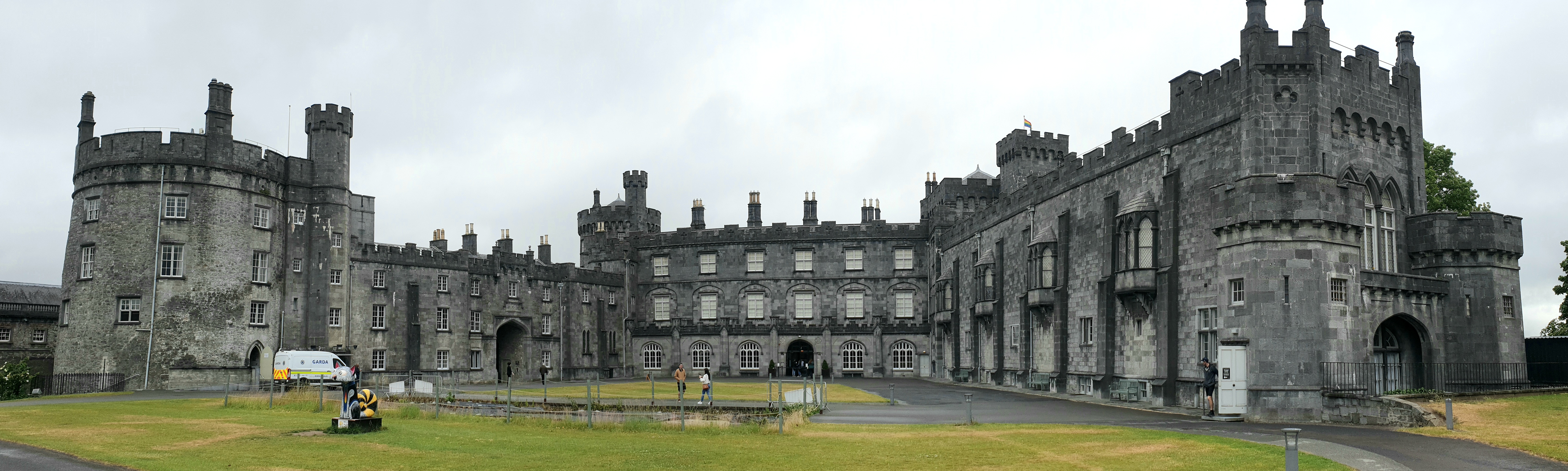
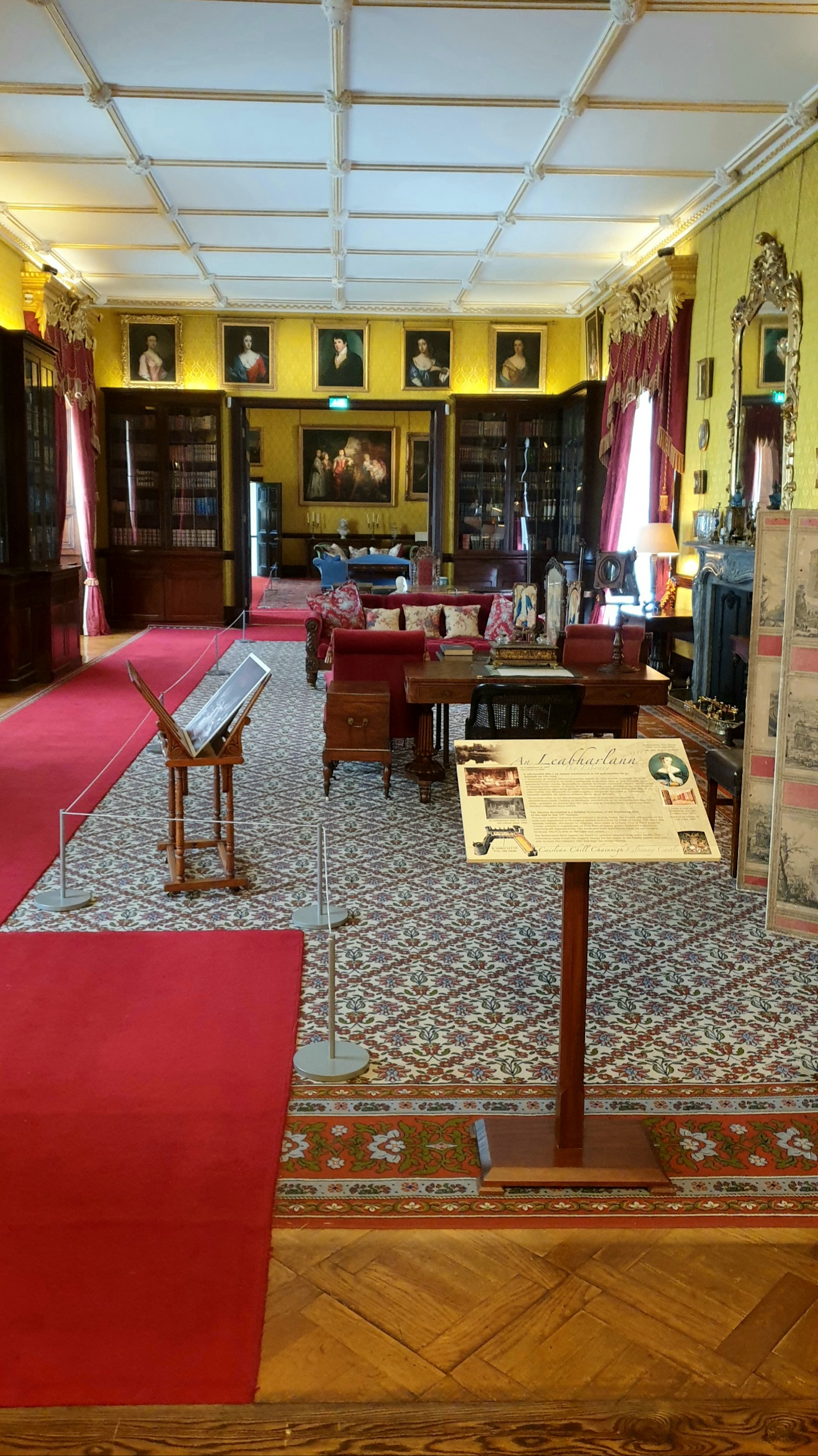
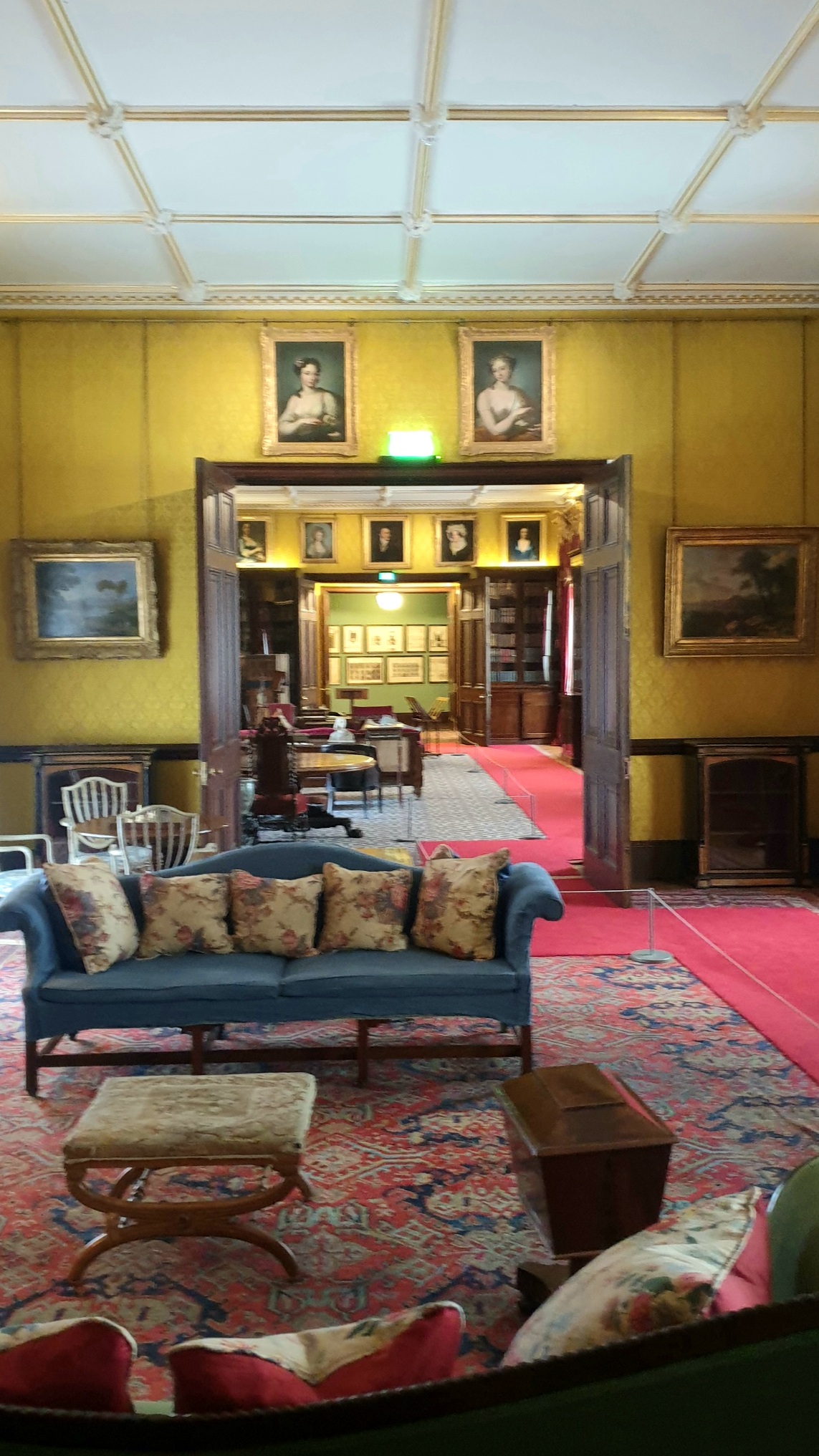
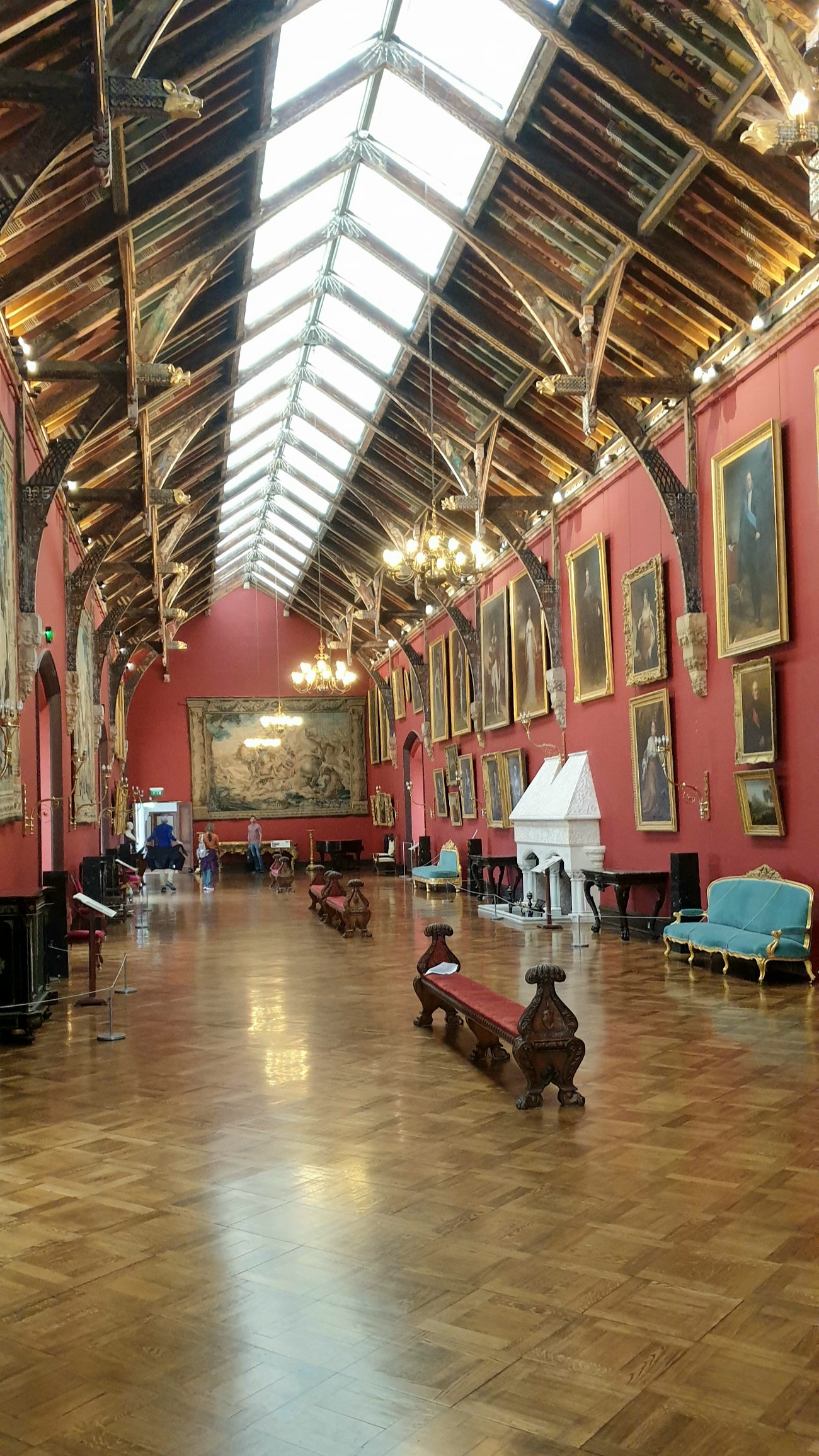
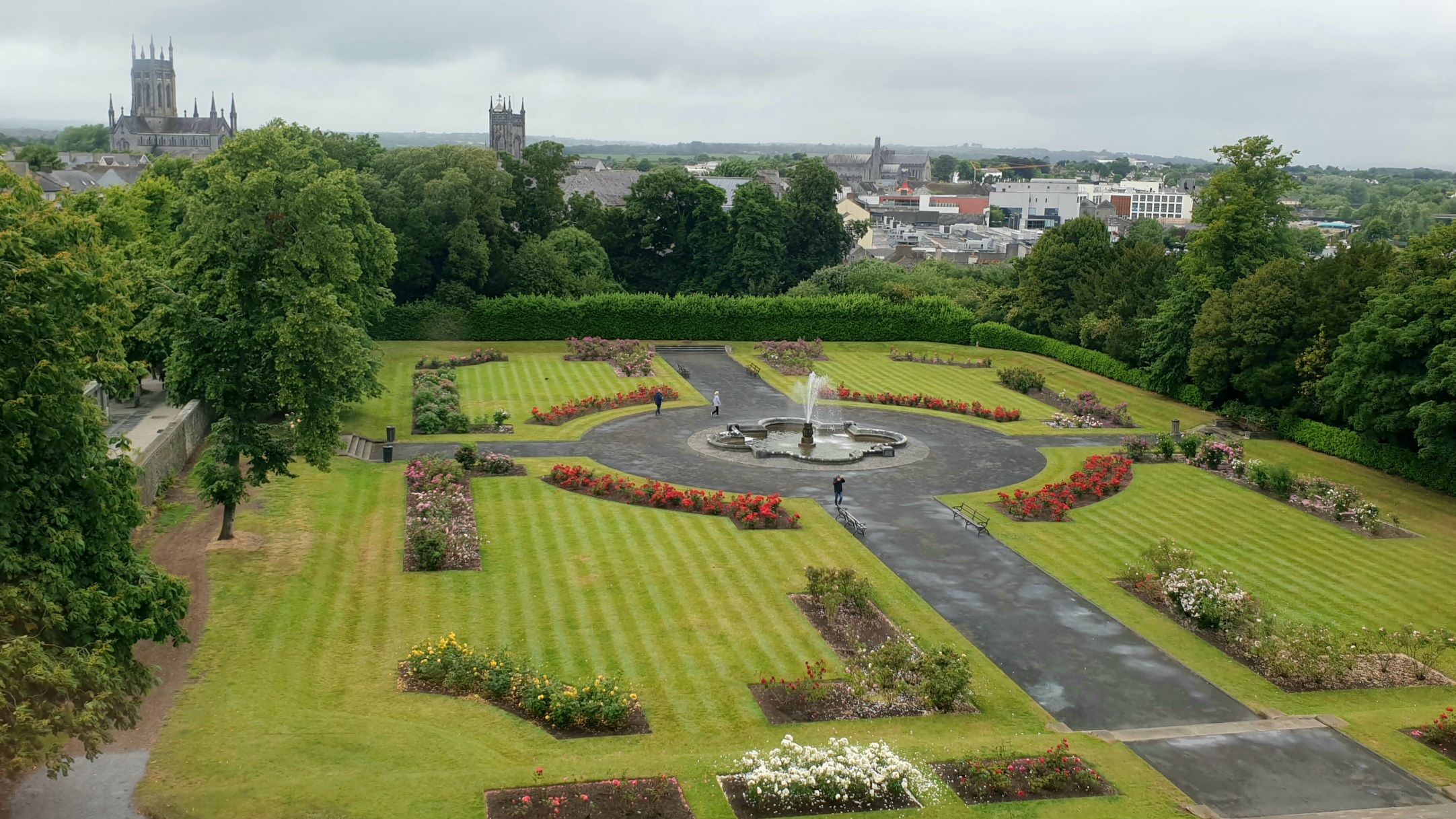
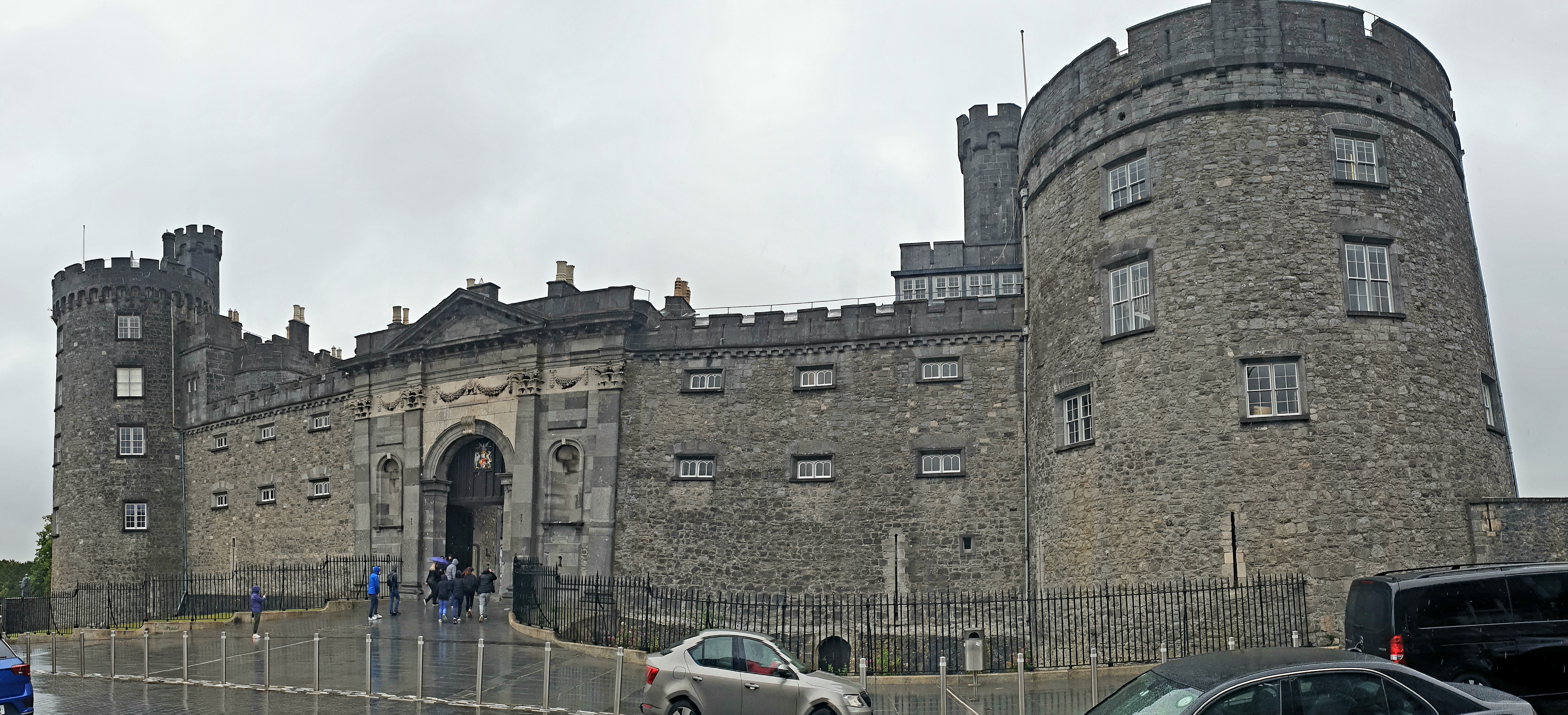
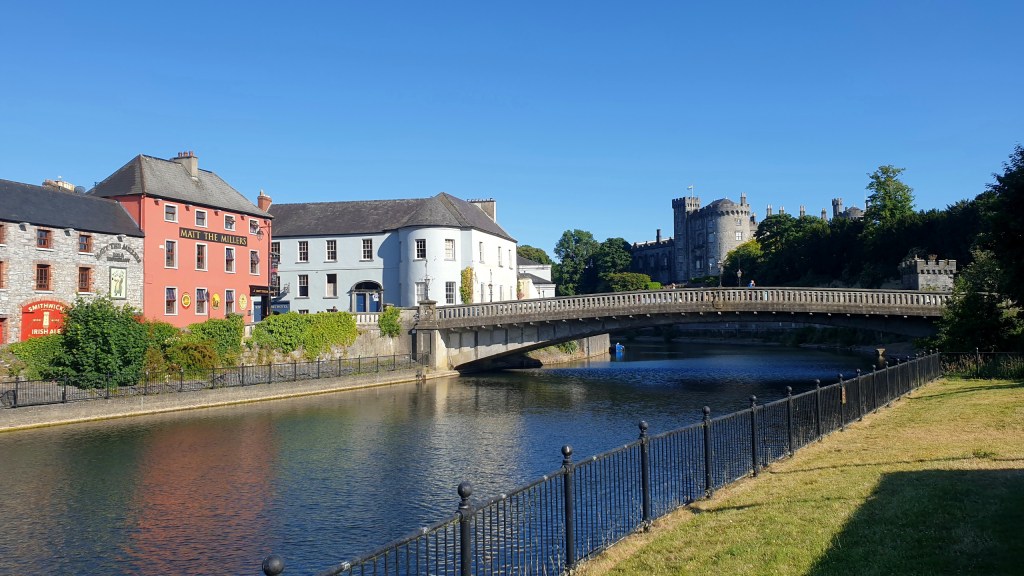
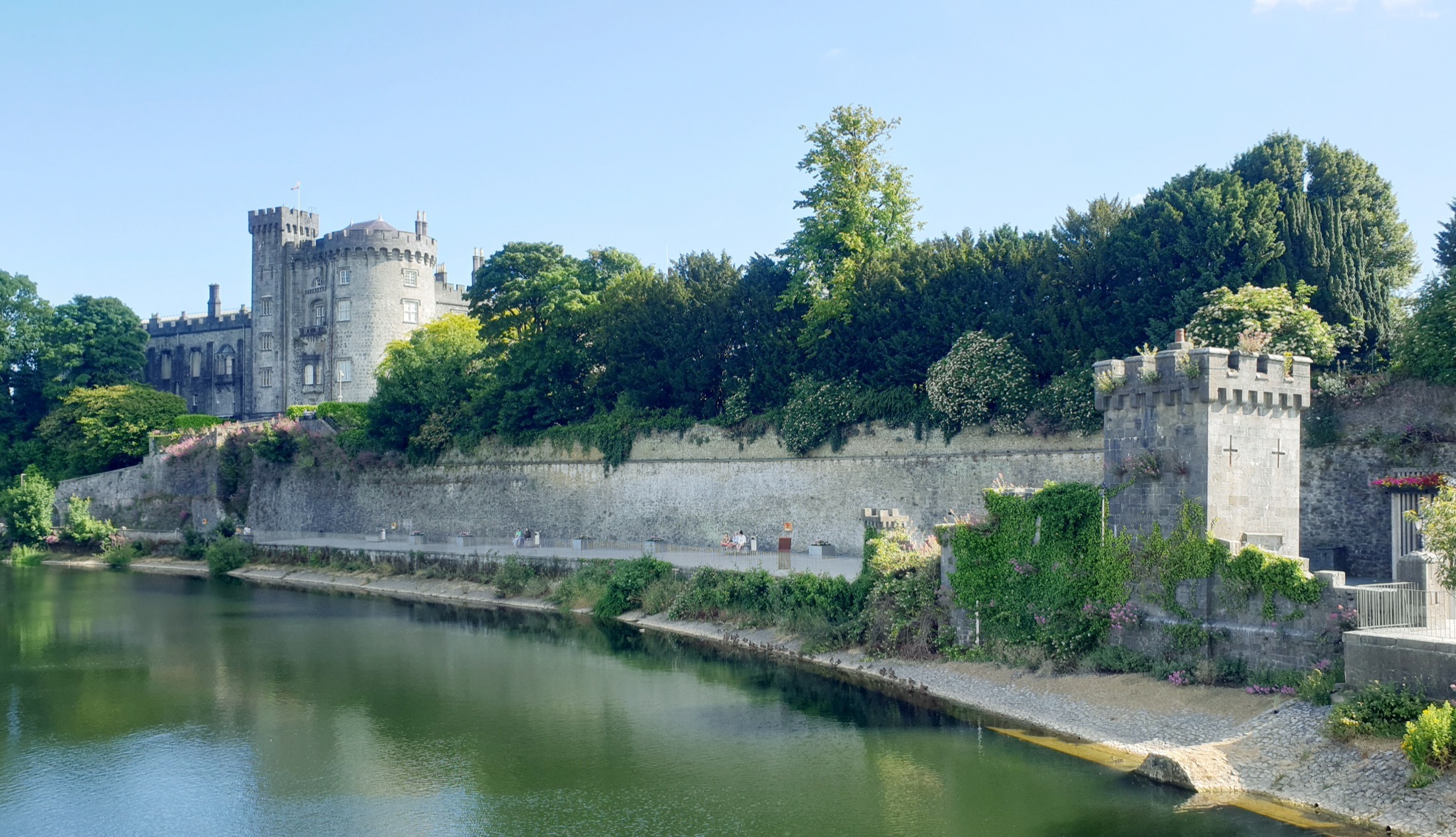
It was a miserably wet day as we did our usual walk around town. For a change we did a tour of Kilkenny Castle which was built in 1192. This place is magnificent and has a most colourful history.
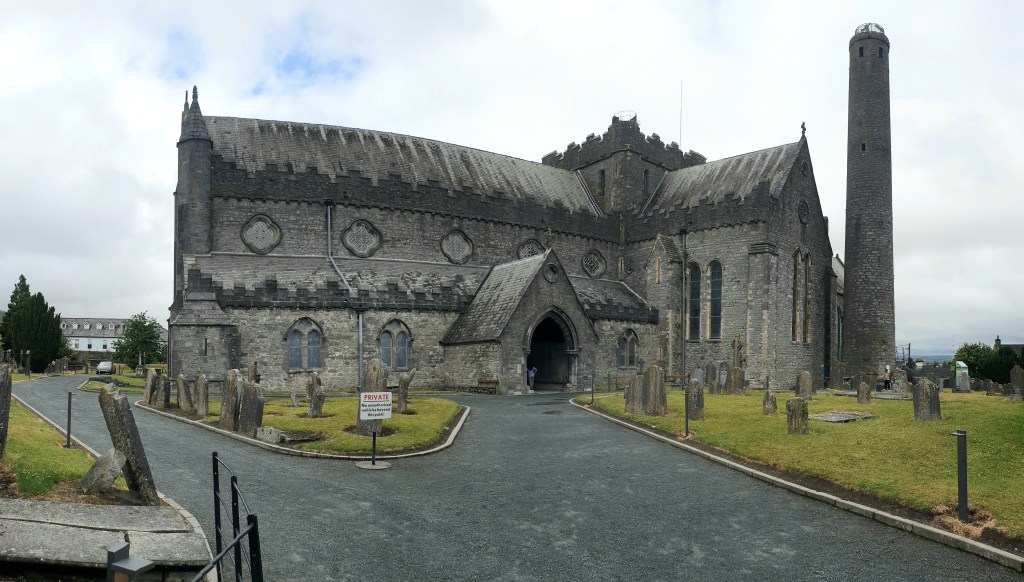
More of Kilkenny which seems to me to have more churches than pubs, and that’s really saying something.

We had a traditional Irish meal in a traditional Irish Pub and listened to traditional Irish balladeers.
The next morning we had another HUGE traditional Irish breakfast and headed for Dublin.

Sat 25/6 – Kilkenny to Dublin – 195klm

We took a chance that the forecasters had got it right. They hadn’t.

The Borris Railway Viaduct has sixteen arches and is supported by soaring limestone pillars. It rises to 18m high and spans the Borris and Mountain River Valley. Built at a cost of £20,000 in 1860 it is no longer used.
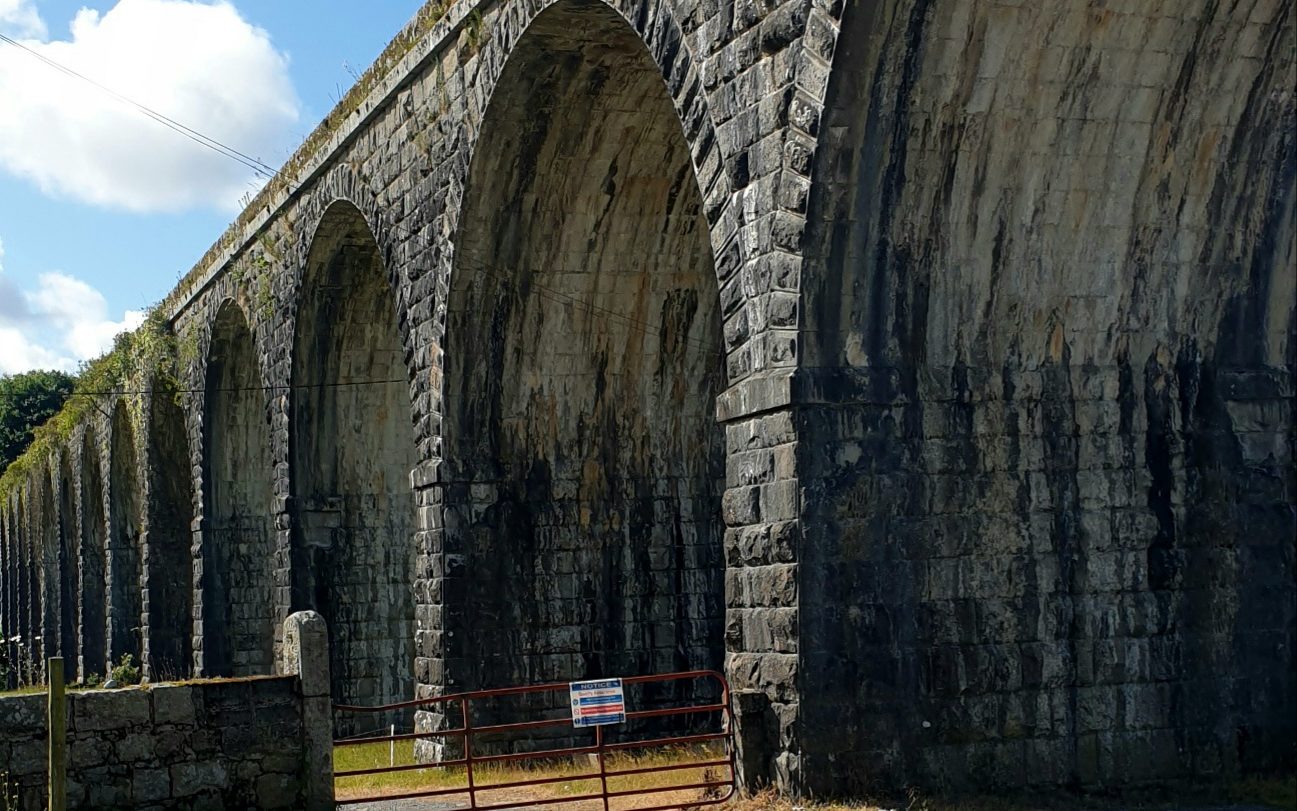
Borris Viaduct

And more old castles with their histories of pageantry, magnificence and disaster.

Leighlinbridge Bridge, built in 1320, remains as one of the oldest functioning bridges in Europe. While behind it is Leighlinbridge Tower House, aka The Black Castle.

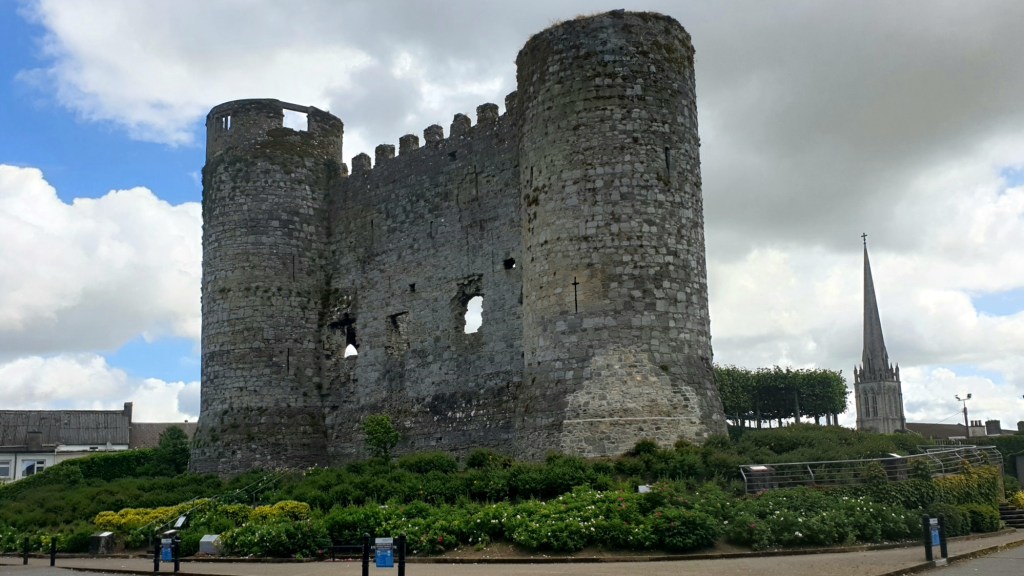
Just a little ways up the road is Carlow Castle which stands on the eastern bank of the River Barrow. It was built around 1210, so it’s allowed to look old and tied.

We now followed the old military road north and east towards Dublin. It began to rain as we rode roads that mostly seemed used by push bike riders and logging truck – thank goodness it was Saturday. From valley to peak and do it again, and again, through some truly picturesque country, albeit narrow, wet and winding.
To derelict Glendalough with it’s age old history. Hidden away in this remote valley, Glendalough is said to be founded by St Kevin, a 6th century monk and hermit who settled in these mountains chosen for their remoteness, beauty and serenity. The Normans destroyed the monastery in 1214. Today its a tourist mecca.

Up over Sally Gap with it’s stunning views, beautiful lakes and vast peat beds. The road, known as Military Road, was built shortly after the Irish Rebellion in 1798 by the British Army who wanted to drive Irish rebel forces from the area.
It is a great ride through here.

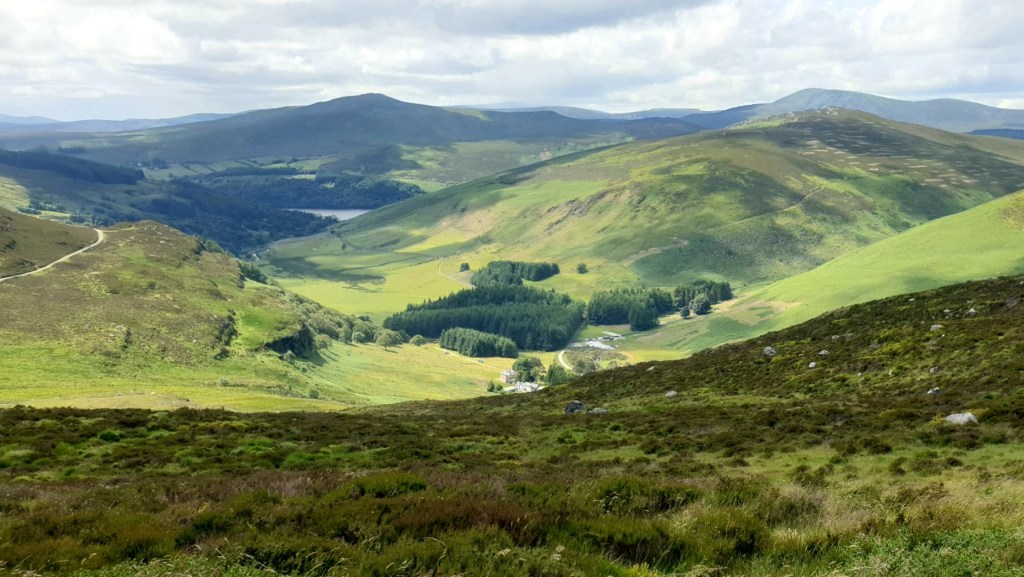
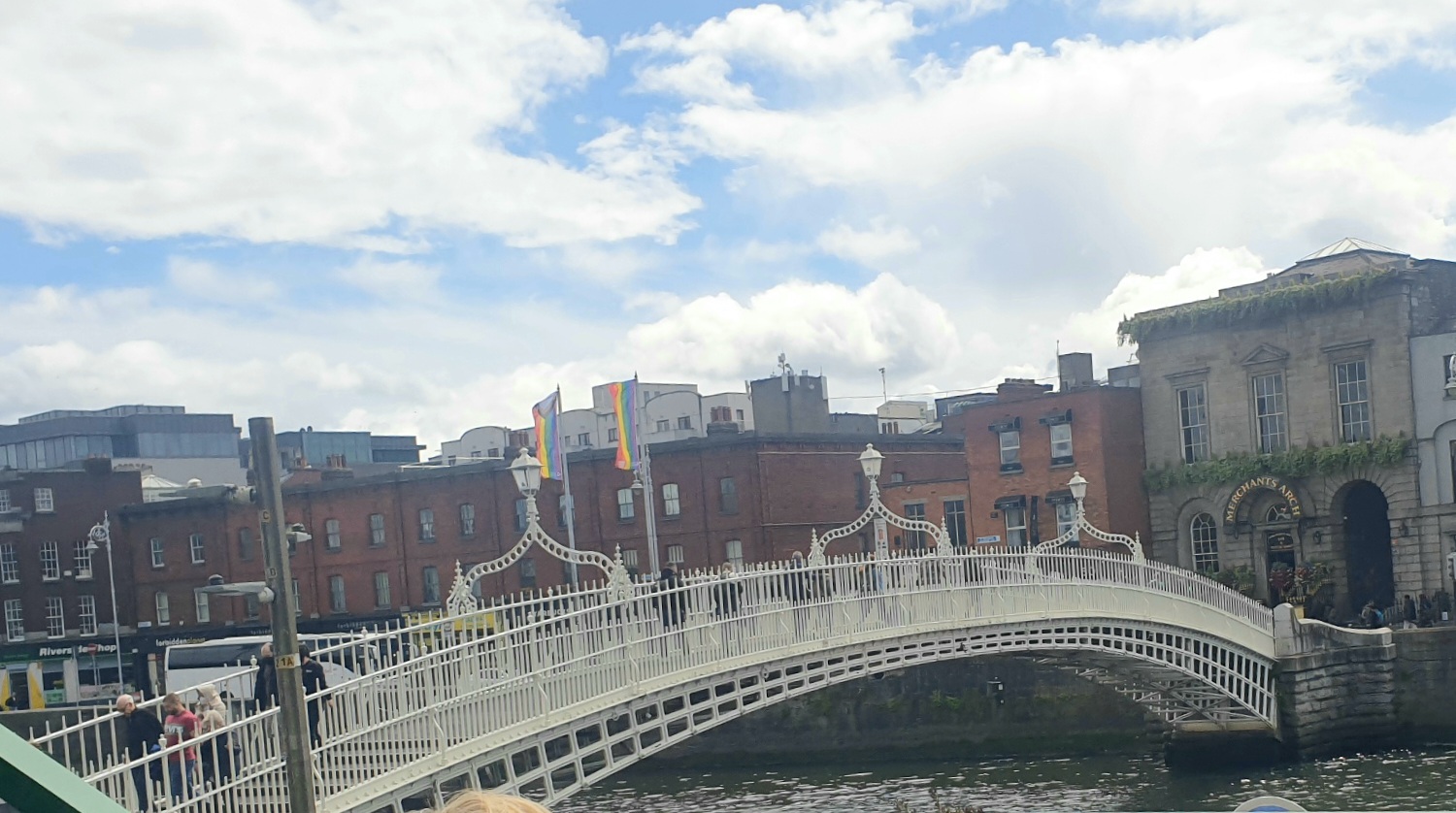
And so to Dublin.

Sun 26/6 – Lay Day in Dublin
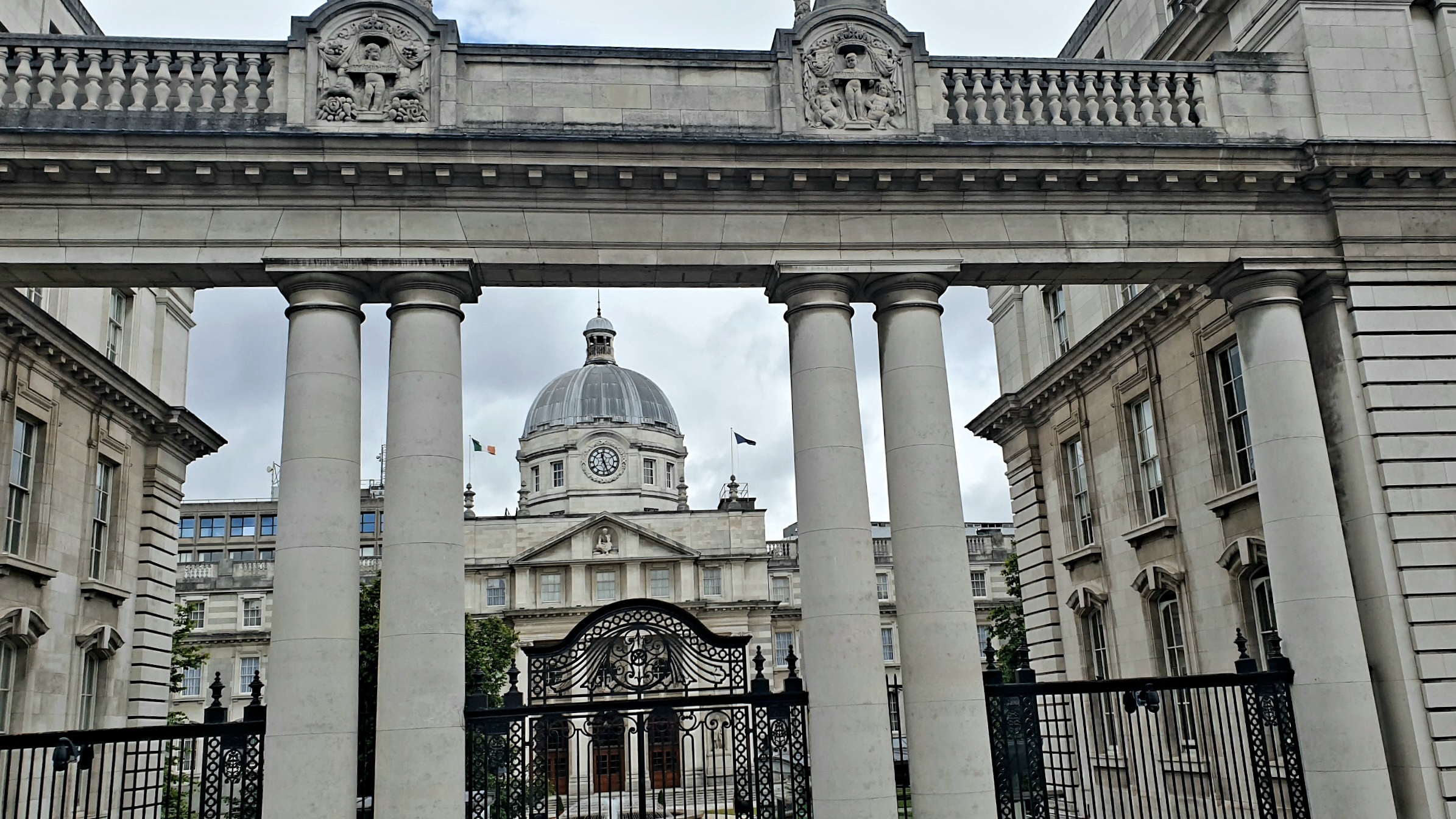
Tomorrow its an early ferry to Wales.

Wk 5 – Wet, Windy & Wild Atlantic Way

Sun 12 – Sun 19 June
Donegal, Westport, Galway, Kilrush, Dingle

Sun 12/6 – Londonderry to Donegal –  190klm

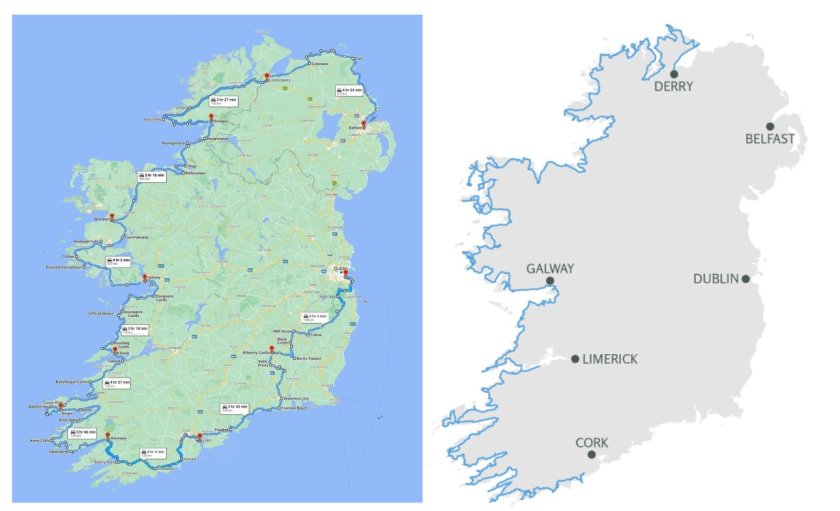
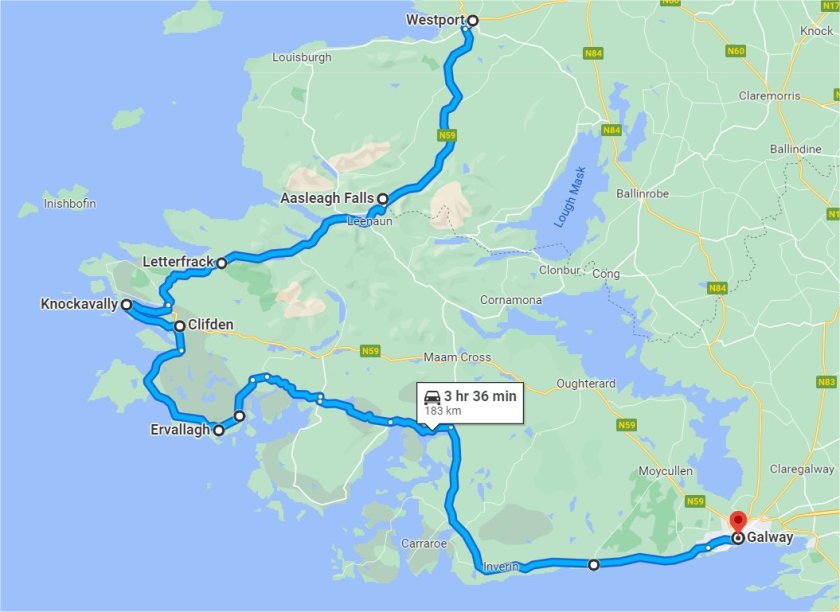
It’s wet again as we tog up and start our journey southward down Ireland’s spectacular coastal route, The Wild Atlantic Way, which is one of the longest defined coastal routes in the world. We will only be travelling just on half of it’s entire 2600km length as you can see.

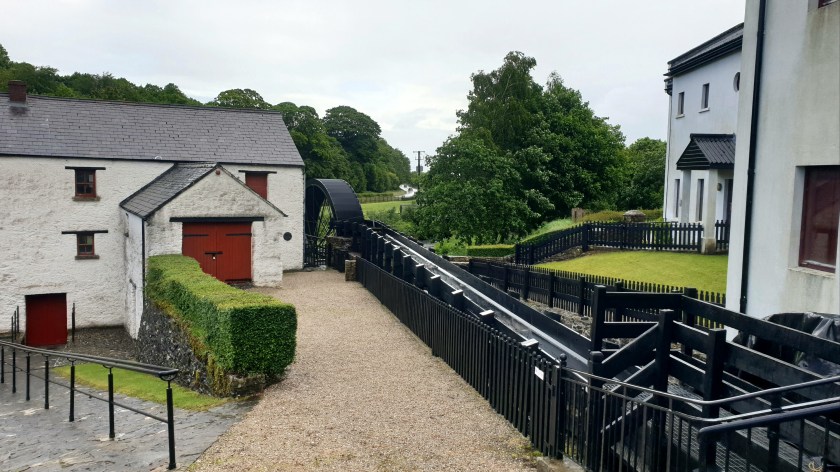
First stop is at Milltown and Newmills corn and flax mill. It features one of the largest operating waterwheels in the country. Built in the early 1800s it powers two separate millwheels, one for grinding oats and barley, and the other for flax from which linen is produced. It was closed at the time.

We soldiered on. Past Lough Finn

Lough Finn

and up and over Glengesh Pass where we stopped for a brew while admiring the view.

The weather wasn’t improving as we made our way to Malin Beg.

The Sliver Strand Beach – Malin Beg

And Teelin Road before finding our digs at O’Donnells of Donegal right on the main square, or diamond in this case.

Mon 13/6 – Lay Day Donegal

We took a look around this very busy town.
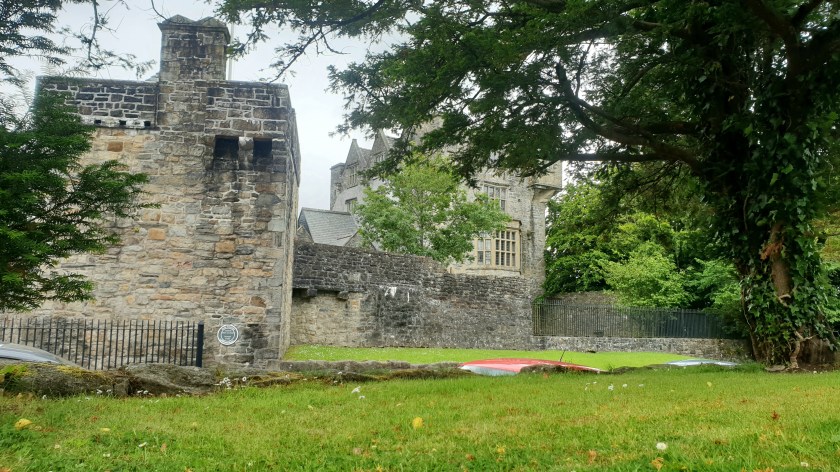
The famous Red Hugh, wealthy chief of the O’Donnell clan, built the Donegal Castle on the River Eske in 1474. It went through a tumultuous history of war and betrayal before falling into ruin. It was nearly fully restored by the State in 1990.

Donegal Castle
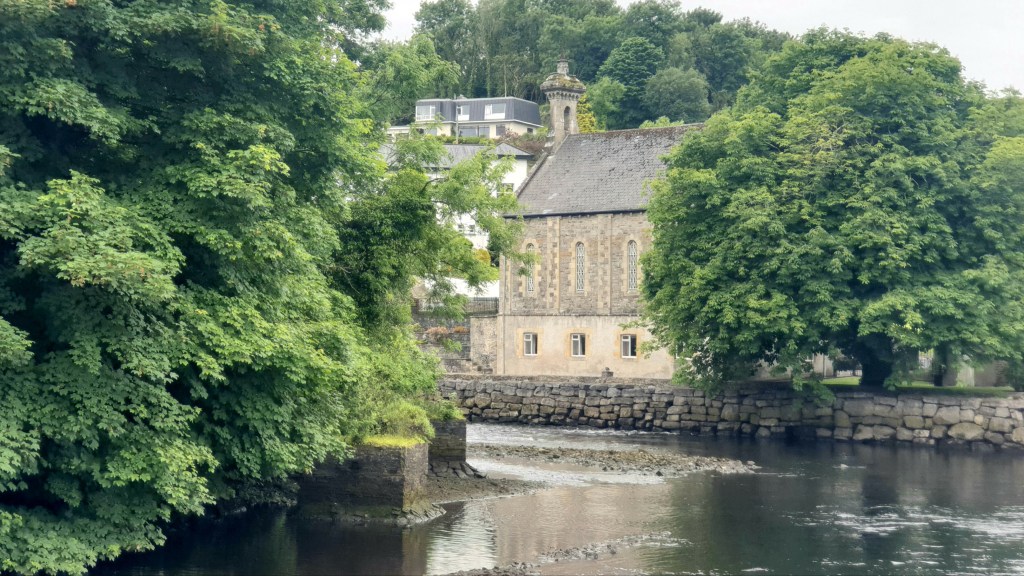
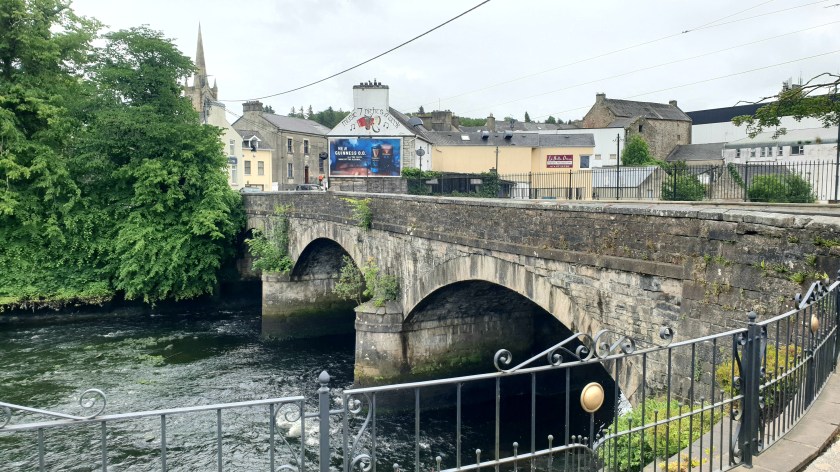
River Eske

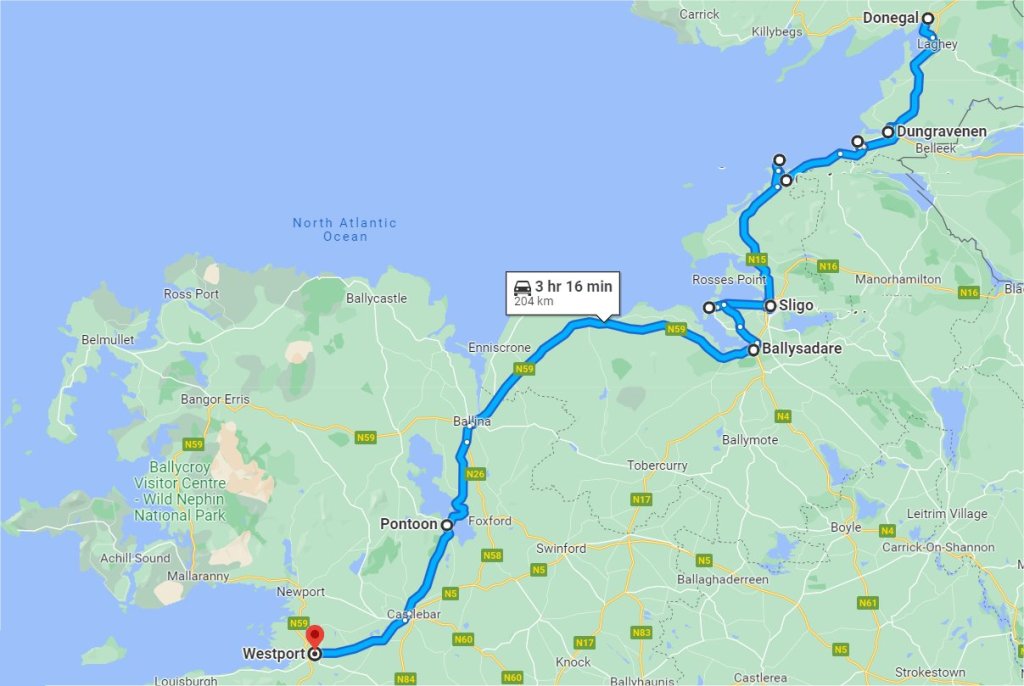
Tue 14/6 – Donegal to Westport – 205klm

It’s overcast but we decide to chance the threatening weather. Not our best decision.

Mall Pier
Mullaghmore

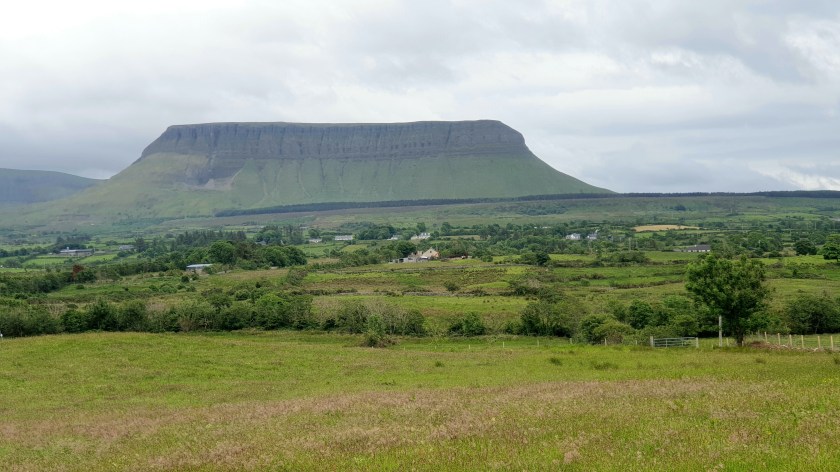
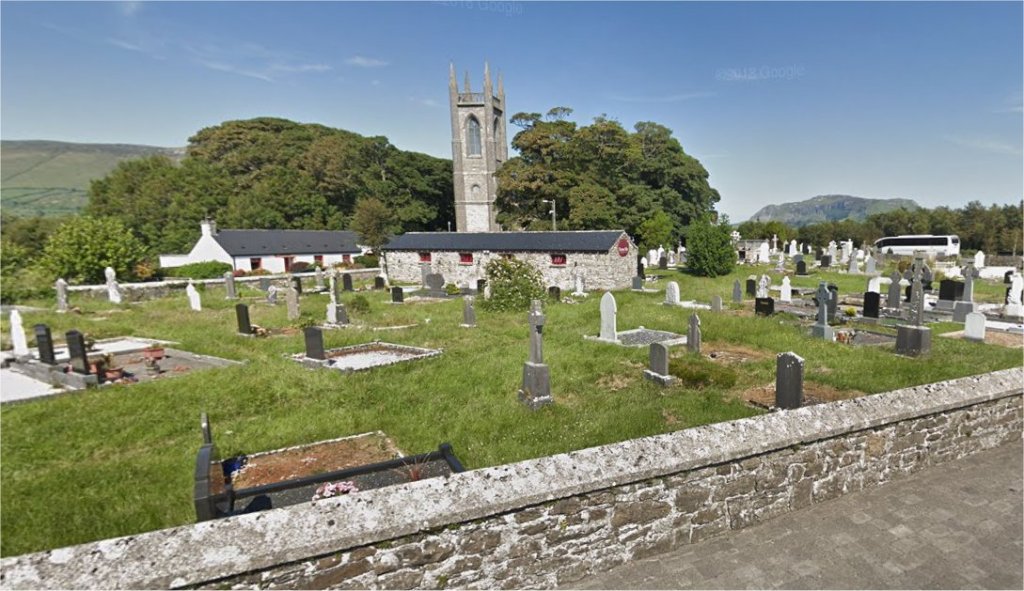
Past the imposing Benbulbin and Drumcliffe Cemetery, where the renowned Irish poet, dramatist and writer William Yeats, 1865 – 1939, is buried.

Benbulbin
Drumcliffe Churchyard – Google Maps

A

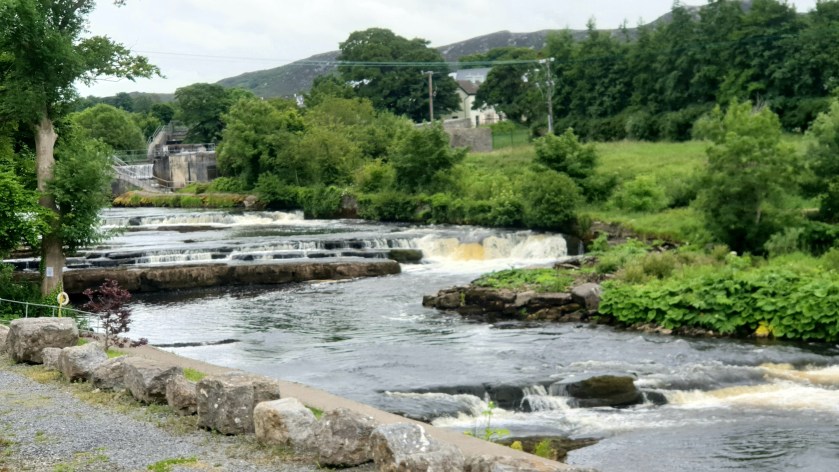
Through Knockmuldowney and past the Ballysadare waterfalls.

Ballysadare waterfall

We stopped, in the wind and rain, and snugged down behind a high stone fence to have a brew at Ardvalley and watched the surfers enjoy themselves.

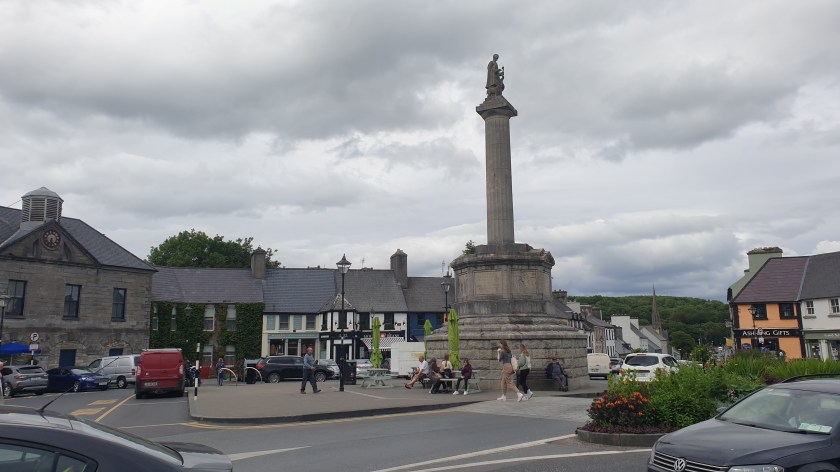
Before arriving in beautiful and busy Westport, one of only a few planned towns in Ireland being commissioned in the 1780s.

Wed 15/6 – Westport to Galway – 185klm

We’re not making the same mistake as yesterday as we tog up and leave lovely Westport after another wonderful Irish all-day breakfast.
We check out Westport Quay on our way south, leaving a fair chunk of the Wild Atlantic Way to the west.

Past a couple of bridges (didn’t do any yesterday did we) to Aasleagh Falls on  the Erriff River just above Killary.

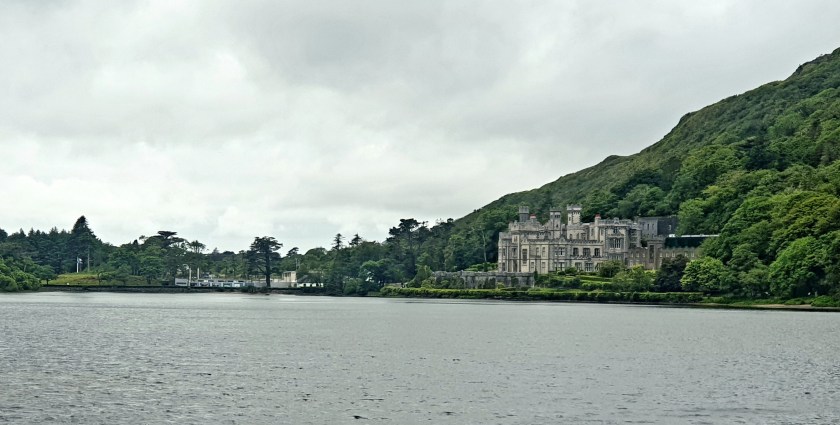
We stopped on the causeway across the Pollacapall Lough to view Kylemore Abbey, built in 1868 it is now a Benedictine monastery.

Kylemore Abbey

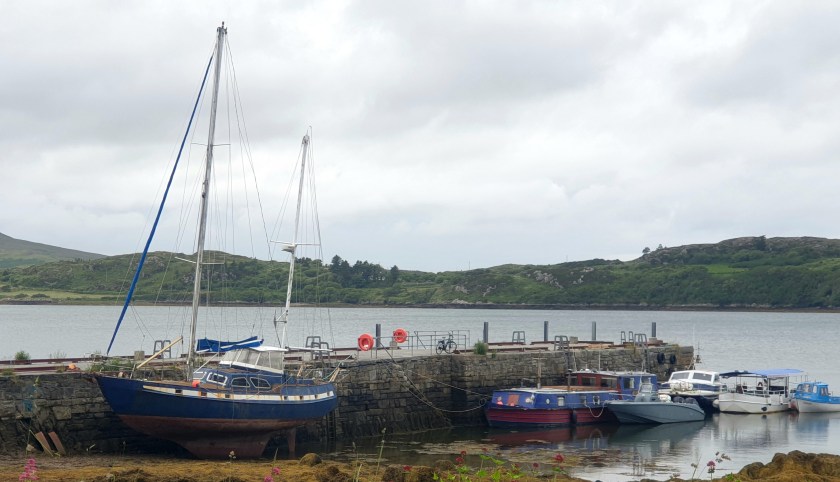
Past this ‘all by itself’ jetty.

To the magnificant, wet and very windy, Pointe Amharc Atlantach Fiáin Sky Bothar (that’s its name) on the Sky Rd, to Clifden.

To Ervallagh beach on Gurteen Bay at Errisbeg with Roundstone Harbour just a little ways along the road.

This wee stop.

Thurs 16/6 – Lay Day in Galway

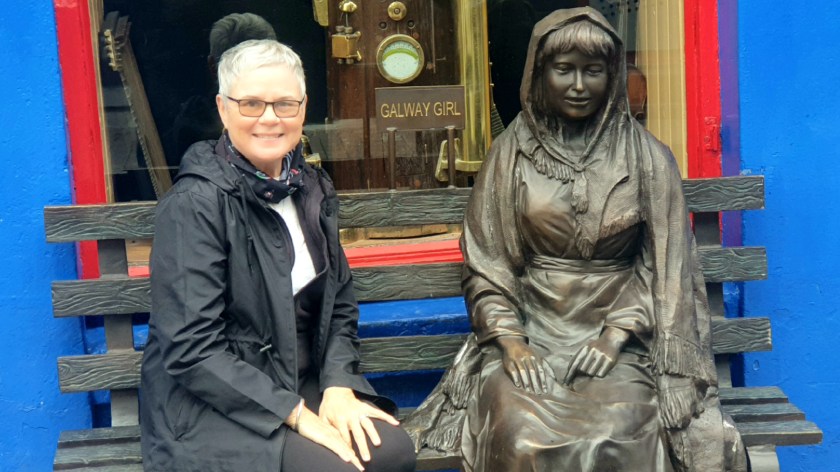
The Galway Girl, except one of them is The Girl From Gympie

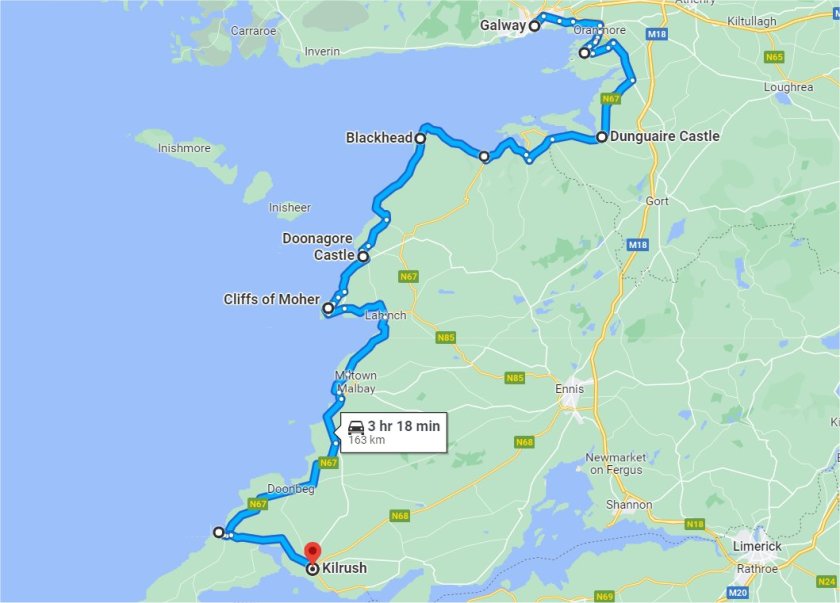
Fri 17/6 – Galway to Kilrush – 165klm

It’s raining, not real hard, but it’s raining, and it rained all day. Enough to cause Norma’s helmet intercom, an N-Com B901R, to become inoperable by the end of the day. It stopped raining 10 minutes after we arrived at Kilrus. Come on!

We stopped at a couple of castles.
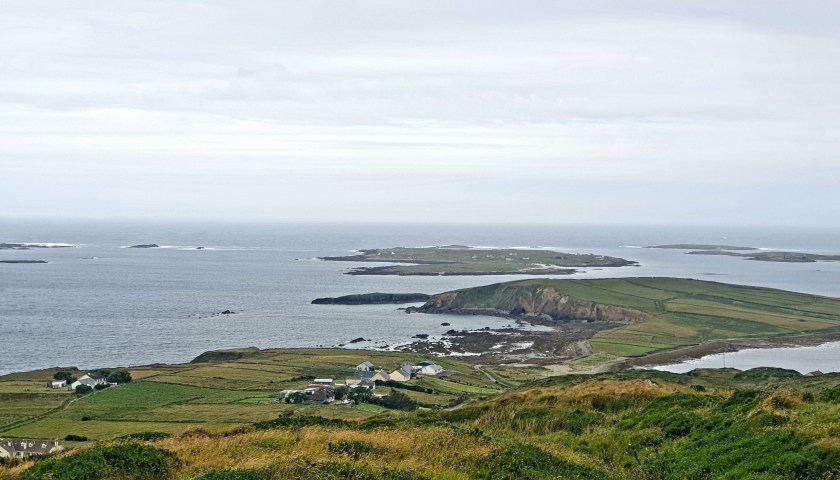
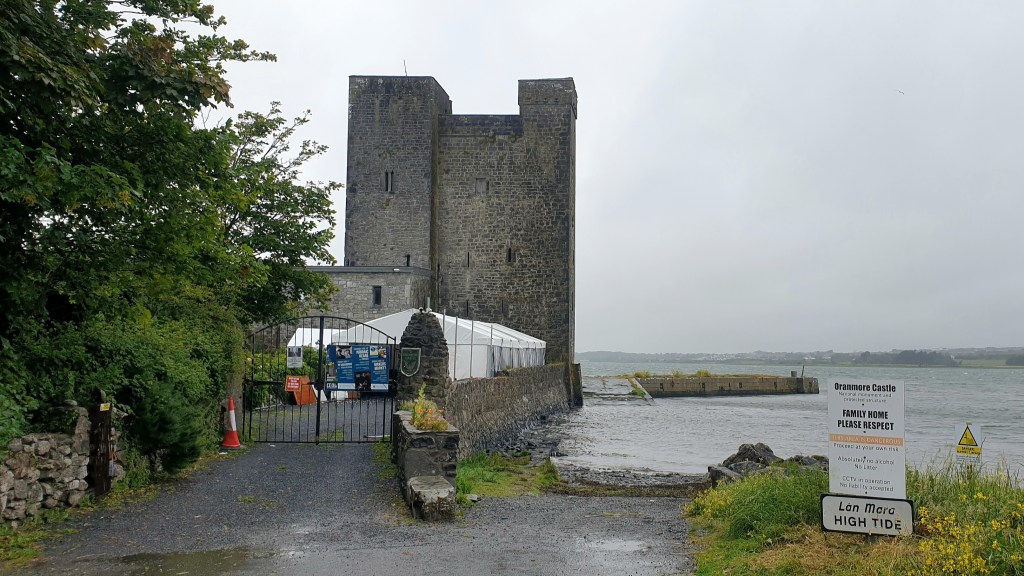
Oranmore Castle was most likely built some time around the 15th century.
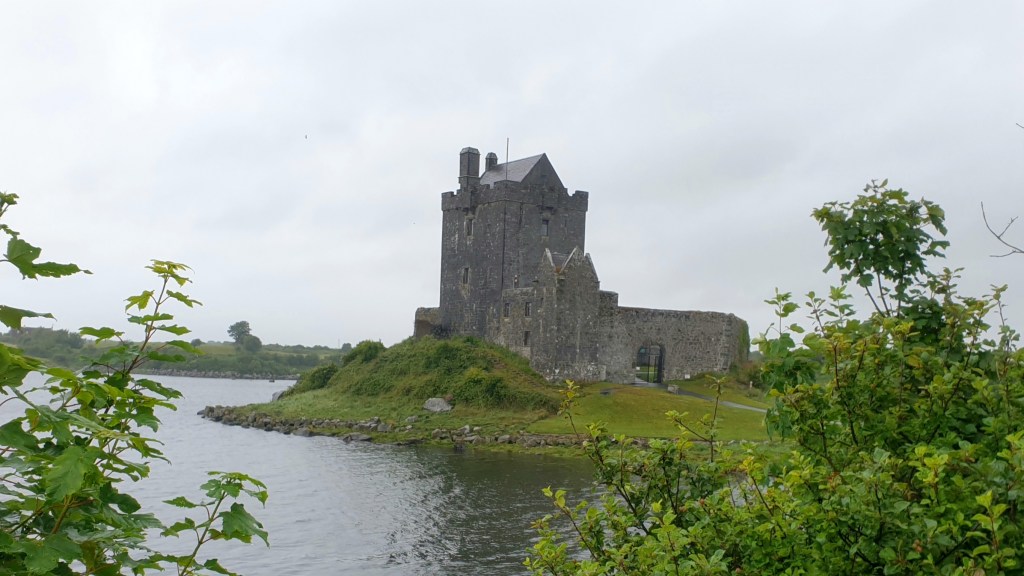
Dunguaire Castle is a 16th-century Tower House on the south-eastern shore of Galway Bay.

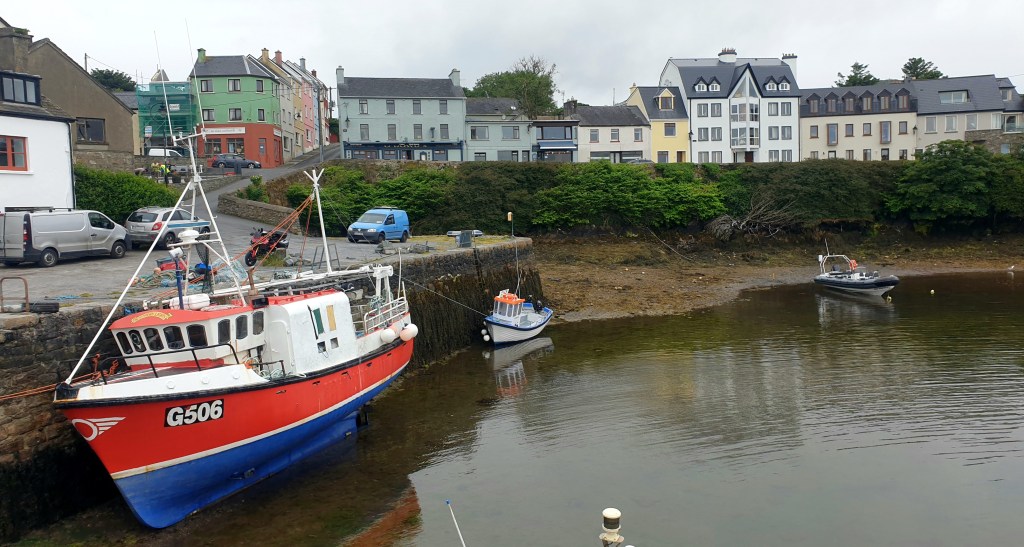
To Kinvarra Pier

Kinvarra Pier

This is The Pinnacle Holy Well of Tobercornan. It is a small spring that fills a stone basin and in 1860 a Gothic Revival style housing was built over it with a corbelled rubble-stone roof (since gone), dressed stone gable copings and corner pinnacles.
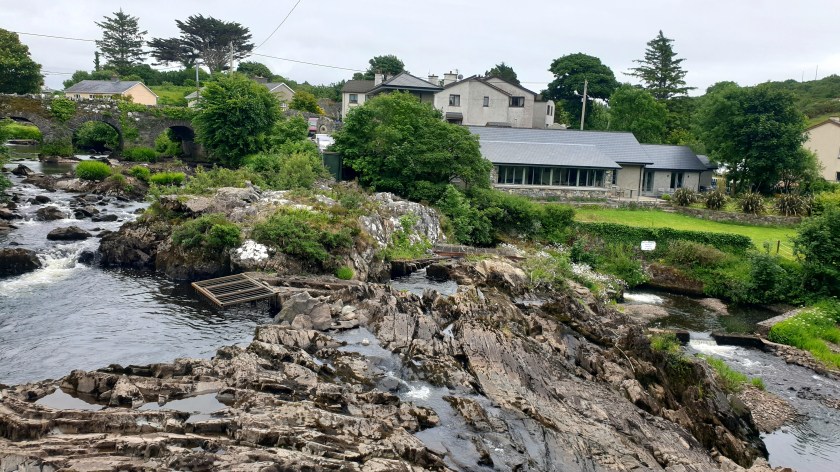
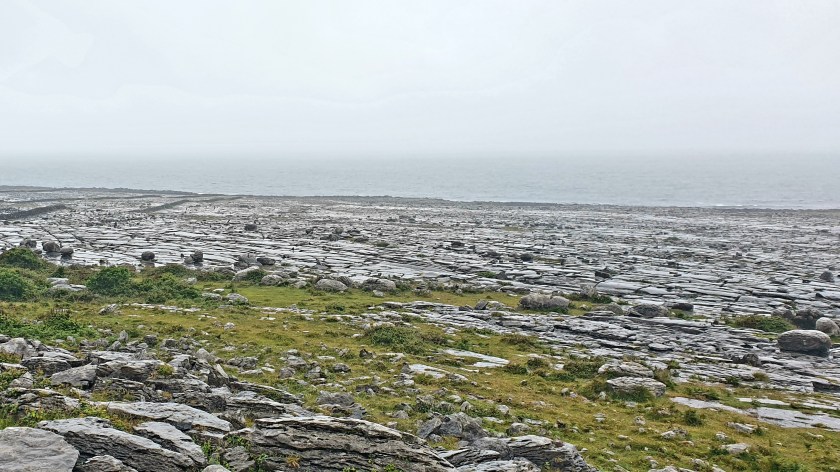
Its bleak and rocky coming around Blackhead.

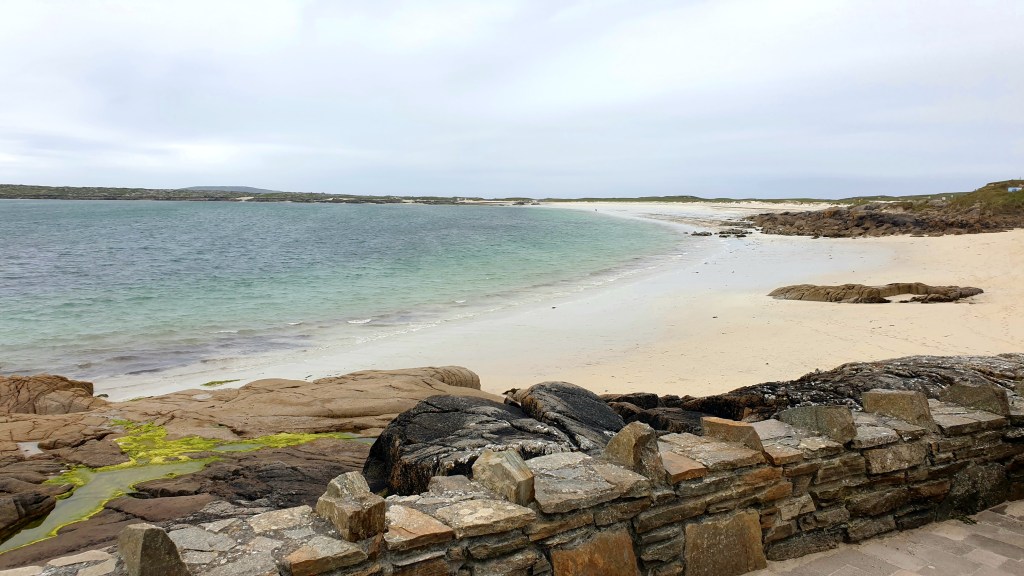
We stopped in Doolin at The Pipers Chair café and bought our coffee – its a rough day when we don’t make our own brew. We sat under their awning and watched the world go by for 30 minutes.
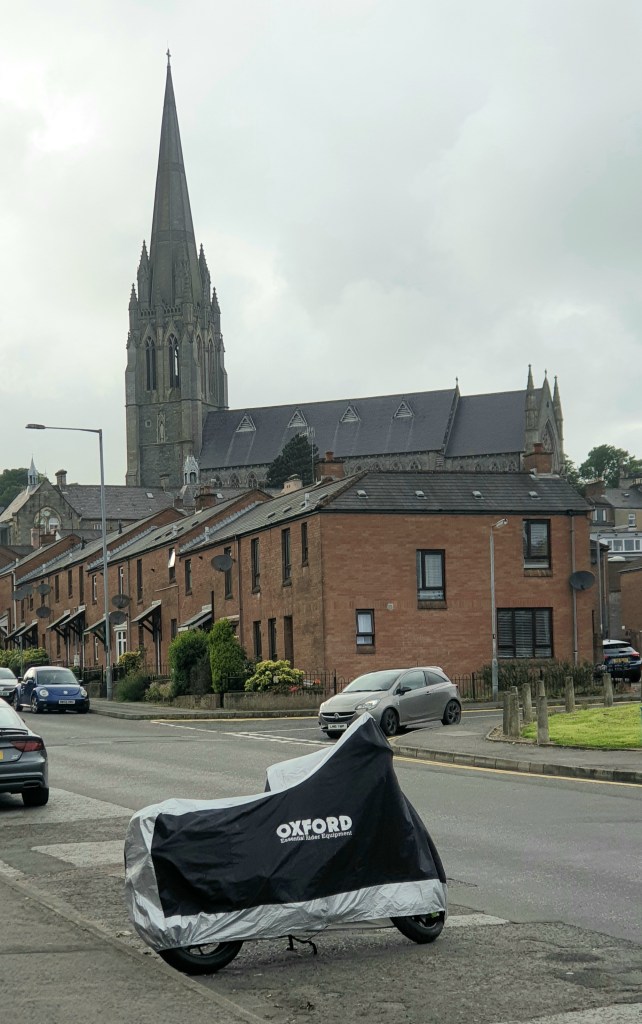
They say there is no such thing as bad weather, just bad gear, and laminate jackets are the new thing. We’re wearing the new and affordable Oxford Mondial laminate jackets. I’d expected the weather on this trip to be a bit different to our previous 2 trips, so I’d done my research and imported these from the UK before we left Australia. They’re light weight, don’t hold water in heavy rain and dry our very quickly, so they were a good investment.  So at least we were dry.
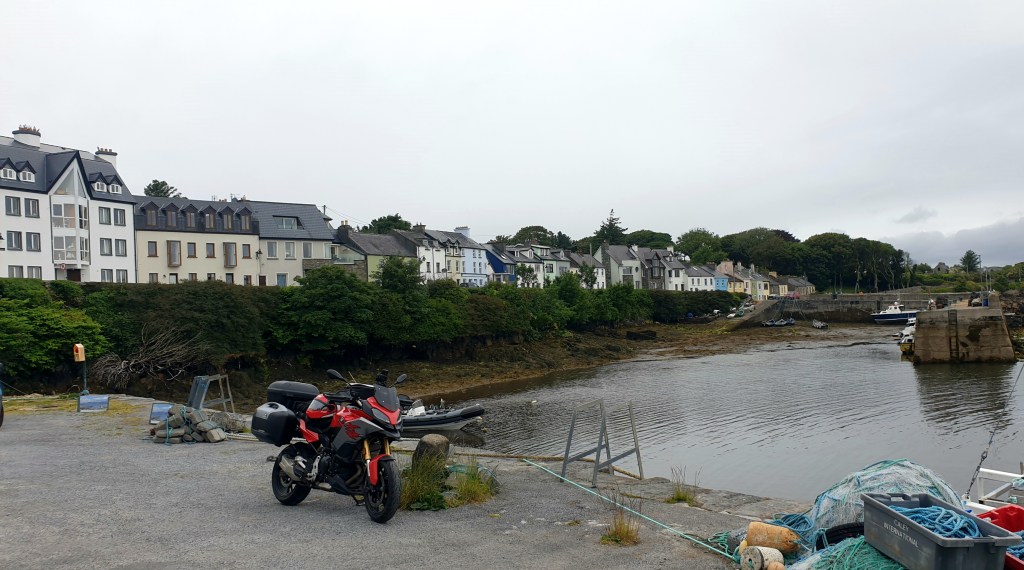
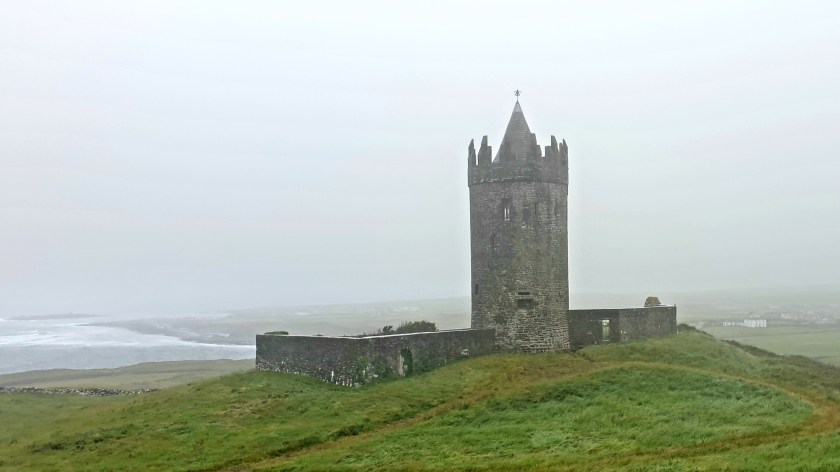
Doonagore Castle is a round tower house with a small walled enclosure built in the 1500s.

Doonagore Castle

The plan had been to stop at the famed Cliffs of Moher, but it was still raining with the visibility down to 100m so we kept going. The car park was full of tourist buses and we couldn’t help but feel sorry for those 100s of people who’d paid good money to not be able to see a thing.

The bridge over the River Doonbeg with Doonbeg Castle, built in the 1500s, in the background.

To Cotty’s Pub in Kilrush.
And, again, it stops raining 5 minutes after we arrive.

Sat 18/6 – Kilrush to Dingle – 165klm

Its heavily overcast but dry as we leave Kilrush to catch the ferry from Killmere to Tabert, crossing from County Clare into County Kerry.

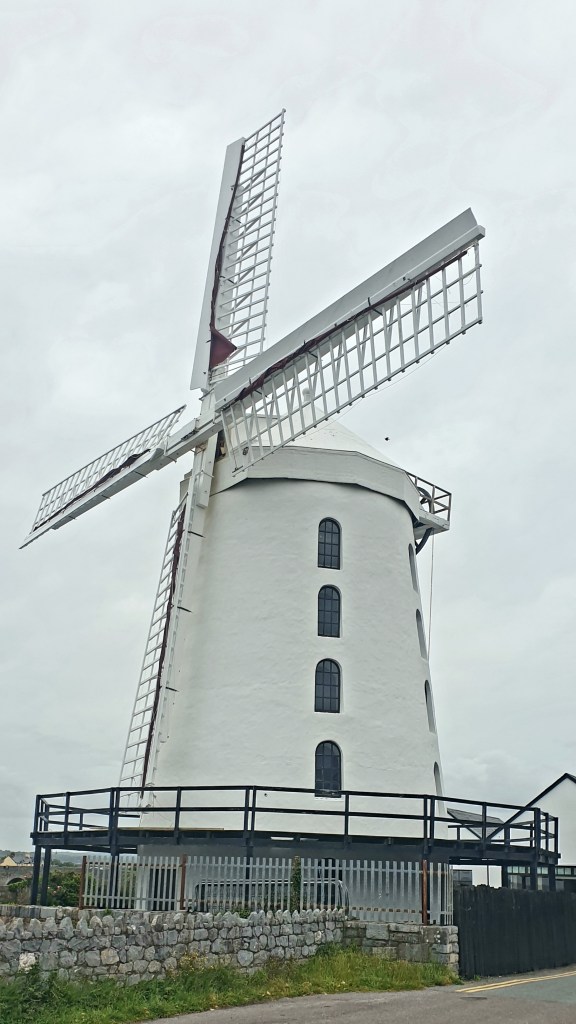
We get lost in Tralee, or at least Tomtom did, but we did find The Blennerville Windmill which is a 21m high, stone, reefing stage, windmill built in 1800.

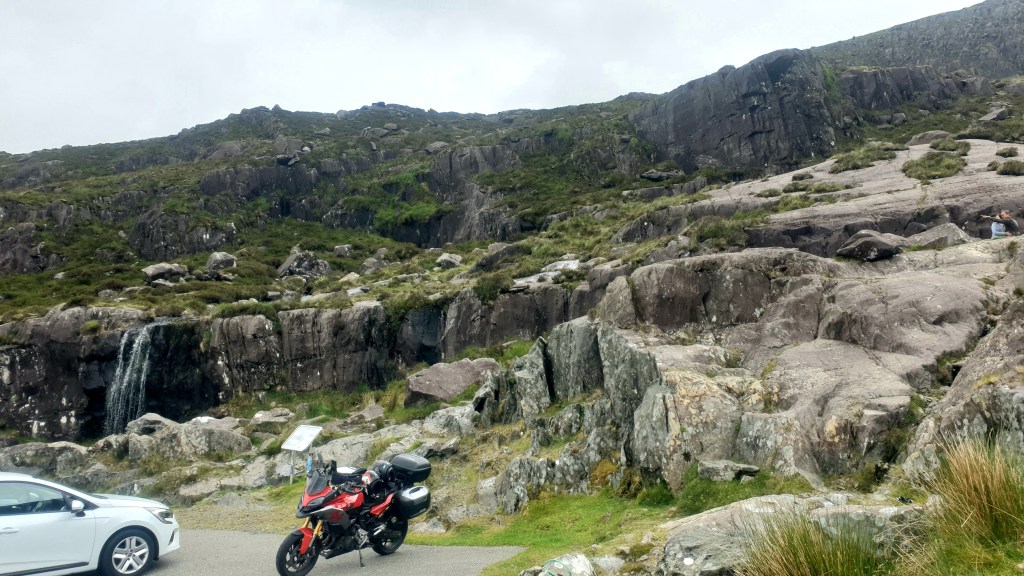
We stopped at Connor Pass Waterfall for a brew. It was quite chilly up here, but dry so we weren’t complaining.

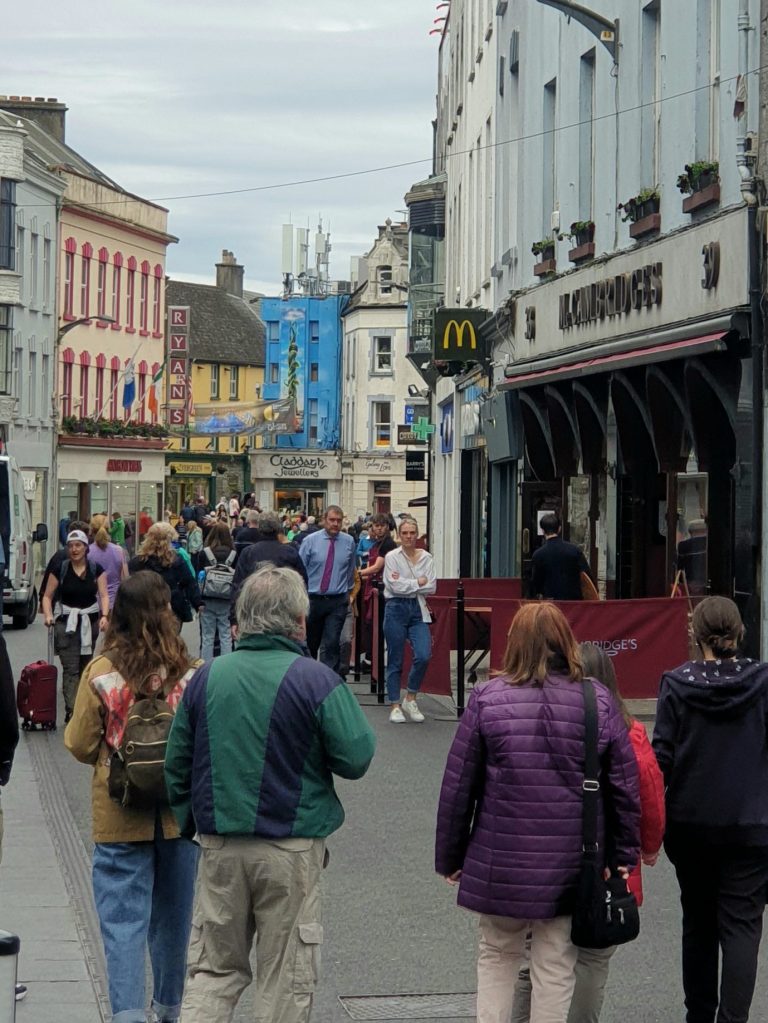
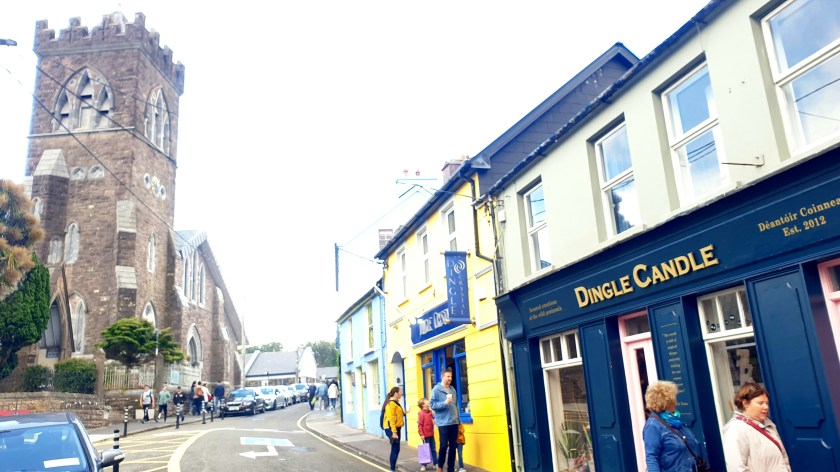
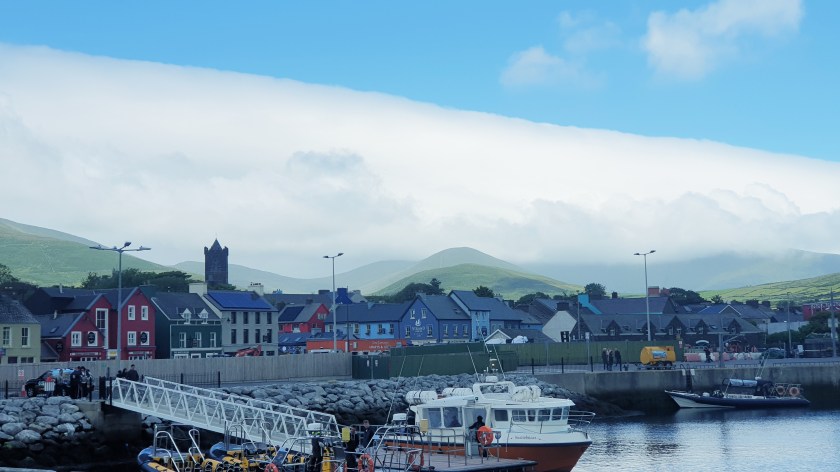
Before dropping down towards Dingle. We did a circuit of the picturesque peninsular west of Dingle before returning to the tourist engorged town to our rather pleasant 2 night stay right on main street.

Sun 19/6 – Lay Day in Dingle

This is a very pretty and very popular town.

Connor Pass in the background
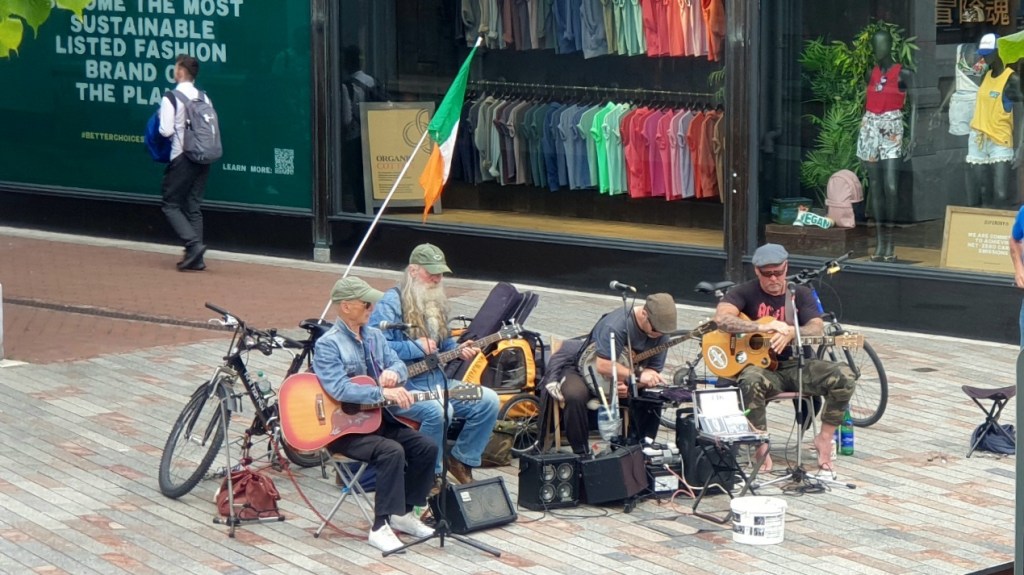
This Trio of Young Buskers were making a killing with their 4 song repertoire.

This time next week we’ll be in Dublin – and the weather is looking promising, much to Norma’s delight, and mine as well.
I have to say that this week hasn’t been the most delightful of travelling for Norma, me neither really although I don’t care. Norma has been nothing but fantastic without a murmur of complaint. I’m a truly blessed man.😘

So that’s it for this week folks.

Wk 4 – Scotland 2 Northern Ireland

Mon 6 – Sat 11 June
Skye, Oban, Glasgow, Belfast, Londonderry

Mon 6/6 – Portree to Oban -235klm

It was a beautiful day and we’re 0n the road early as we have a ferry to catch. Now this was a change from my original plan because I’d met a Scots biker bloke in Gairloch who’d suggested my previous plan was for mere tourists and we couldn’t be classified as that now could we. Hence the altered plan – he also hinted that our Oban 2 Glasgow route was for sissies as well. What is it with these Scots, they have the sweetest way of insulting you in a language that’s a little odd. (Note from Editor who is constructing this in Donegal, Ireland – but nowhere near as odd as the Irish)

So we left Portree on a hastily planned route that had us calling into Iselornsay where we observed some folk who had their priorities in perfect order as they came ashore from their anchored yacht.

We continued on to the ferry terminal at Armadale arriving early enough to beat the queues for both position and coffee. I’d previously booked the ferry.

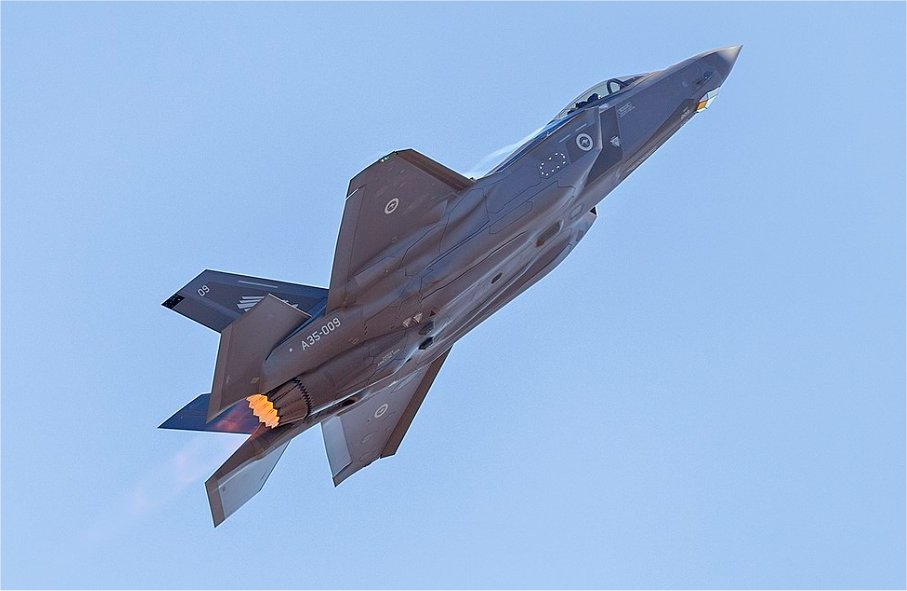
The 20 minute ferry crossing was full to capacity and quite uneventful except for the very sudden, very loud and very low fly by of an F-35b Lightning of the Royal Airforce. This abrupt wake up call was no doubt in celebration of the Queen’s Jubilee which was in full swing at the time. Actually this one’s Australian but as close as I could find on Google.

The rest of the day was without incident and also without a lot of interest apart from being a very pleasant ride on lovely motorcycle roads that were virtually vehicle free.

We stopped at Strontrian for a brew then took the 5 minute free for motorcycles Corran Ferry across Loch Linnhe before crossing the quite striking Connel Bridge which is a cantilever bridge that spans Loch Etive. It was opened around 1905 and originally used for rail only before having a roadway added in 1914 with the bridge being effectively operated as an extended level crossing with gates. In 1966 the bridge was converted for the exclusive use of road vehicles but still requires traffic lights at each end because it is so narrow.

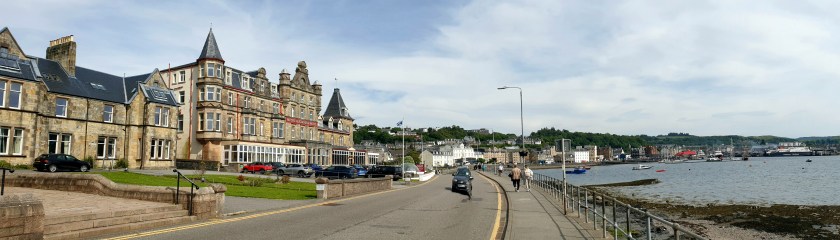
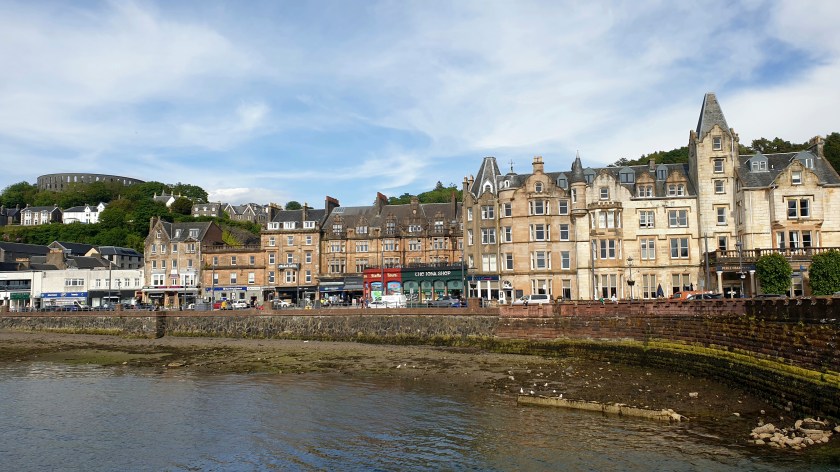
And so to Oban with its population of some 8,000 souls that triples in the holiday season. Nestled on a near perfect horseshoe bay in the Firth of Lorne and protected by islands all around, Oban is beautiful with its majestic Victorian mansions / hotels / holiday homes promenading along the shoreline. There is also a constant flotilla of ferries servicing the many outlying islands.

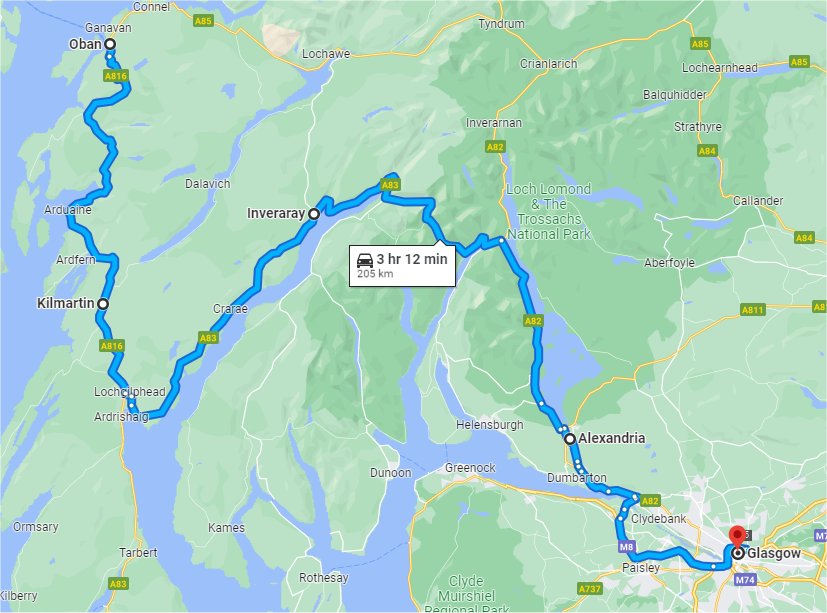
Tue 7/6 – Oban to Glasgow – 200klm

With overcast conditions we go through the, what is becoming the norm, practise of donning our Dainese rain pants. These are light weight, compact 100% waterproof pants. Now you may be wondering why I keep banging on about this, but for those of you not from Australia you need to understand that it is quite a rare thing for us because it’s mostly dry where we come from, and so having to kit up in wets is not normally part of our riding experience. So now I’ve got that out of my system let’s move on.

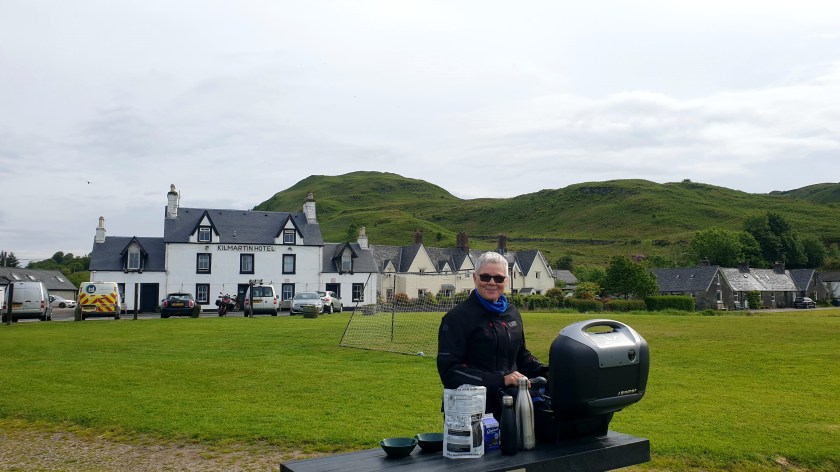
To Kilmartin where we stopped for a brew. With it’s many standing stone circles and such this is quite a popular area for many on the quest of meaning. I’ve been there and done that.

We then followed the western shore of Loch Fyne to Inveraray where I bought a Hoggs of Fife Countrysport flannel shirt to commemorate our Scottish sojourn – it wasn’t cheap.

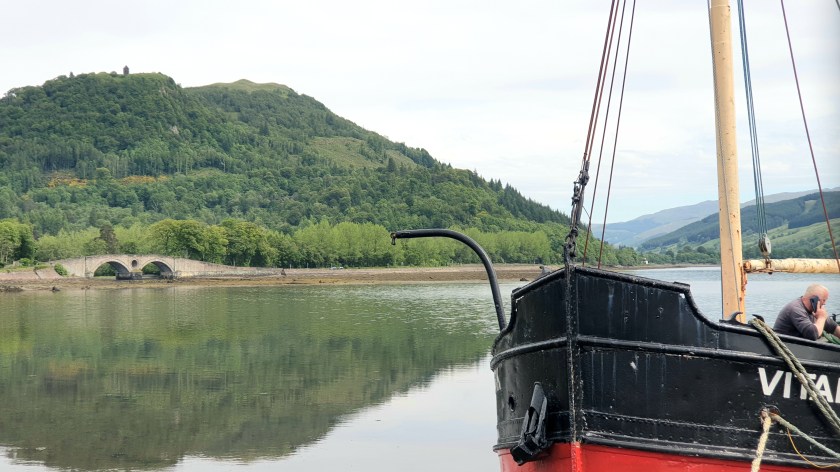
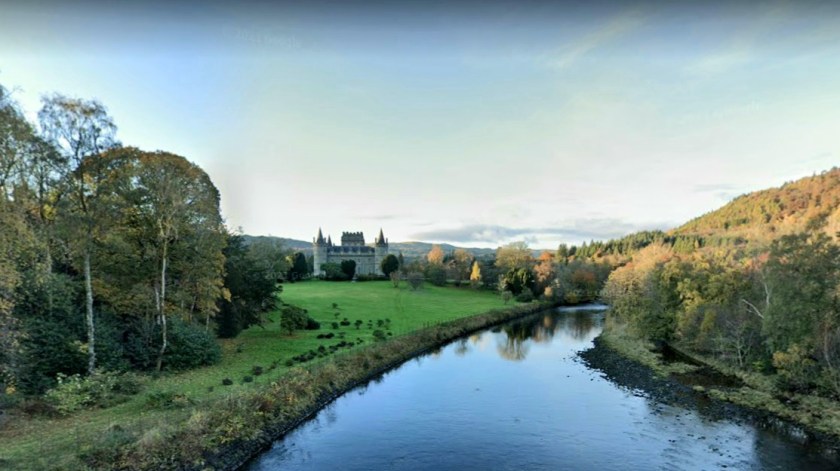
Crossing Aray Bridge (above) on the way out of town I spied the picture perfect Inveraray Castle. This is a Google image as there was nowhere to stop.

But this is my own. Garron Bridge is an elegant single stone arch bridge, built in 1748 it crosses the Gearr Abhainn at the head of little Loch Shira, an inlet of Loch Fyne a couple of miles north of Inveraray

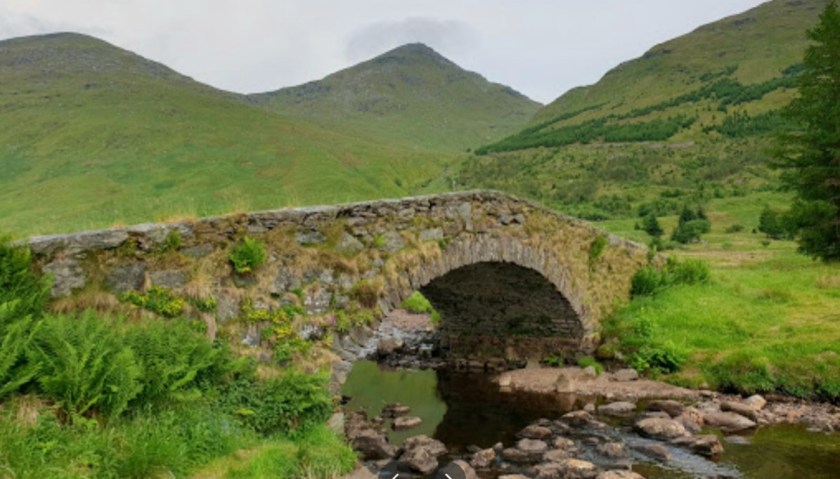
Below is Butter Bridge built in 1745, it originally carried a military road into the heart of the Highlands to keep those troublesome Scots under control.

And so to Glasgow via the beautiful Loch Lomond and the Erskine Bridge over the River Clyde.

Wed 8/6 – Lay Day in Glasgow

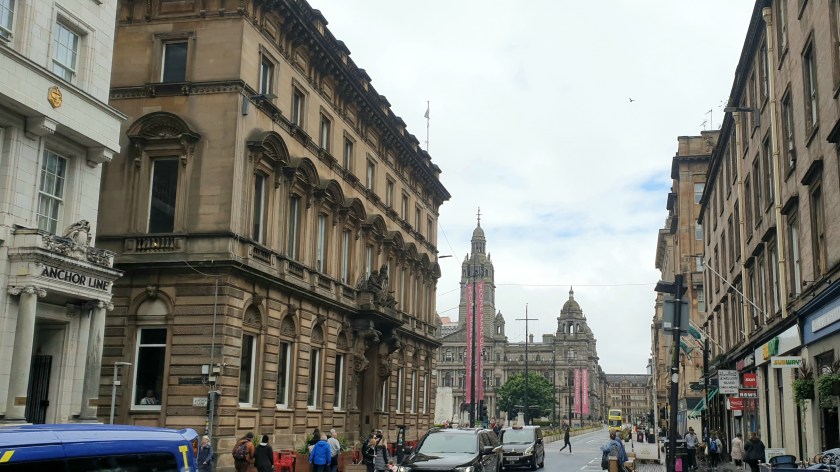
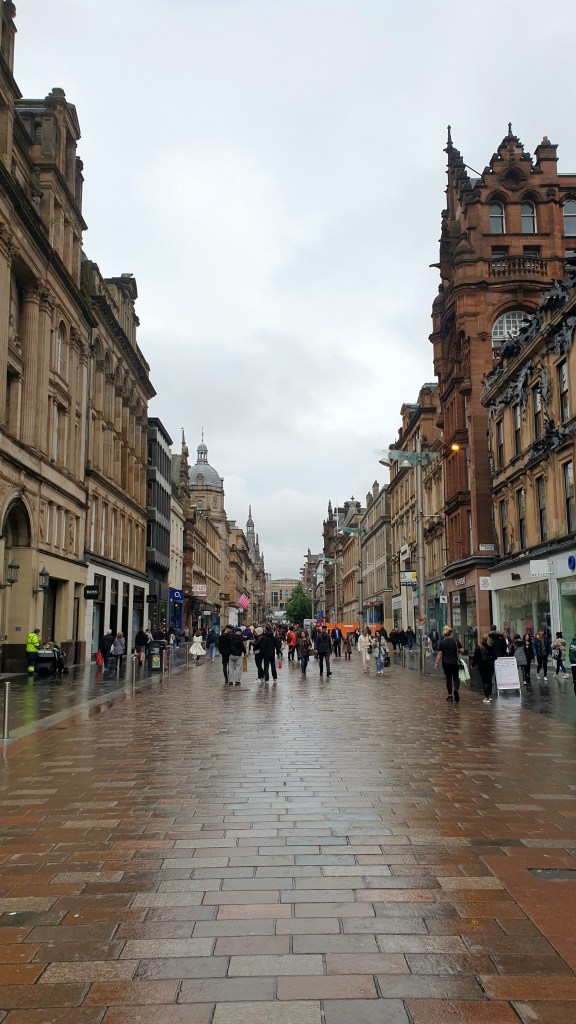
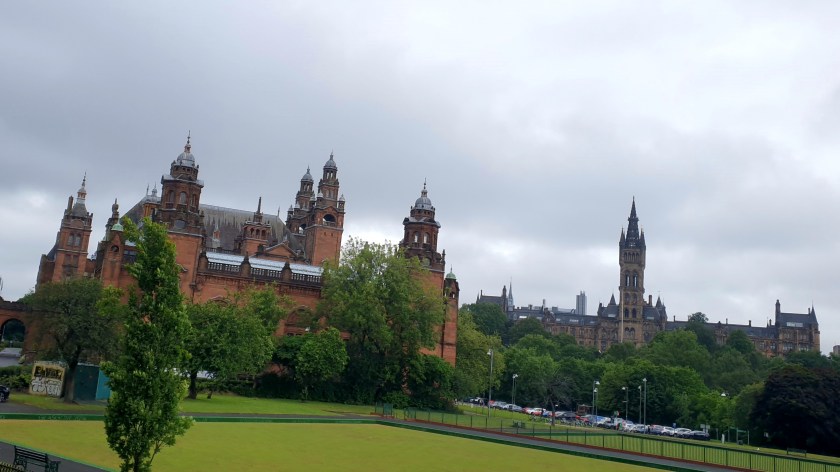
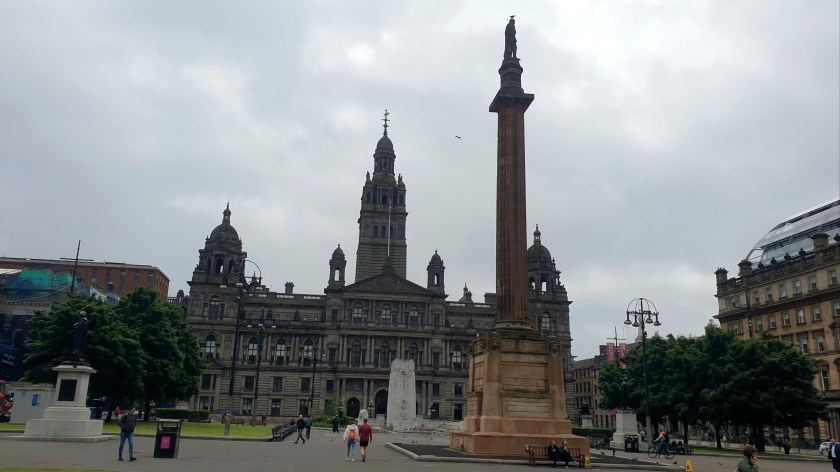
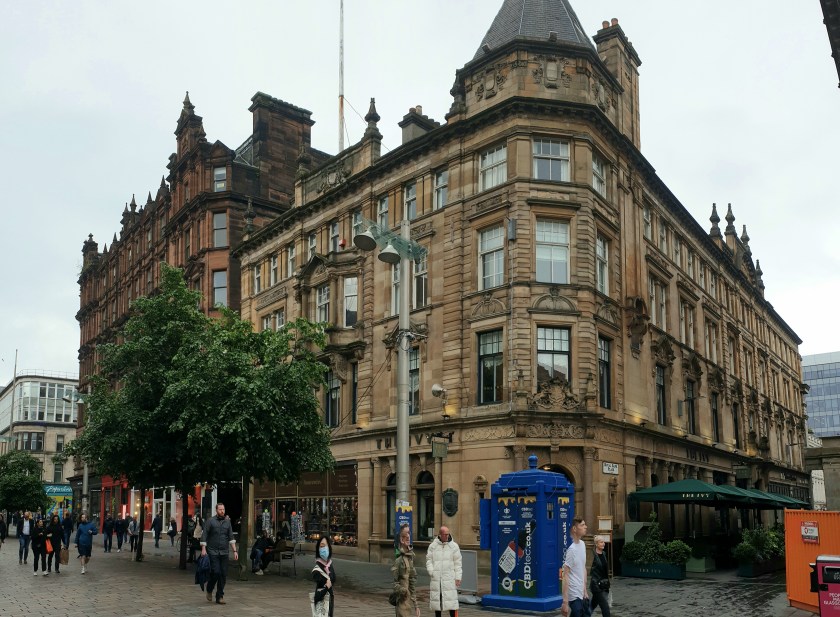
Yep, it’s still raining, and we’re still smiling as we do the mandatory walk around Glasgow. And a truly lovely city it is.

Nothing but diamonds and very expensive watches in Argyll Arcade.

Before watching Tom Cruise save the world, again, at the boutique Everyman Cinema where they serve you hot chocolate and cake – free, but it’s only one session a month. How good is that.

We’d booked a Hop-On-Hop-Off bus tour. We sat on the open top deck in the drizzle with our umbrella, but we did get to see it all on this bleak day.

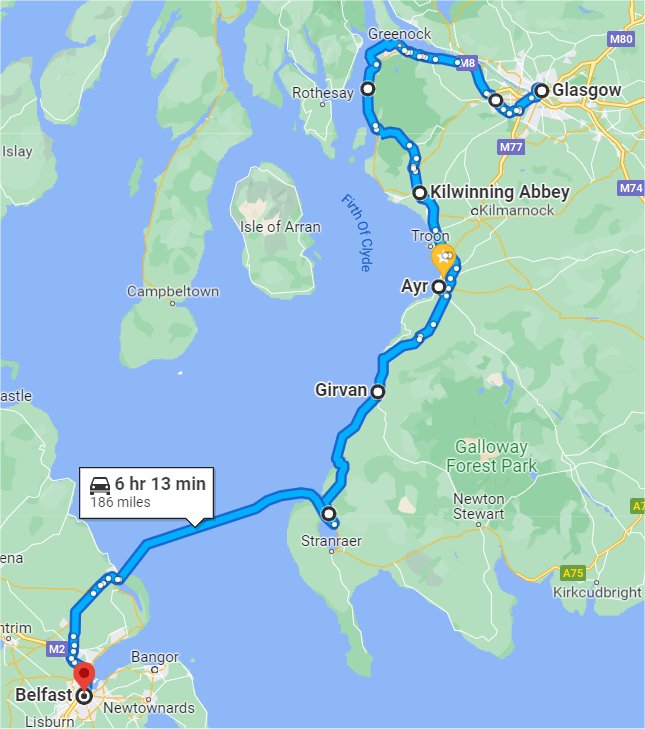
Thu 9/6  – Glasgow to Belfast

Come on, look at those skies. Move on Larry.

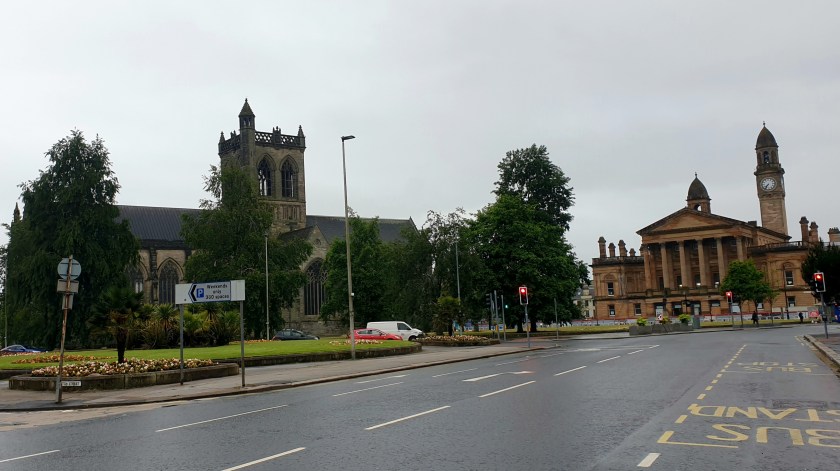
Paisley Abbey with Paisley Town Hall behind it.

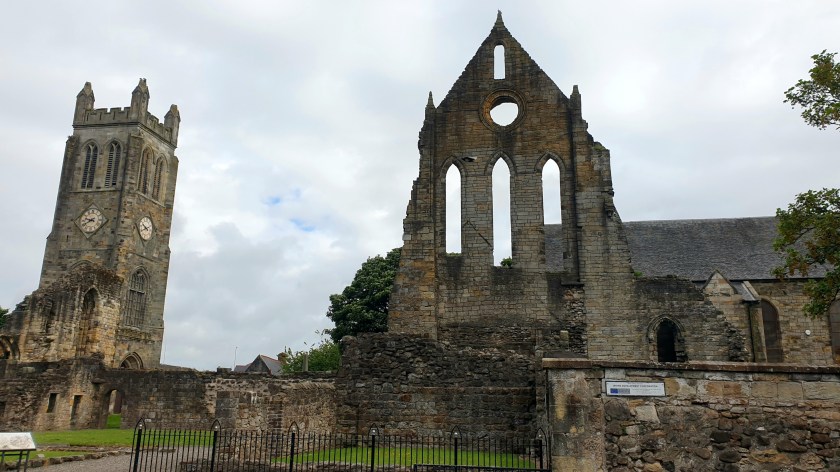
And what is left of Kilwinning Abbey which was founded in the late 1100s and ‘cast down’ following the Protestant Reformation of 1560, though its magnificent south transept still stands nearly to its full height today.

To little Girvan Harbour.

It was still raining as we caught the afternoon ferry to Belfast.

Bye Bye Scotland. Thanks so much for the pleasure, we loved every minute of you, rain and shine.

Fri 10/6 – Lay Day Belfast

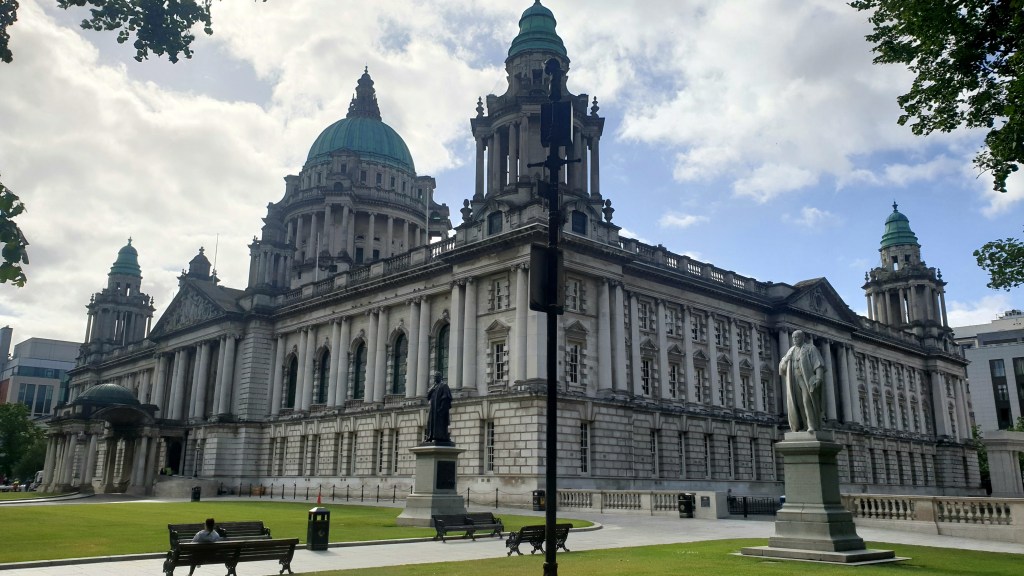
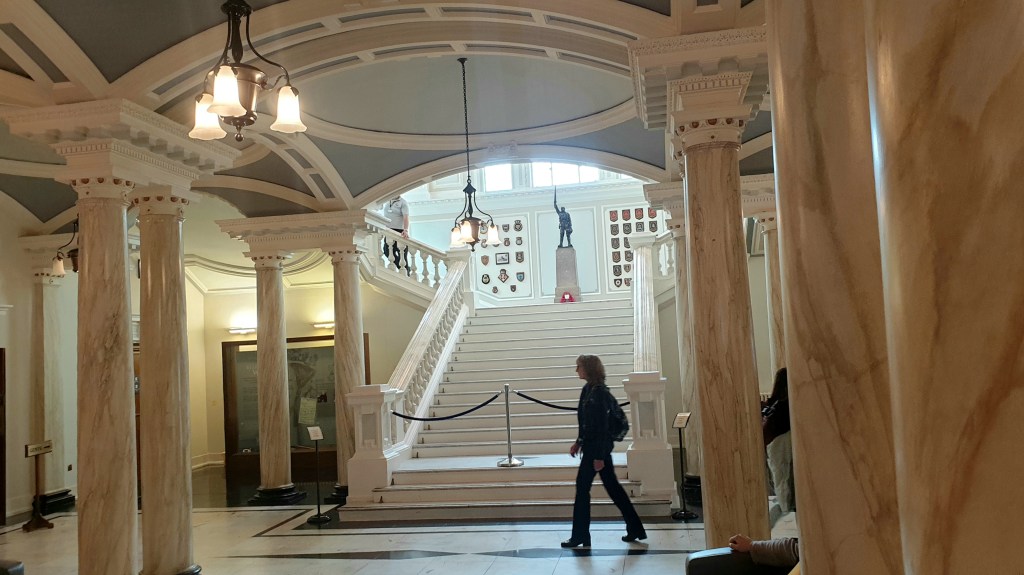
Belfast’s majestic City Hall.

And the obligatory Hop-On-Hop-Off bus tour.

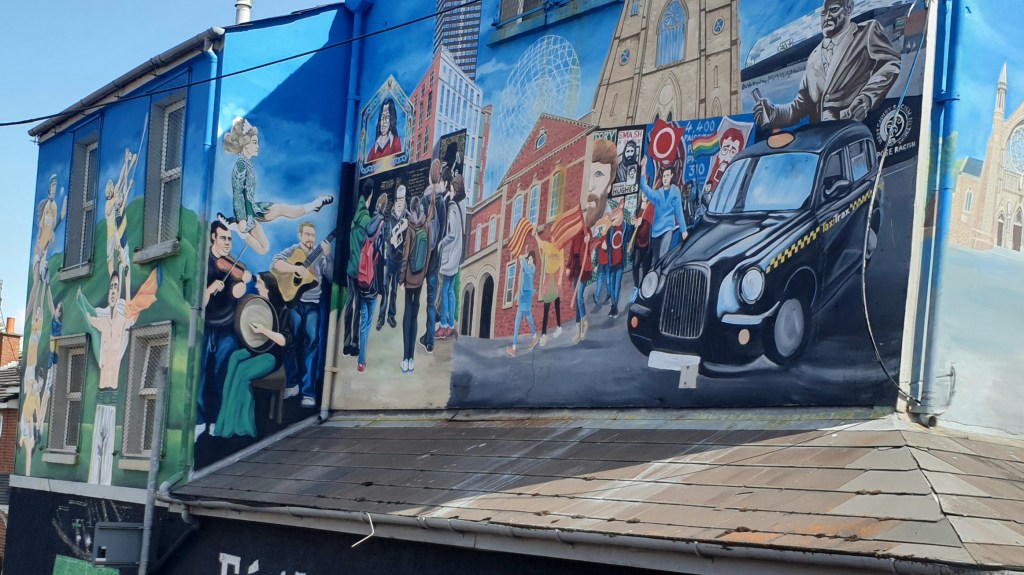
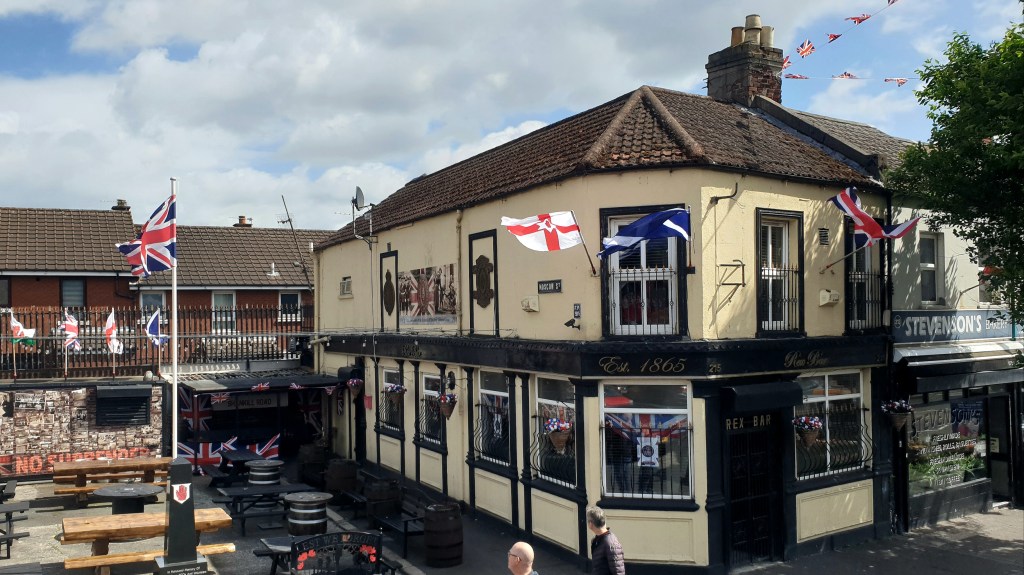
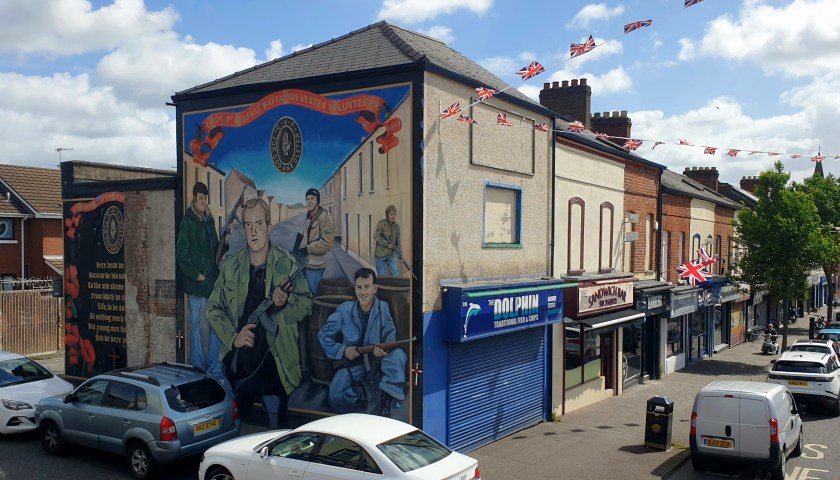
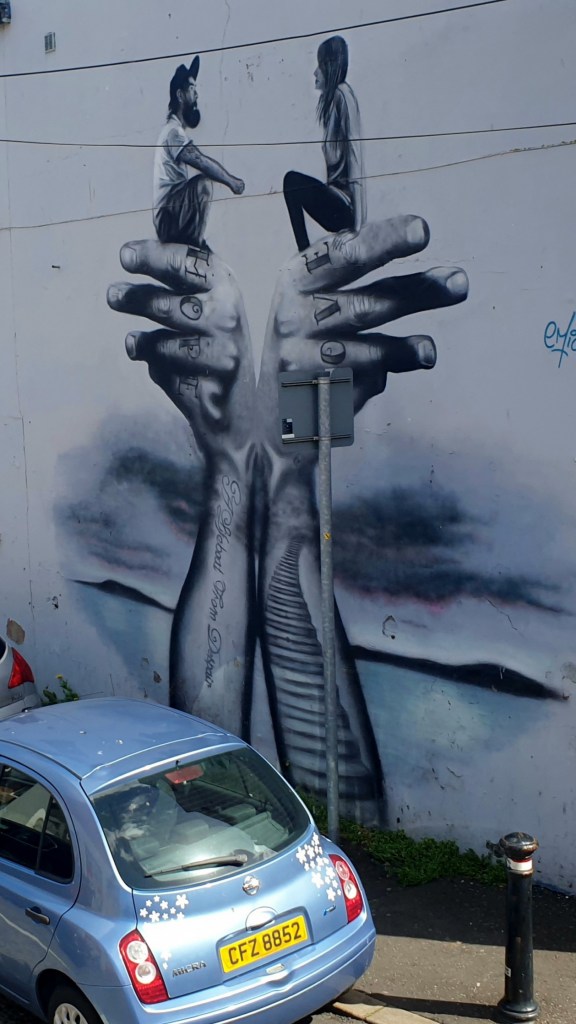
I find the whole story of Belfast to be quite heartbreaking. I’m in no place to make comment but it does anger me that religion is often blamed, but the truth is that true religion has, and never has had, anything to do with it. In fact, from where I stand, true religion is its only answer.

Hens Party Belfast style – pedal harder girls.

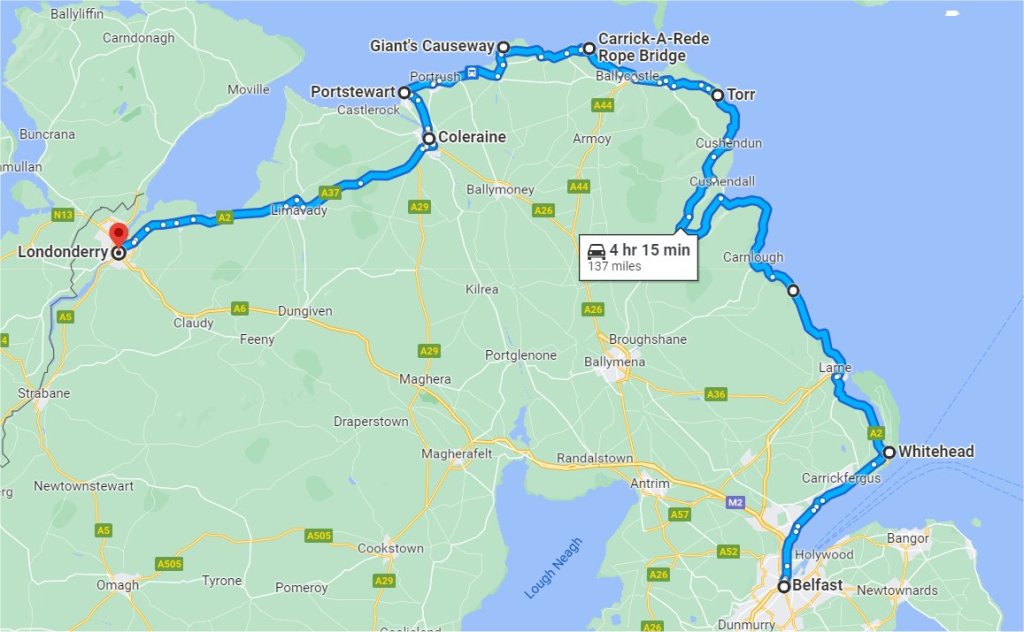
Sat 11/6 – Belfast to Londonderry – 215klm

On the road early today, there’s a lot to see.

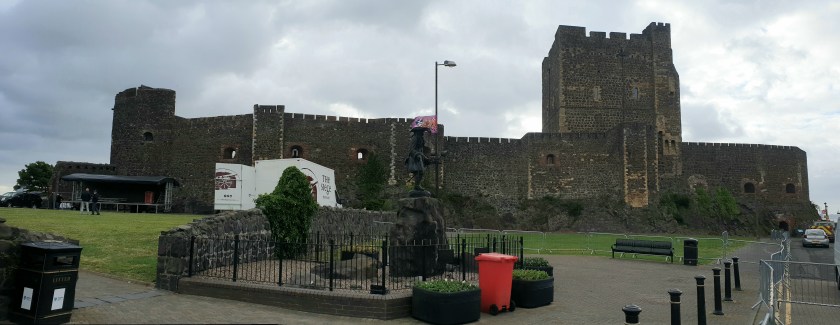
Carrickfergus Castle, built in 1177 and has seen its fair share of sieges. Not the best of pics – it’s hard to get good photos in the rain 😢

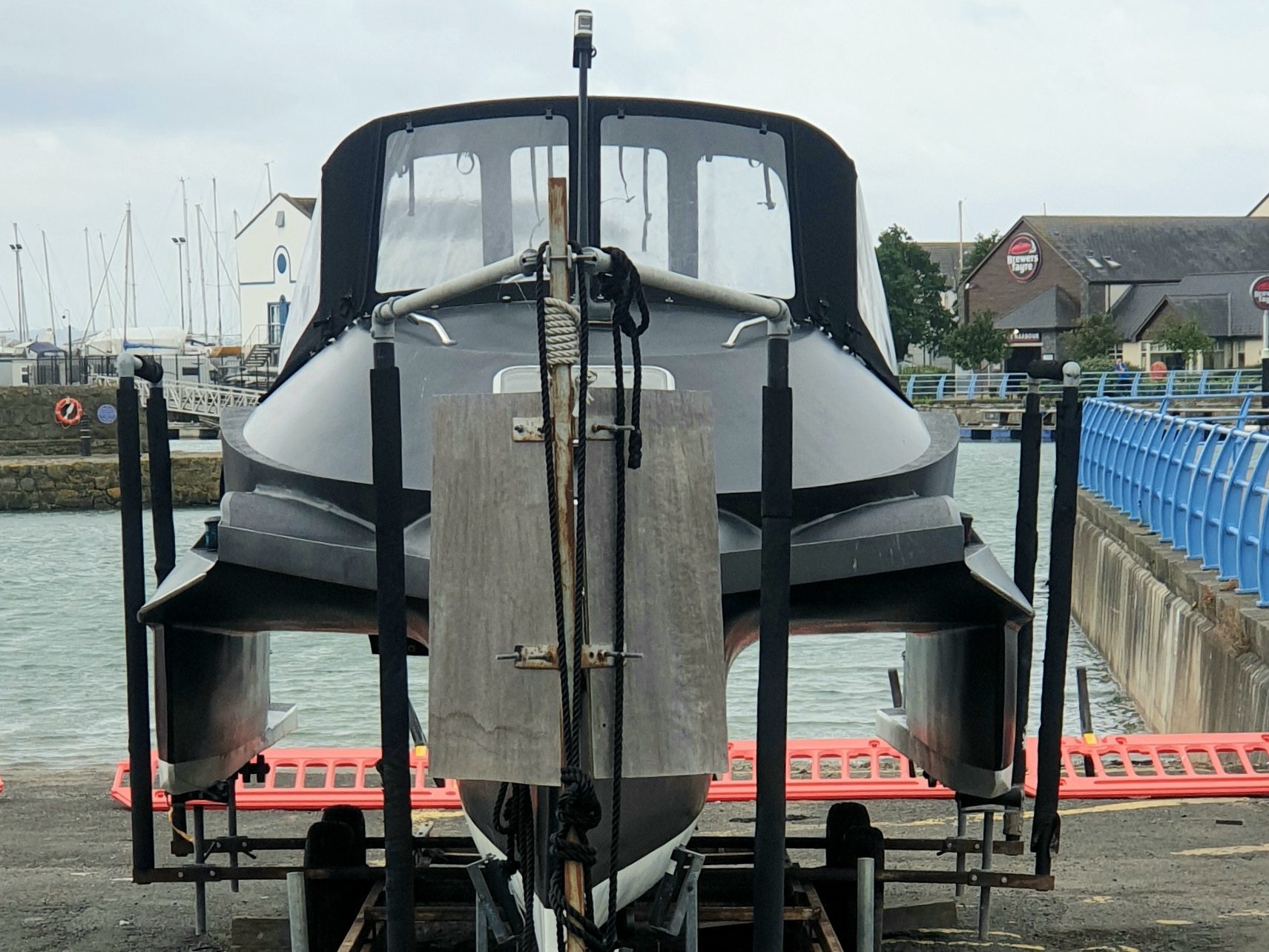
This could be interesting – on the hard next door.

Now TomTom has generally been very good 99.9% of the time. Our next effort was the .01% when it failed, and that possibly because I’d set a wrong perimeter.
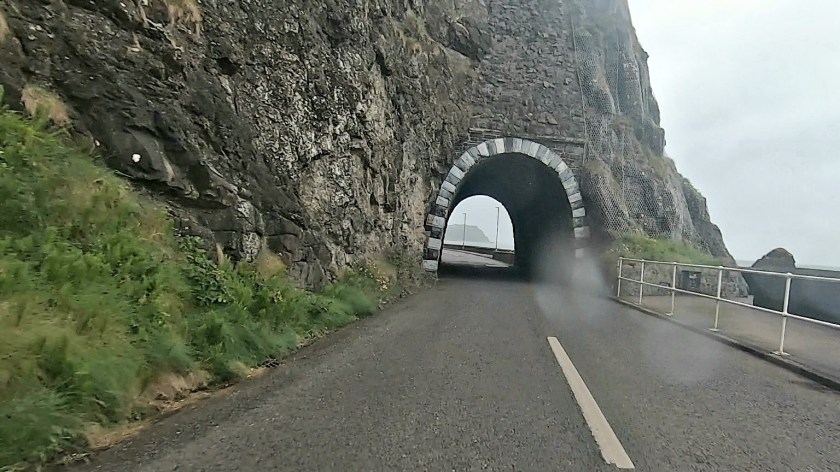
Anyway we ended up here, which looked dubious to start with on a 10% slope but deteriorated to deep gravel which isn’t the desired surface for a heavily laden touring bike. The upshot is that we came to a dead end before TT said sorry and took us back from whence we’d come. It’s a whole lot steeper than it looks, but going back up was easier than going down. The scenery was nice 😃

One way.

Cushendun. That’s a pretty bike hey, even if its not a Moto Guzzi.

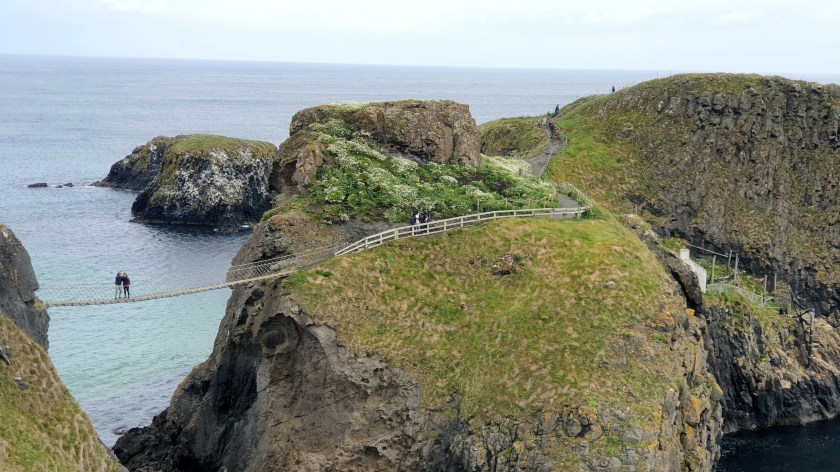
Speaks for itself. At least it was assessable whereas The Giants Causeway just up the road was awash with buses and people and officialdom. It was also bucketing down so we left it on our right.

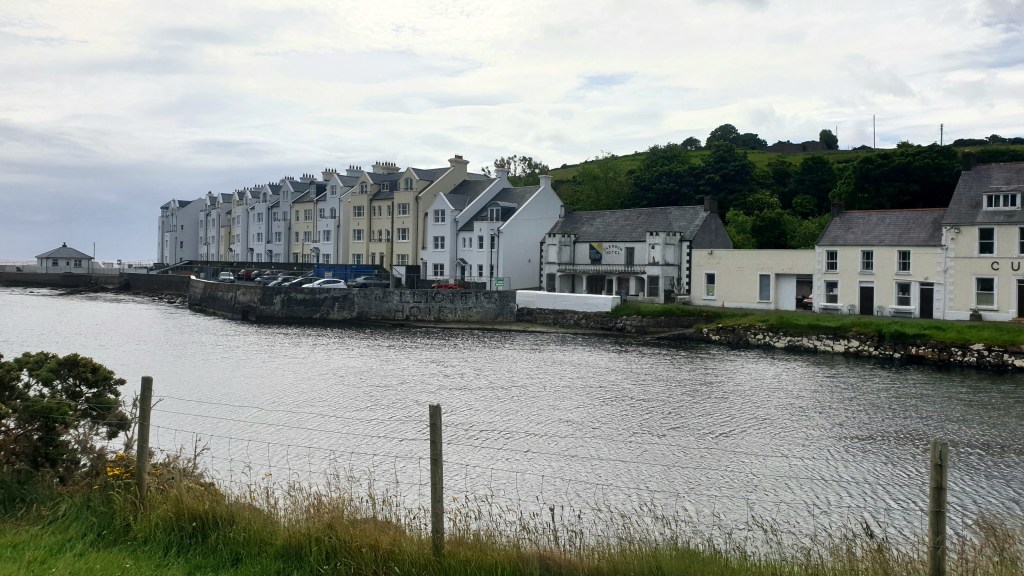
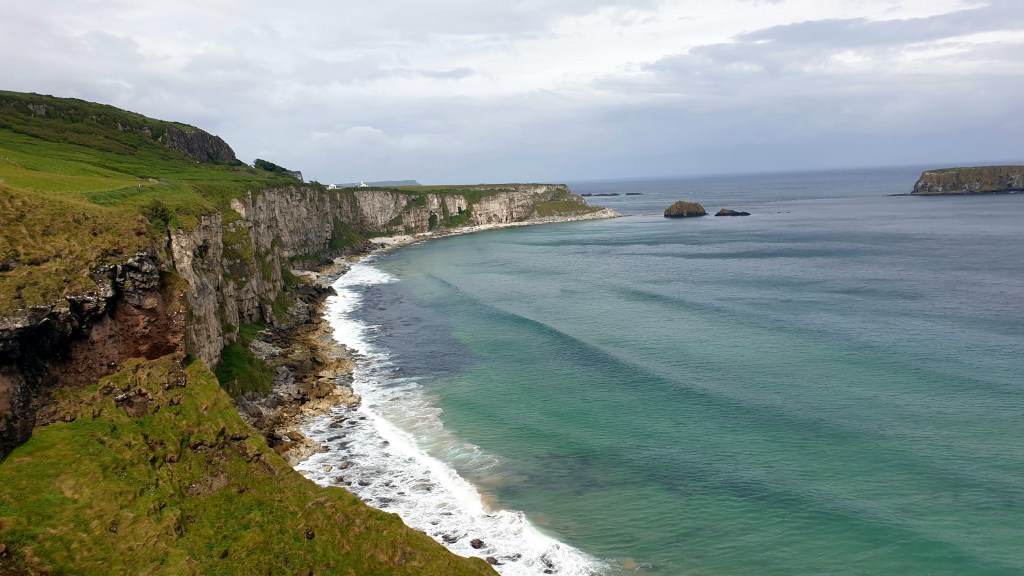
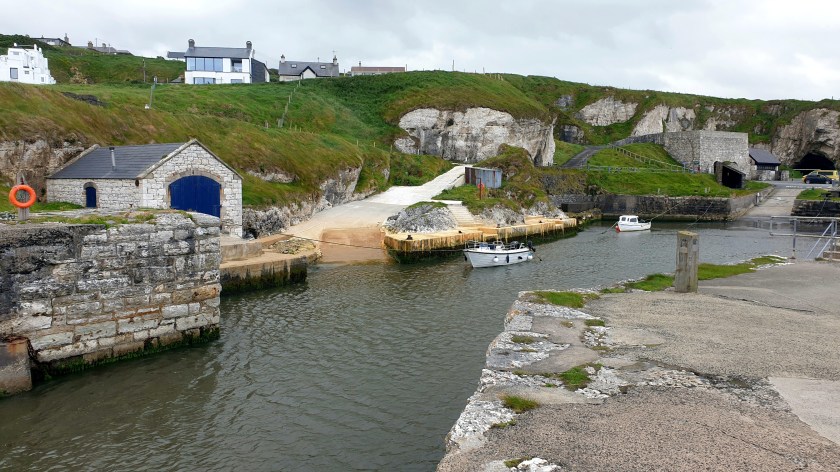
But not before popping into nice little Ballintoy Harbour in it’s comparative seclusion squashed between Northern Ireland’s 2 most famous tourist attractions.

Through Portrush which was very busy also and onto Portstewart where we propped at the old Rock Castle which was originally built in 1834. The castle was sold to the Dominican Sisters in 1917. Wikipedia says that the College “is concerned not merely with imparting knowledge and skills, which have their place, but, more importantly with training pupils to think, to evaluate and to make decisions.”
We had a brew and admired some brave person’s proclamation – go you good thing.

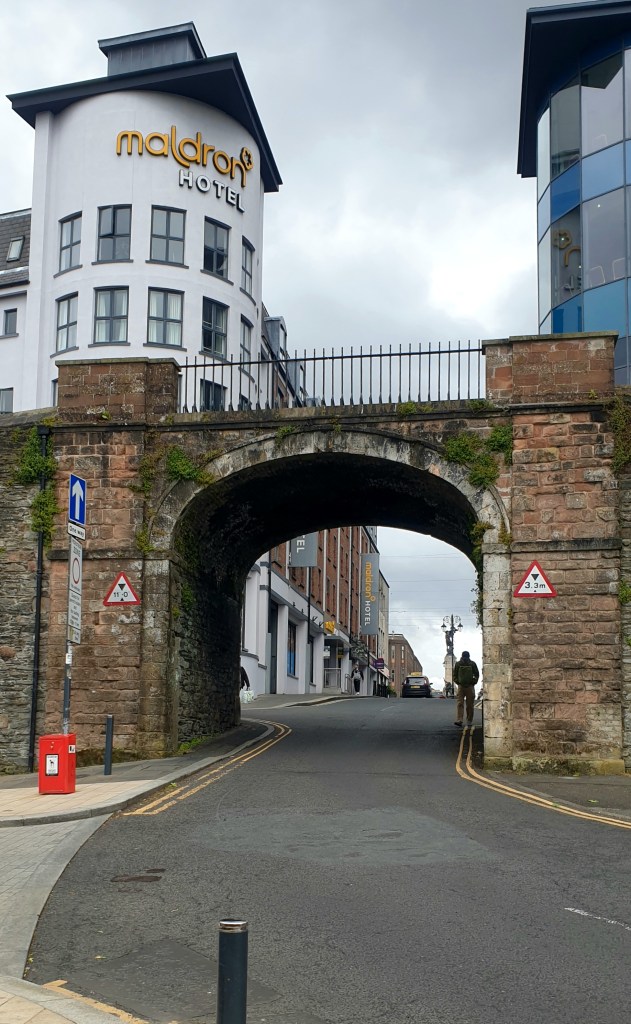
It started to rain in earnest so we pushed on to Londonderry with its city walls built between 1613 and 1619.

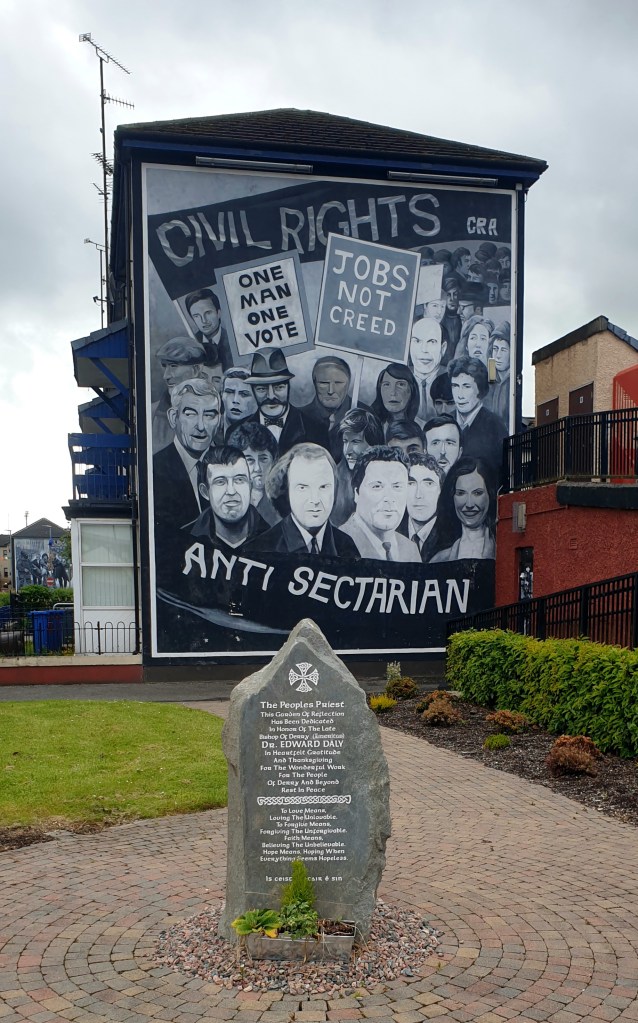
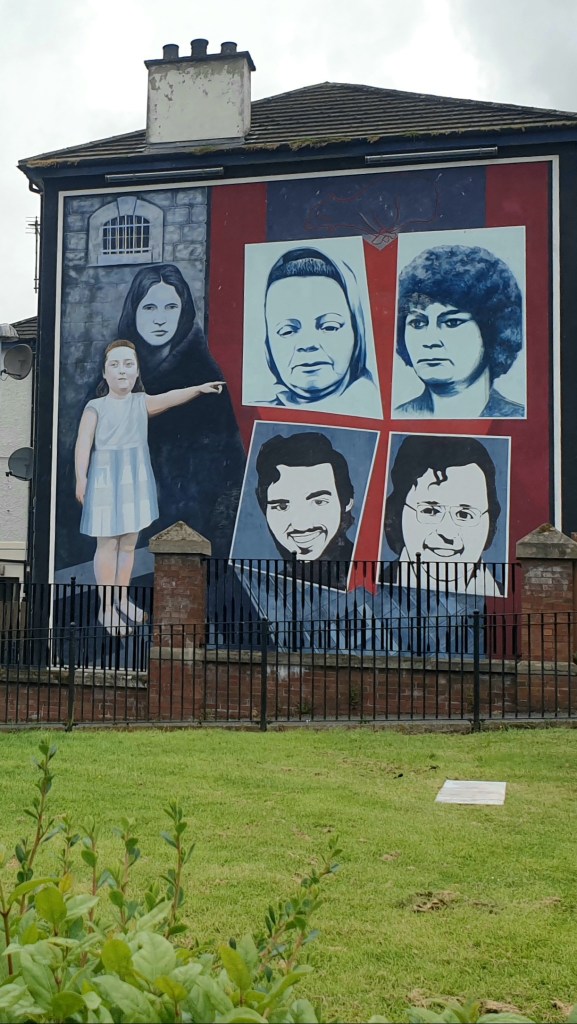
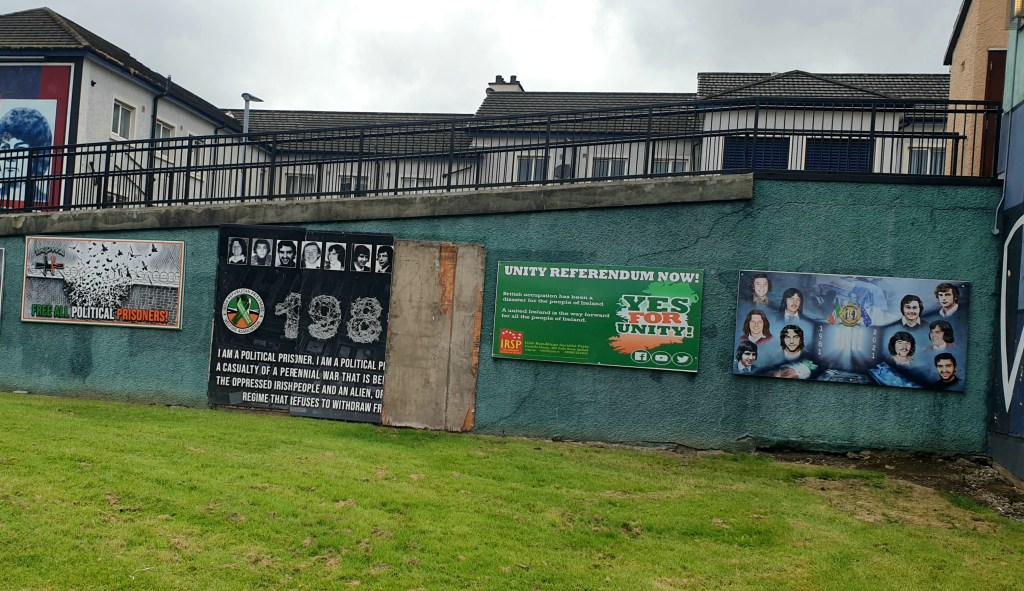
We really liked Northern Ireland and its busyness and party and beauty. But we couldn’t escape the sadness of the sense of an underlying vengefulness. For a country that has a ridiculous amount of monuments to Jesus Christ, those who control this place don’t know a damn thing about Him. It distresses me to be quite honest.

Tomorrow we’re heading south to Donegal – looks like rain 😜

Week 3 – Scotland

Mon 30 May – Sun 5 June
Edinburgh, Ballater, Inverness, Ullapool, Gairloch, Skye

Mon 30/5 – Edinburgh – Ballater – 265klm

This morning is overcast but promising to be dry until 11am, so we decide to trust the forecast and not tog up in our Panda Wear.

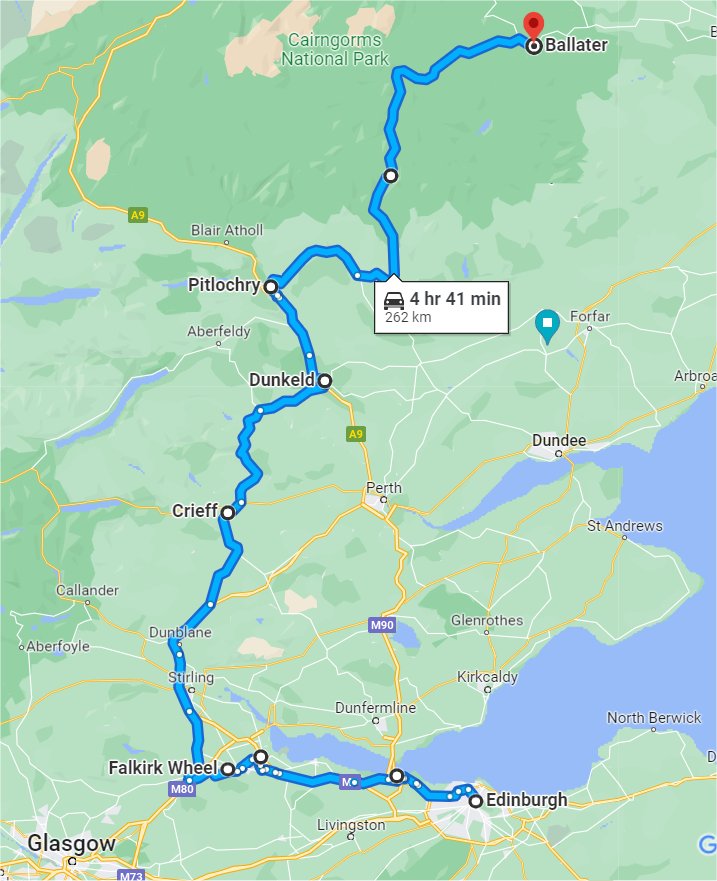
Today is a long day so it’s an early start. Leaving the fair city of Edinburgh with it’s abundance of classic buildings, we head west for the tiny seaport of Queensferry with it’s 3 famous bridges.
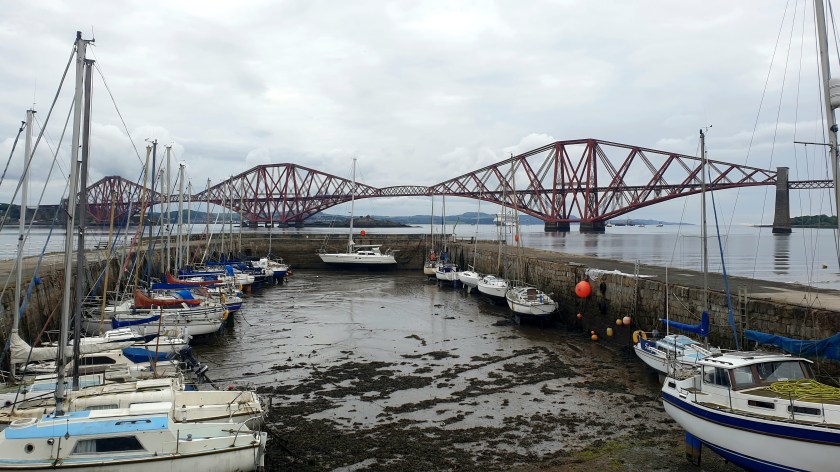
The Forth (rail) Bridge opened in 1890 and is a Scottish icon that is recognised the world over as the most famous of cantilever designs. The world’s first major steel structure, the Forth Bridge represents a milestone in the history of modern railway civil engineering and still holds the record as the world’s longest cantilever bridge. Regrettably the tide is out so this lovely little harbour isn’t showing at it’s best.

The Forth Road Bridge is one of the world’s most significant long span suspension bridges. With a main span of 1006 metres between the two towers, it was the fourth longest in the world and the longest outside the United States when it opened in 1964. The structure is over 2.5 km long with 39,000 tonnes of steel and 125,000 cubic metres of concrete used in its construction.
Right behind the Forth Road Bridge is The Queensferry Crossing which opened to traffic in 2017. The 2.7km structure is the longest three-tower, cable-stayed bridge in the world.

There was a cruise ship anchored in the roadstead which was just disgorging its horde of tourists, so there were buses everywhere as we left Queensferry and headed further west.

To The Kelpies. The Kelpies are rooted in Scottish history and heritage. Back in the late 18th and early 19th century you would have heard the clip-clop of heavy horses on the towpath , which is the inspiration behind The Kelpies, efficiently drawing barges of iron ore, coal and goods from Falkirk’s world famous Carron Iron Works along the canal to the bustling industrial hearts of Edinburgh, Glasgow and beyond.

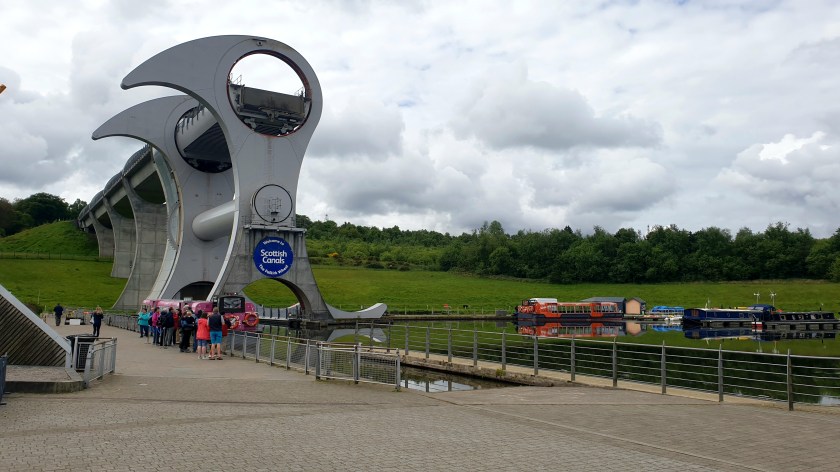
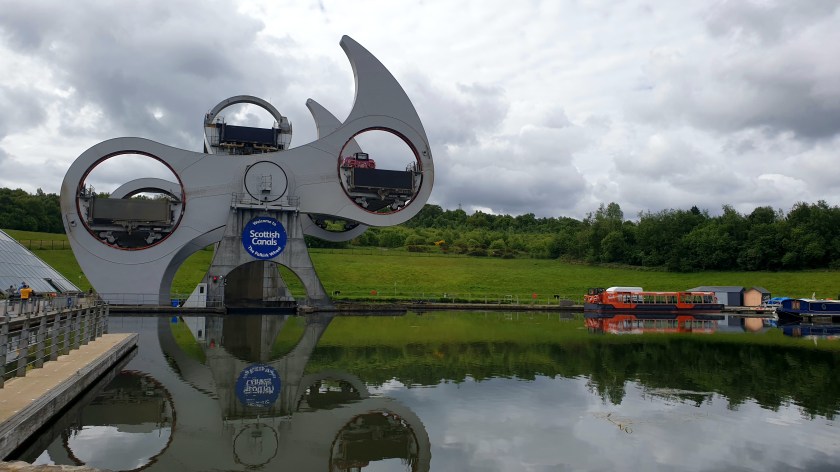
Just up the road is the Falkirk Wheel. Originally the Forth & Clyde and Union Canals were linked by a flight of 11 locks which took nearly a day to transit. These were dismantled in 1933. In 1994 the concept of a wheel as a boat lift was first considered as a solution for Falkirk and was opened in 2002. The world’s only rotating boat lift, The Falkirk Wheel links the Forth & Clyde Canal to the Union Canal 35 metres above, allowing vessels to sail through the sky thanks to a unique fusion of art and engineering – and only using the same power it would take to boil eight kettles.
It was now approaching the foreshadowed 11am weather deterioration so we donned our wet weather pants and headed north. Through Crieff where we filled up with fuel, and on to the lovely village of Dunkeld which sits on the banks of the River Tay where we stopped for bite to eat and a wander.

We’d only had a little rain up until now as we headed to Pitlochry and into The Highlands where we were met with heavy rain, 5c and blowing a gale which isn’t pleasant at any time but I suppose this is what Scotland is known for so we soldiered on.

Despite the inclement conditions the countryside was still stunning. Yep, there’s still snow up there behind the ‘Old Bridge of Dee’, which was built around 1740.

And so to Ballater, close to Balmoral Castle. We stood in the rain as I tried to contact our landlord for the night only to find she’d locked herself out. So we stood in the rain some more and waited for someone to rescue us with a spare key. Norma wasn’t too impressed, nor could I blame her as she’d endued quite enough for the day without a whisper.

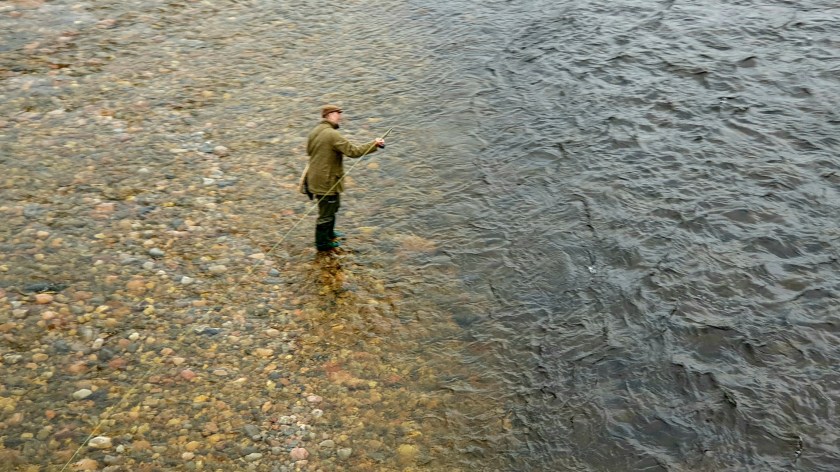
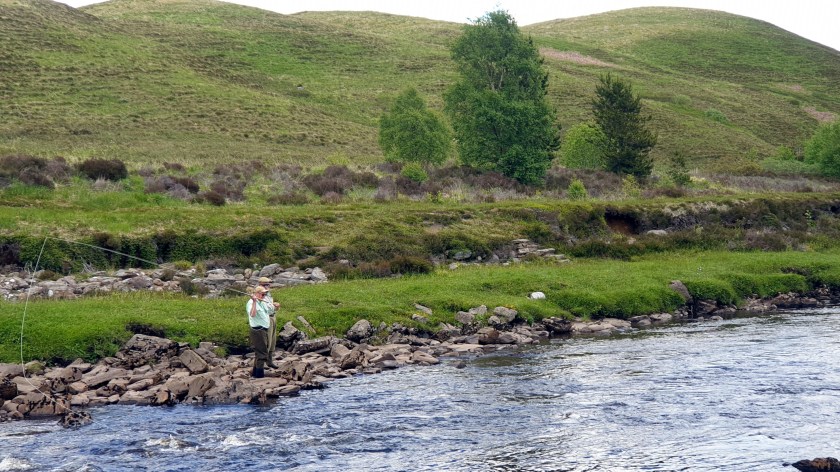
And this guy working a fly under the bridge.

Tue 31/5 – Ballater – Inverness – 220klm

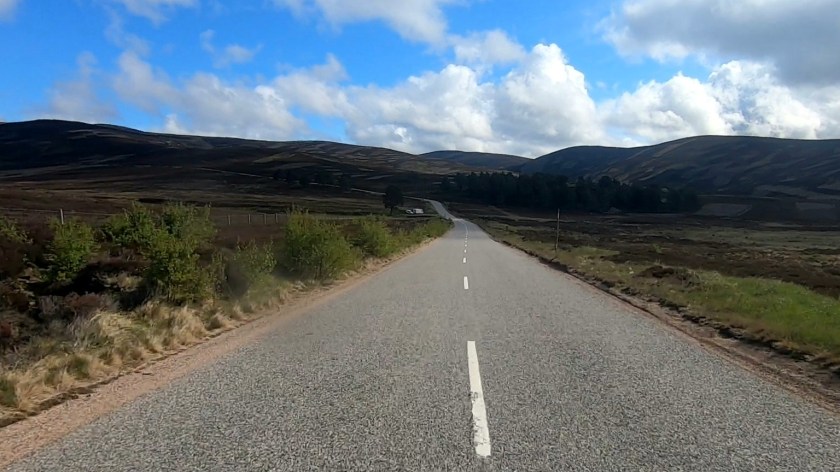
The sun was trying to shine as we took our leave of Ballater and ventured into more of Scotland’s breathtaking Highlands.

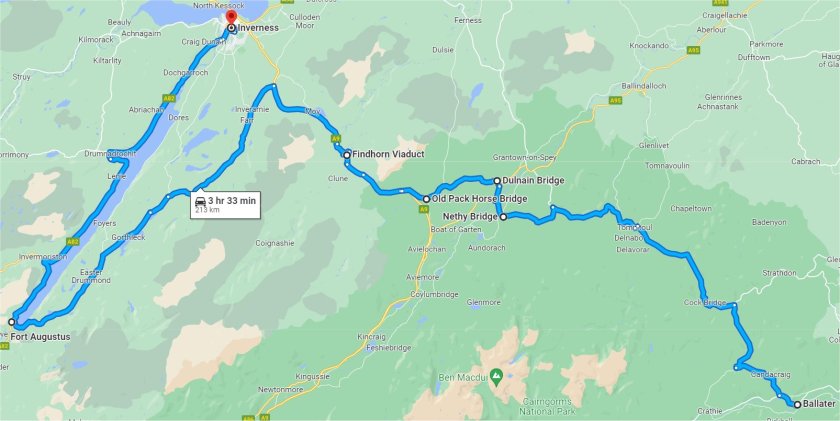
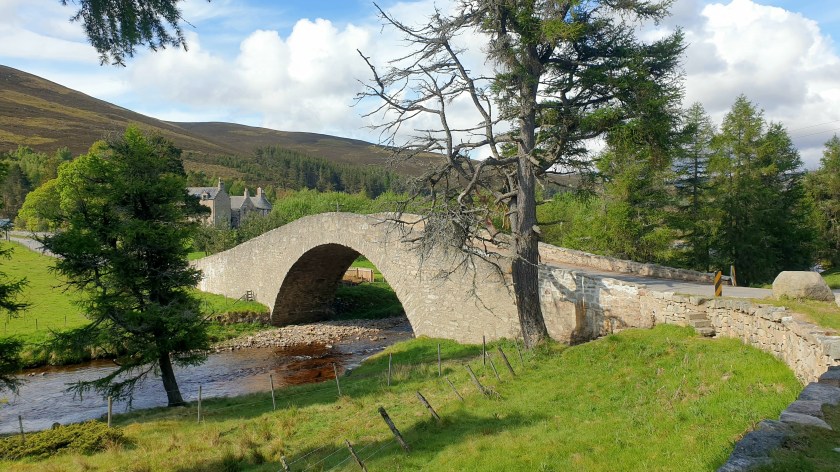
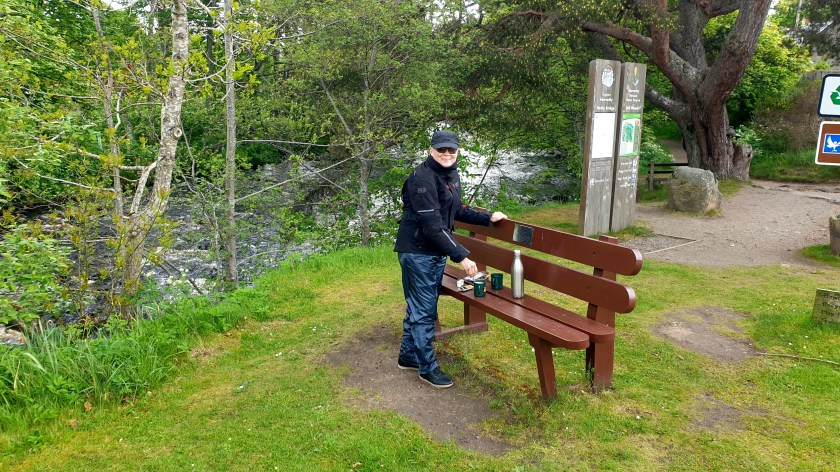
Across Gairnshiel Bridge on the border of the Queen’s Estate, to Nethy Bridge where we stopped for a brew. As you can see we weren’t trusting the weather but we are smiling.

The Broomhill Bridge crossing the River Spey, is considered the finest wooden bridge surviving in Scotland. It was built in 1894 and replaces an earlier one built in 1863.

Further on we came across Old Packhorse Bridge. One of the most iconic visitor attractions in the Cairngorms, the old packhorse bridge across the River Dulnain at Carrbridge was built in 1717. The bridge was built to allow funeral processions to access Duthil Church when the river was in flood.

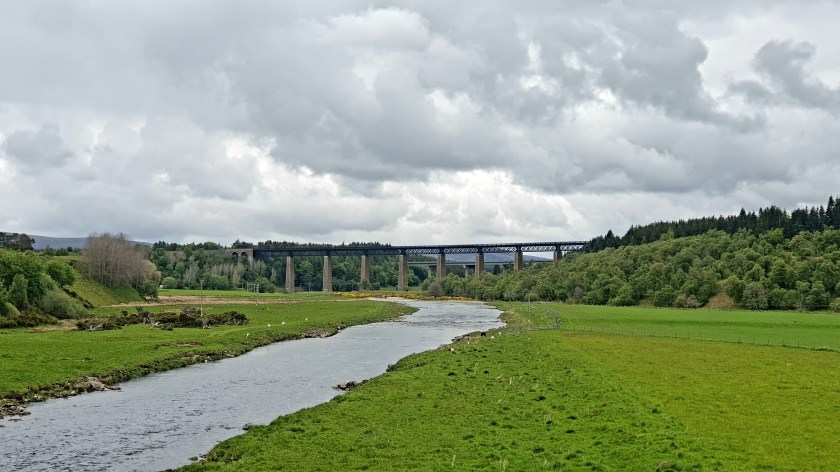
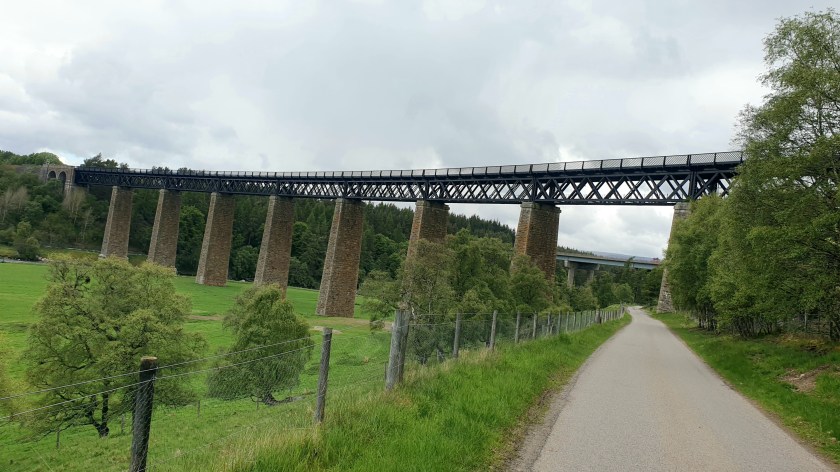
Findhorn Viaduct was opened in 1897. The bridge’s nine spans total 405m in length, and is up to 44m above ground level.

Just around the corner is the unused Divie Viaduct built in 1863. The 145m long viaduct carried a single railway track 32m above the river supported by seven 14m arches

We continued on NW then sharply SW to Fort Augustus, reaching there with 1 mile showing on the fuel gauge – but I know that is 10 miles out 😜
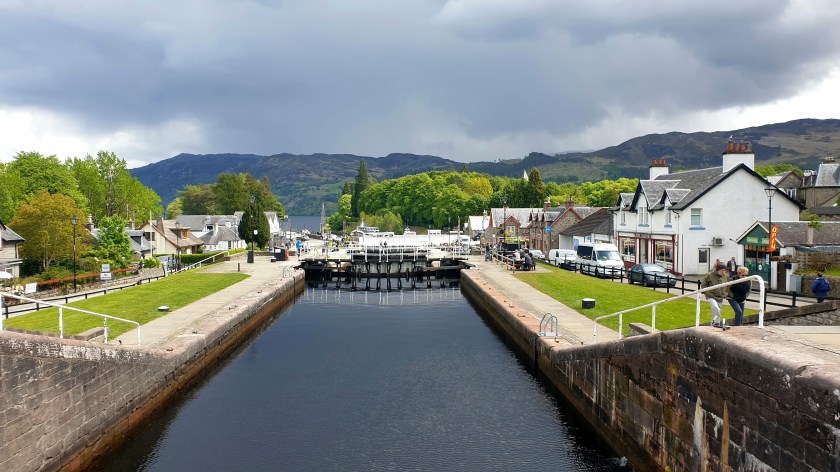
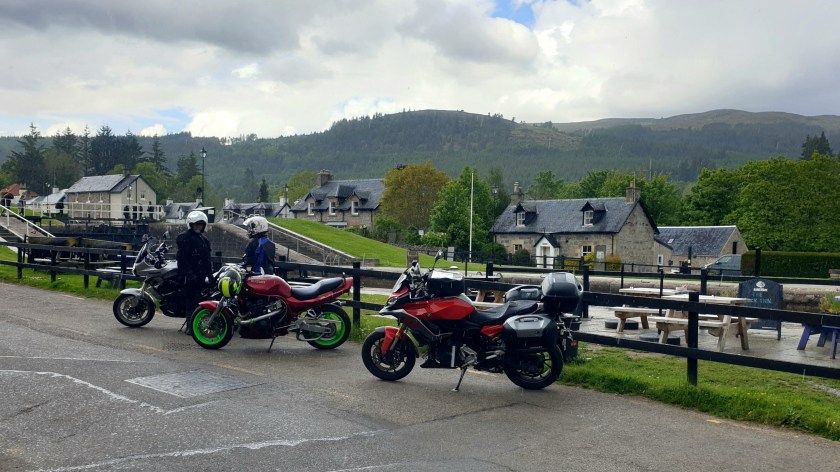
Situated on the southern tip of Loch Ness, and lying on the 60 mile long Caledonian Canal, Fort Augustus is a very popular tourist attraction. It was packed as we stopped for lunch. We snared a table under an awning as a thunder storm had many scurrying for shelter.

And so to Inverness following Loch Ness’s western shore – no monsters today.

Wed 1/6 – Lay Day In Inverness

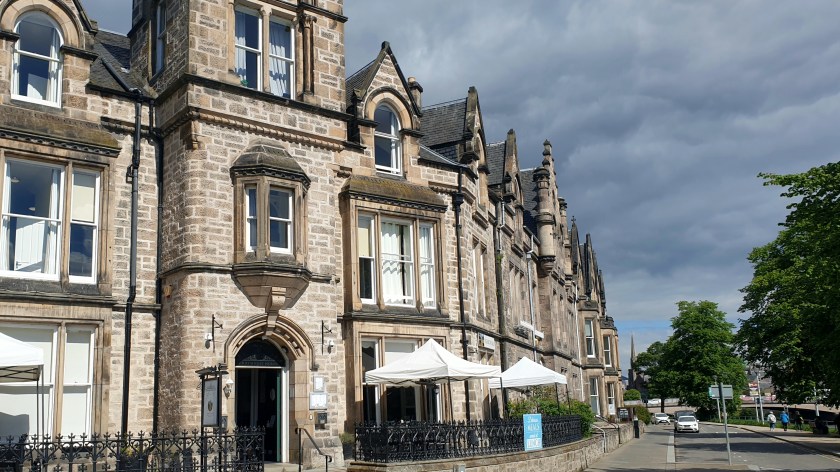
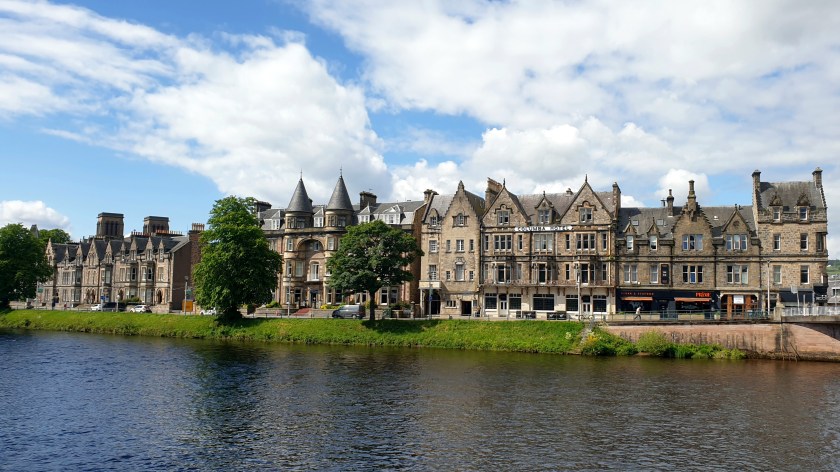
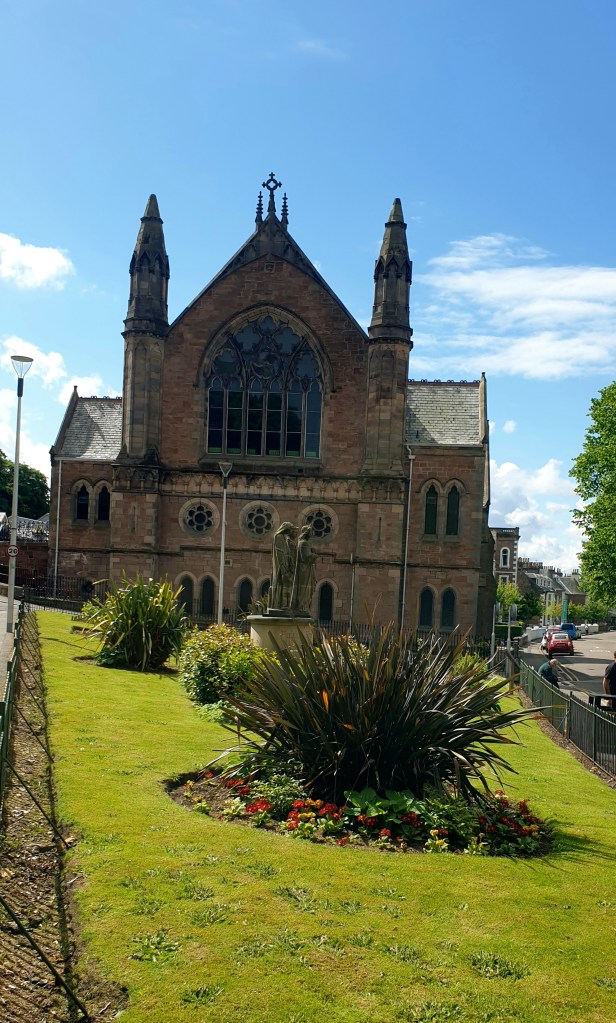
Blue skies as we wandered the pleasant town of Inverness.

Thur 2/6 – Inverness – Ullapool – 178klm

With summer finally arriving in Scotland we left Inverness with smiles at the lovely conditions. A quick peek at the Kessock Bridge crossing the Beauly Firth. This was opened in 1982 and has a total length of 1056m with a central span of 240m.

We headed north.

To Shin Railway Viaduct. Opened 1868 and still in use, it comprises a 85m lattice girder main span and five stone approach arches, each of 9m span.

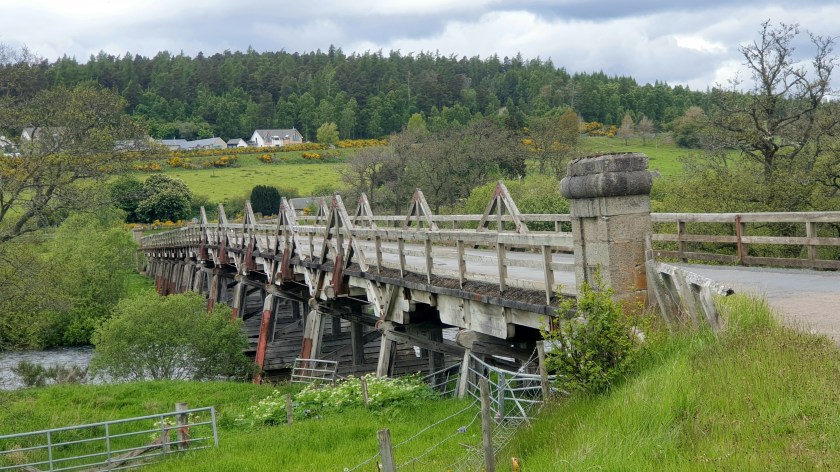
A U turn at Lairg led us through some very remote, single laned and heavily plantationed country to the Old Oykel Bridge built in 1823, and replaced in the 1930s with an identical looking bridge right next to it.

With these guys working a fly just downstream.

There’s some rugged country through here.

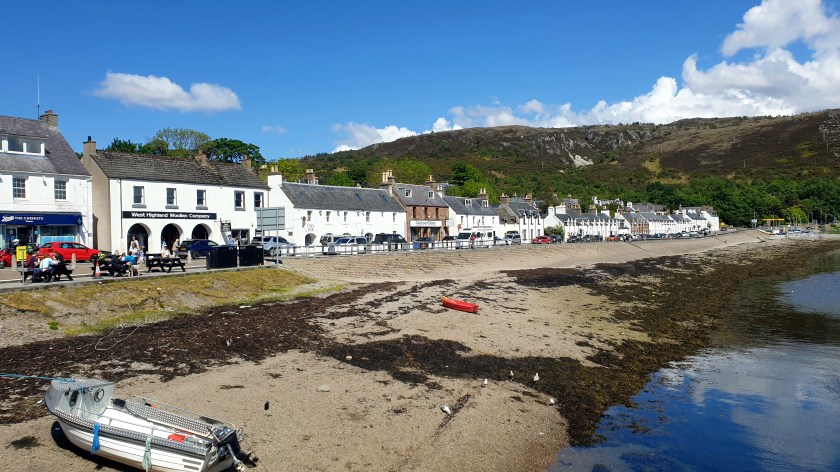
To Ullapool which was literally packed with tourists. We’d booked our cheapish room back in February and it cost A$258 for a single night then, which is our most expensive accommodation – lots dearer now, and nothing to be found.

Fri 3/6 – Ullapool – Gairloch – 95klm

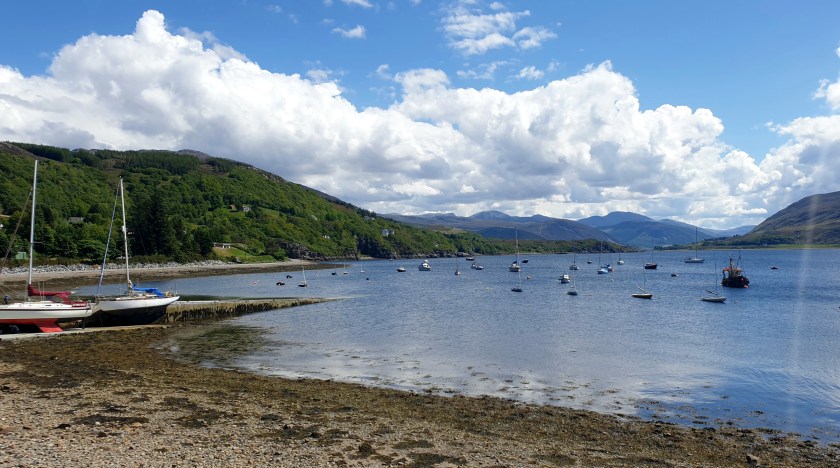
Some pretty views leaving town.

And ran into this bunch of 13 guys, mostly young, and all ex or current employees of Triumph Motorcycles. They where all riding small capacity Japanese bikes and mostly older 2 strokes. We had a brew.
Pretty.

Barren.

And beautiful.

We arrived in Gairloch. Where our accommodation is a mere A$245 for the night 😒
But hey, its Friday, and we all know what that means – single scoop for A$5 😂

Sat 4/6 – Gairloch – Skye – 225klm

Another longish day in glorious sunshine. More of this:

A brew at Shieldaig.
Actually we’re not brewing on this trip. On our previous two trips we’d carried an espresso maker with cooker etc. This time we’re carrying stainless flasks and using instant coffee. Takes some of the romance out of it, but its so much easier.

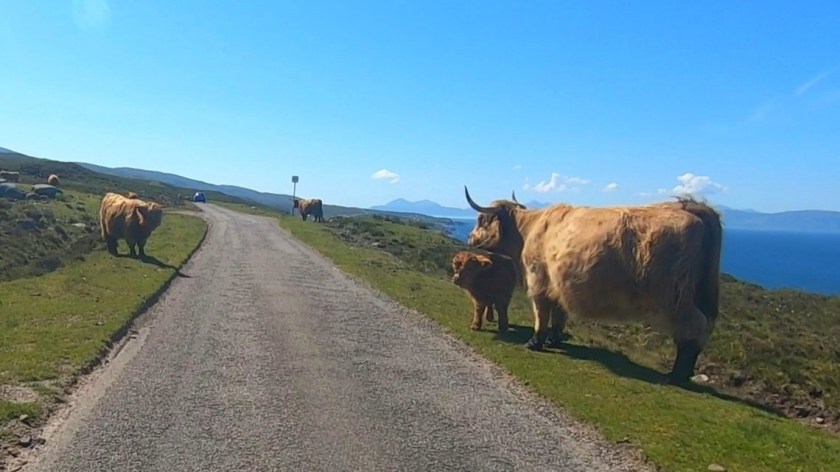
More remoteness and shaggy cattle of the Scottish Highland Breed.

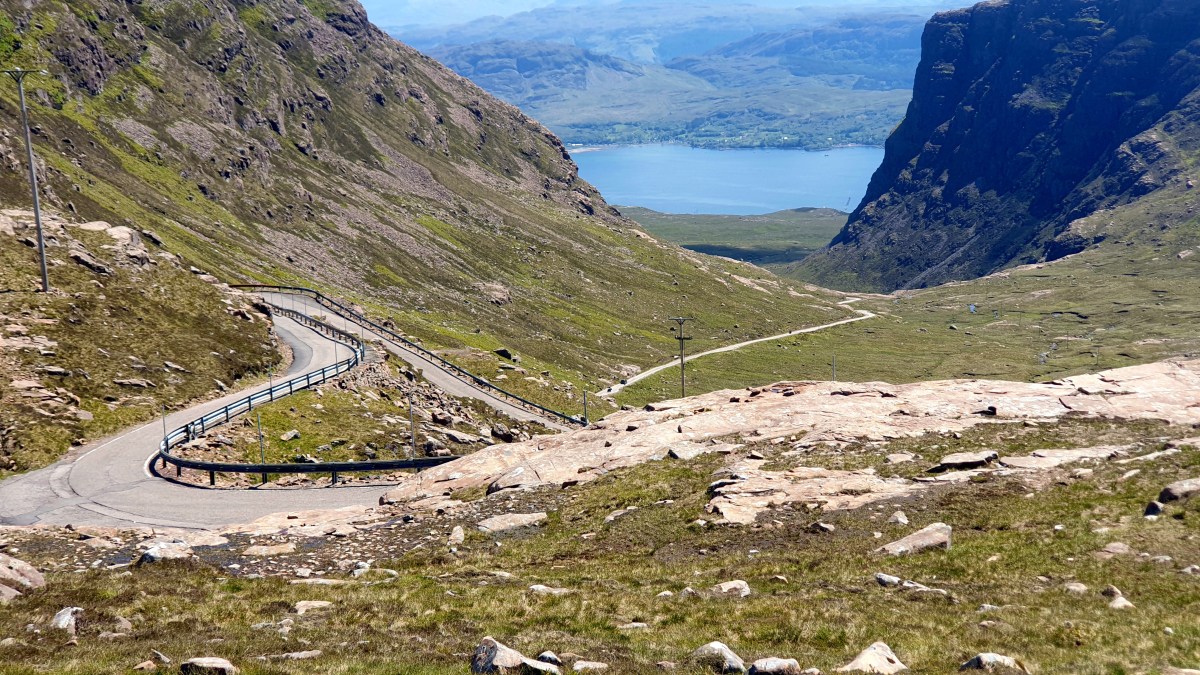
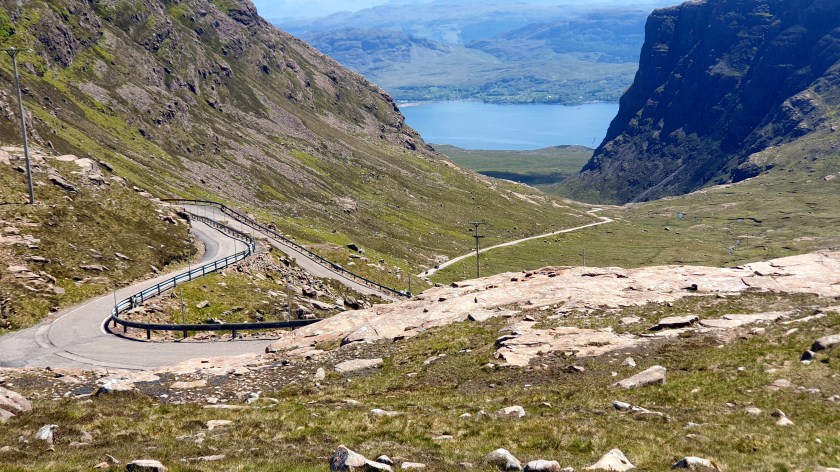
The top of Applecross Pass looking out towards the Isle of Skye.

And the infamous Applecross Pass. Its pretty impressive to look at but no big deal to ride except for the fact that its mostly singled lane.

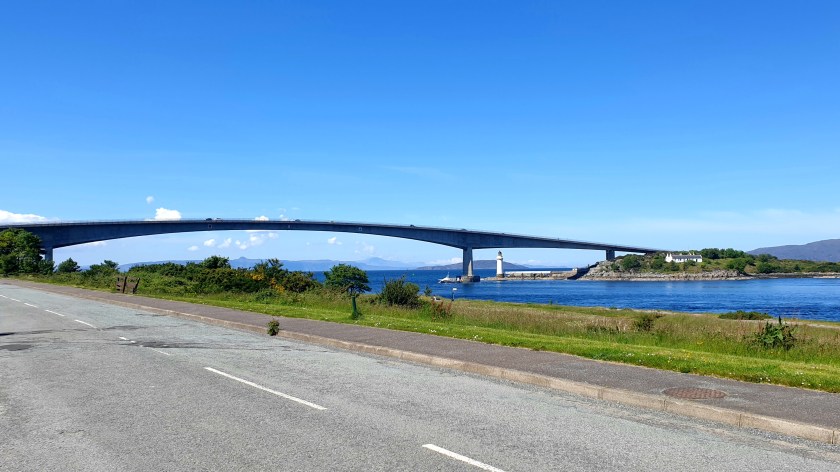
And across to the Isle of Skye where we’ll take a lay day.

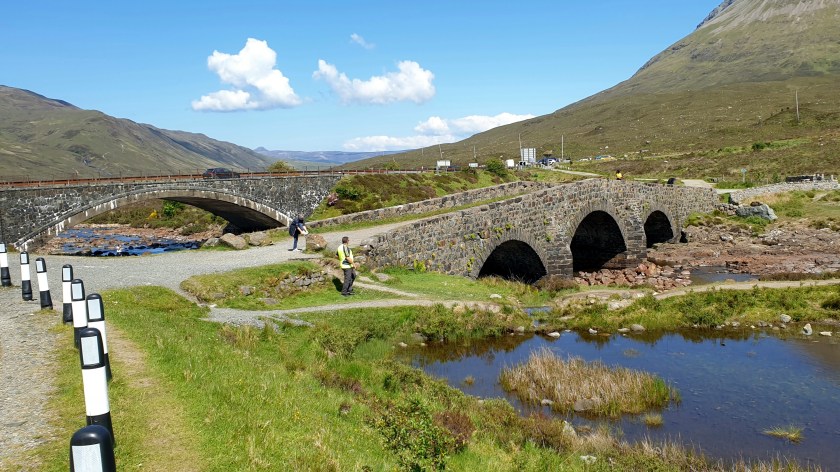
The Sligachan Old Bridge, built between 1810 and 1818, and replaced in the 1930s with the bridge behind it.

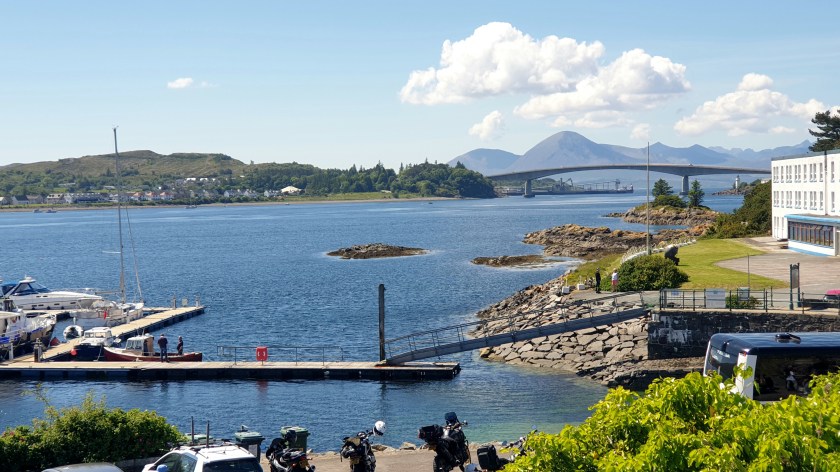
And so to Portree which is also packed with the tourists. I’m guessing this is quite the norm in these areas of Scotland, but this is also Queeny’s Platinum Jubilee (70 years) so the whole of the UK is awash with nostalgia and hopping into their cars and heading somewhere else to enjoy the 4 day weekend. Good for them, we’ll join them.

Sun 5/6 – Lay Day In Portree

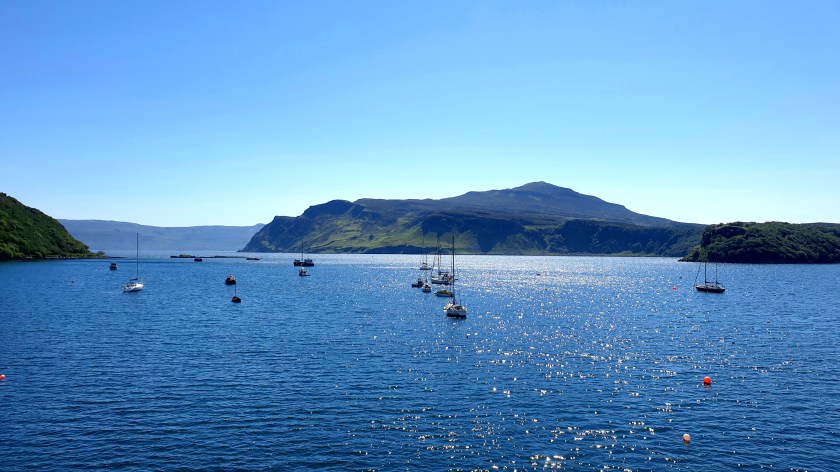
Portree being quite small, it didn’t take us long to scout out. Nice little harbour and that’s about it.

Tomorrow its off to Oban.