Wk 10 – NE Portugal & Spain

Week 10.
Porto – Vila Real – Ponfedarra -Potes – Reinosa – Laguardia

Mon 18th to Sun 24 July
Porto – Vila Real – Ponfedarra -Potes – Reinosa – Laguardia

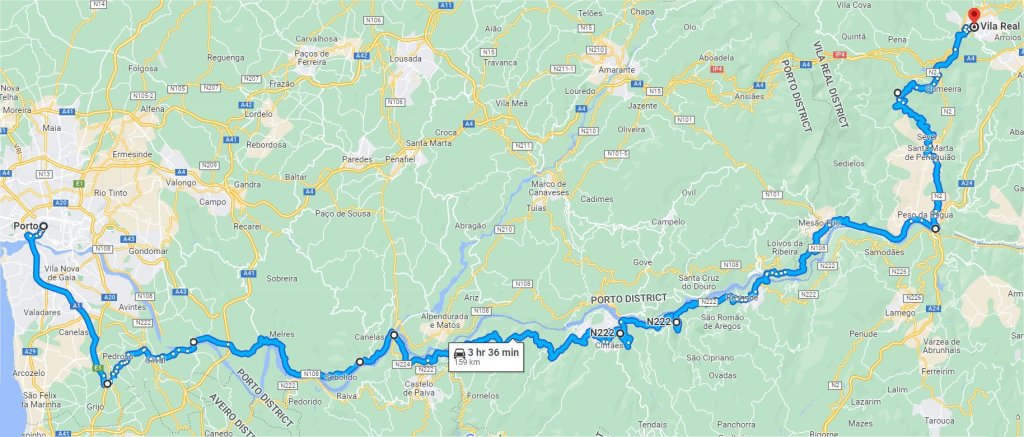
Mon 18 July – Porto to Vila Real – 160k
We started the day with 2klm showing on the ‘to empty’ gauge, which isn’t really an issue because that means there’s still 10klm in the tank. Except when the first 2 servos shown on the GPS are closed – then its fumes, but we found one eventually which said we took all 15.5ltr that the tank takes 😜

I’d checked the oil and brake pads with the rear pads getting close to too thin and the oil needing 1/2ltr so I sourced a BMW dealership virtually on the route. They had the required 5/40 oil (only BMW uses that stuff, I think) but not the brake pads, but they did have a new F900R on the floor, so they took the pads out of that. Now that’s service. I’ll fit them and fill her later. We hit the road.

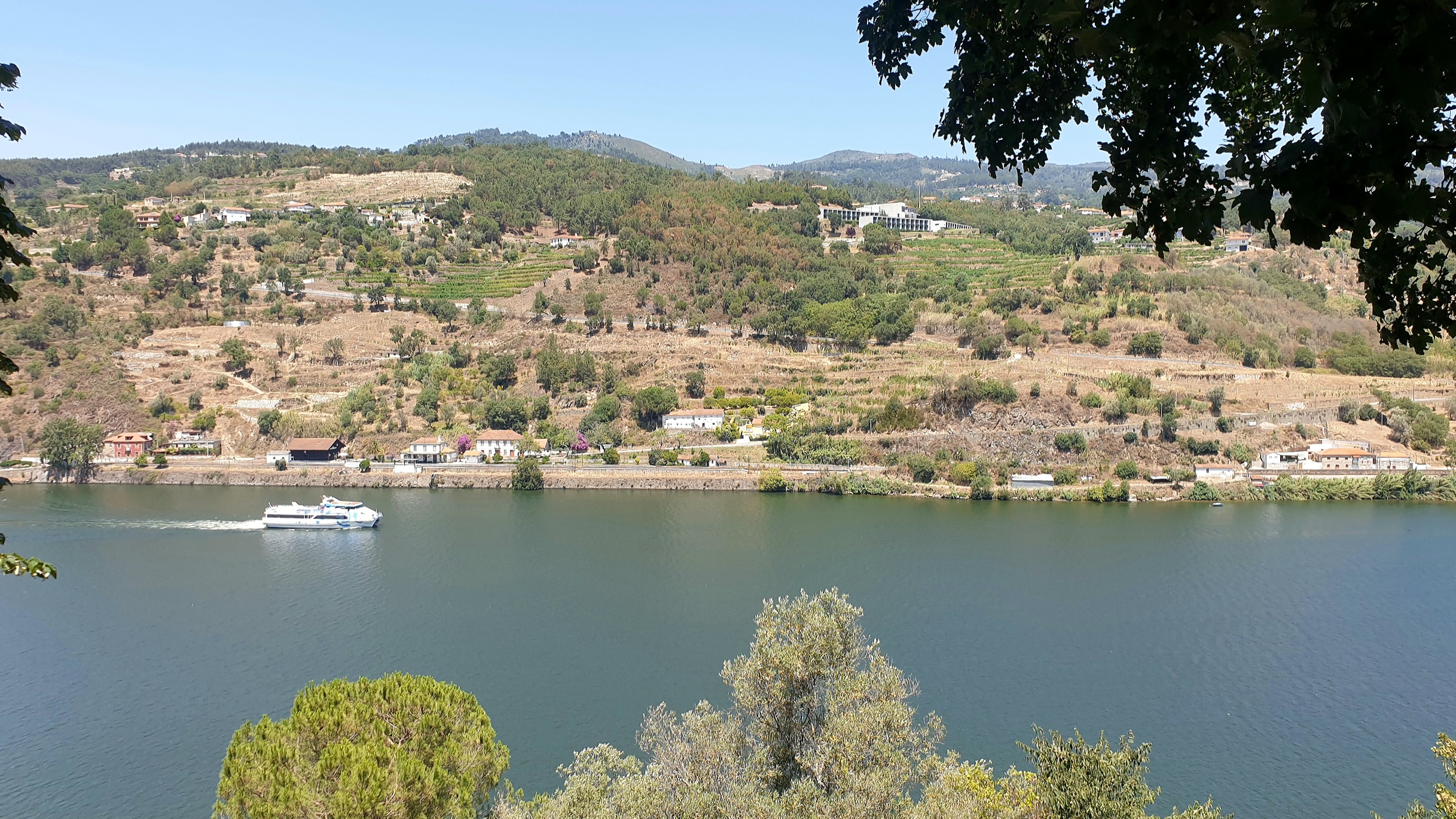
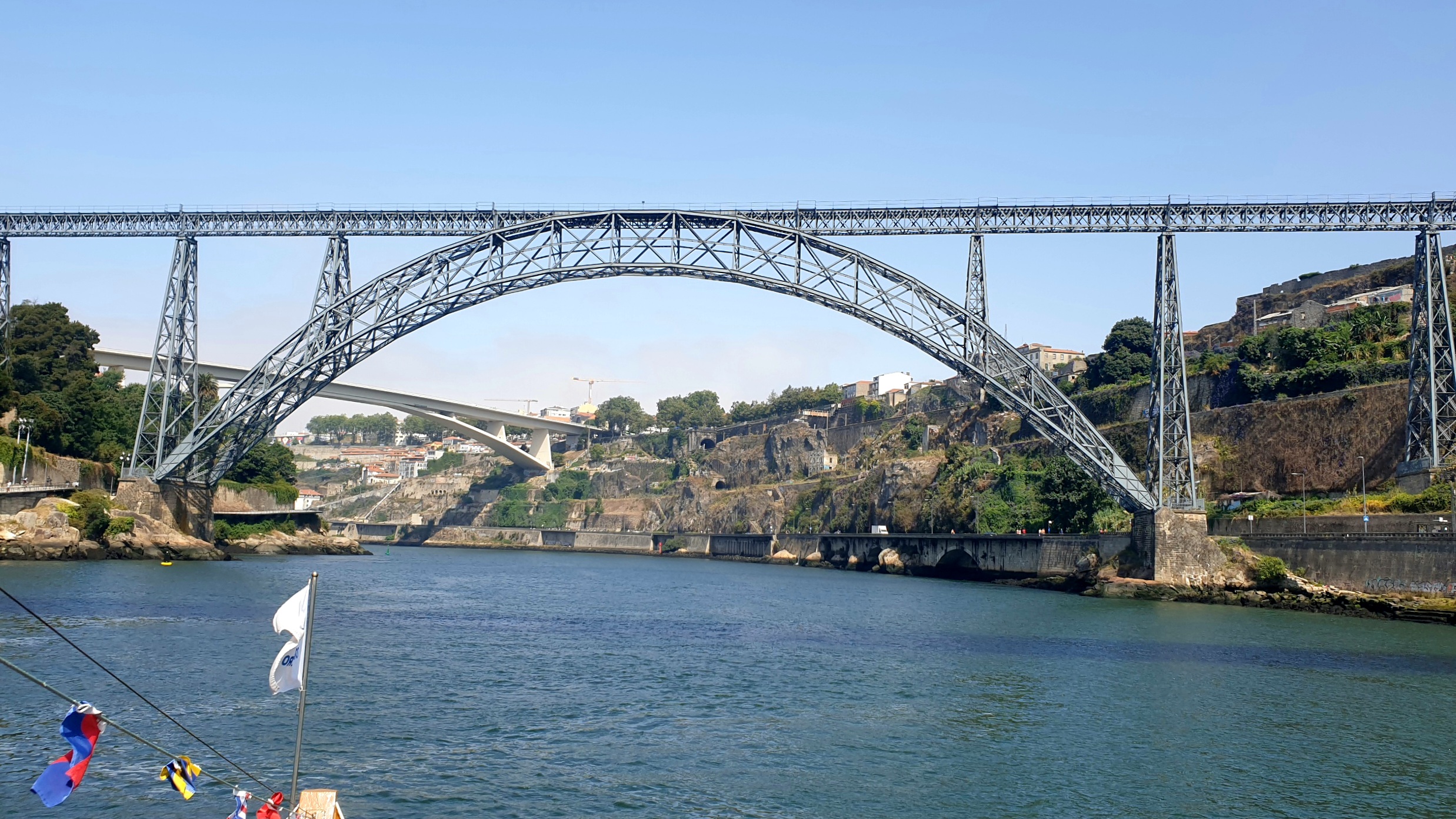
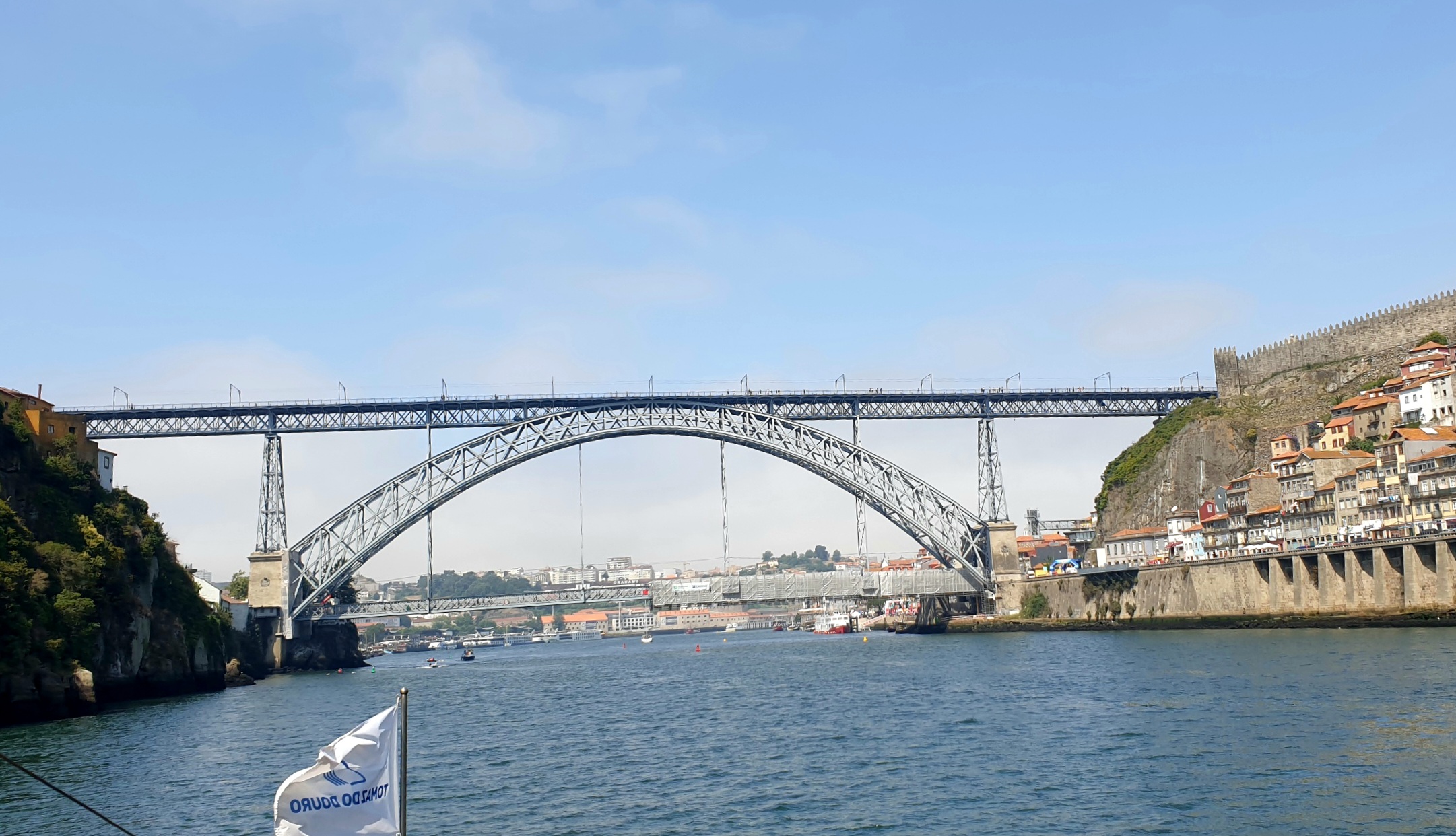
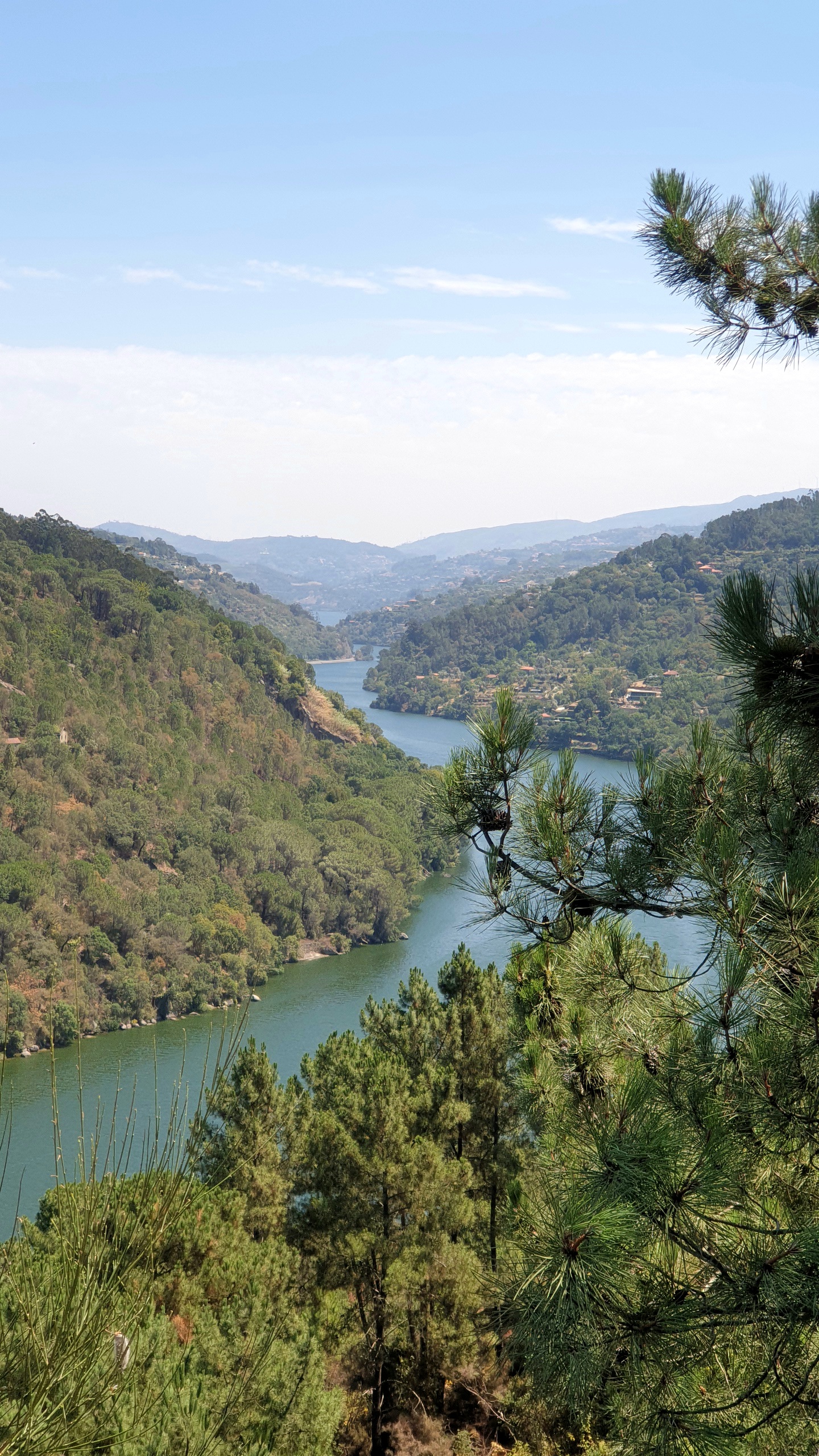
Today we traversed 100klm east straight up the Douro Valley and mostly following the amazing Douro River with its myriad of twists and turns.
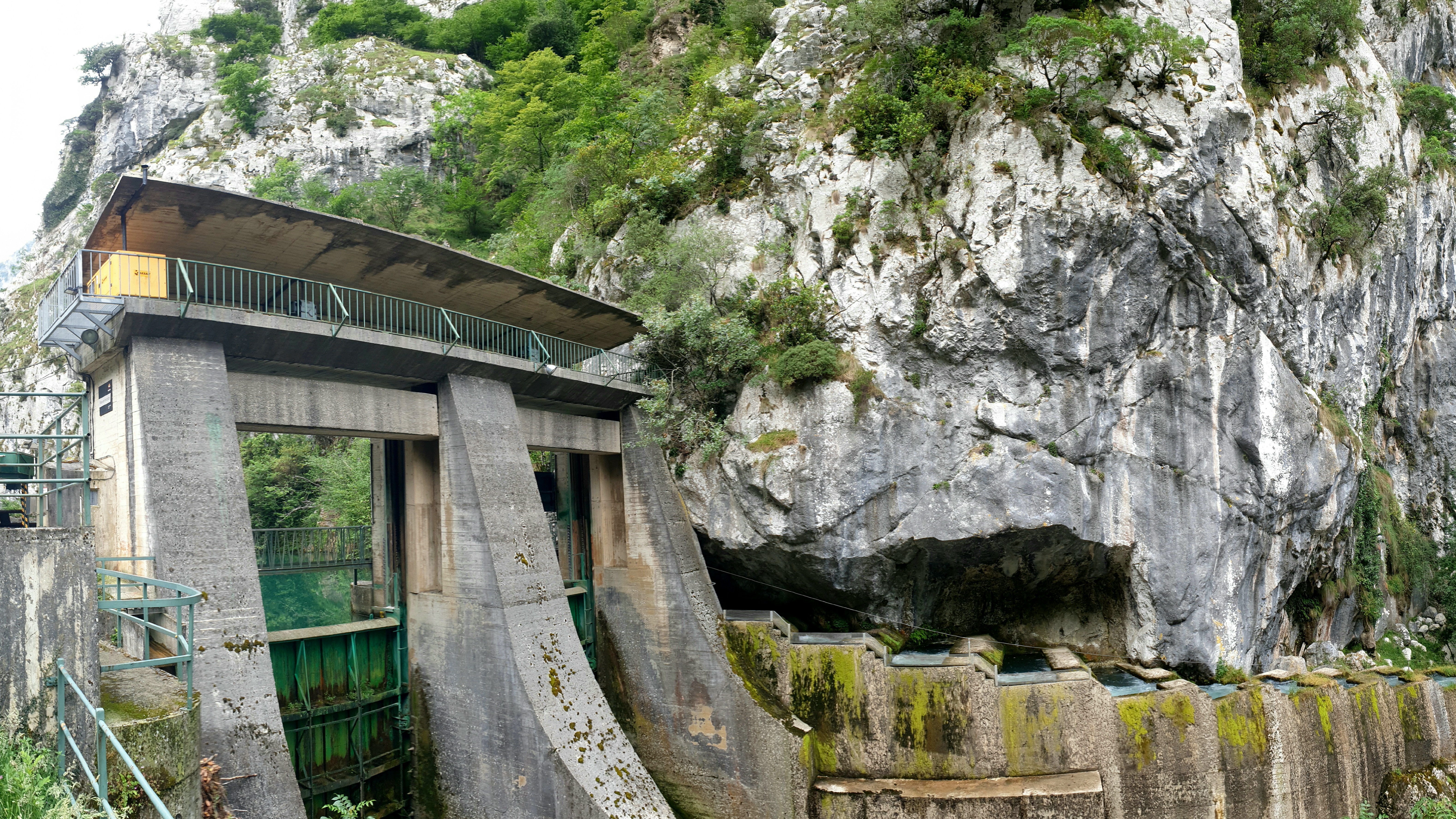
The Barragem de Crestuma-Lever

Then it was from one side of the Douro River to the other as we slowly wandered eastwards.

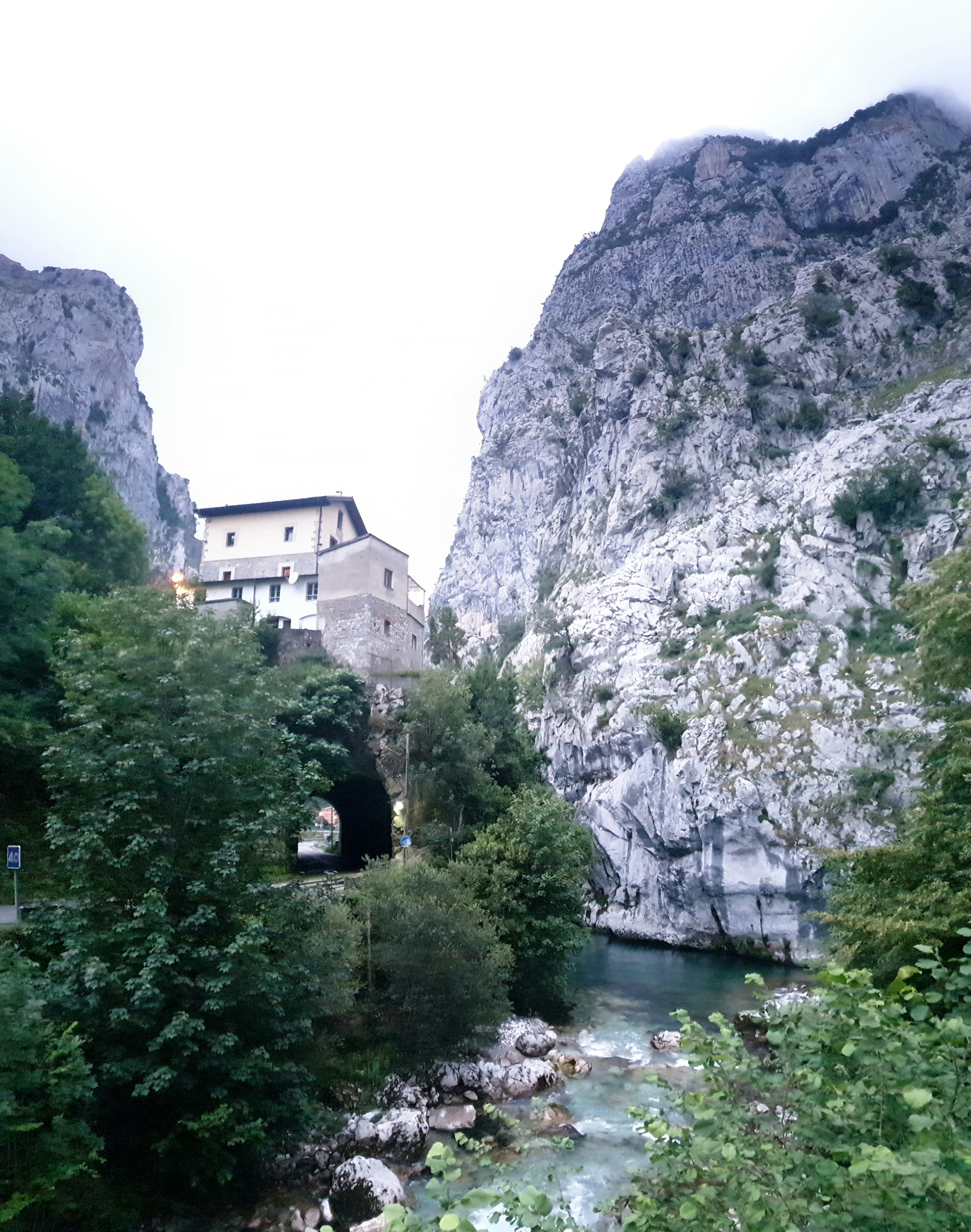
Magnificent scenery and fairly quiet roads that just kept on wriggling their way east. We stopped for a hydration break over looking this.
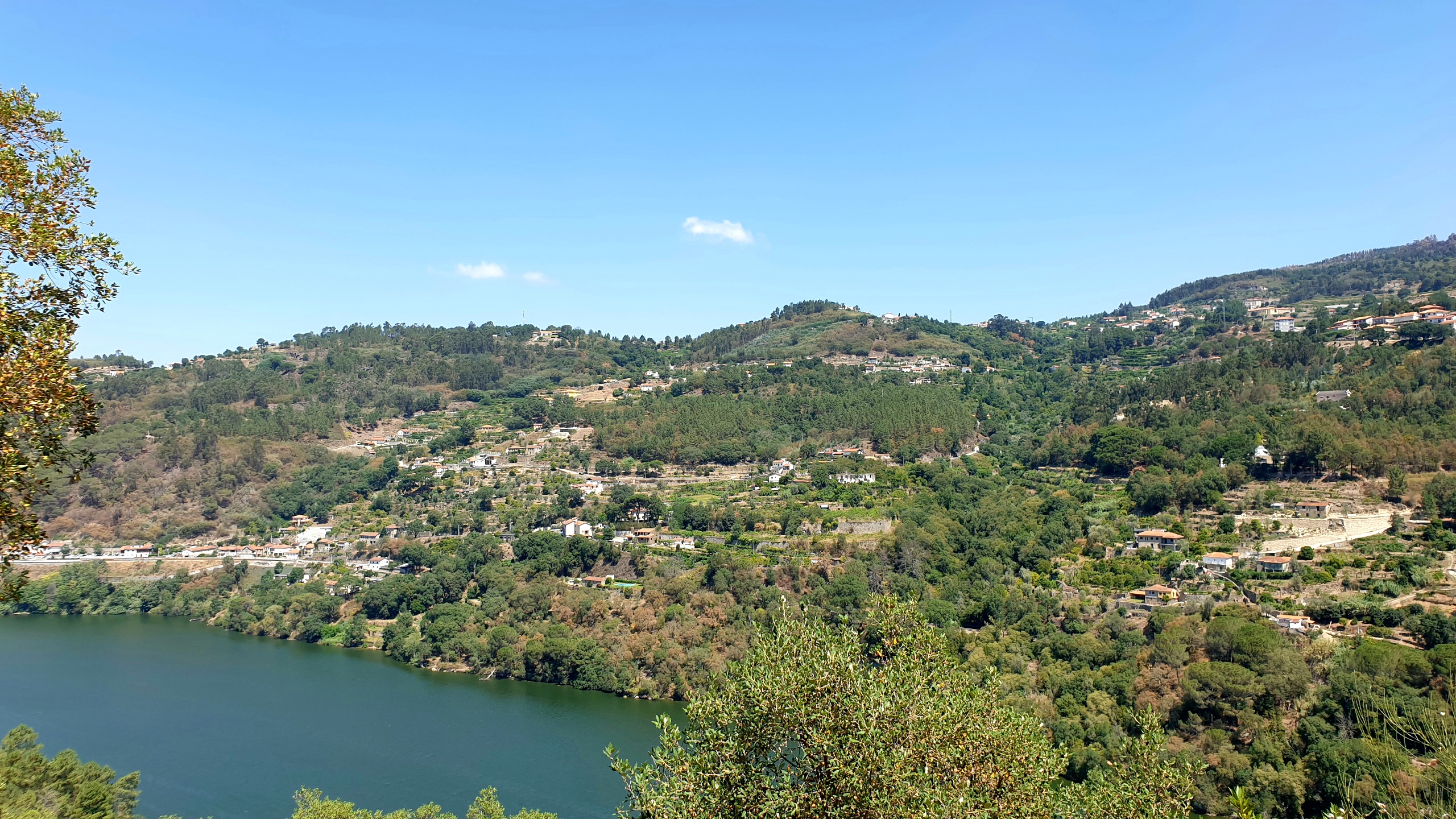
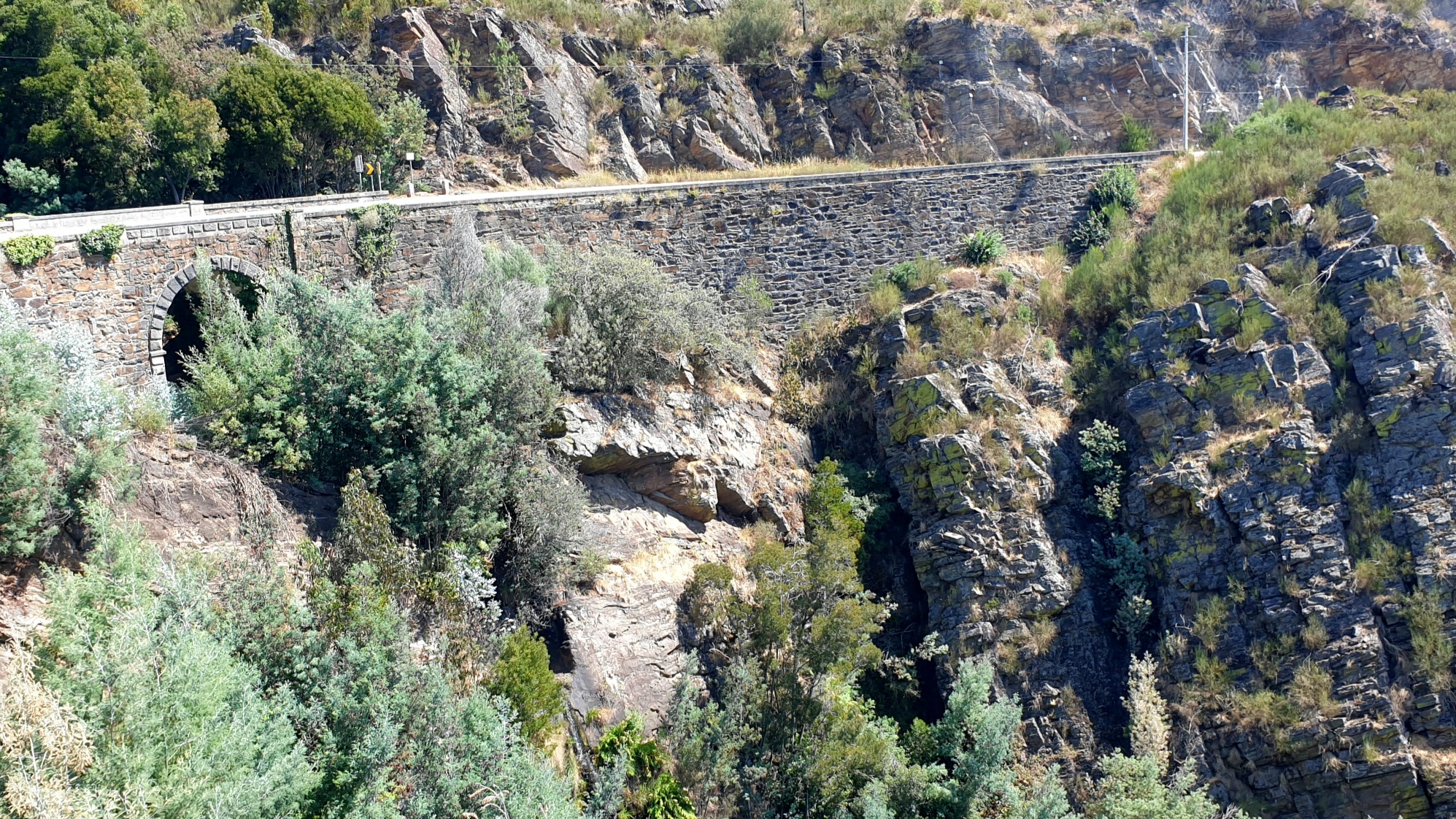
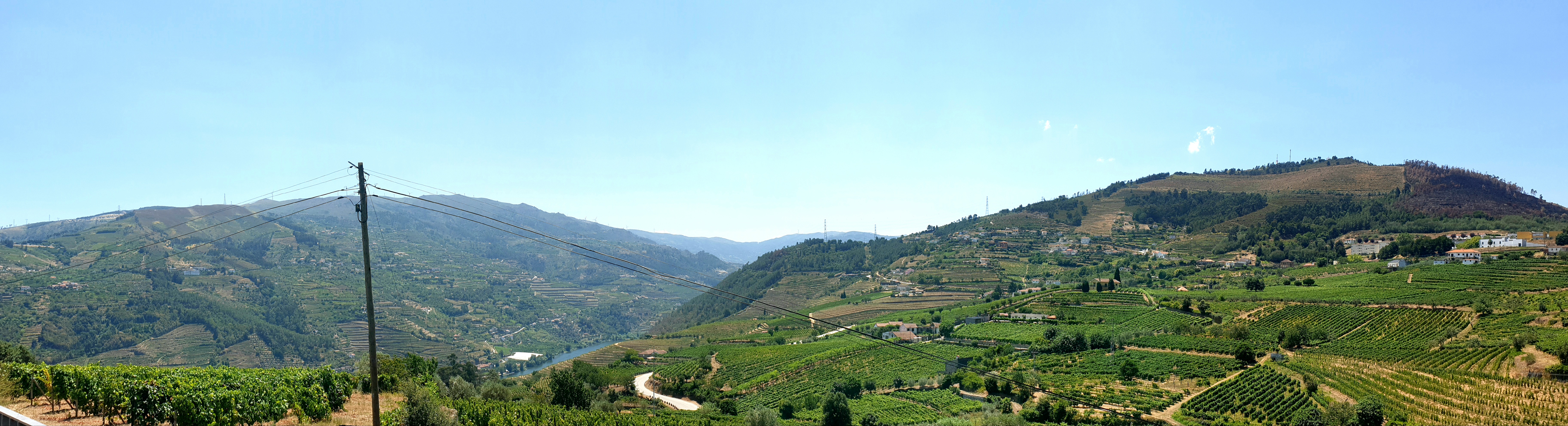
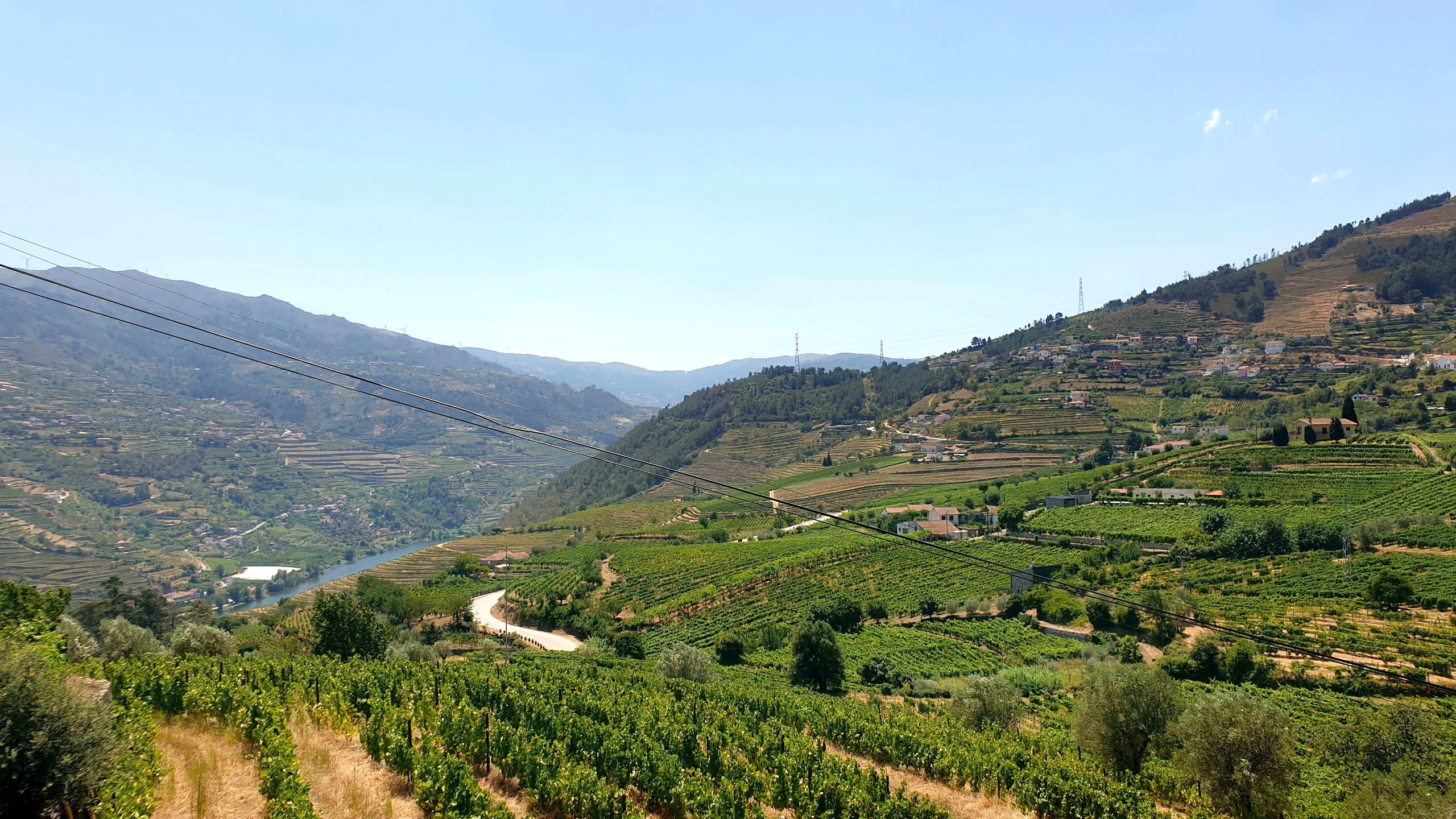
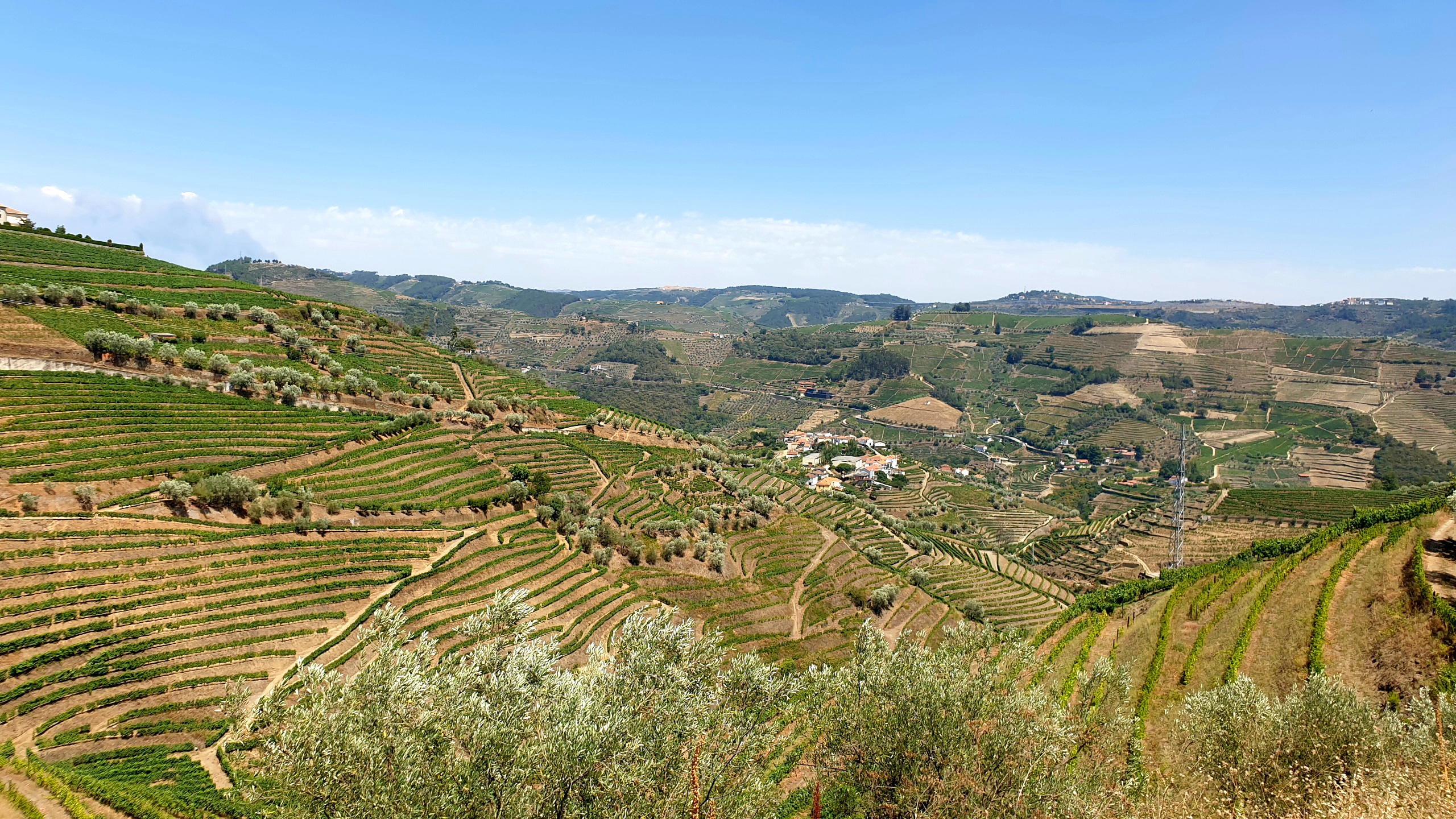
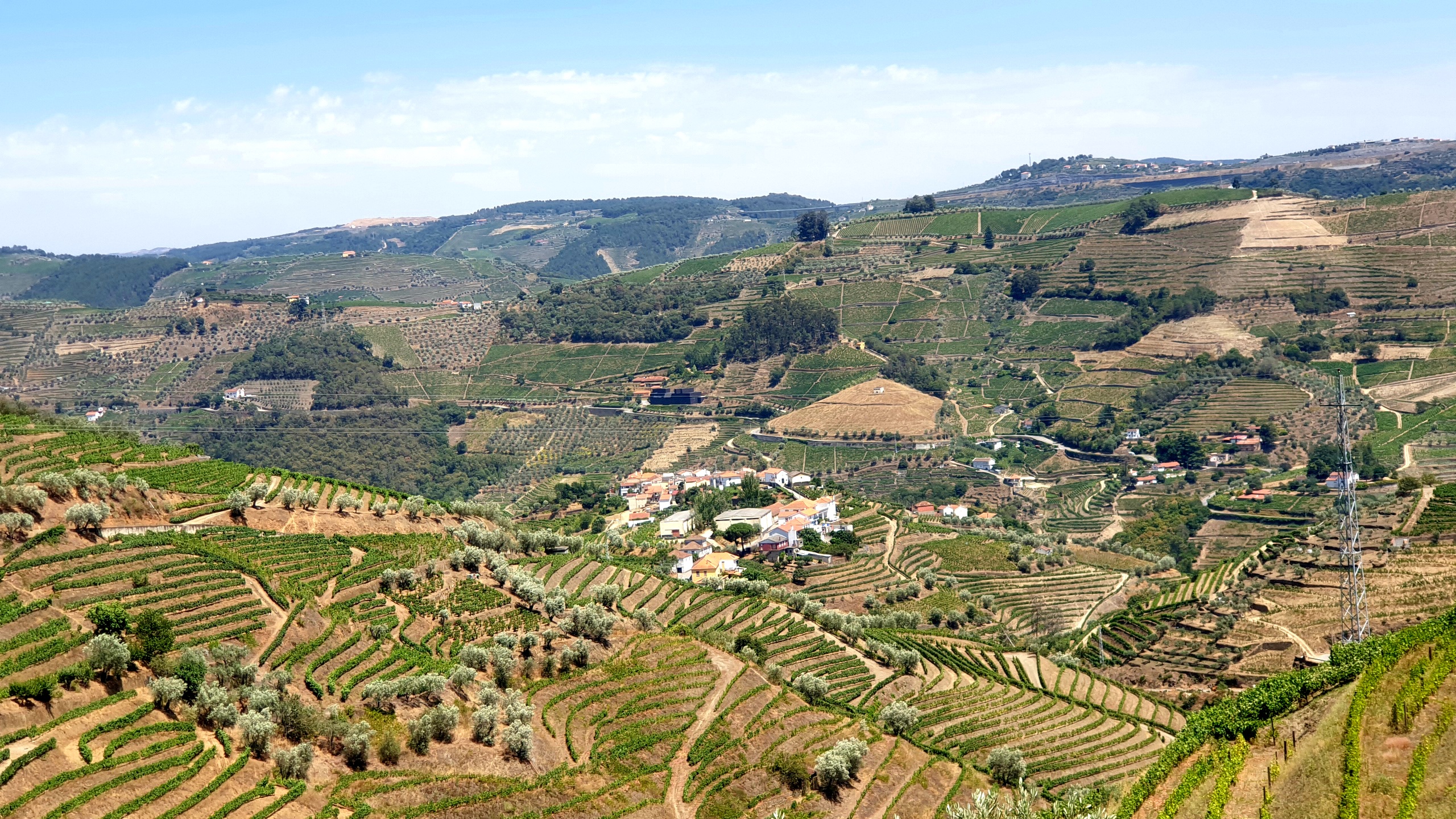
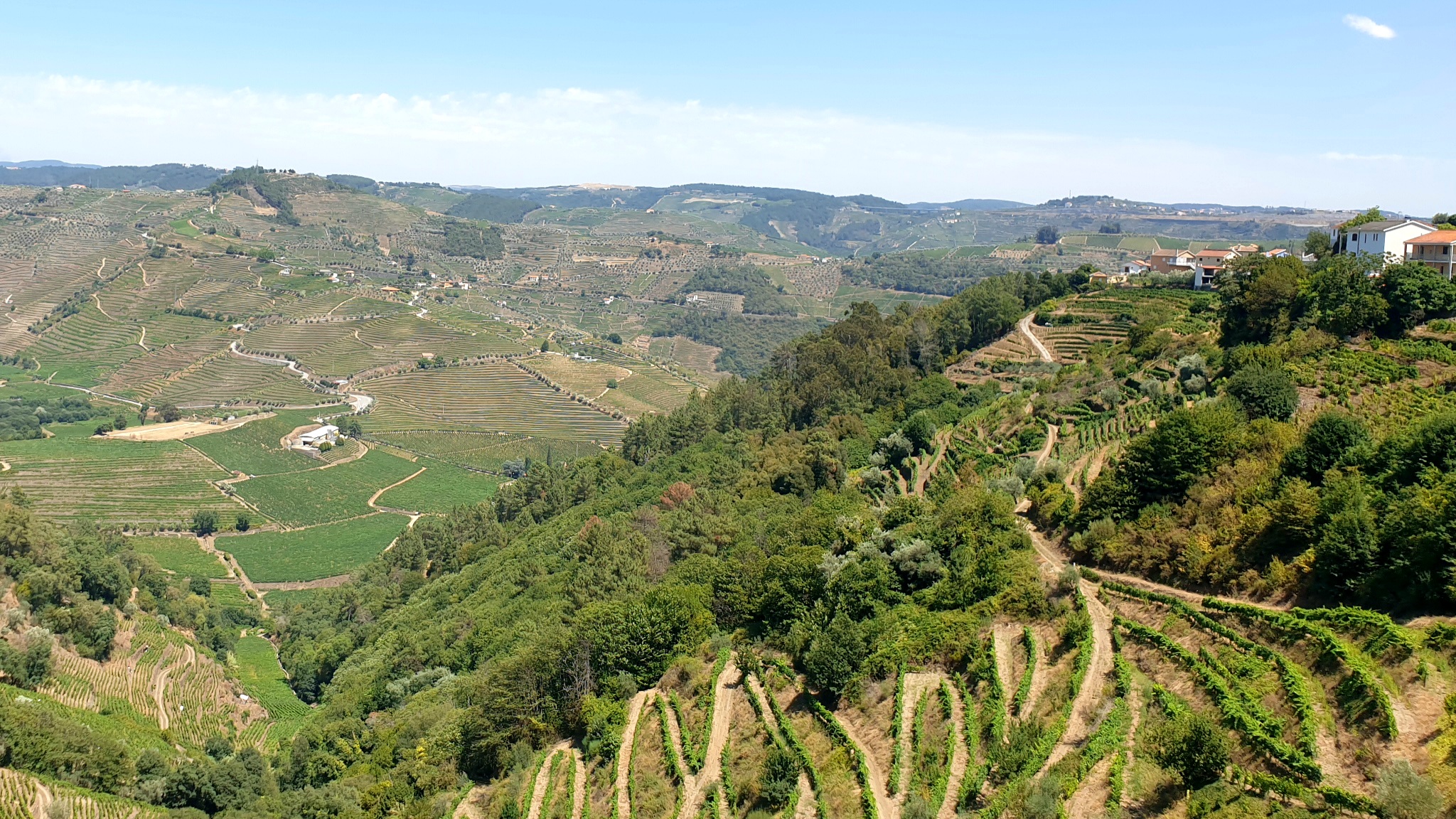
Then at Peso da Régua we headed north into grape country. This is where all the grapes for the famous ‘Port’ wine are grown. Our (my) chosen route took us through some very remote countryside, all of it steep and tight and all of it cultivated to within an inch of its existence. And all of it just fantastic to ride through. It seemed to go on for ever.
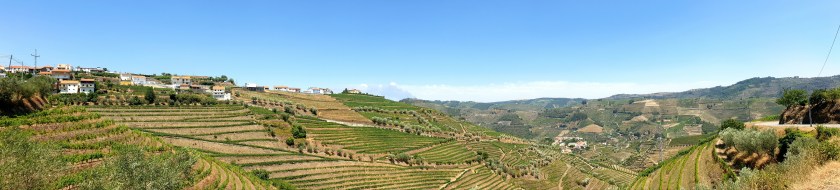
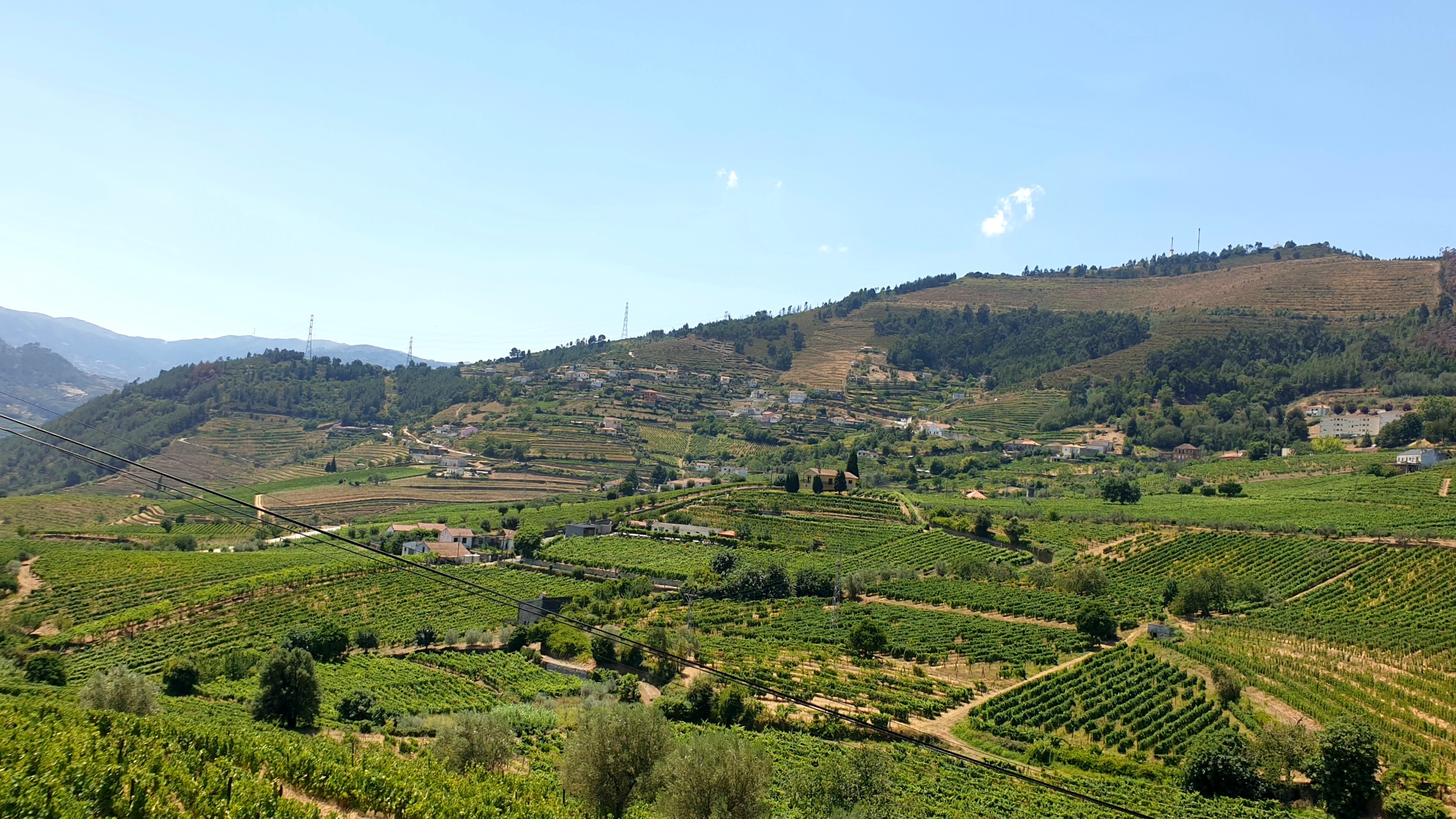
There were fires around, quite a few by the smoke plumes. That’s Parque de Merendas da Póvoa that’s burning out to the west of us.

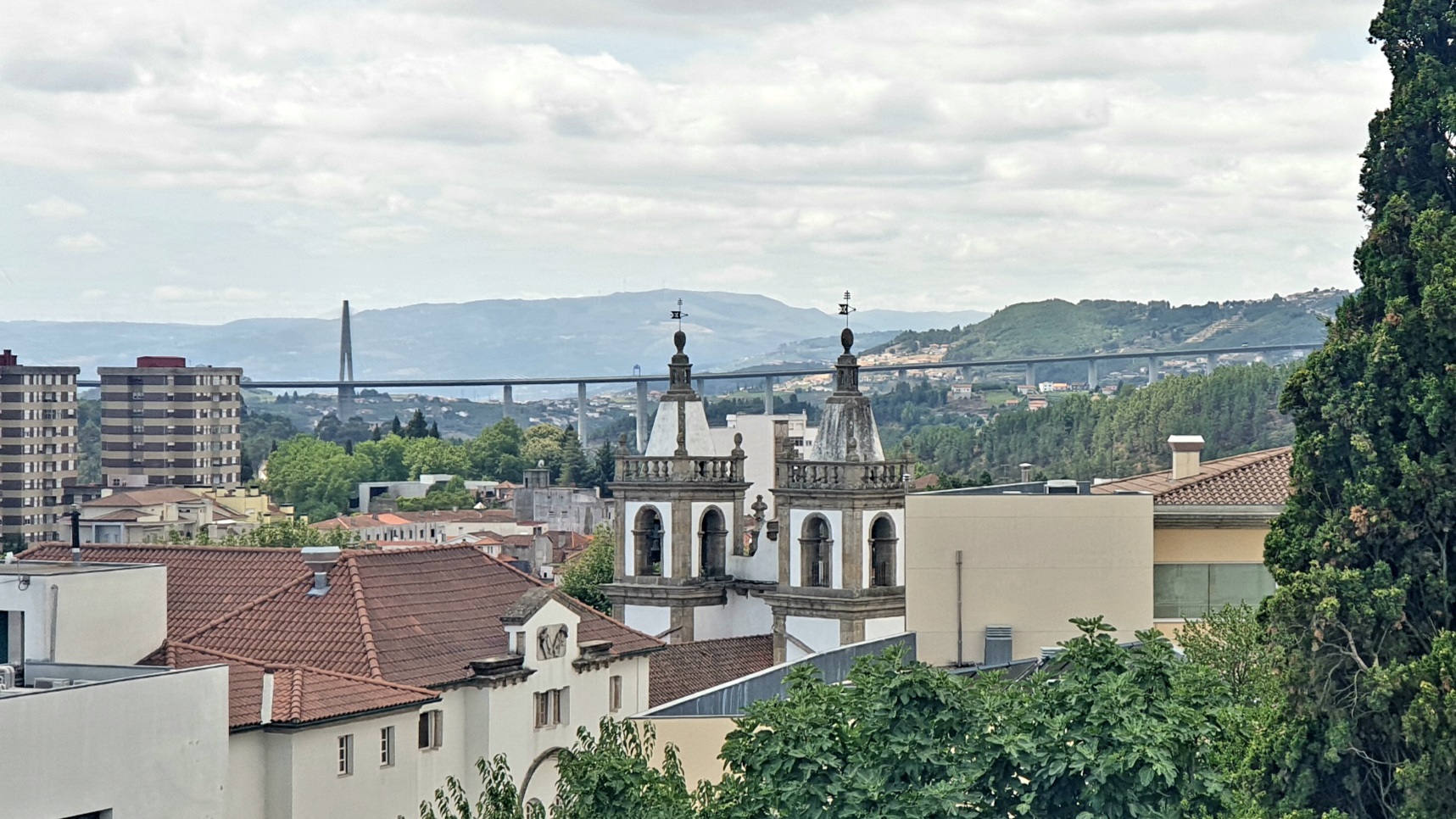
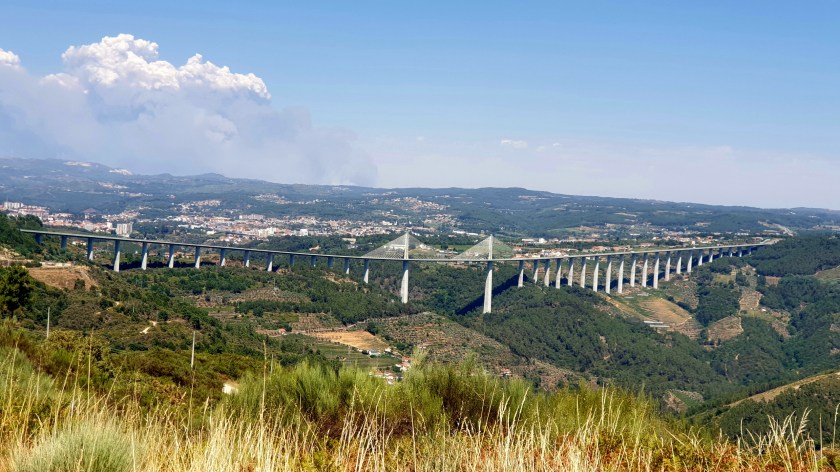
And Parque Natural do Alvão burning to the north of us with Vila Real behind the magnificant Viaduto do Corgo (Viaduct) in the fore ground. We rode through this area 2 days later.
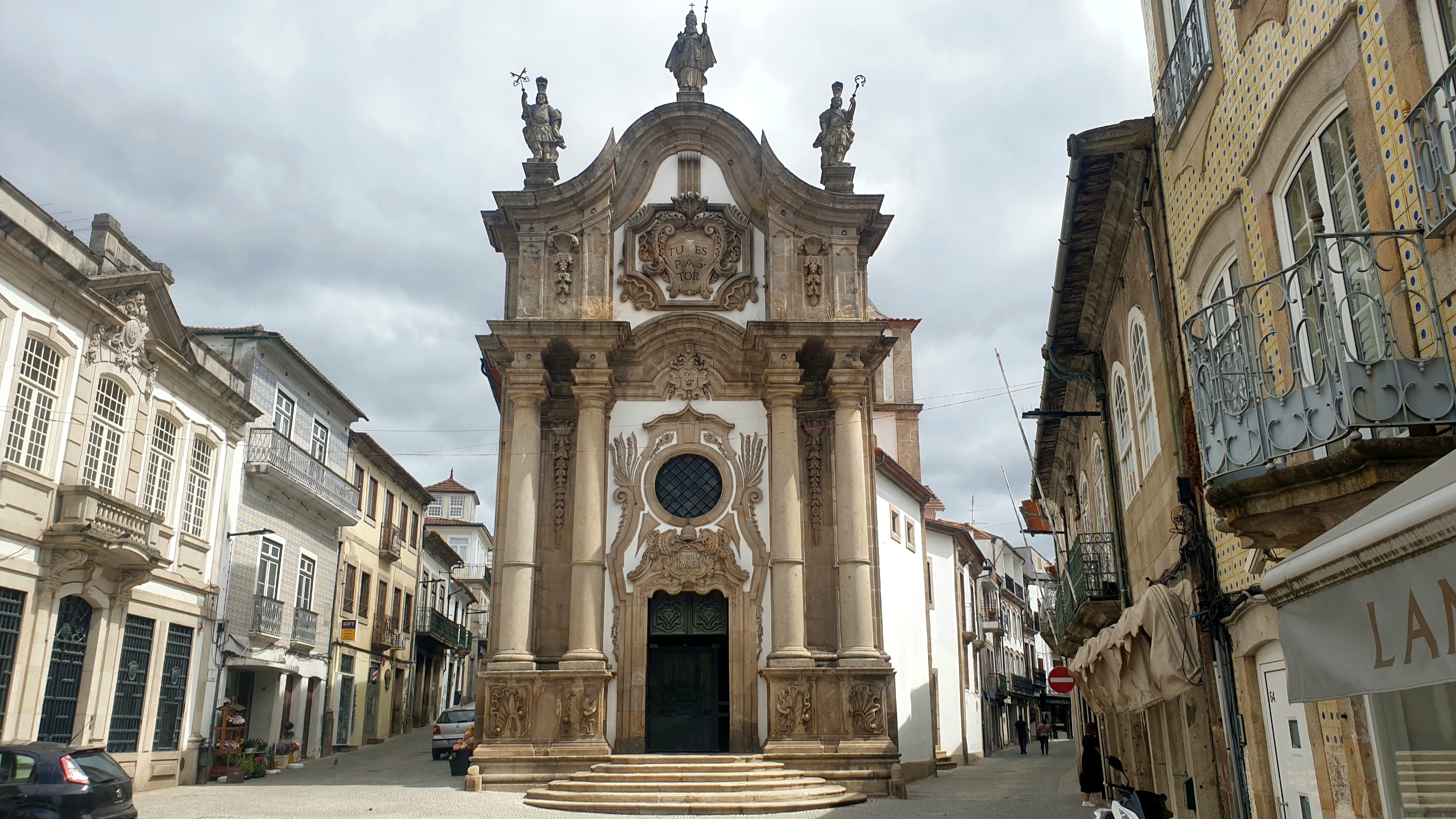
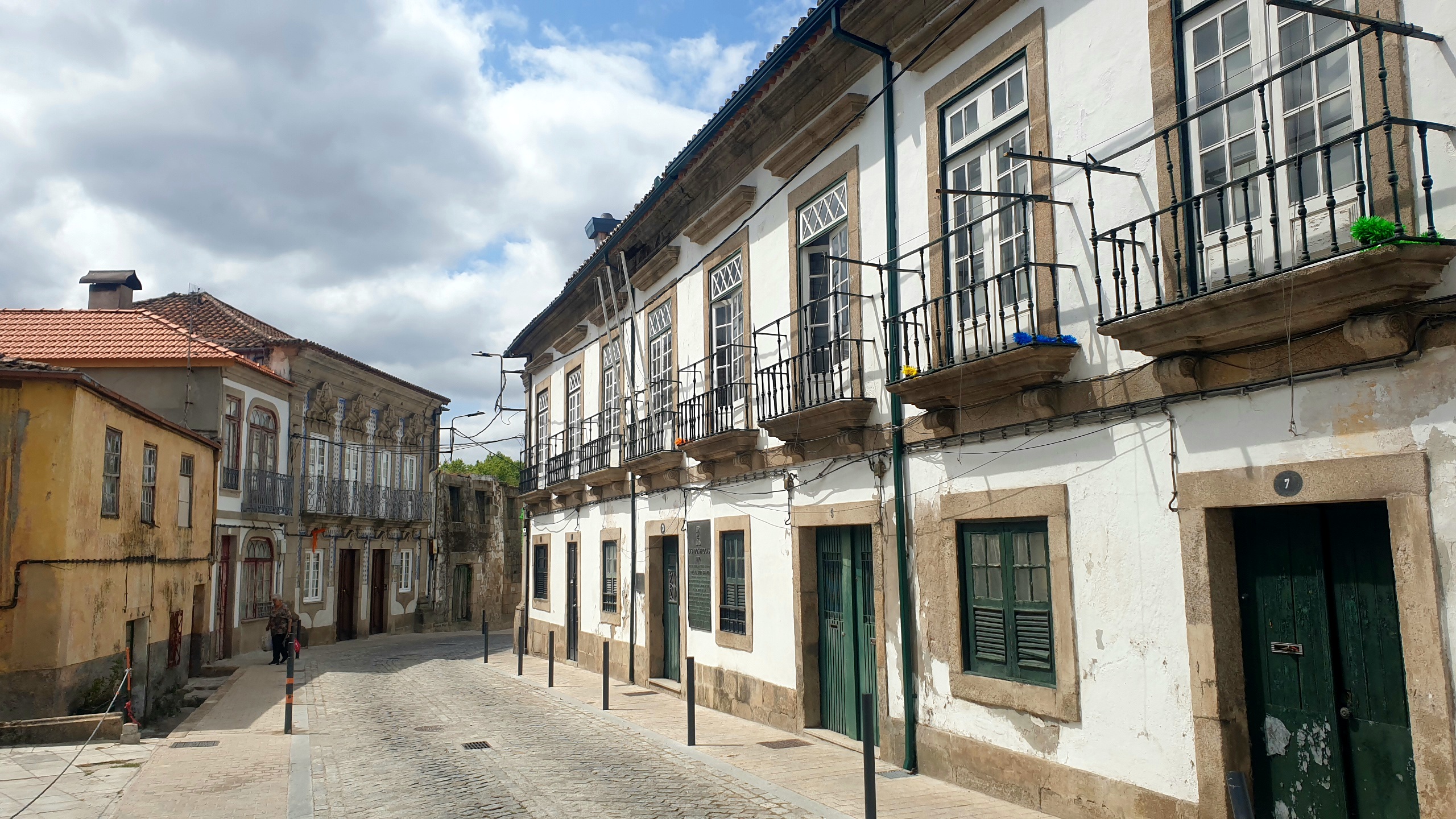
We found our usual ‘in the middle of the old town’ accommodation. Had a shower and a snooze and went out for dinner.

Tue 19 July – Lay Day in Vila Real

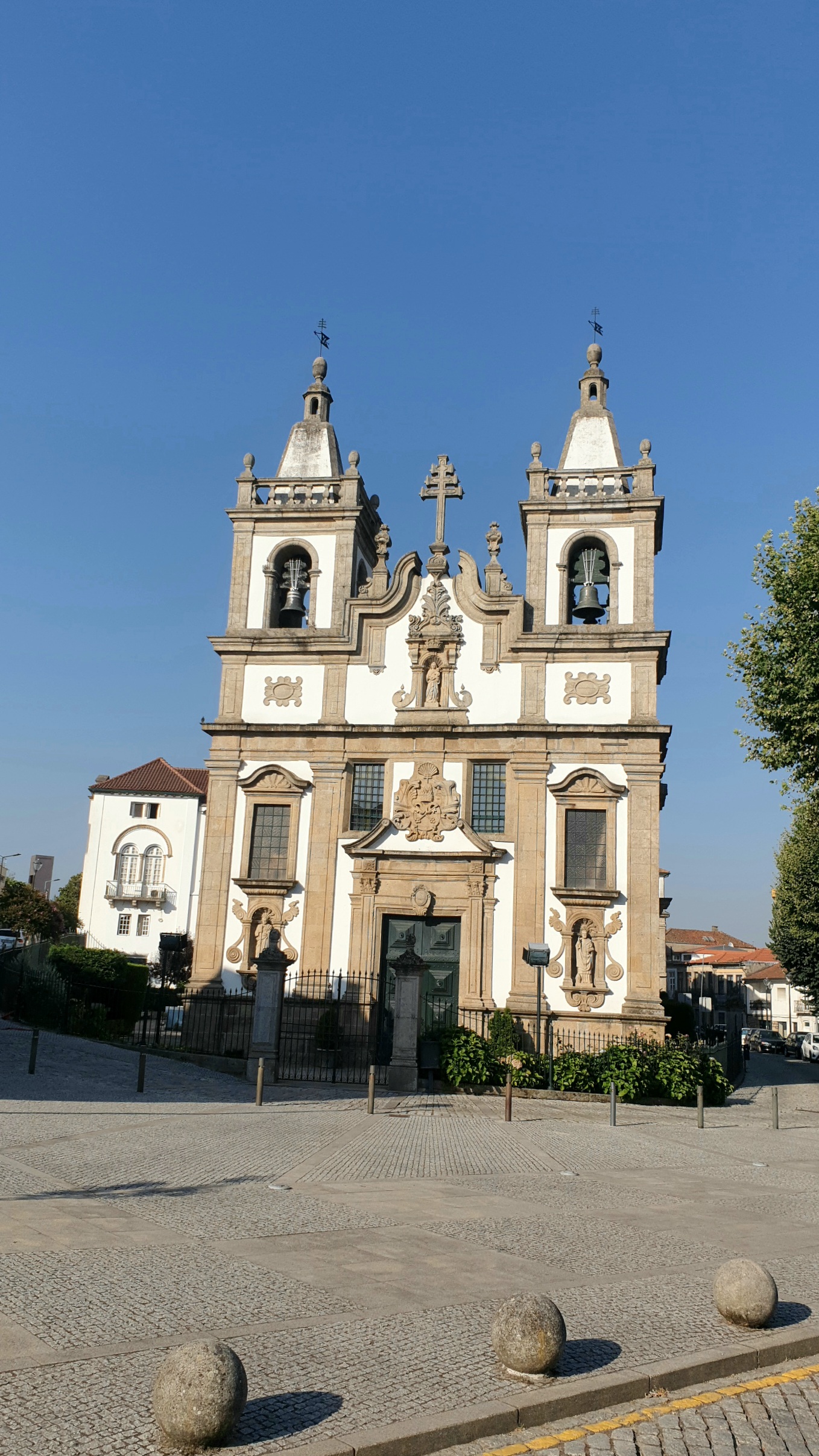
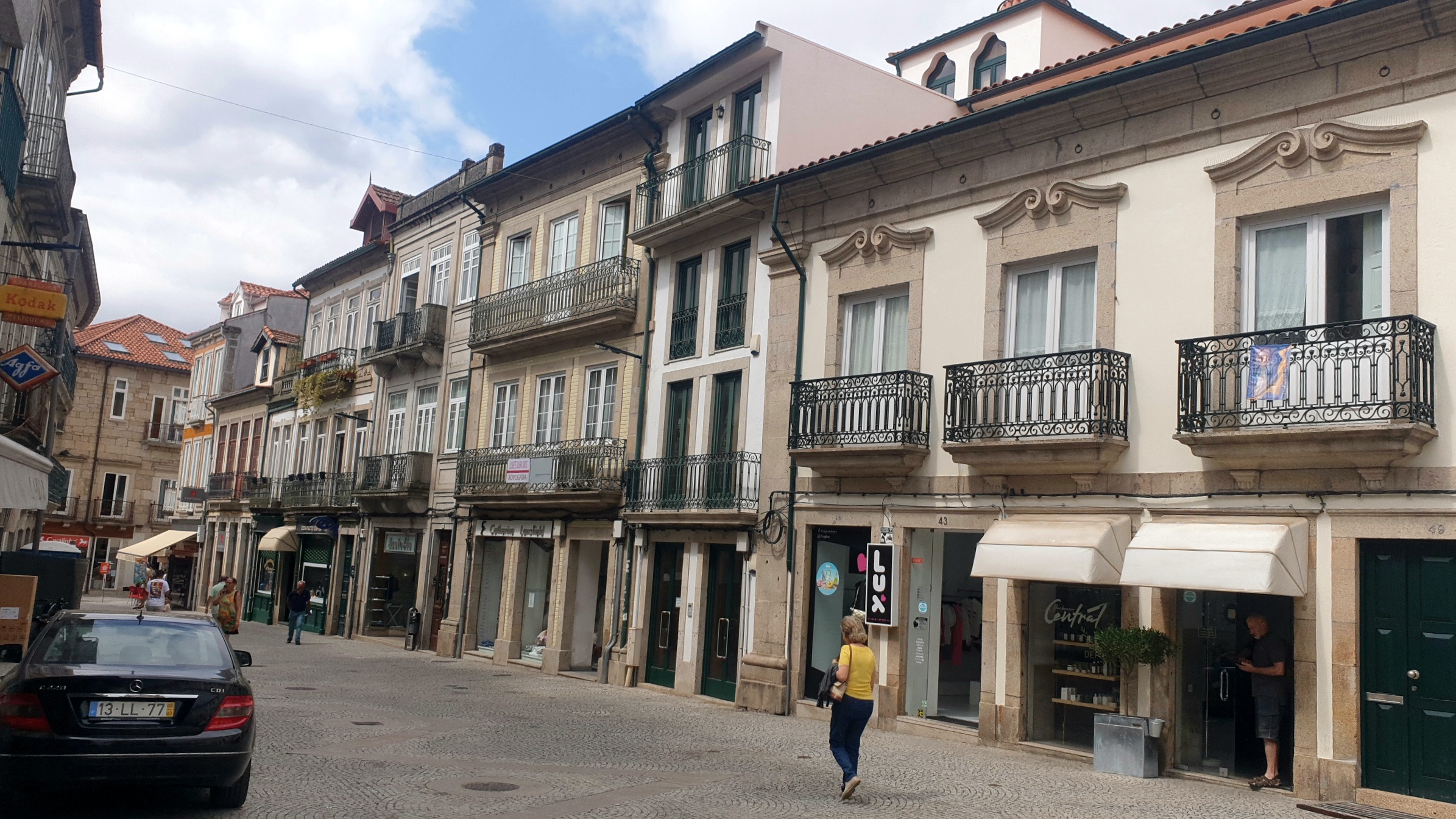
It’s a lovely day, and in spite of the bush fires the temps are moderate and pleasant. We took a stroll, not a lot to see, but tranquil and easy to bear.
I topped up the oil with that odd BMW oil – I’d pretty much use any motorcycle oil, but they had the proper stuff so why not.

Wed 20 July – Vila Real to Ponferrada -250klm

Woke up to a perfect cool, clear and crisp day of 16c – hit the road by 8.30am for the 250klm run to Ponferrada.

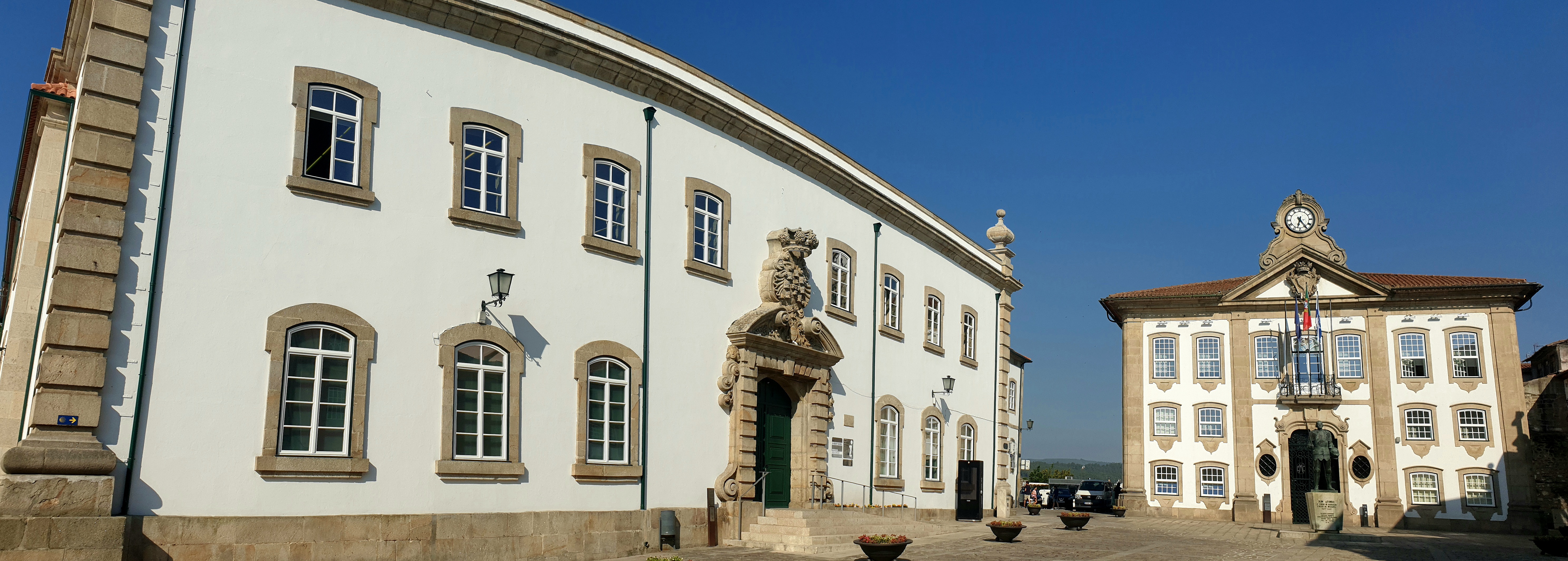
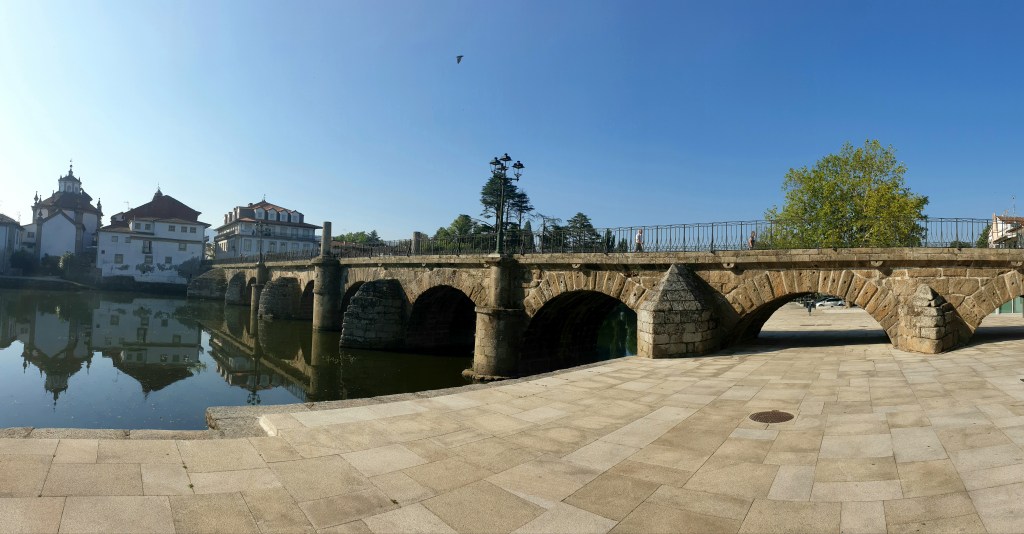
Our first port of call was the Spa town of Chaves and it’s Ponte Romana de Chaves which is a Roman Bridge over the river Tamega which was constructed at the end of the 1st century or beginning of the 2nd.

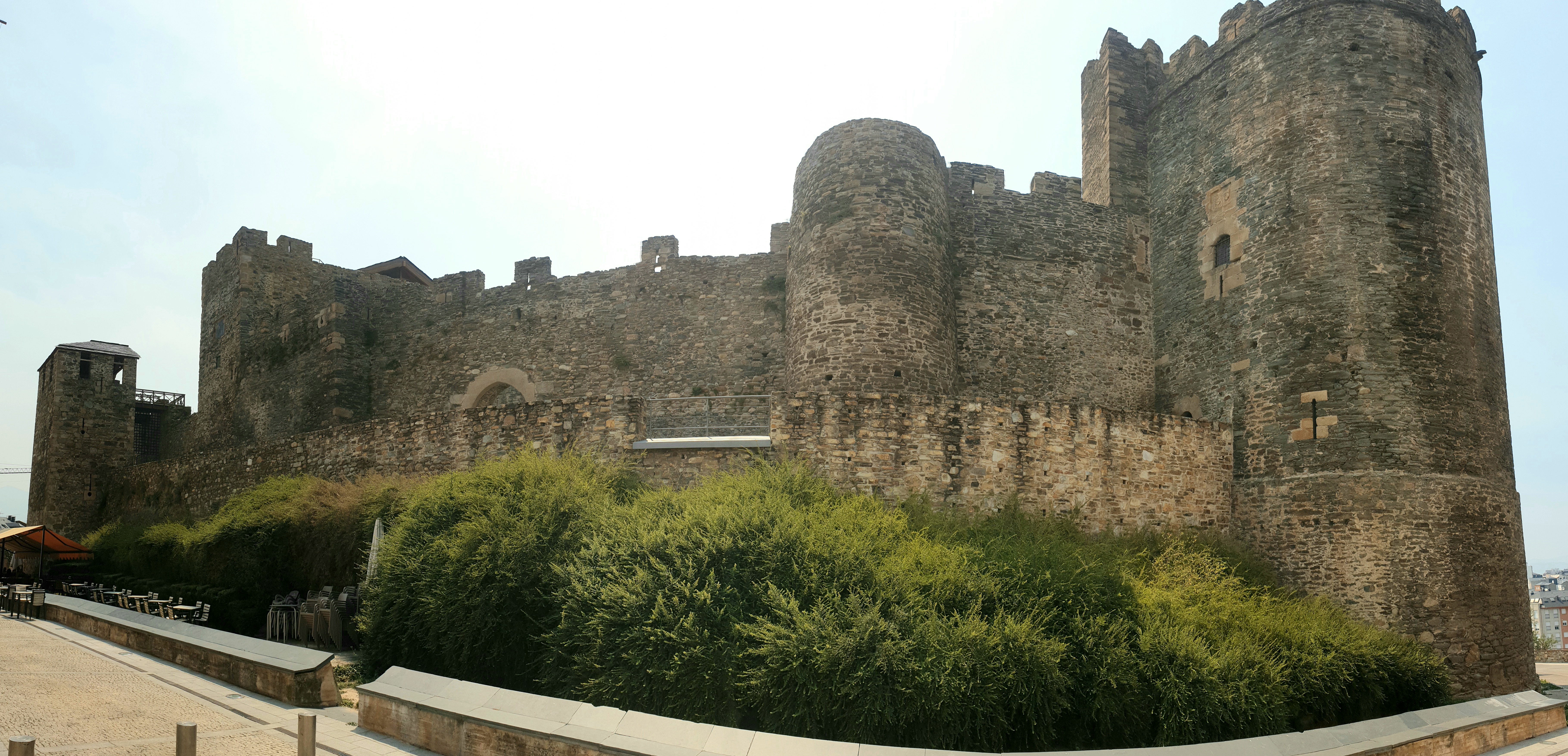
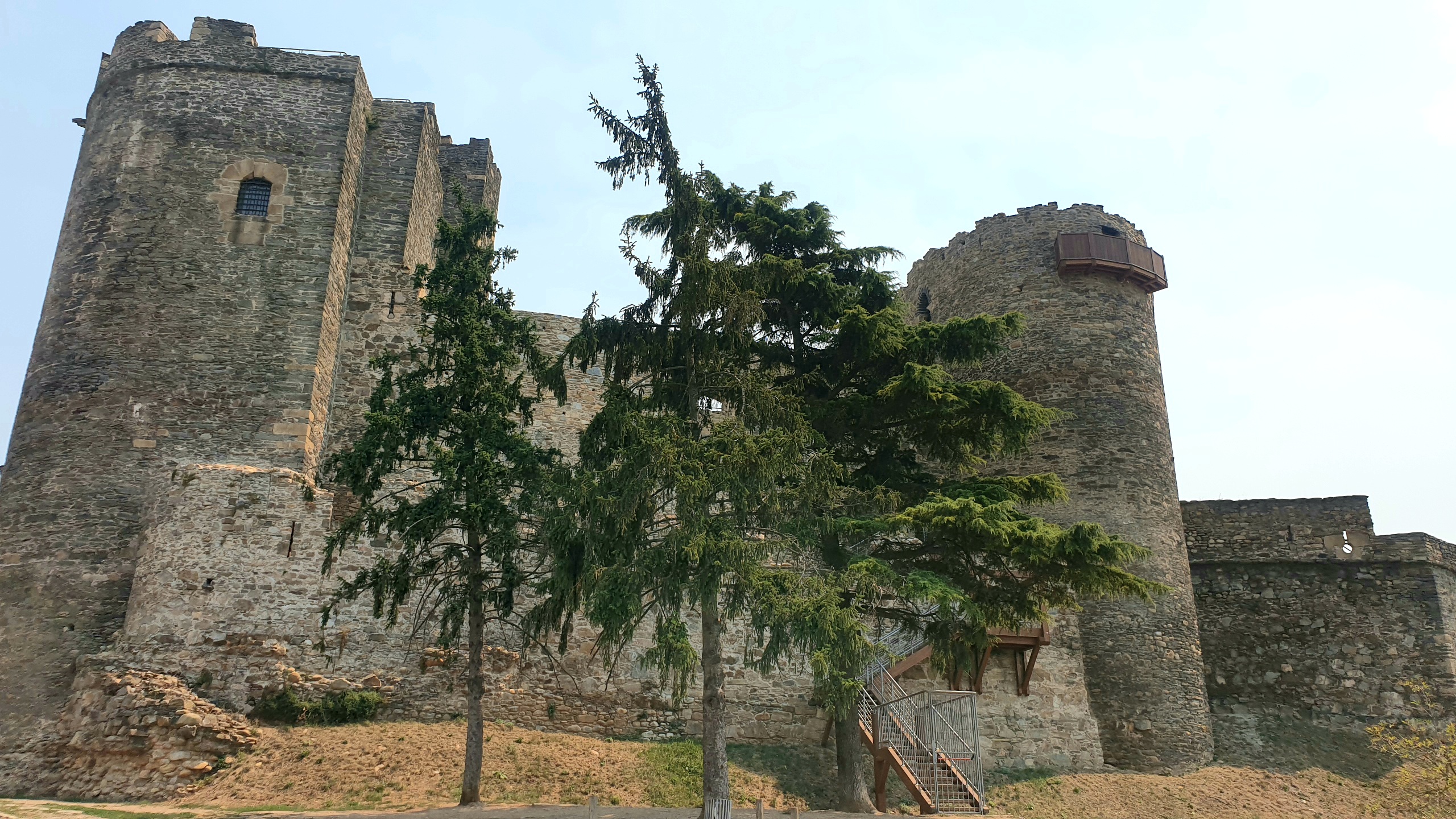
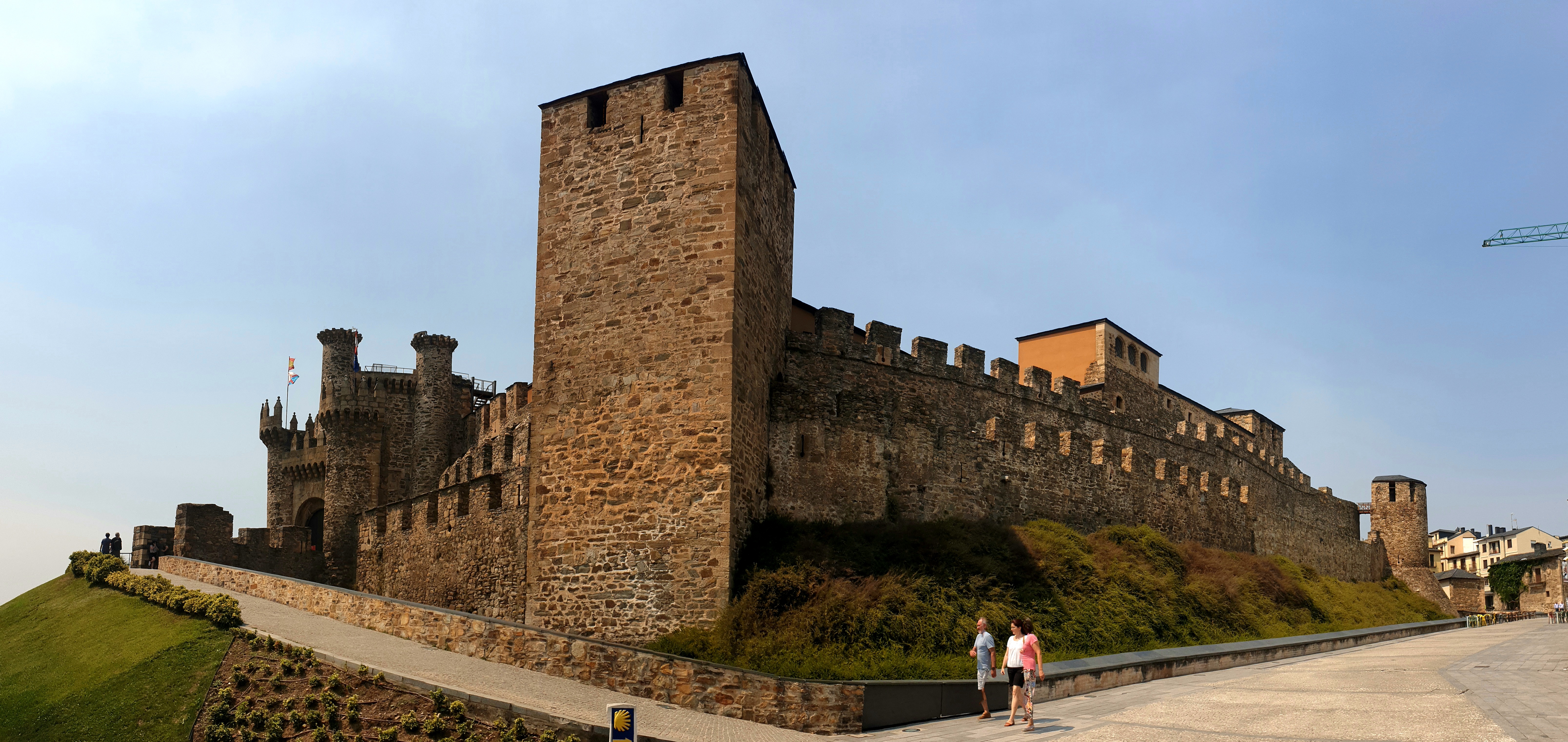
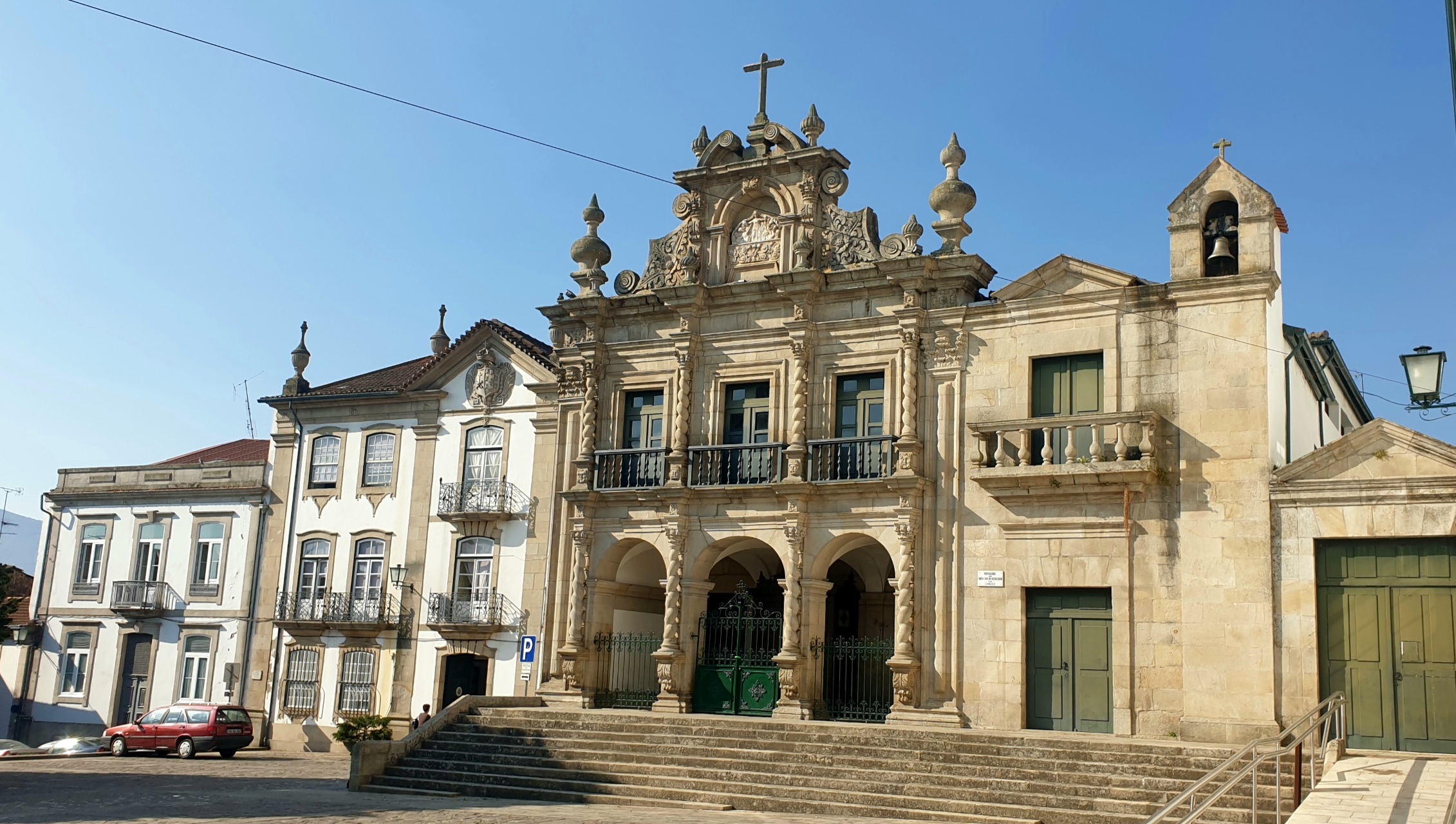
Then, just up the hill is Castelo de Chaves built in 73BC according to Wikipedia.
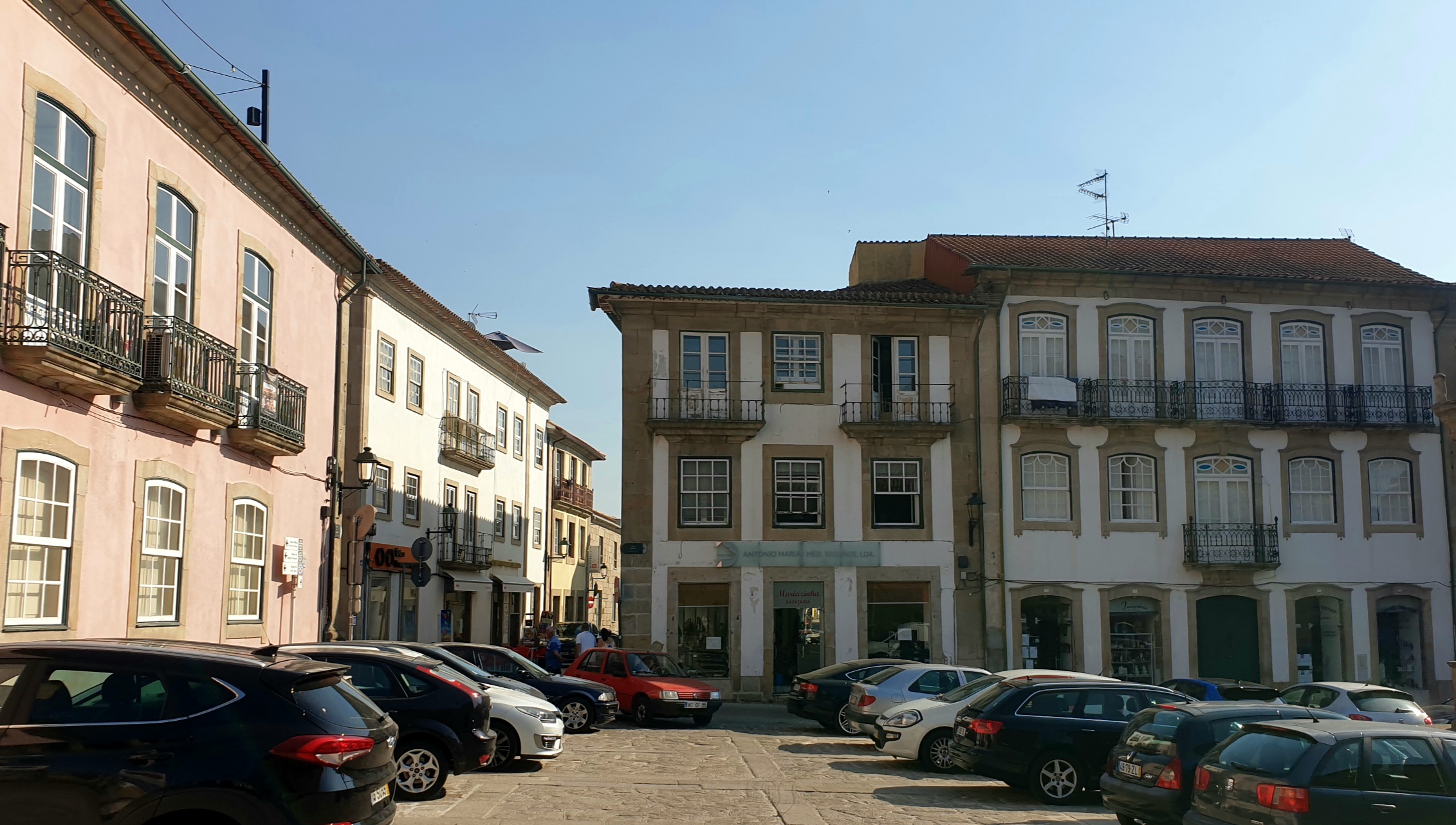
It is surrounded by some lovely old buildings and lanes.

From Chaves onwards we were in smoke for the rest of the day, a remnant of the fires that ran through on Monday as we were coming in to Vila Real.

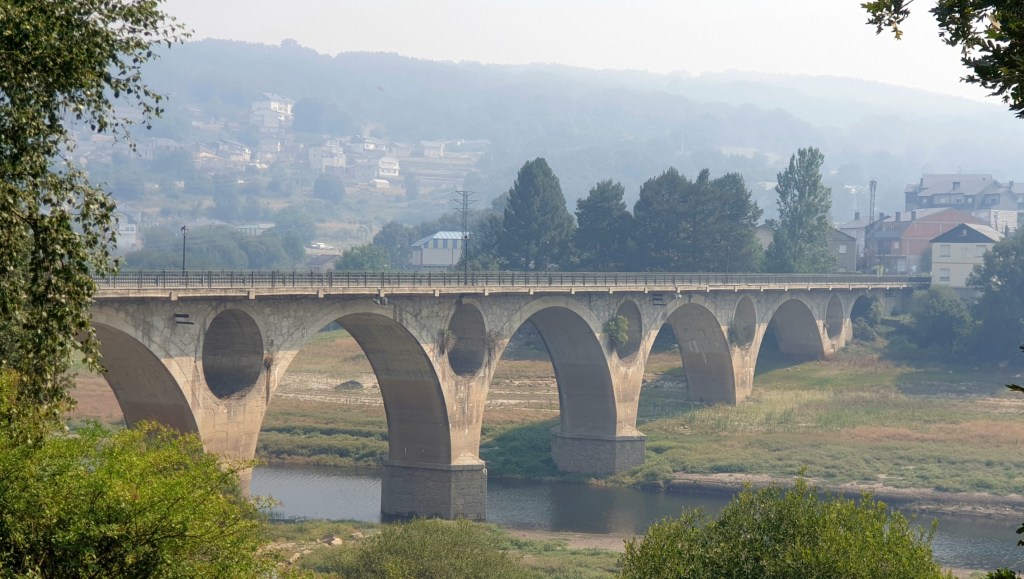
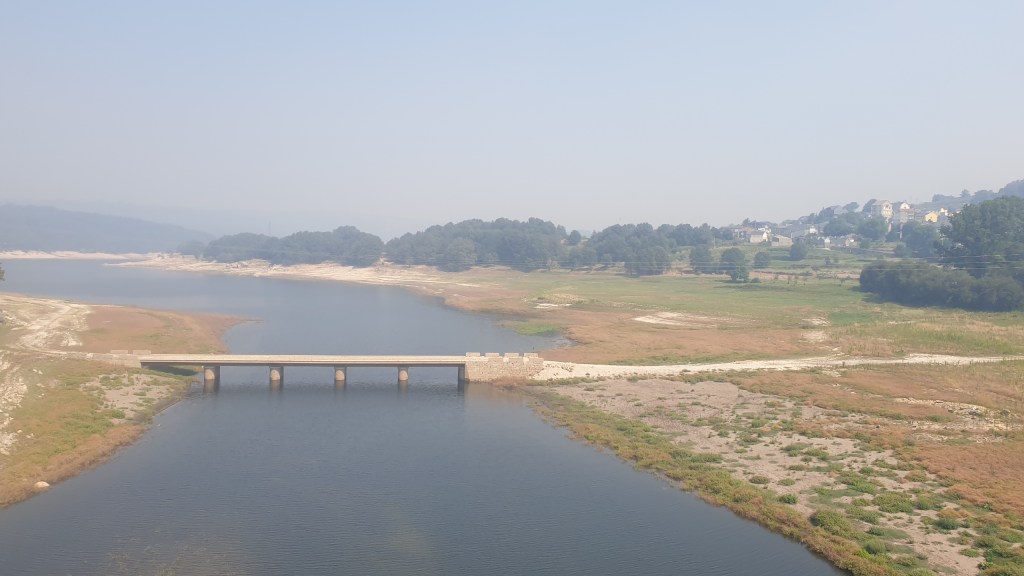
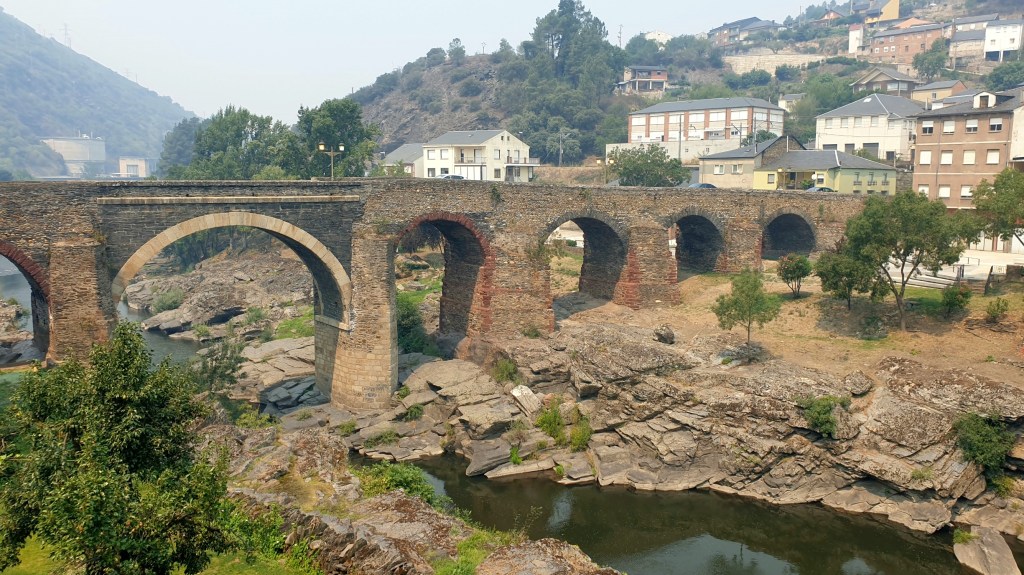
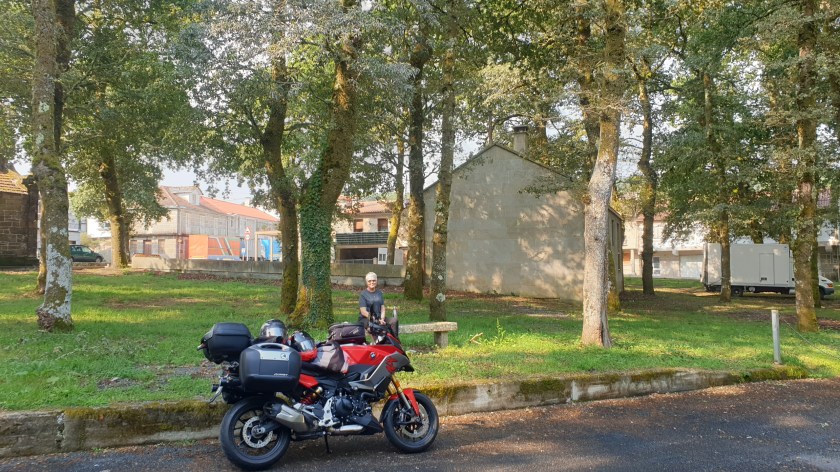
A Veiga offered a respite with a picnic area so we stopped for a brew, and a look at a couple of bridges. You can see the smoke haze.
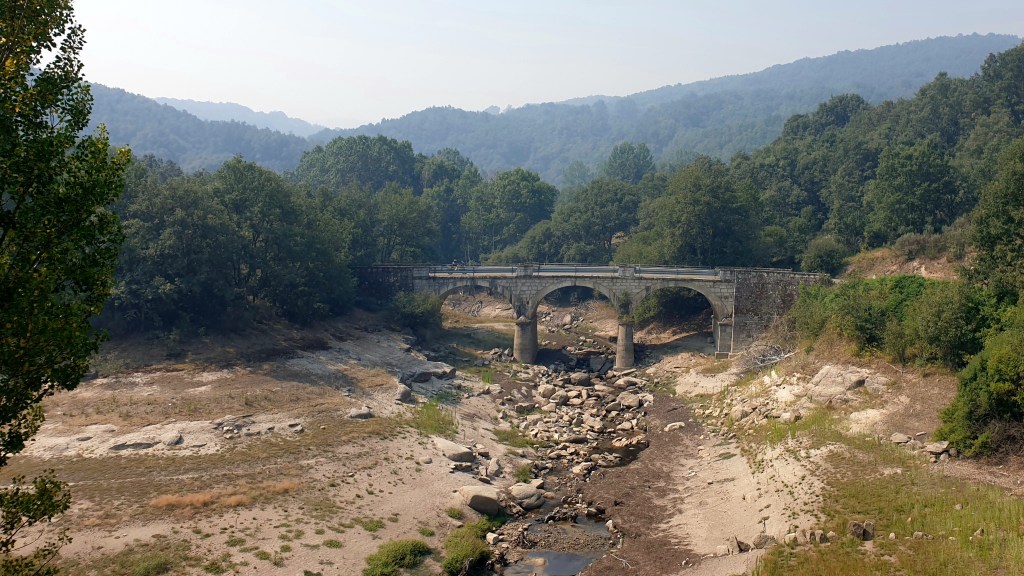
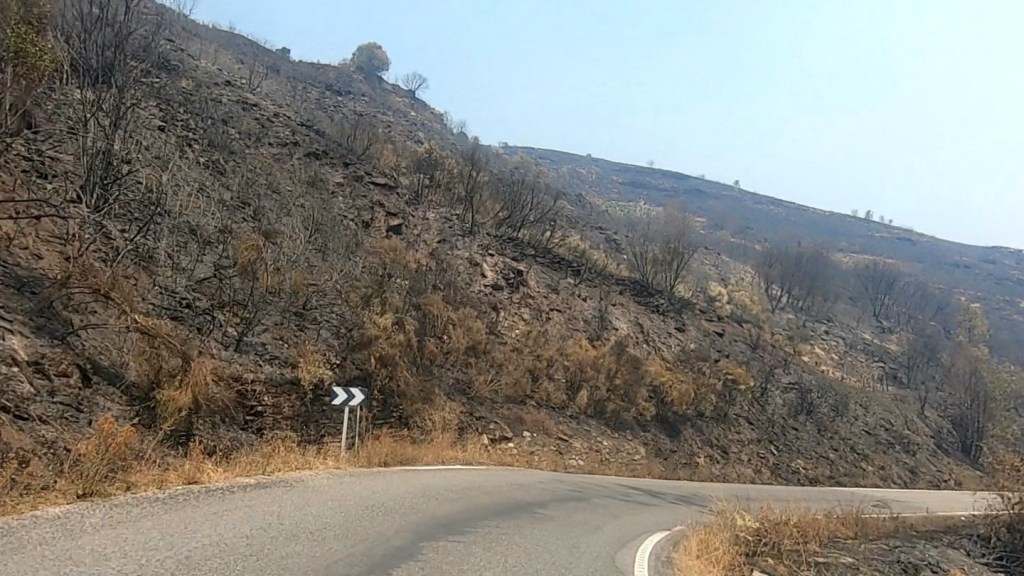
The next 45klms of narrow but well surfaced road were non stop twisties as we traversed one range to the next and finally to O Braco. We saw plenty of evidence of the bush fires that were now burning in this area with a couple of fixed wing aircraft and 2 helicopter water bombers filling from the lakes that followed the road.

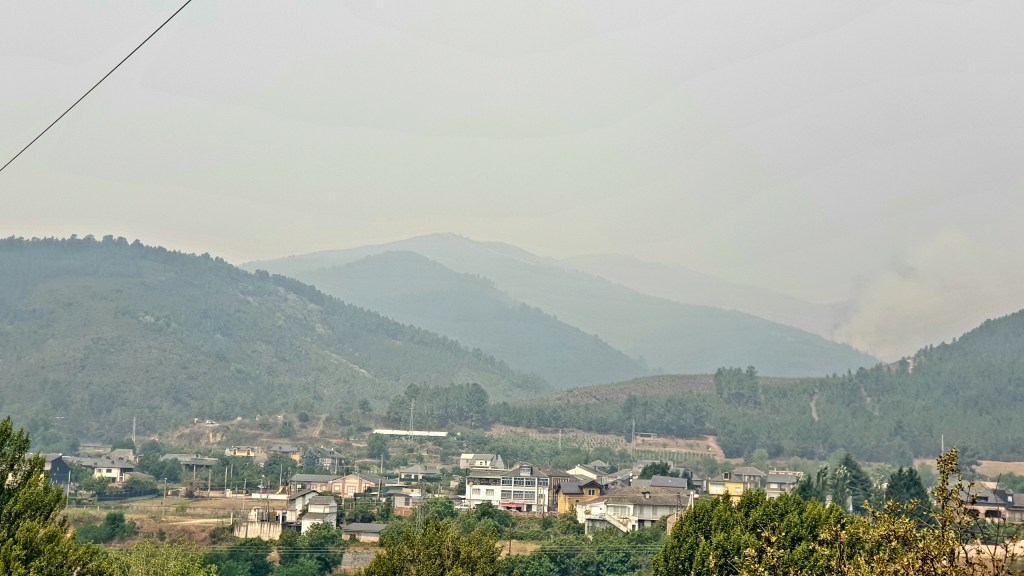
I must say we were never in any danger of the fires, they were quite aways from the road we were travelling and, by Australian standards anyway, the local temps were in the low 20s and there was virtually no wind, so certainly not conducive of the wildfires we’re led to believe were running through here. What we did see from the fires that had burnt to the roadsides we travelled, they appear to be mostly undergrowth fires, and certainly no what we’d call bush fires. Although the media will choose to differ.

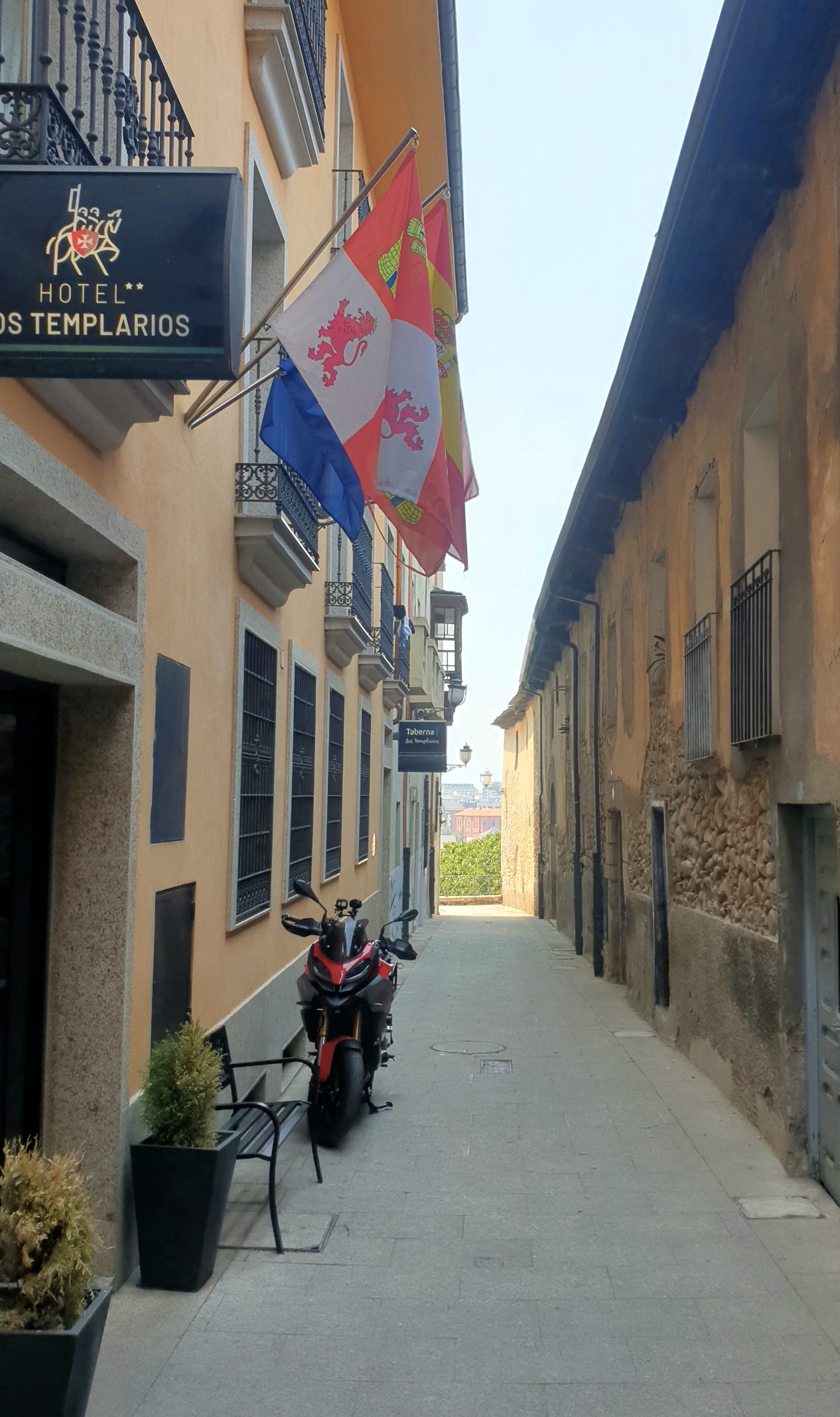
We rocked in to Ponferrada around 2.30pm and threaded our way through Plazas and lanes to our moderate digs in the middle of the Old Town area.

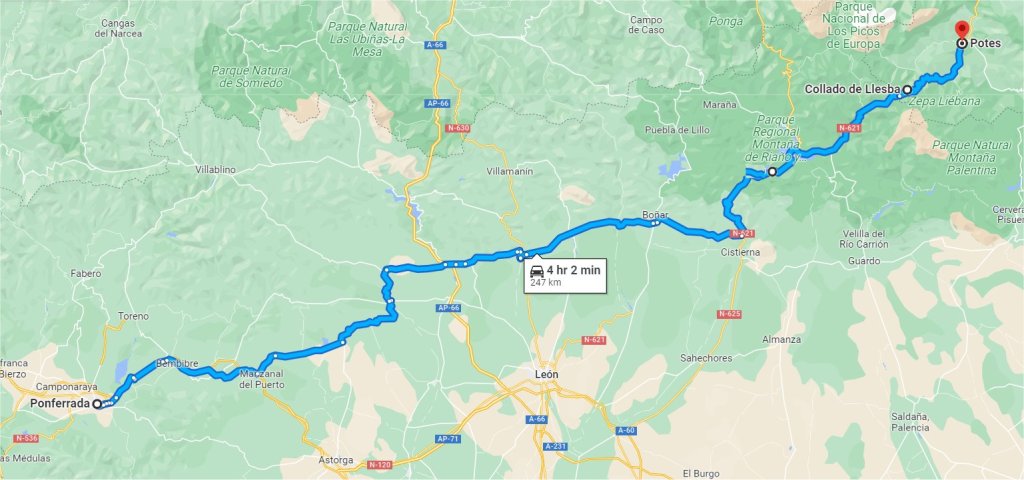
Thurs 21 July – Ponferrada to Potes -240klm
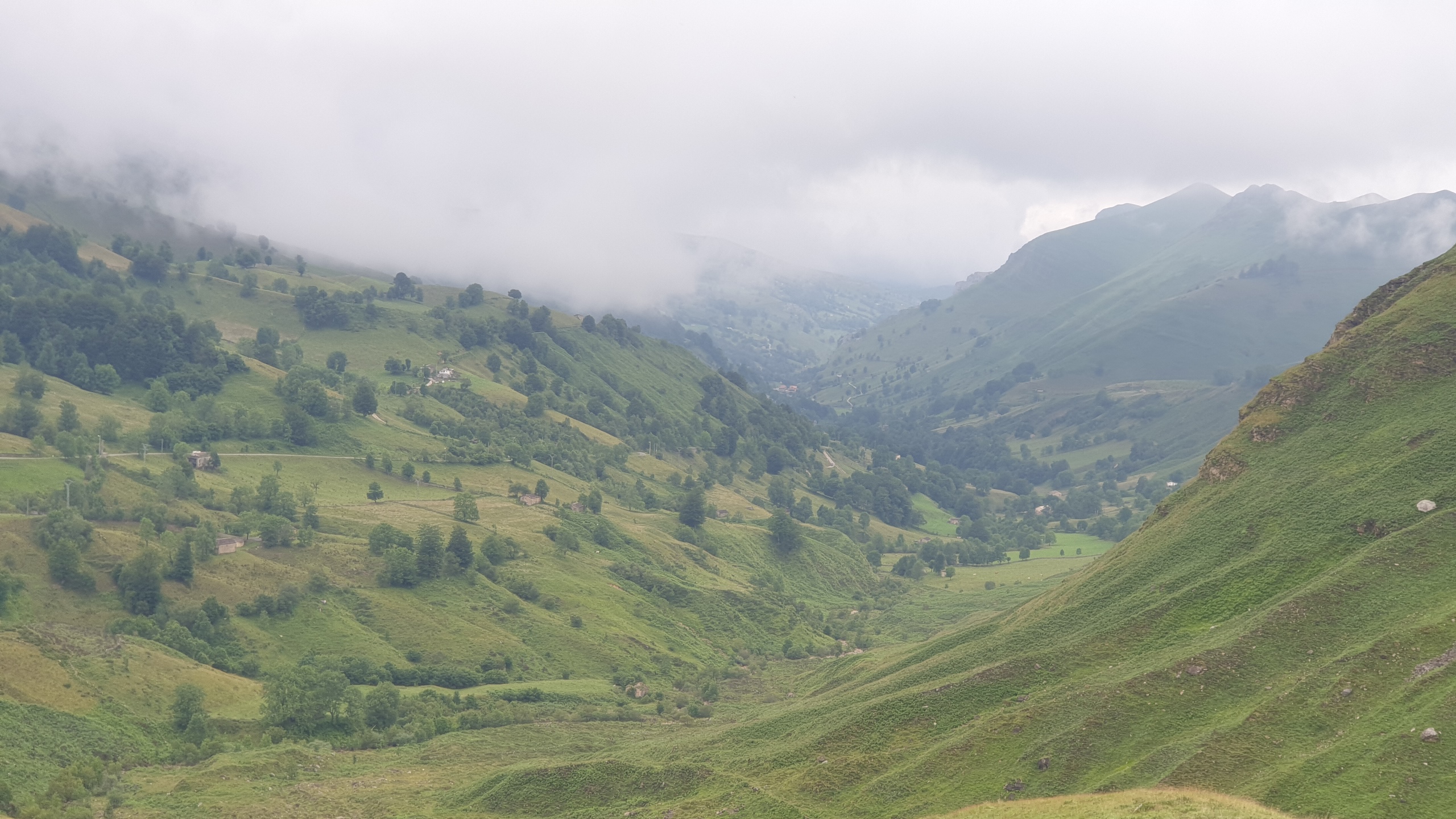
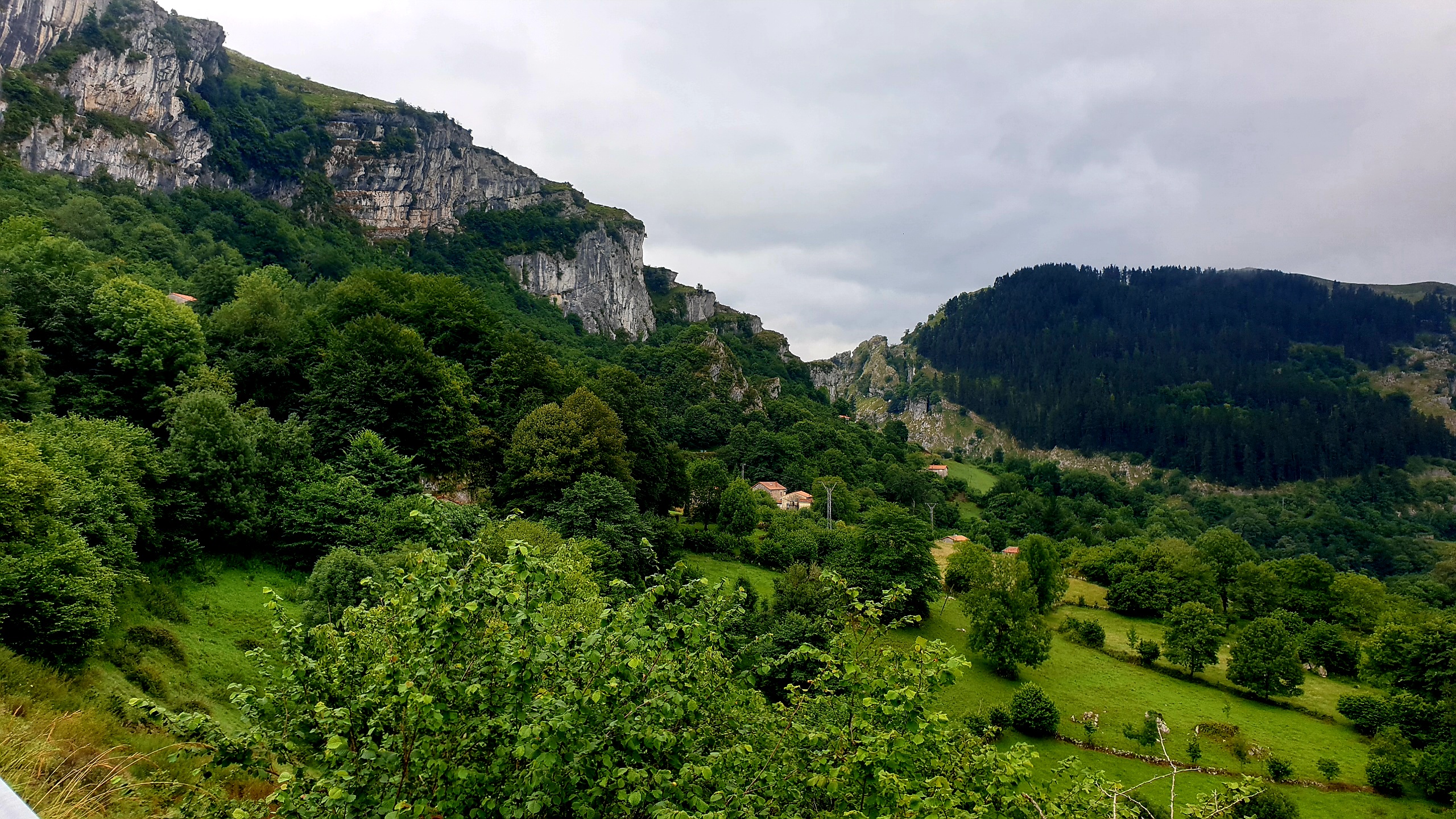
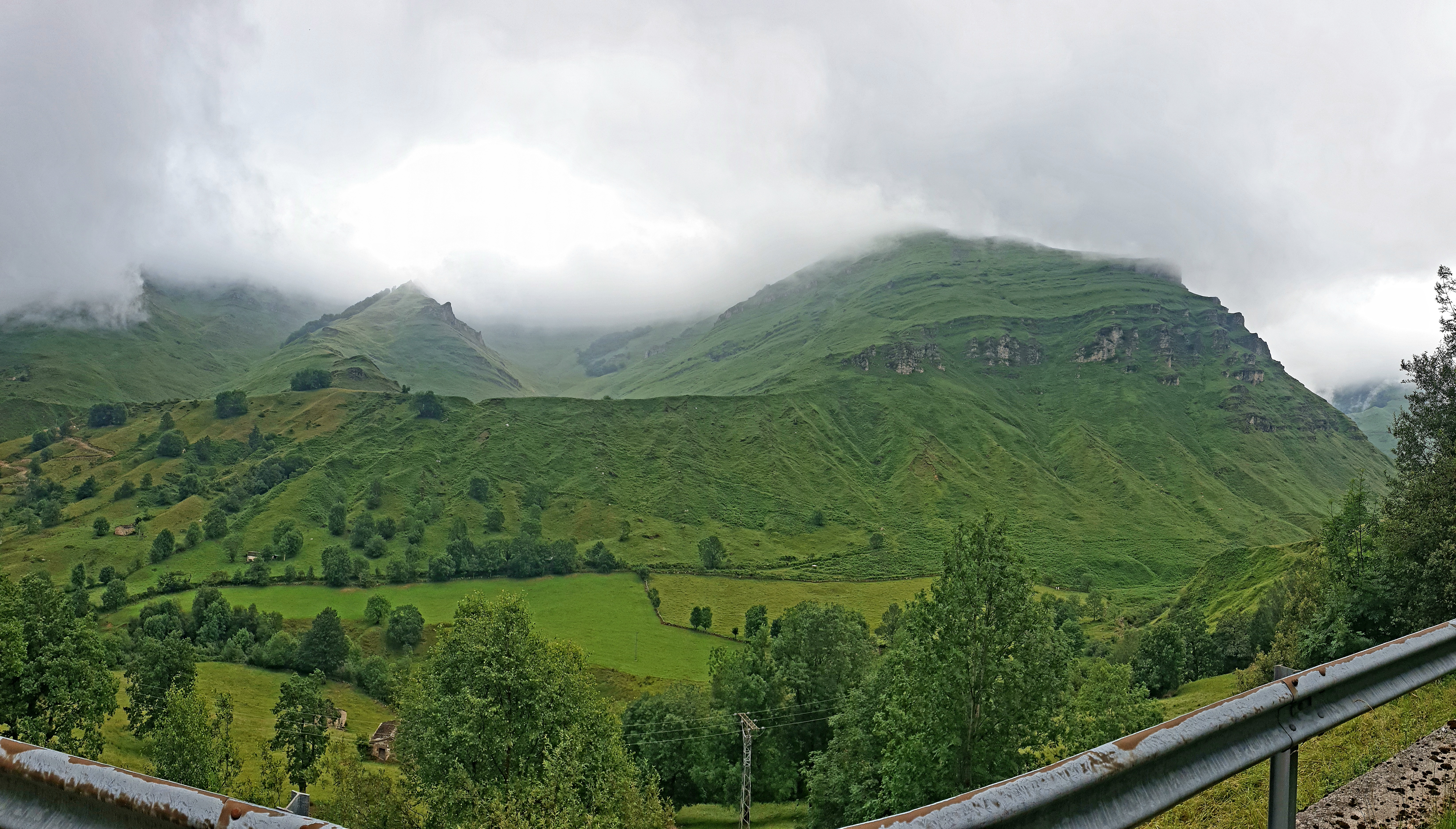
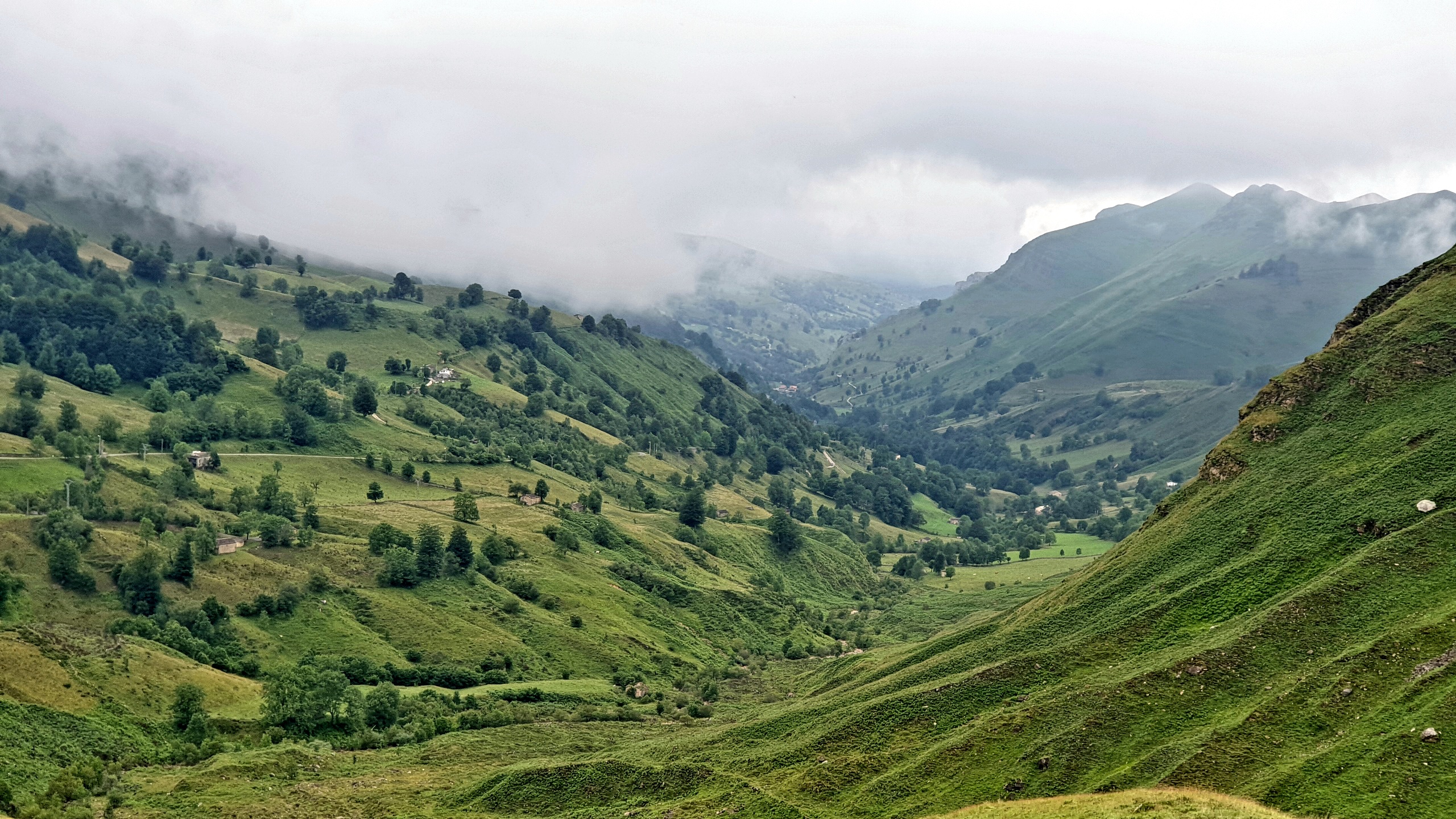
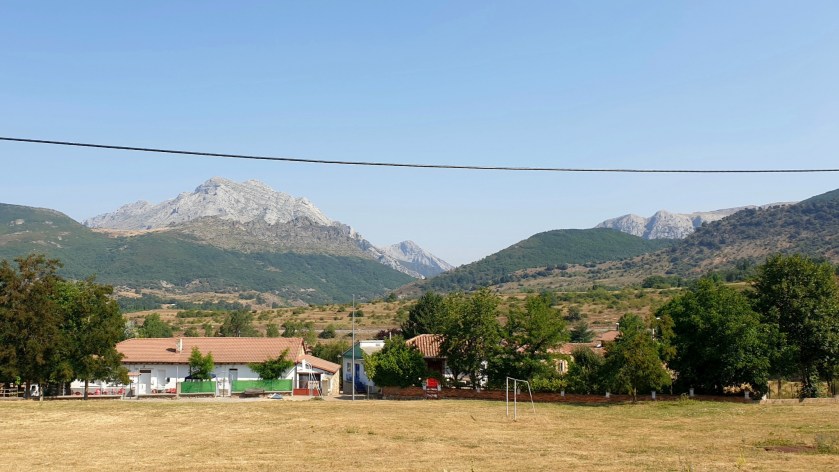
Today looked like a great day for a ride, and it was. Nice and cool at 20c and heading up into the mountains again with the promise of wonderful views and fantastic roads. We weren’t disappointed.

East on the N-VI for a little way then NE on the LE-450 onto the LE-451 then the LE-493 to La Robla, which has a fairly serious open cut quarry thing happening. We stopped for a coffee with the locals sitting in the sun like lizards.

We’re now heading east on the CL-626 which skirts the mountains just there to our left as we snaked along to Sabero where we pick up the N-621 heading north into the mountains.
We also picked up the Rio Esla which, at 285klm, is a pretty decent river and has more flow than the Douro River which it flows in to and which we’d followed a few days previously.

The N-621 follows the Rio Esla all the way to it’s source. It also takes us all the way to Potes.
There’s a power station just east of Las Salas with a substantial lake behind it.
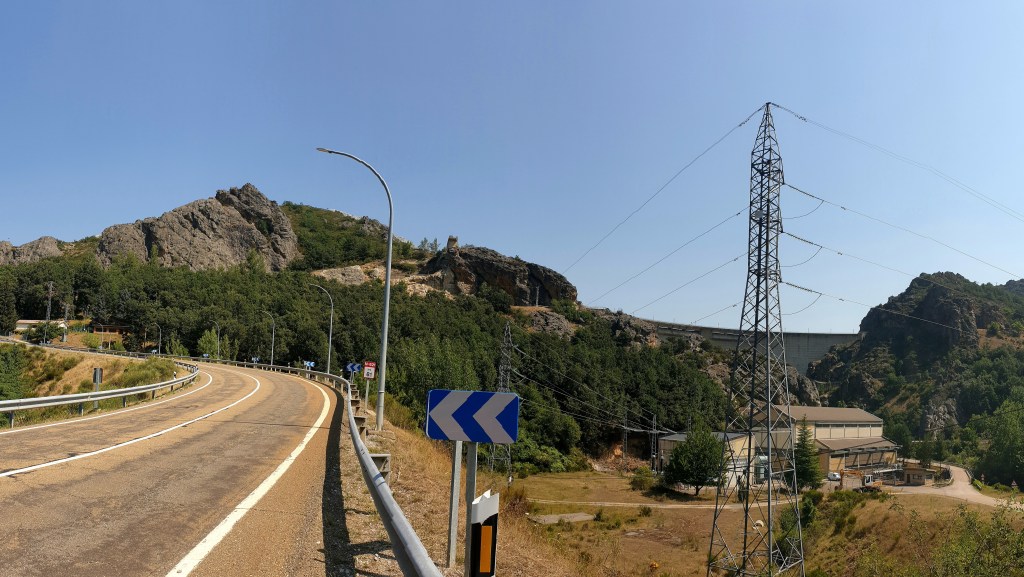
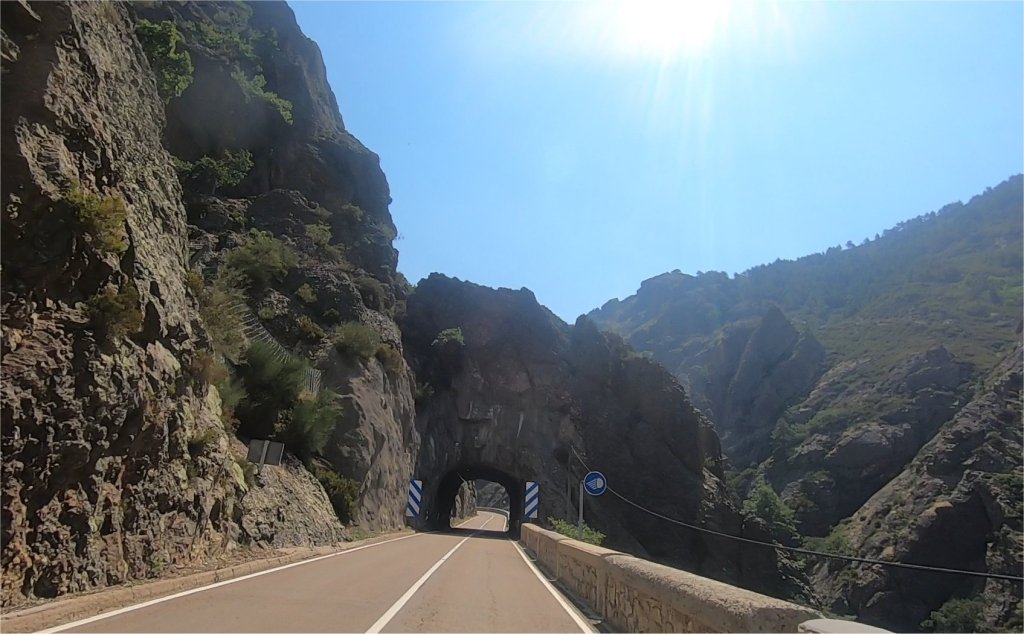
It ‘s a gorgeous ride through here with hardly anyone else on the road.
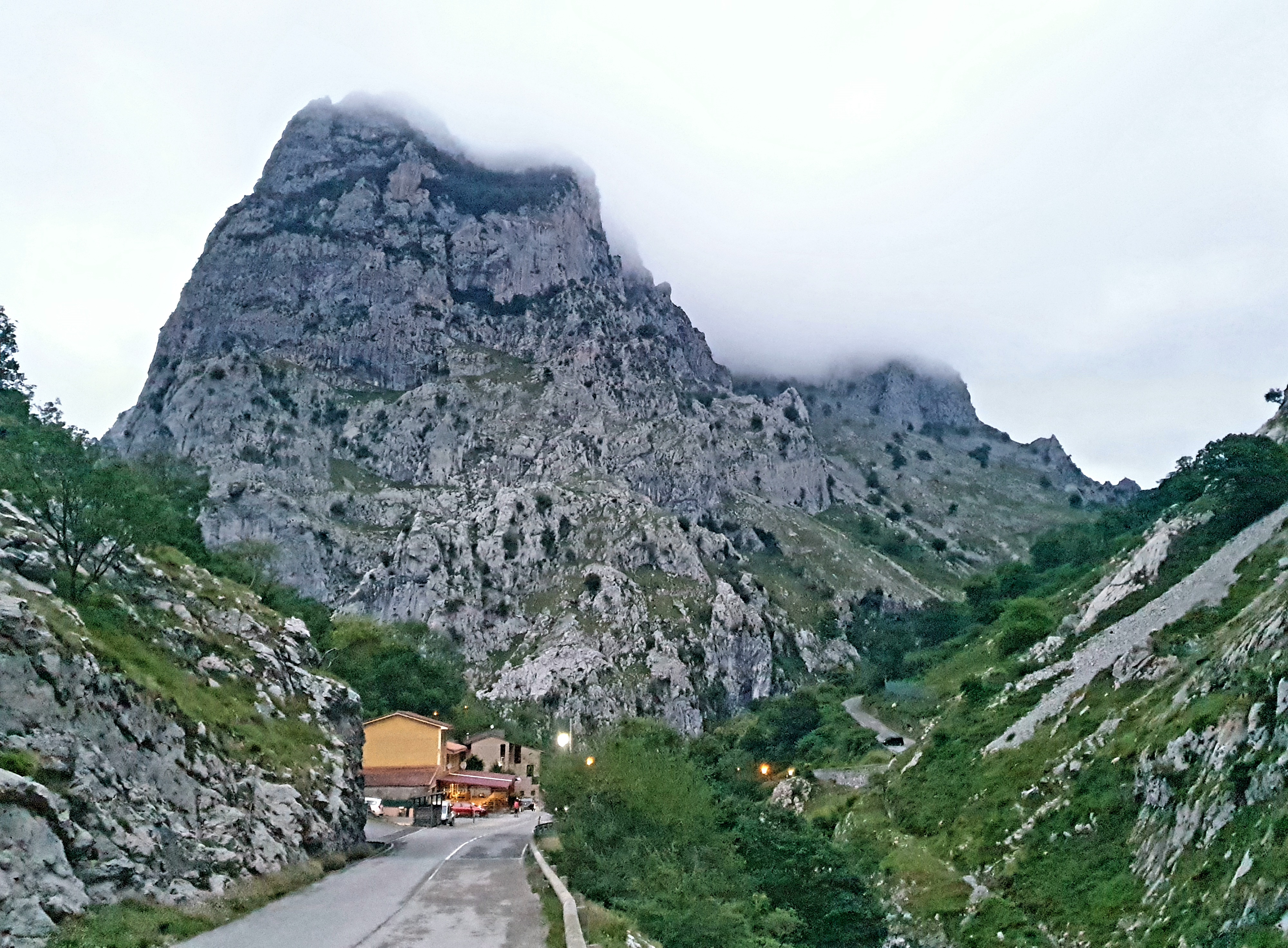
Riaño is our next port of call with the stark and prominent Pico Gilbo.

A little ways up the road is Boca de Huérgano with it’s Antiguo Puente de Boca de Huérgano which was built in the 15th century.
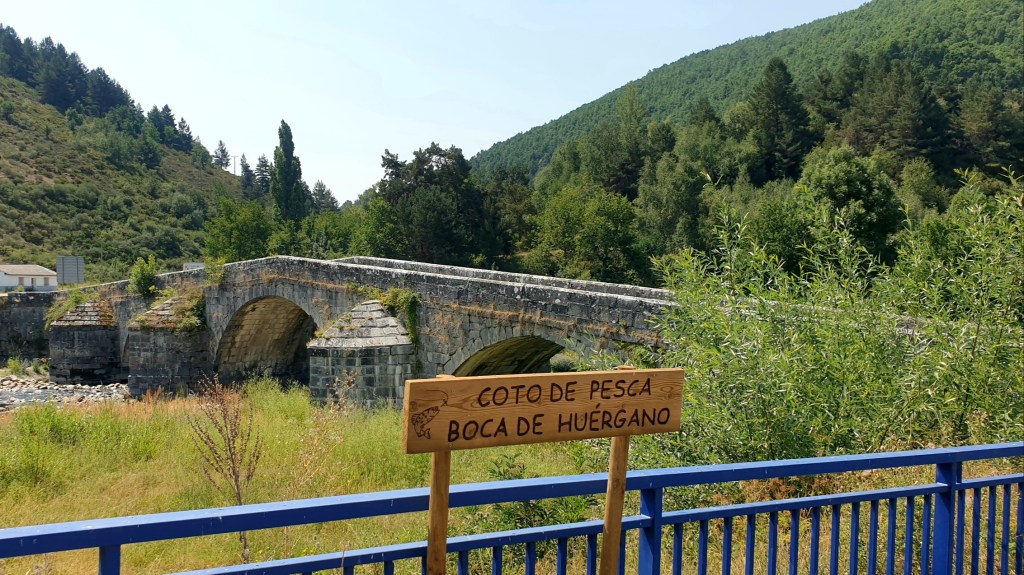
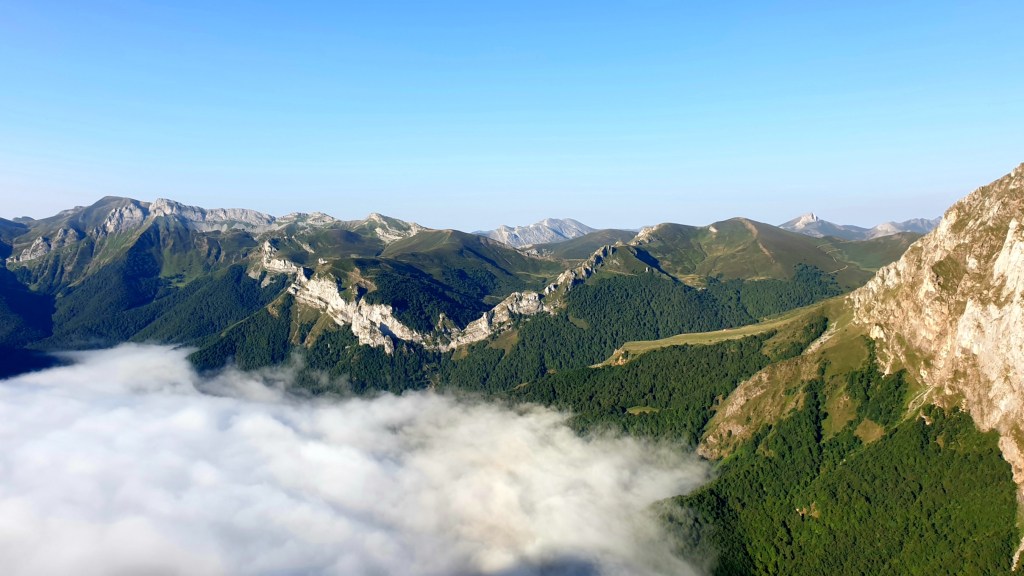
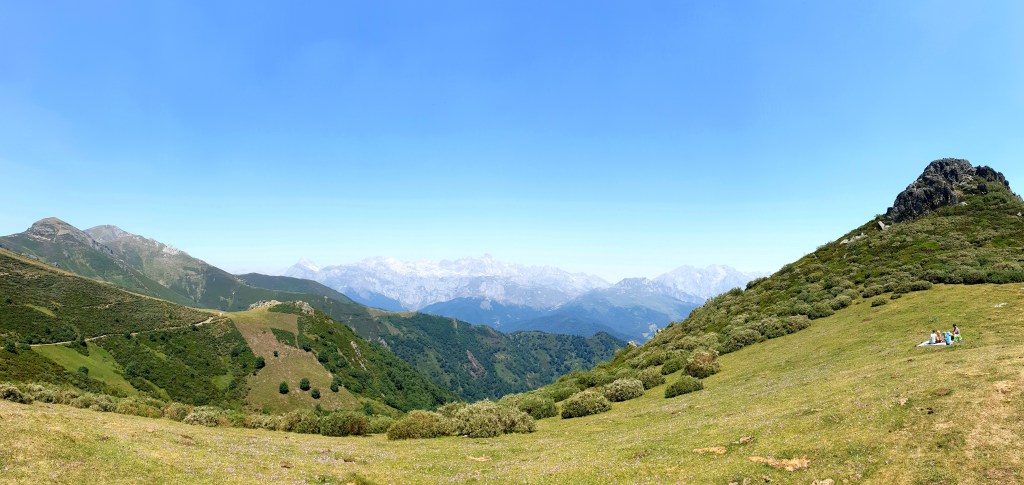
We’ve still got over 5oklms to go so we push on to Collado de Llesba and its magnificent views north into the Picos de Europa.

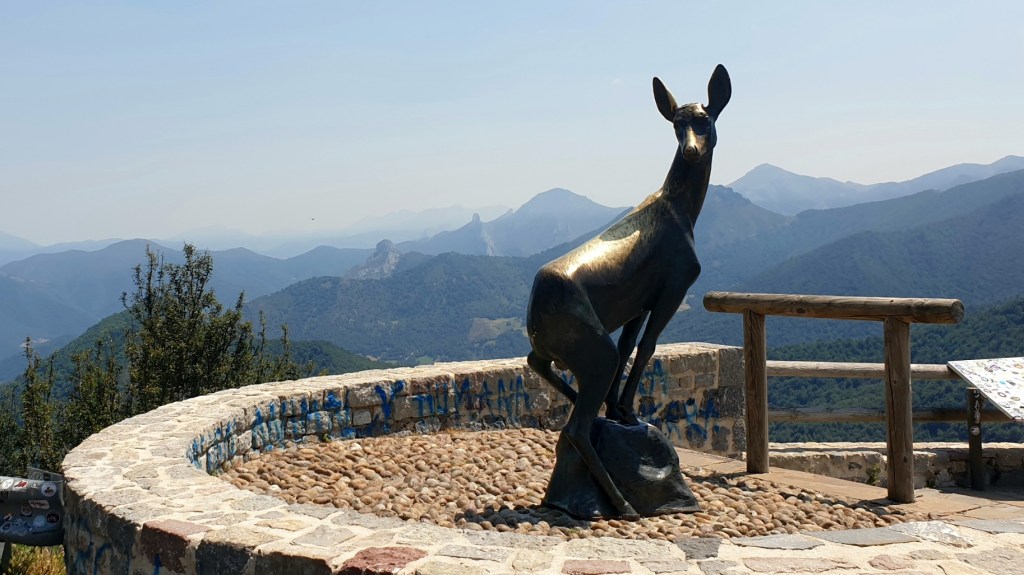
The Llesba viewpoint is is a natural viewpoint at an elevation of 1,682m and is better known as the Bear viewpoint because of its monument to the Brown Bear.
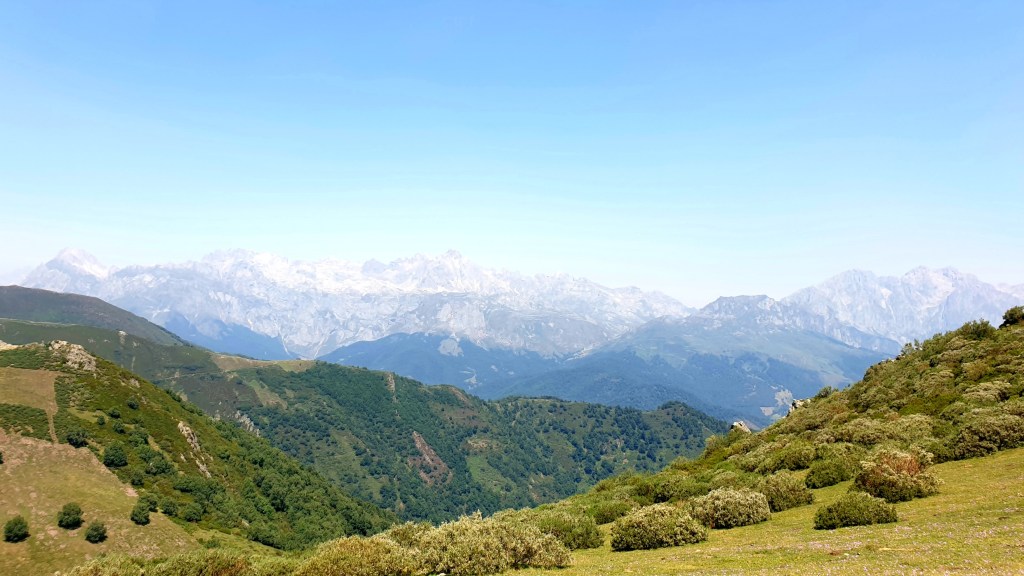
From here its 30klms to Potes and its a serious decent for most of that. A klm from the top we passed a couple on their fully loaded push bikes coming the other way. These 2 were older than we are and we were in awe of their guts and determination, but they did look totally worn out; hats off to them.
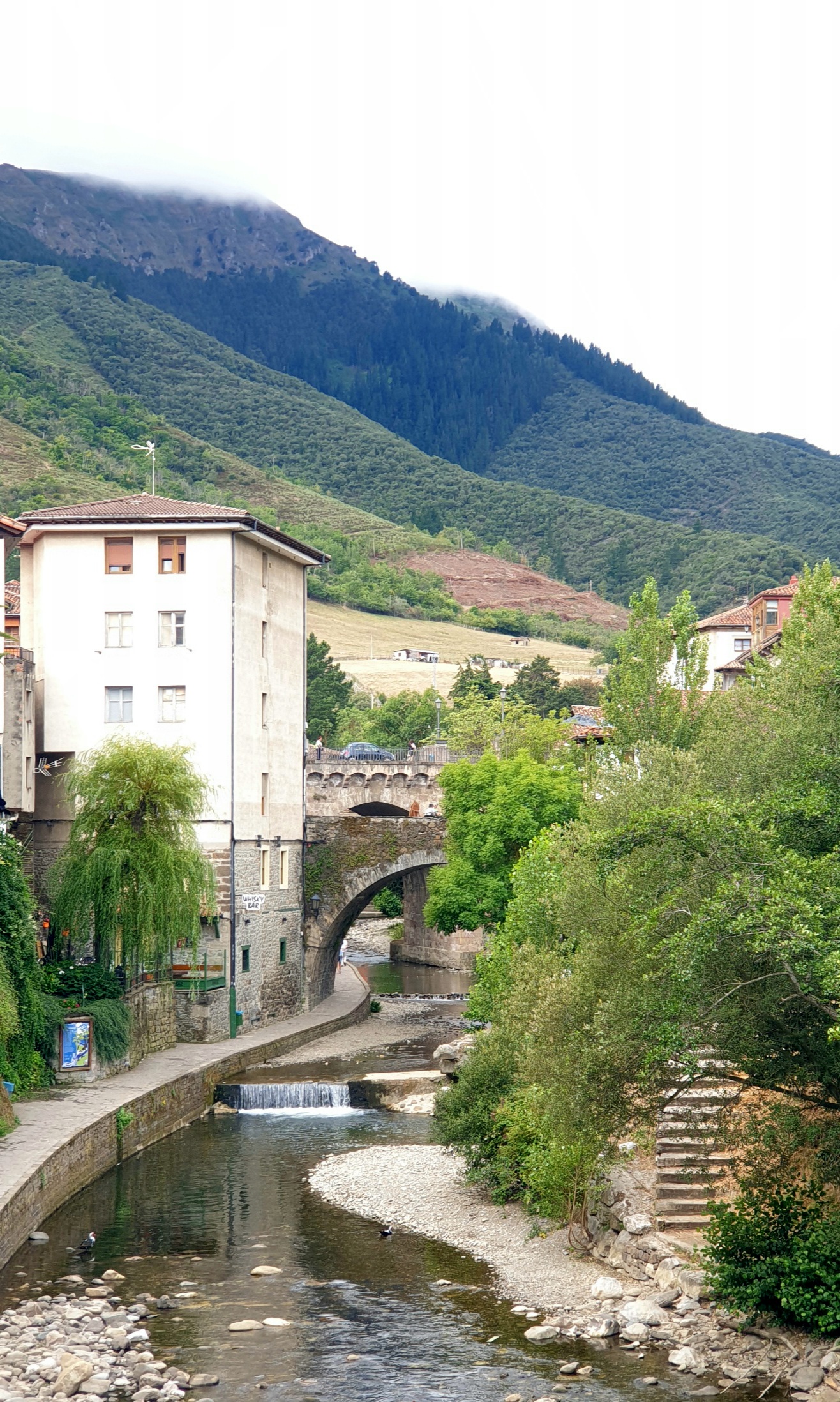
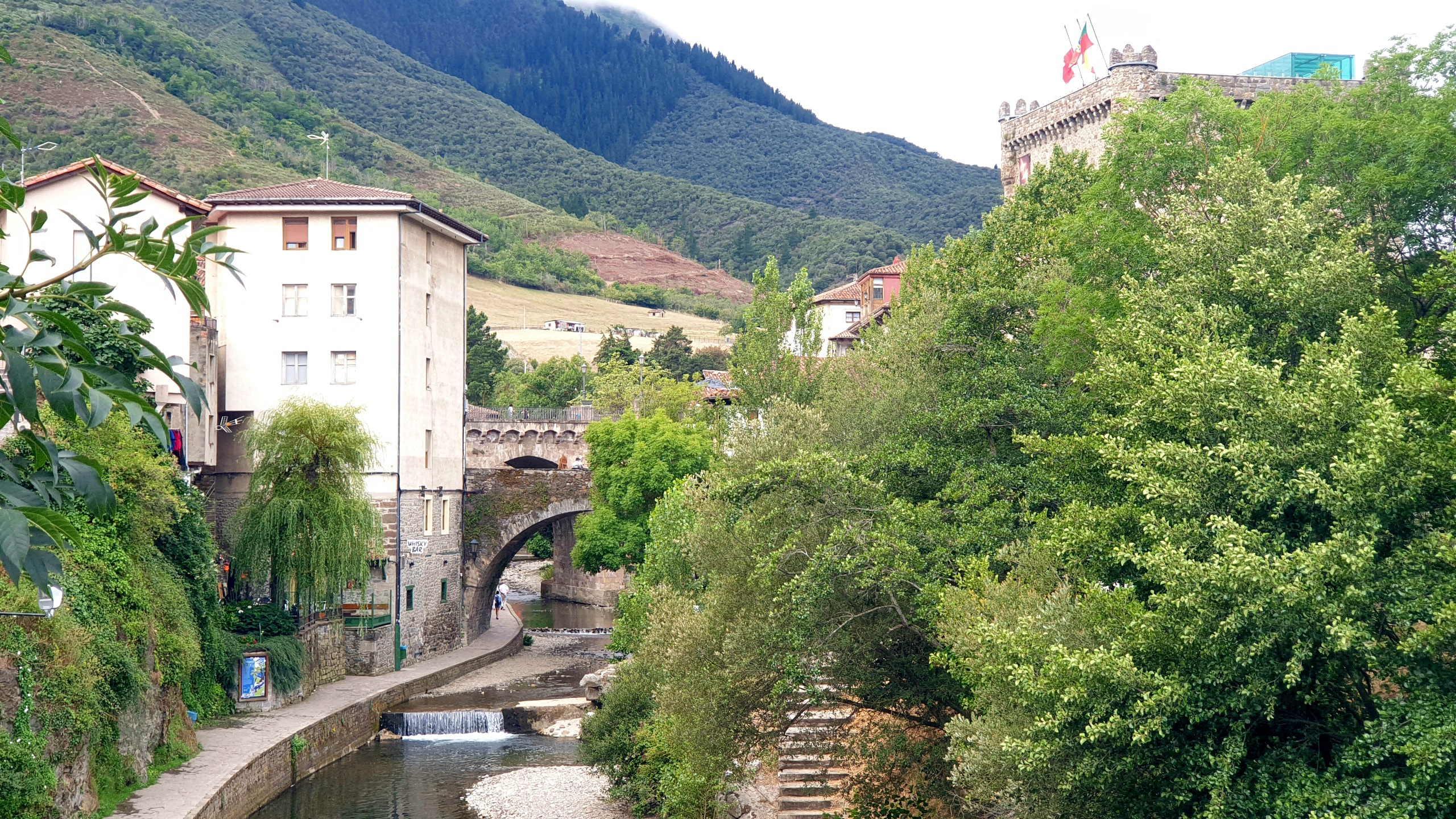
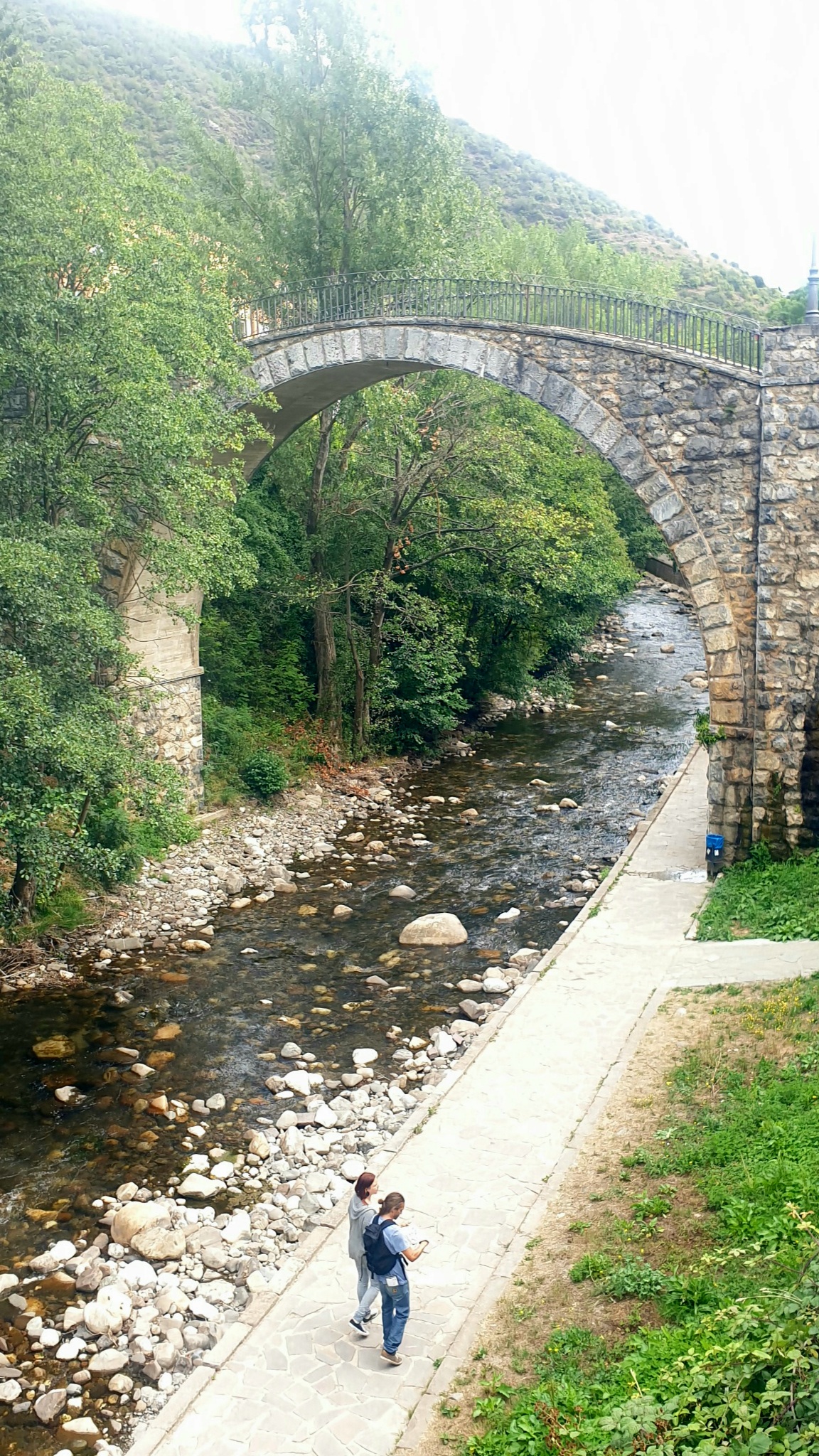
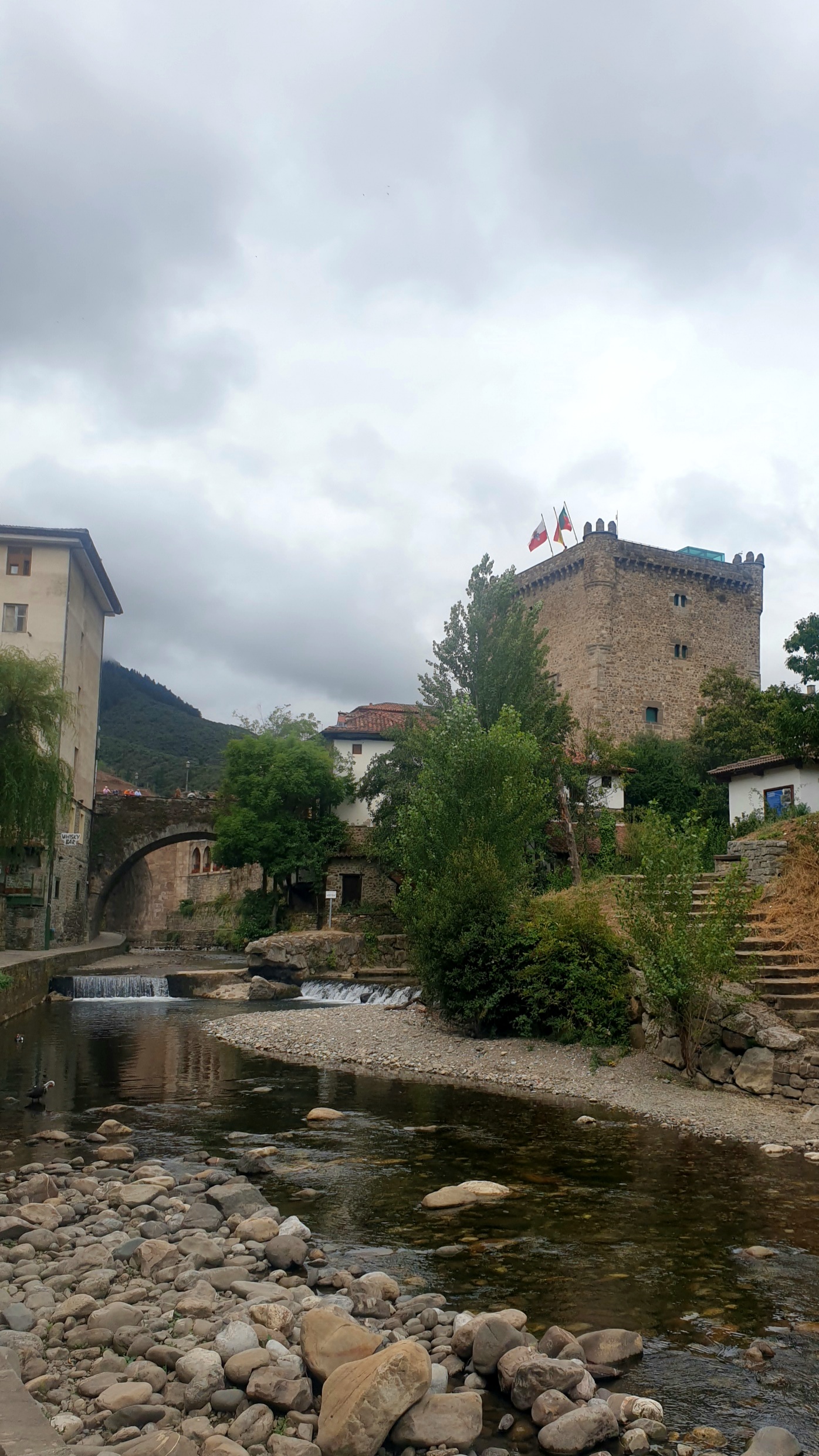
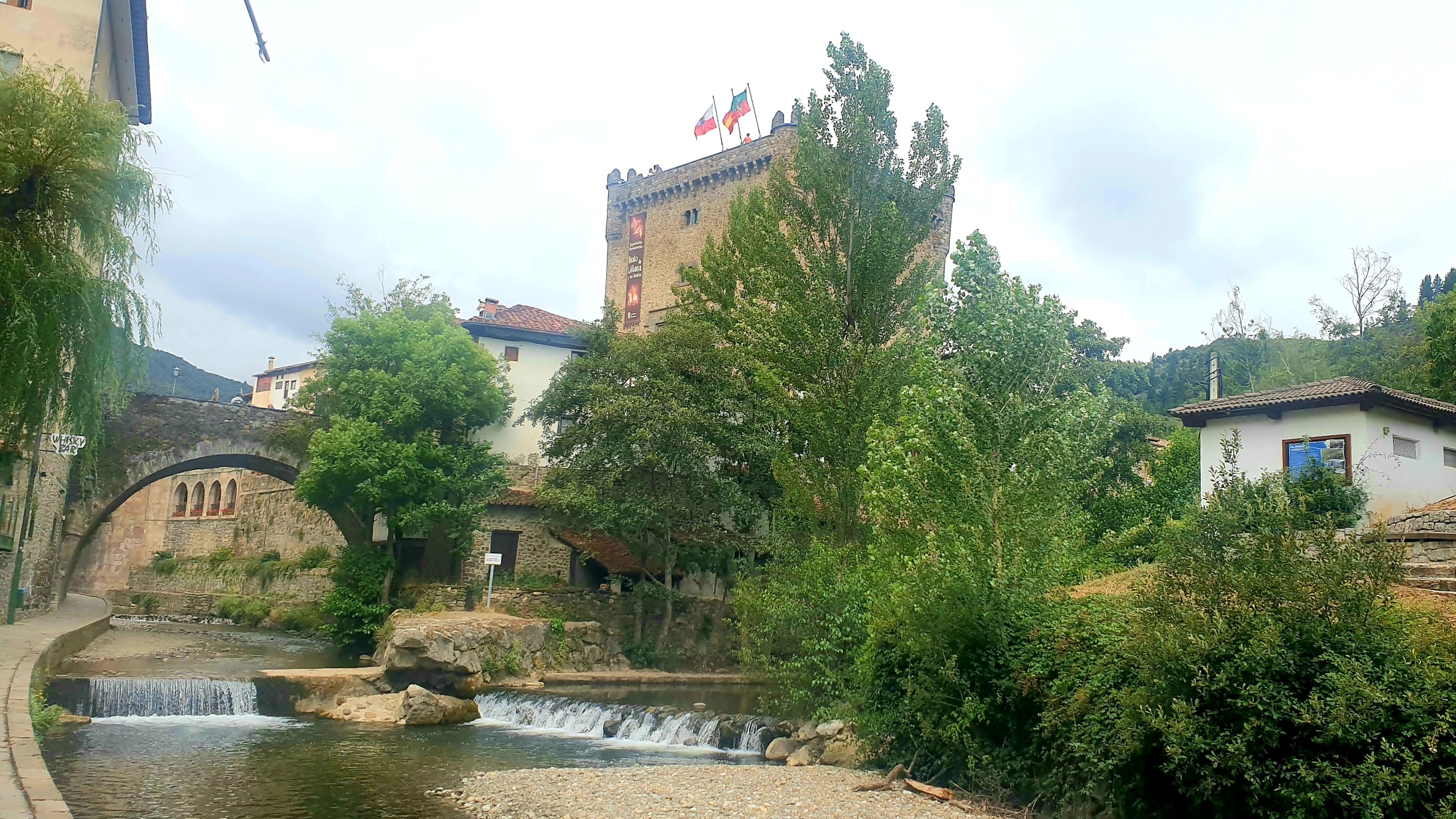
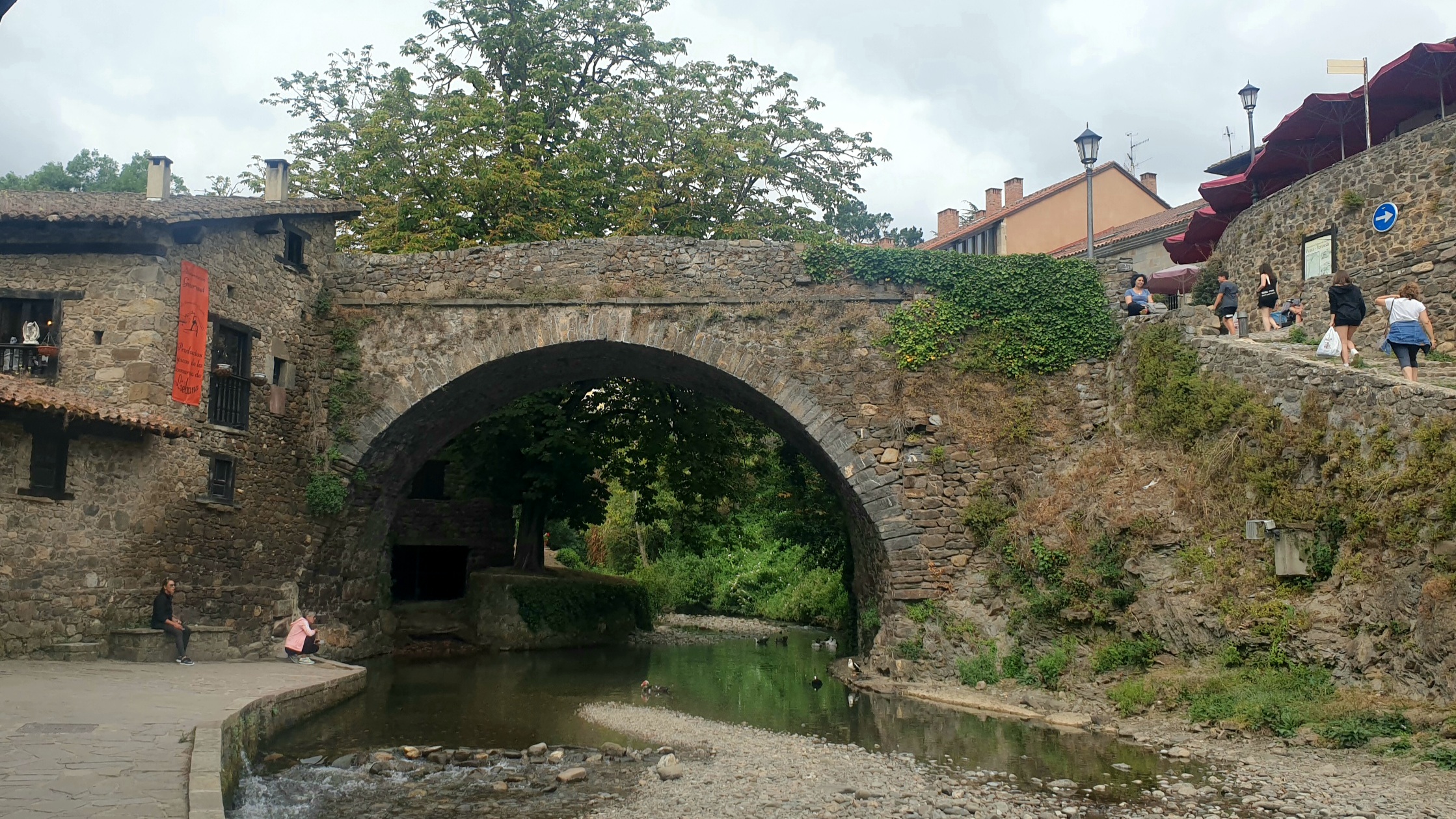
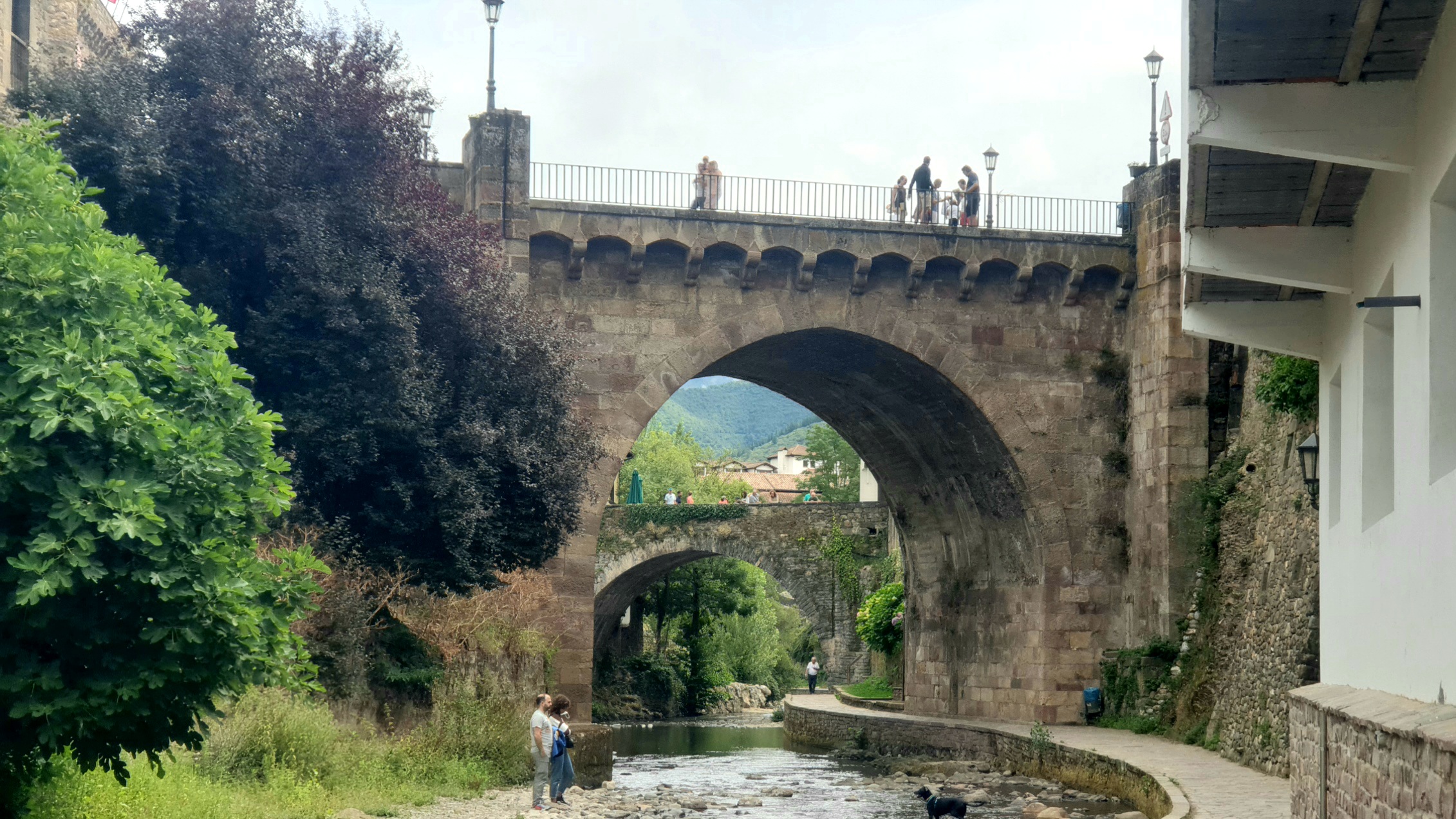
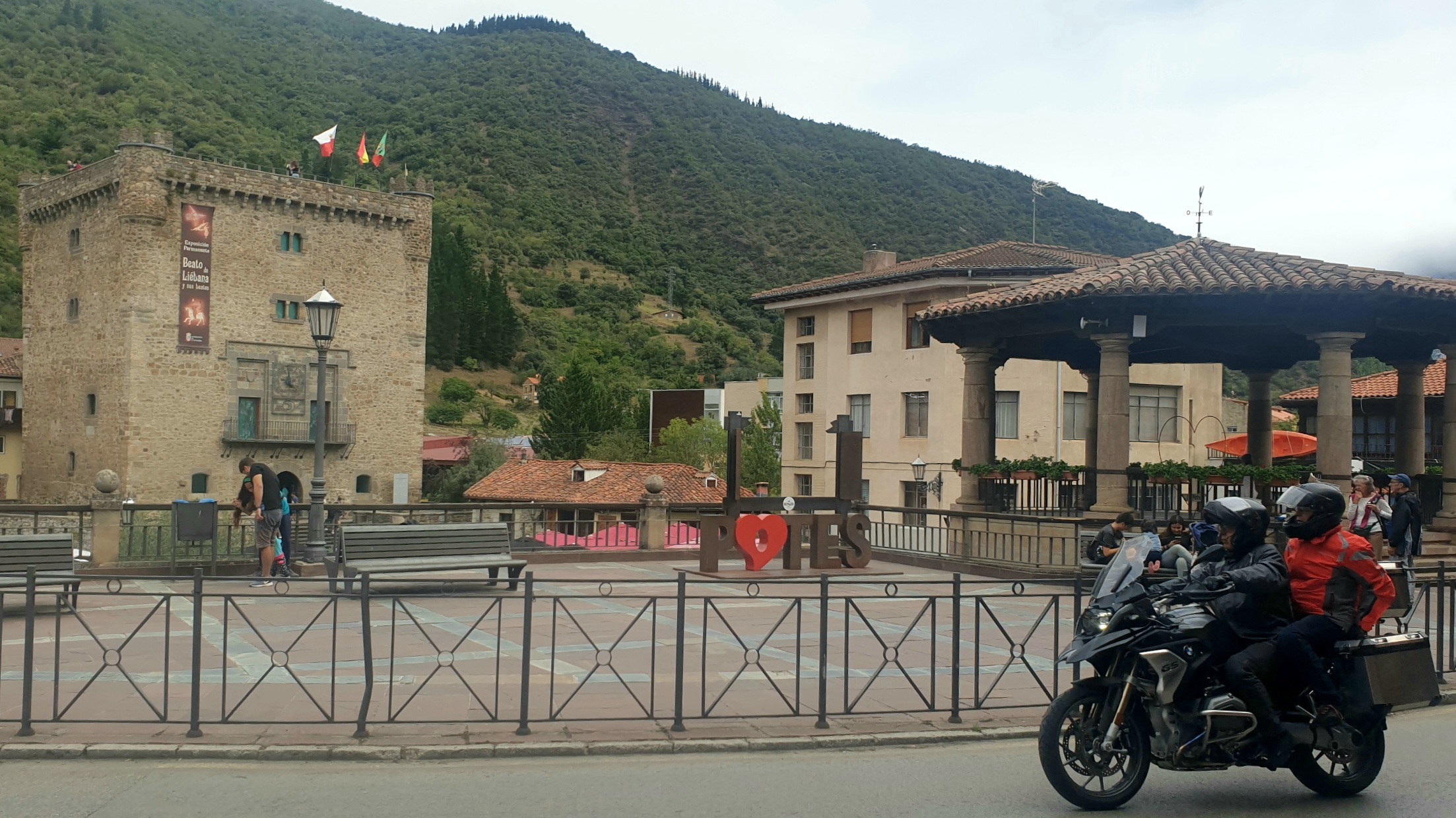
And so in to Potes which was heaving with tourists. It reminded me of Bright in NE Victoria but on a much larger scale. It has lots of bridges.
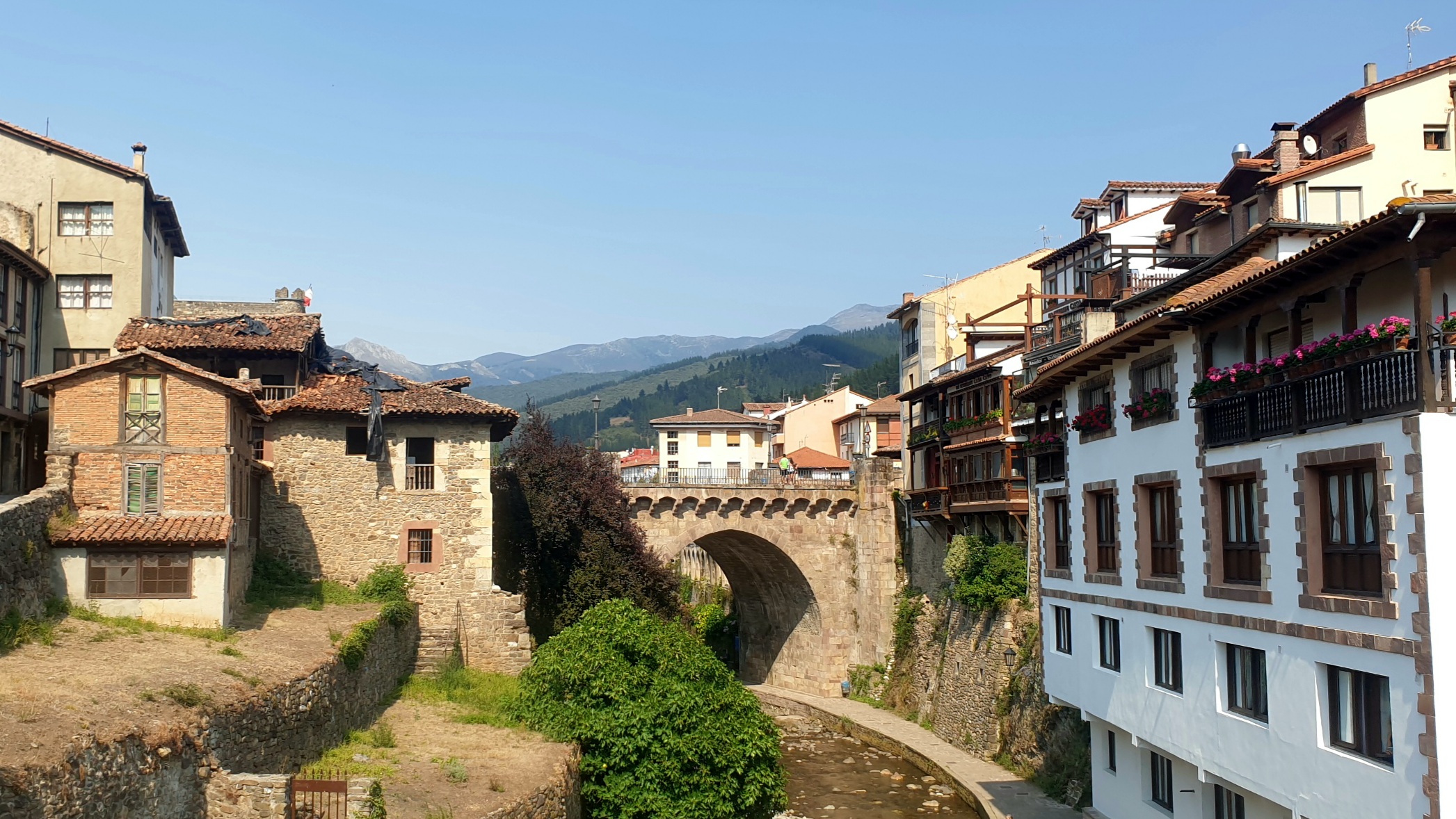
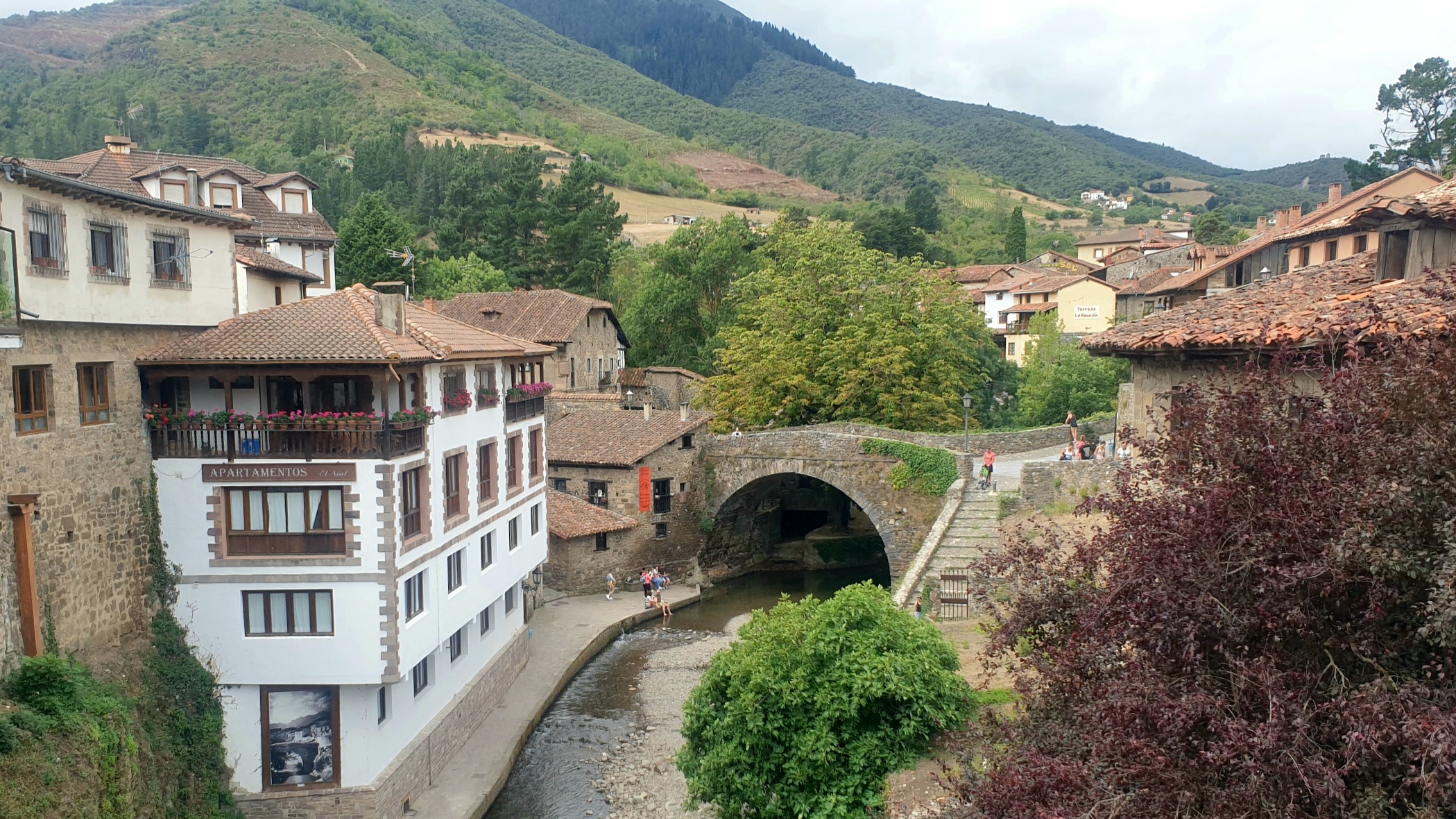
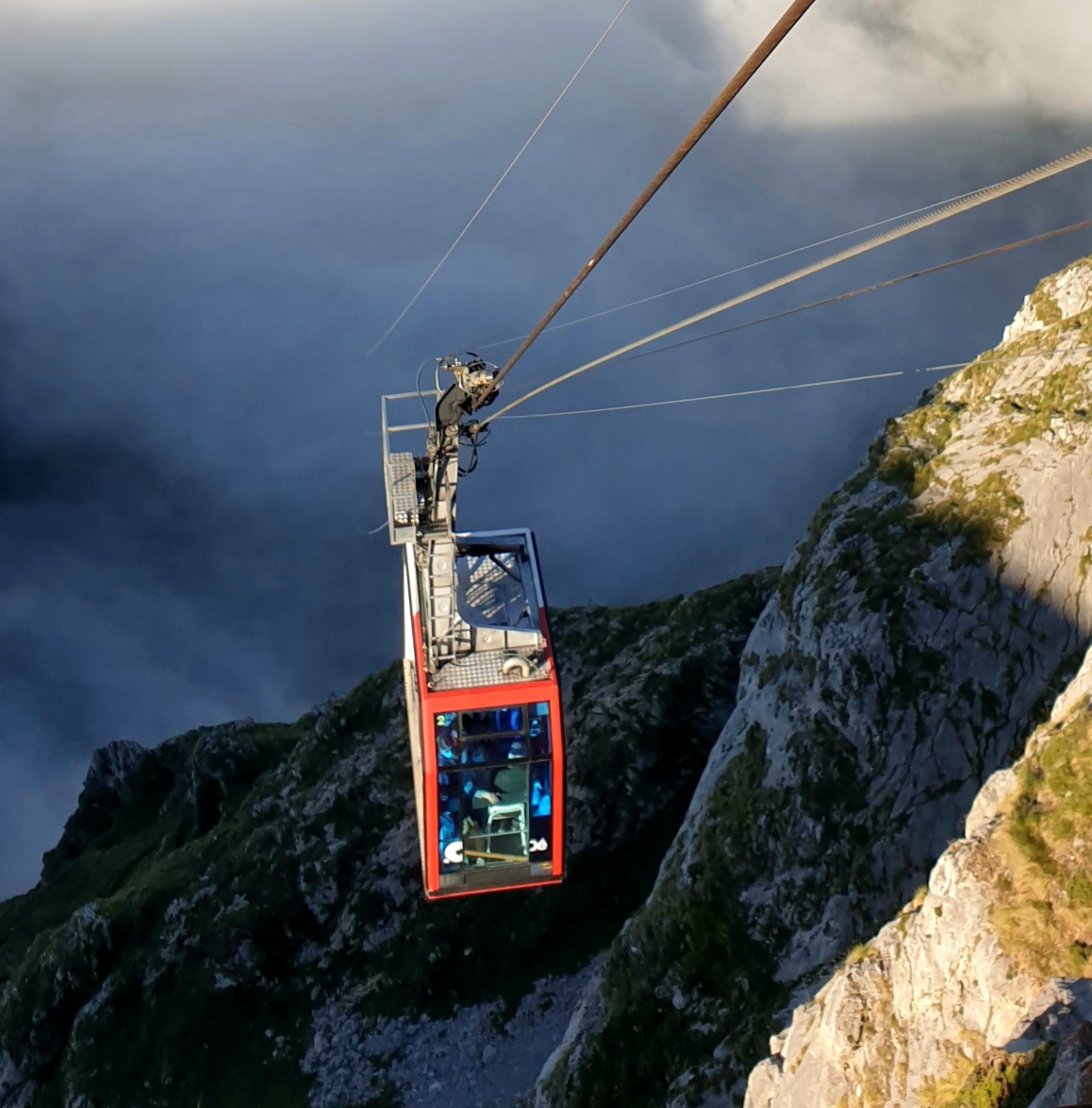
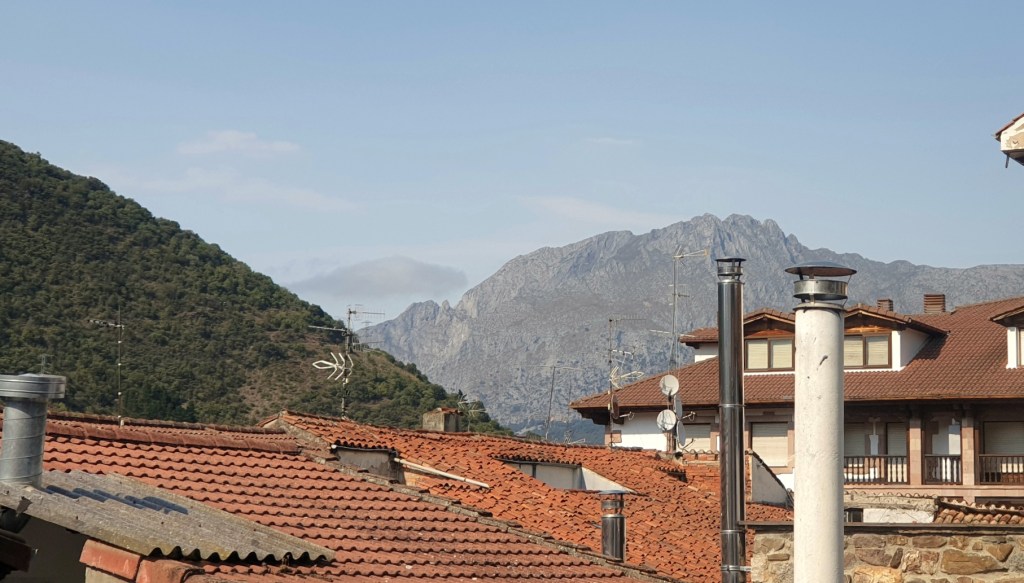
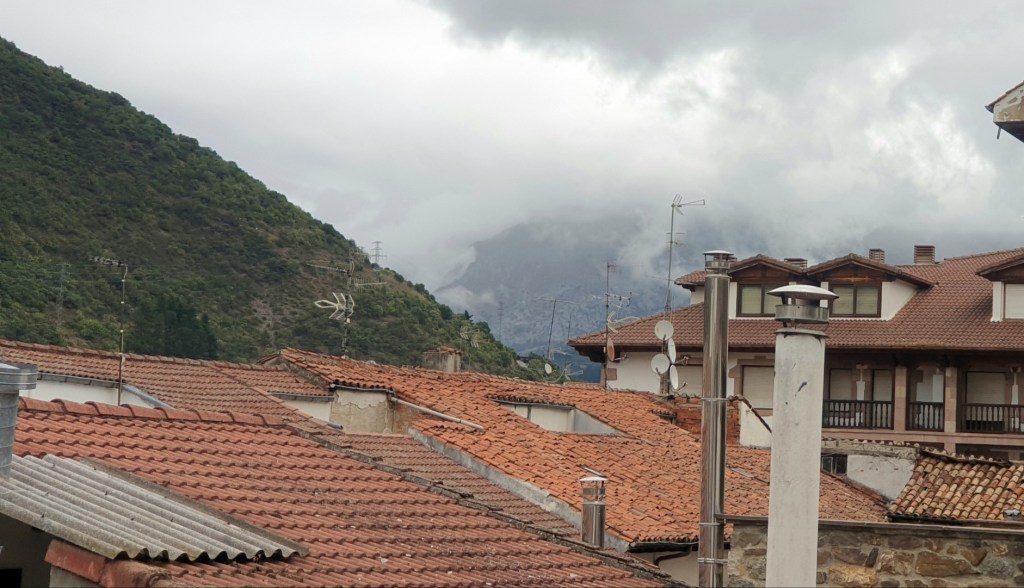
The plan for today, Friday 22nd July, and a Lay Day was to take the 25klm ride up to Fuente De and then catch a Cable Car up to spectacular views out into the Picos de Europa. But today the was forecast was cloud everywhere. We had an enjoyable day anyway sitting on the main drag having coffee and cake and watching the world go by.
Sat 23 July – Potes to Reinosa -190klm
Weather forecasts are strange beasts, but generally fairly accurate in our experience. So last evening we took a chance and booked early tickets on the Fuente De cable car because the forecast said there’d be sunshine up there. And there was.
So first in line, because we don’t do late like all those people behind us, we were in the 8.30am car and headed virtually straight up 753mts.

The views were certainly stunning as usual pictures do not do them justice.

We spent a half hour up there then came down to be greeted by a que that went on forever. That’s why we don’t do late.
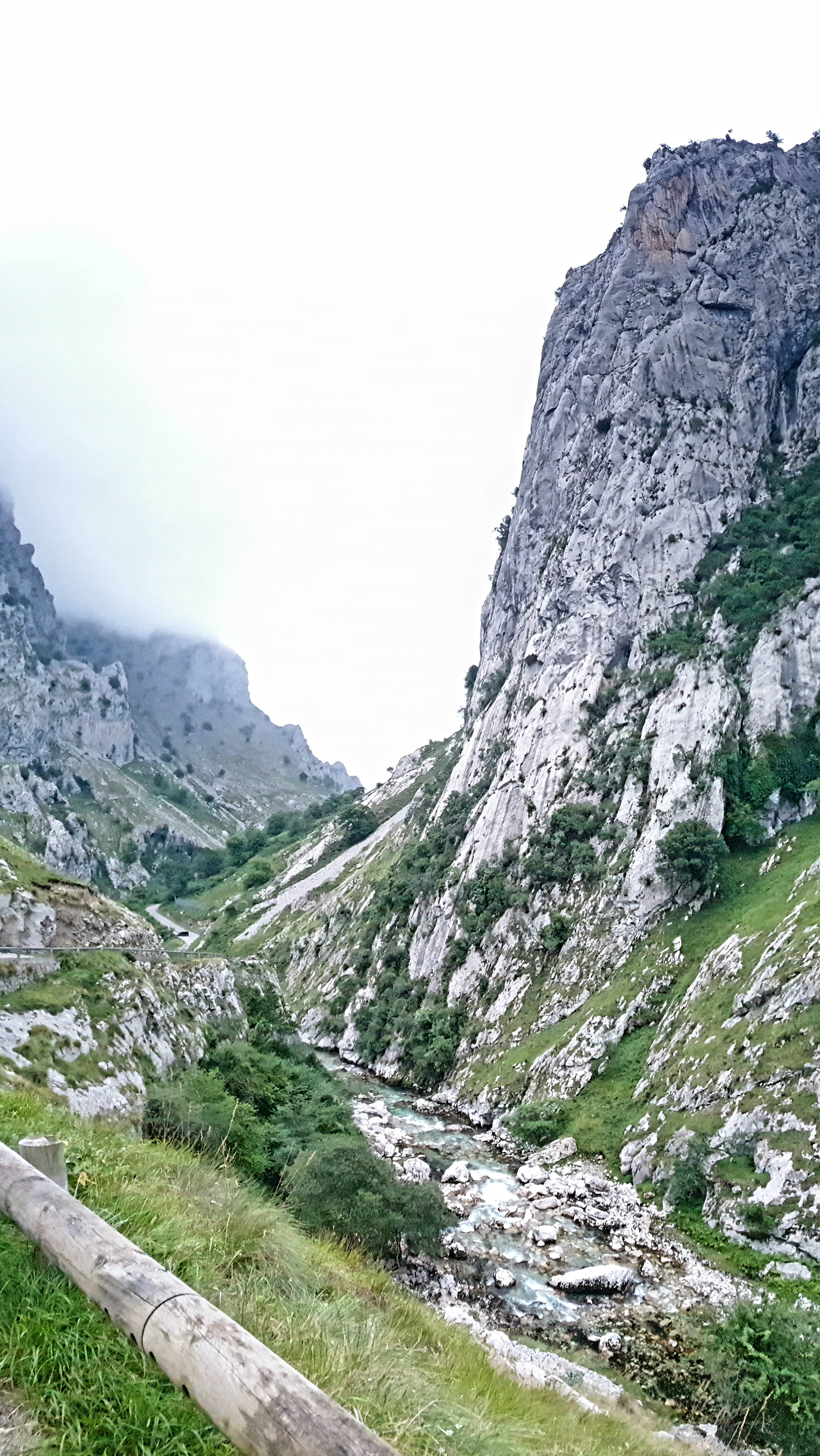
We headed back down the hill to Potes and then took the N-621 north for 15klms. It was a perfect day for a ride through this majestic scenery,
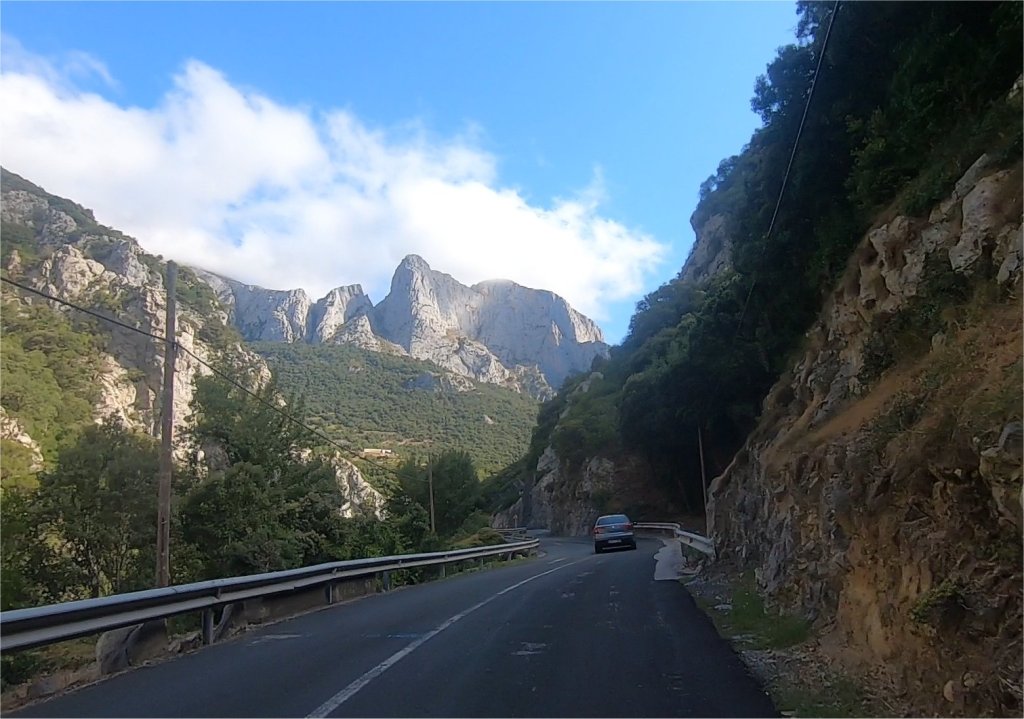
before hanging a right onto the CA-282, which is a glorious bikers road with it’s tight twisties and stunning views through remote back country.
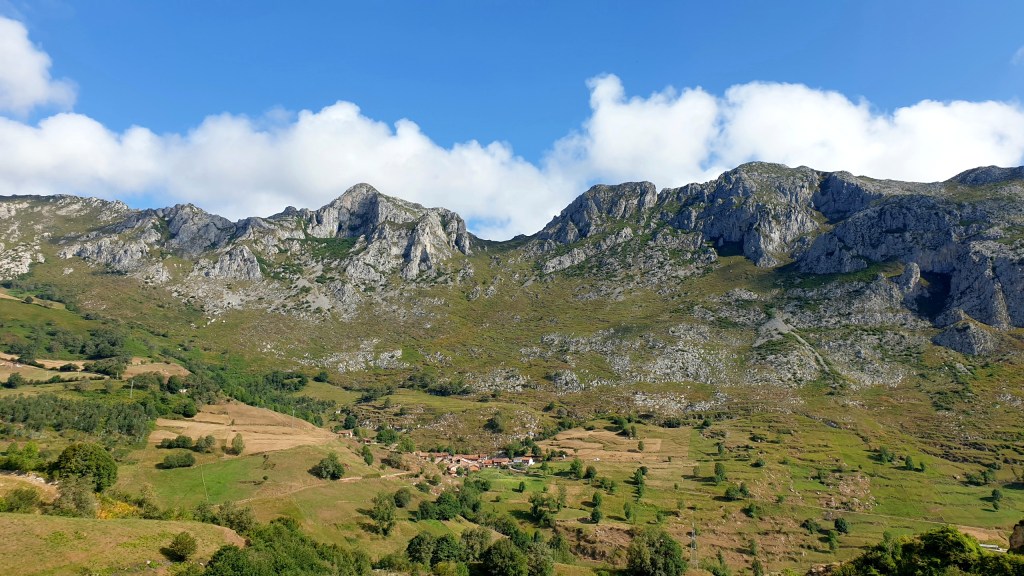
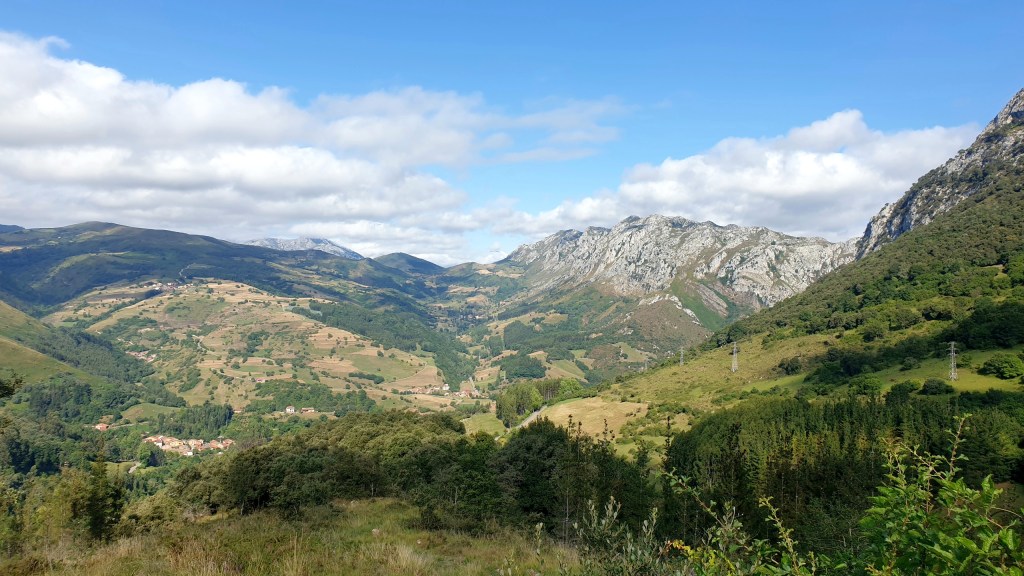
We chased this road along its way for 25klms then stopped for a brew. Sitting there in the middle of nowhere when out of the bush popped all these Scouts. They were a group from Madrid; 17 young kids with 4 young adults as leaders.

Another 10klms and we were on the C-182 then the CA-280 and heading south along another magnificent biker’s dream albeit quite tight. But be careful, these things are everywhere along with their bovine mates.
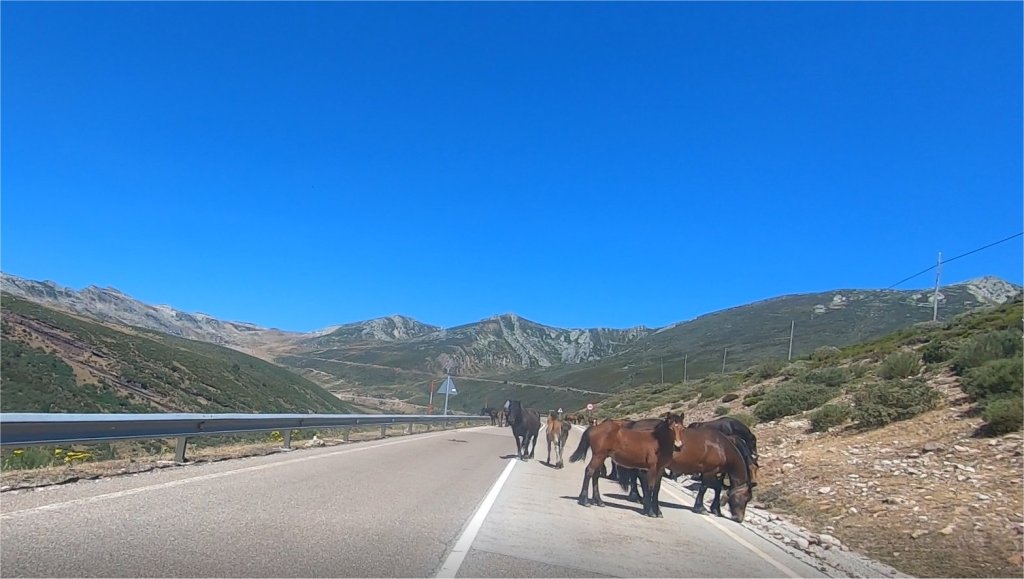
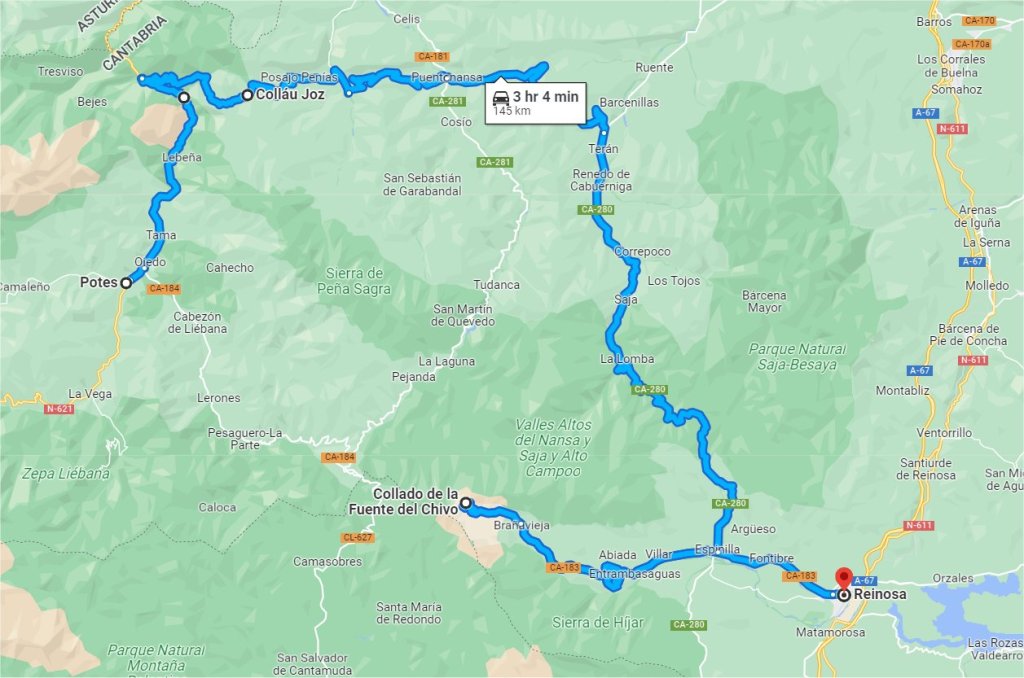
Down the range for 35klms and we took a right onto the CA-183 which was the road that motorbikes were made for; 20 klms of the best road to date. As Norma said ‘You could have had some fun on that by yourself’ I had a heap of fun with both of us.

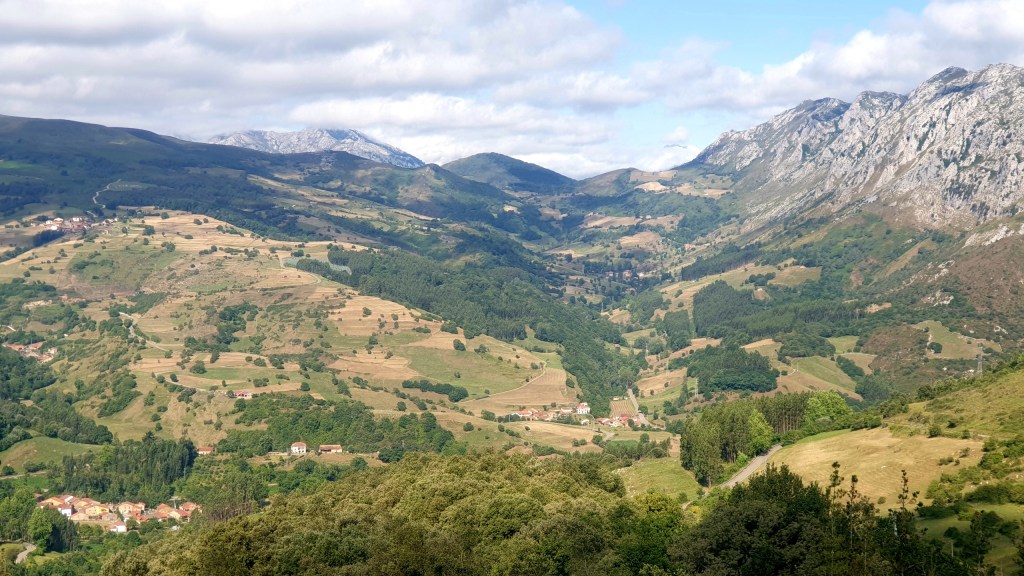
This took us to Collado de la Fuente del Chivo with it’s vistas north and west out over the Pico de Europa. The haze took some of the shine off the views but non the less they were worth the ride. Hey, the ride was worth the ride.
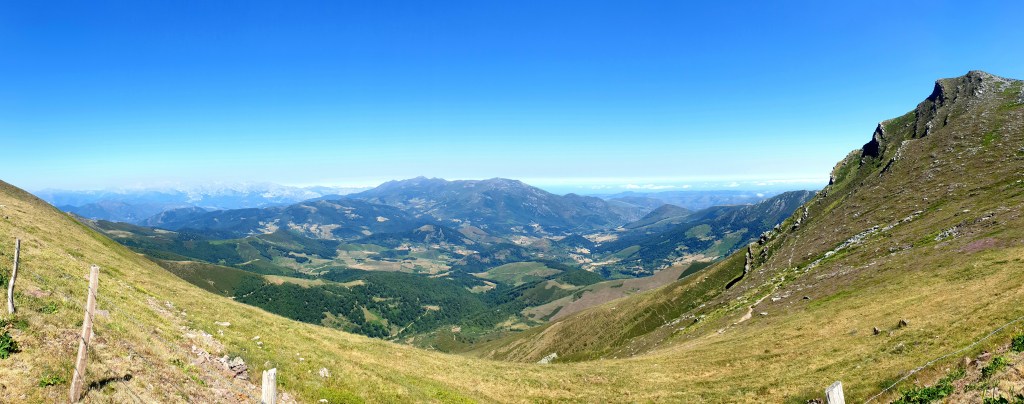
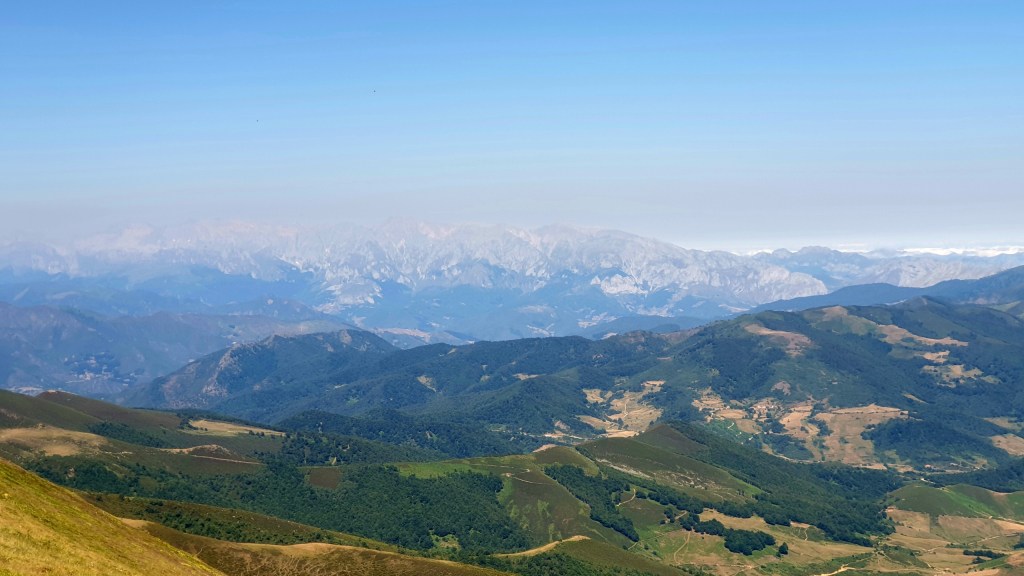
The ride down was pretty fun as well, so we stopped at the bottom for a coffee before the 20klm run into Reinosa. Had a chat with a guy who’d caféd an R100. Very nice.
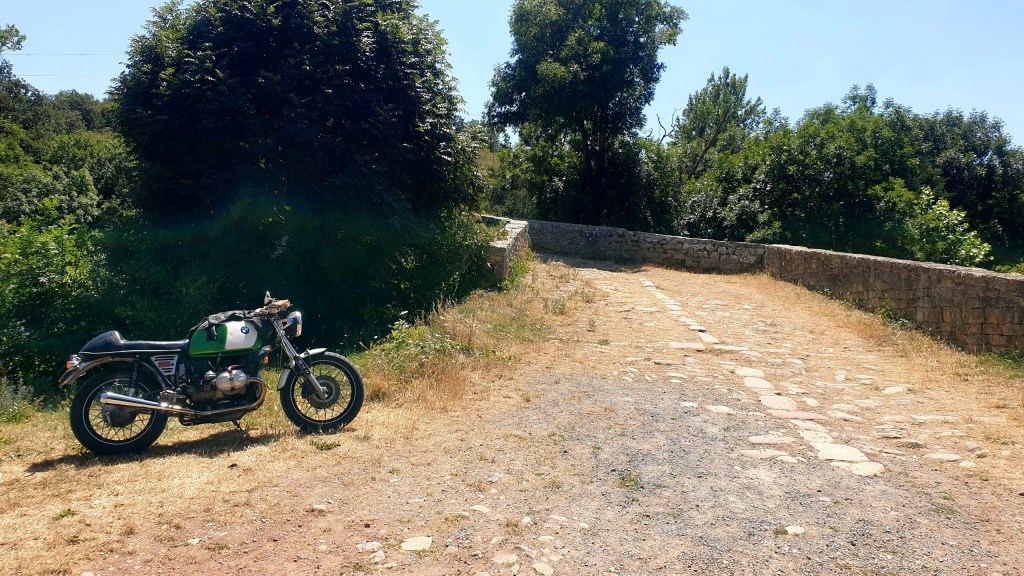
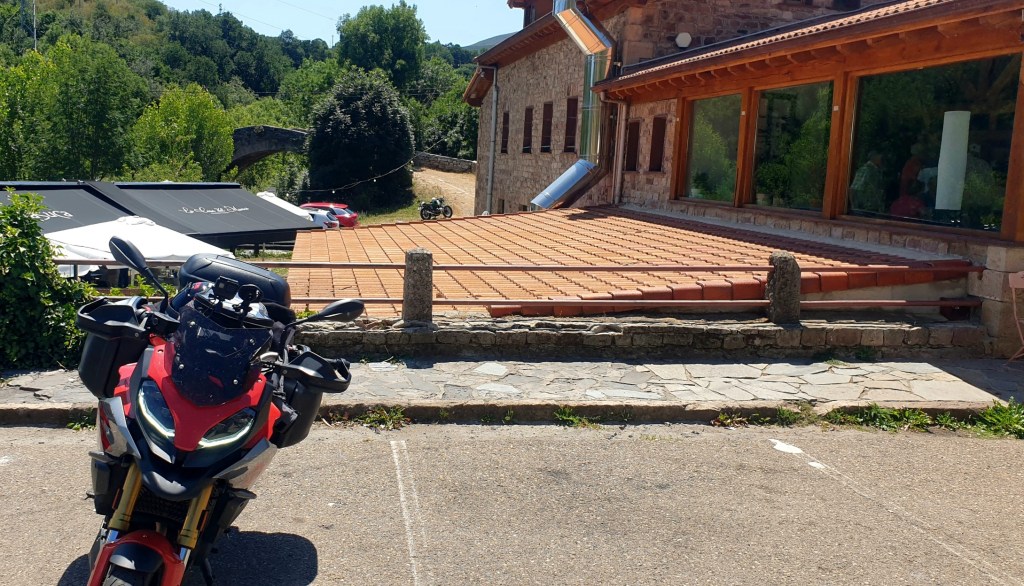
So into Reinosa.

Sun 24 July – Reinosa to Laguardia -185klm
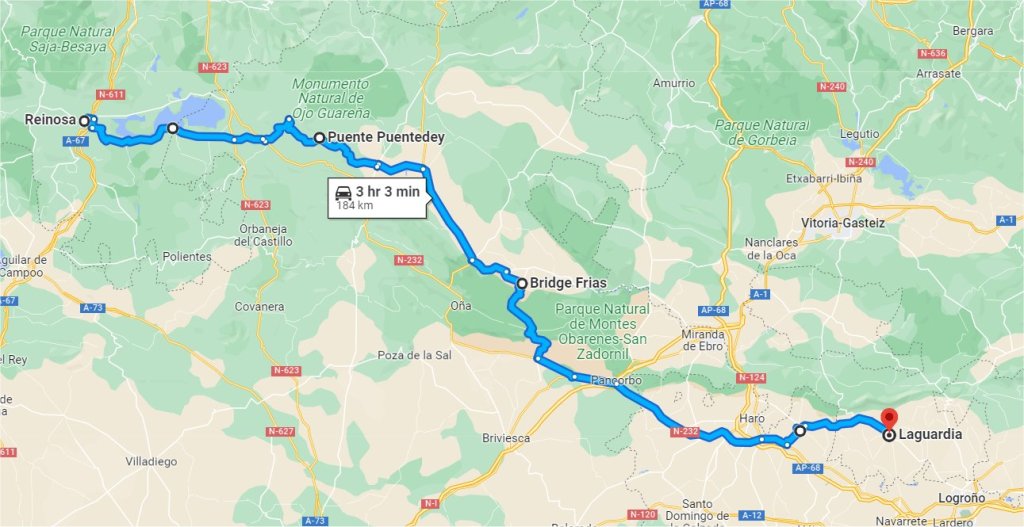
Today threatens to get to 42c so we’re very thankful to our host for an early breakfast and we’re on the road by 8am on a truly magnificent morning.

We’re only 10klms out of Reinosa and spy the Puente de Horna de Ebro to our left so we took a gander.
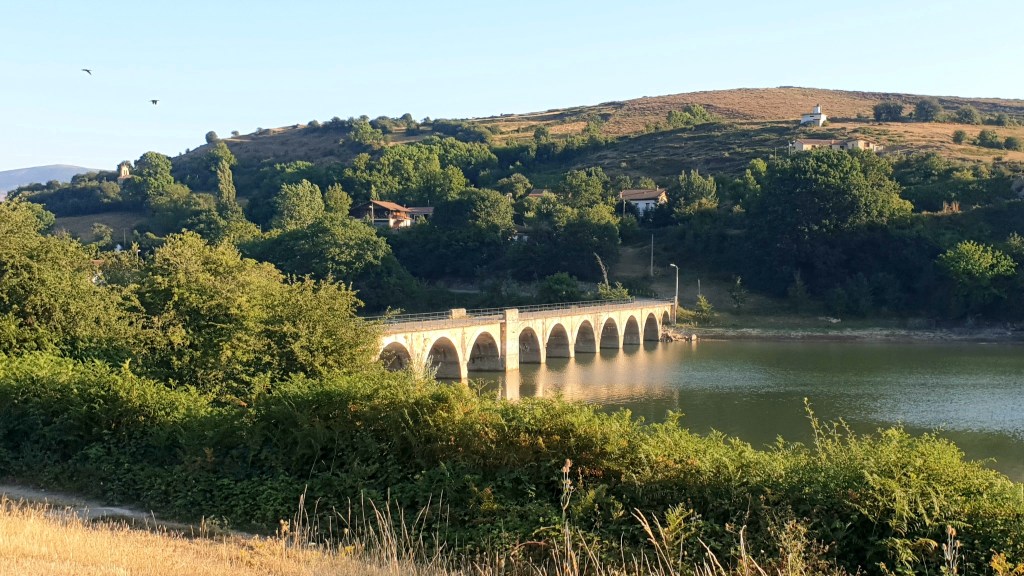
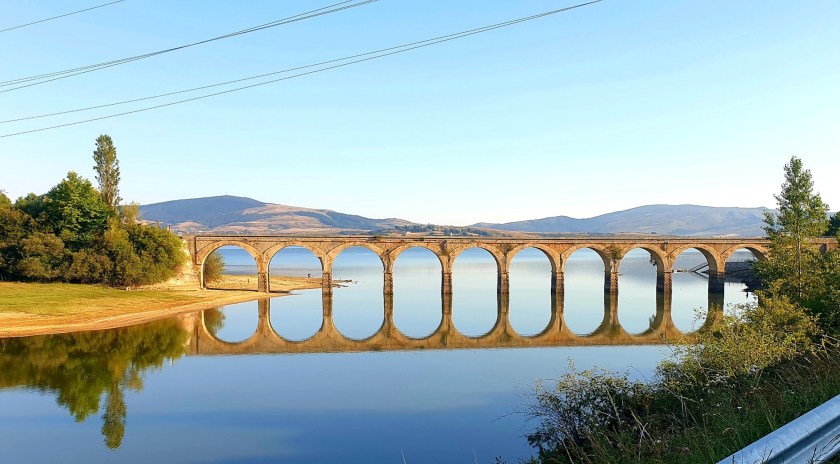
We’re on the southern shore of Ebro Reservoir built between 1921 and 1945. Seems they weren’t in a hurry. Further up the road we encounter the Puente del Tren de la Robla narrow gauge railway bridge. Pretty hey in the calm of the morning.
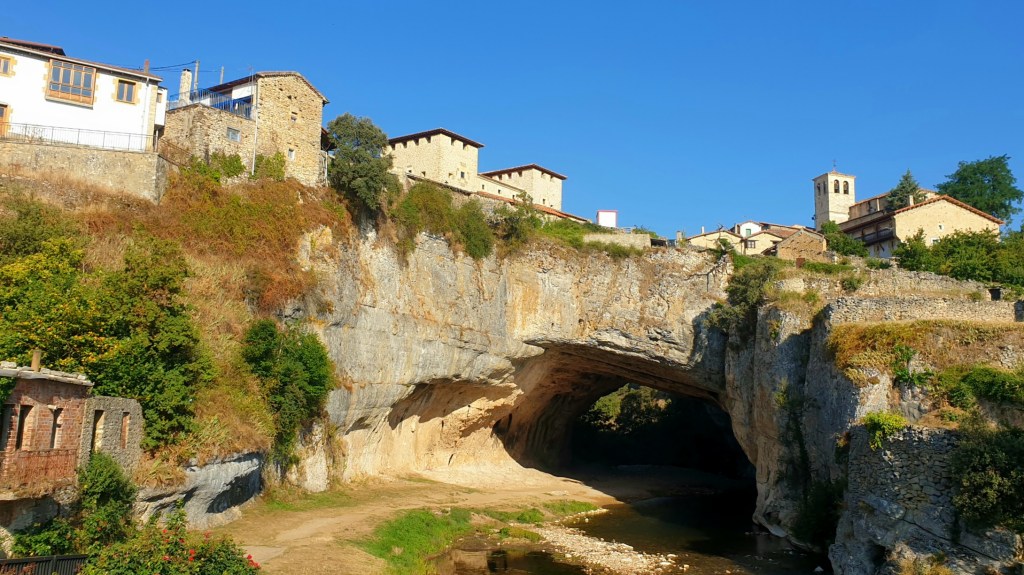
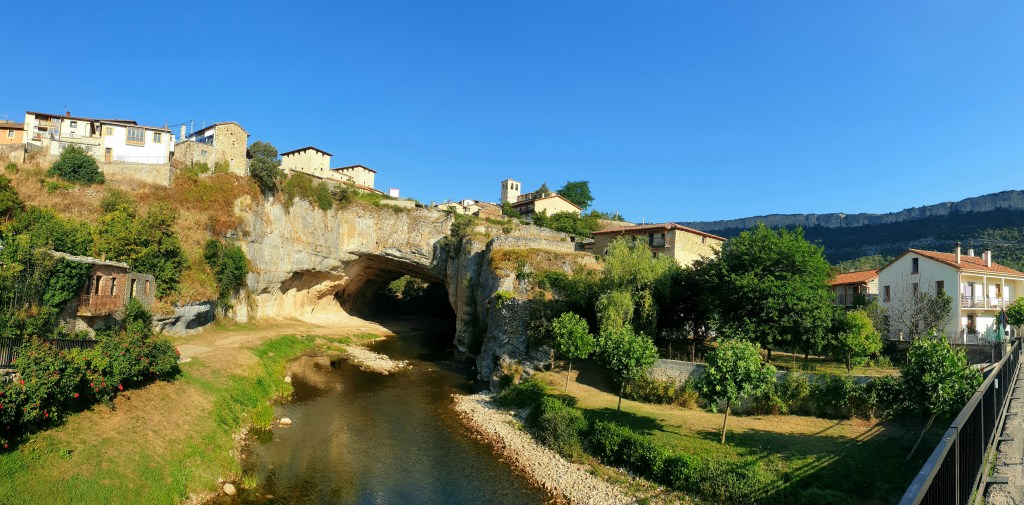
We followed the BU-564 to the N-232 then the BU-561 to Puente natural del río Nela or Nela River Natural Bridge which is a natural bridge that consists of a huge stone arch on which the village of Puentedey is built. We took our time and our photos.
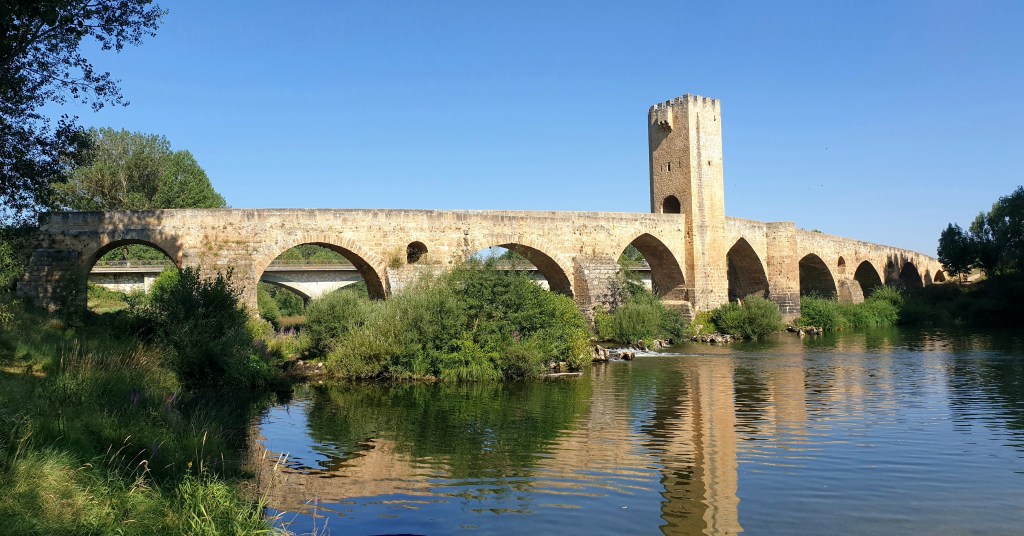
50 klms further SE was Frias with it’s Puente de Frías across the Elbos River. Its predominantly Gothic style construction dates back to the 13th  century.
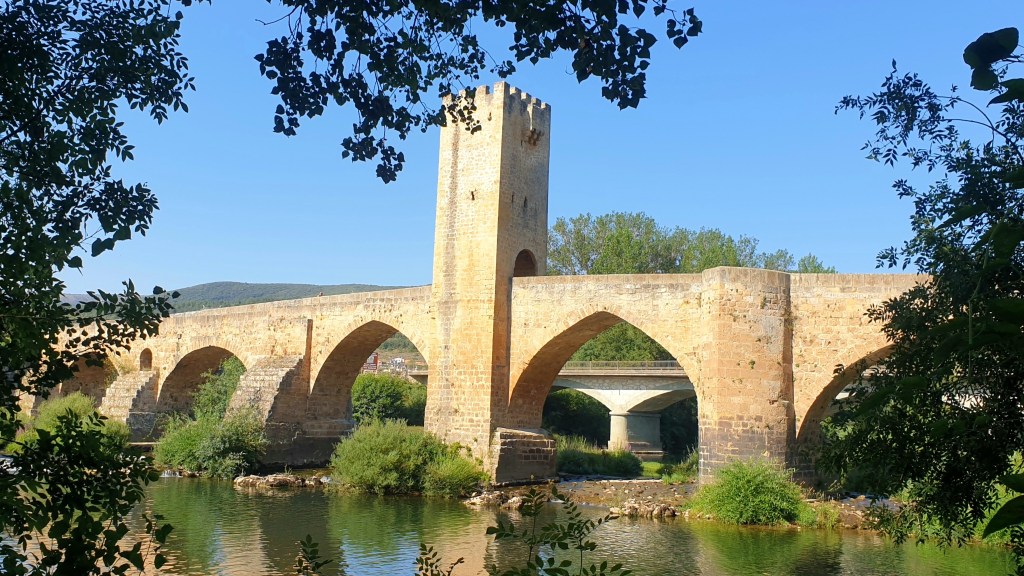
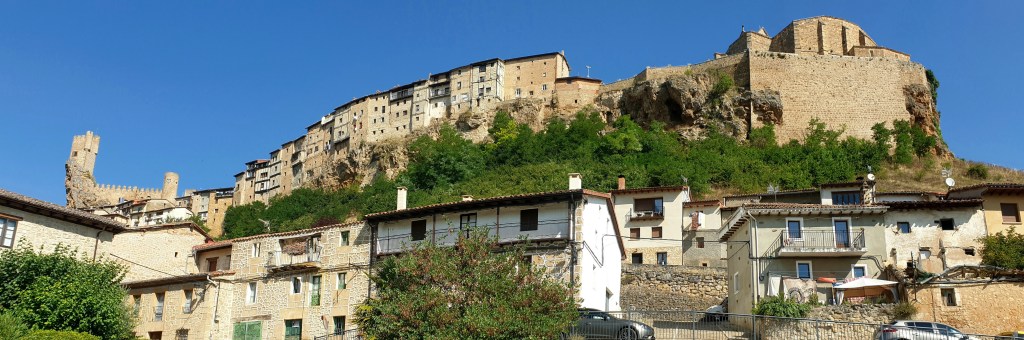
The city of Frías is the smallest city in Spain with a castle crowned by a peculiar rock and dating back to the 9th century.

A little further is on is Tobera.

A further 10klms and 1,000mtrs higher brings us to Mirador El Portillo de Busto viewpoint which is the perfect place to enjoy the surrounding landscapes, to the north on one side
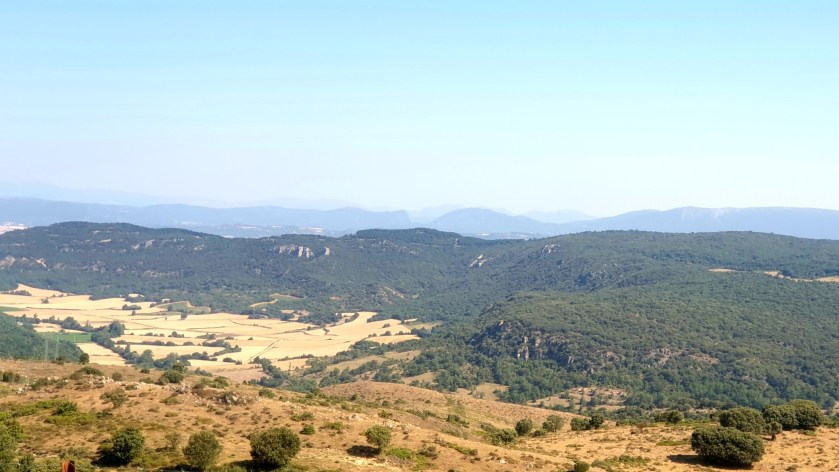
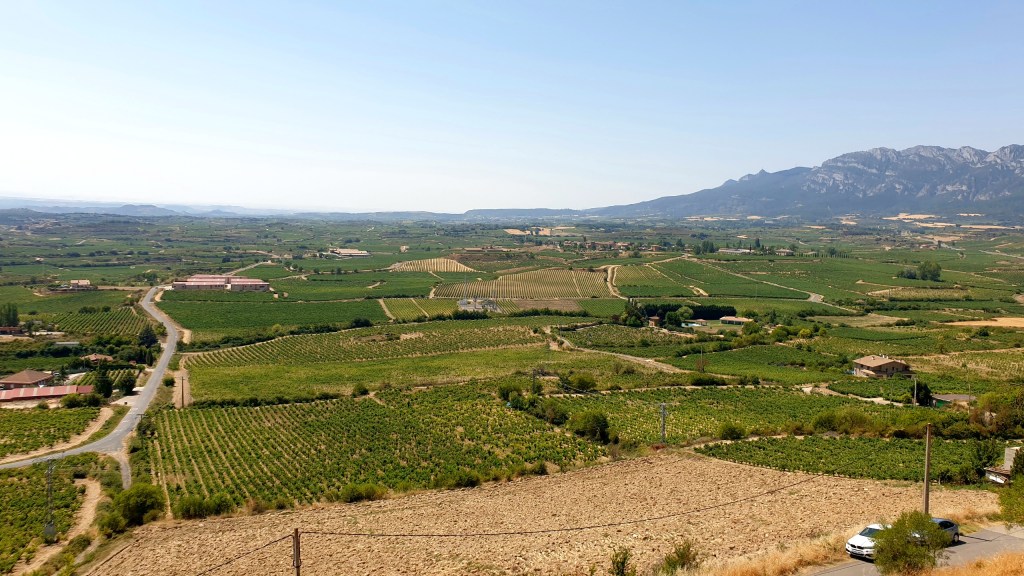
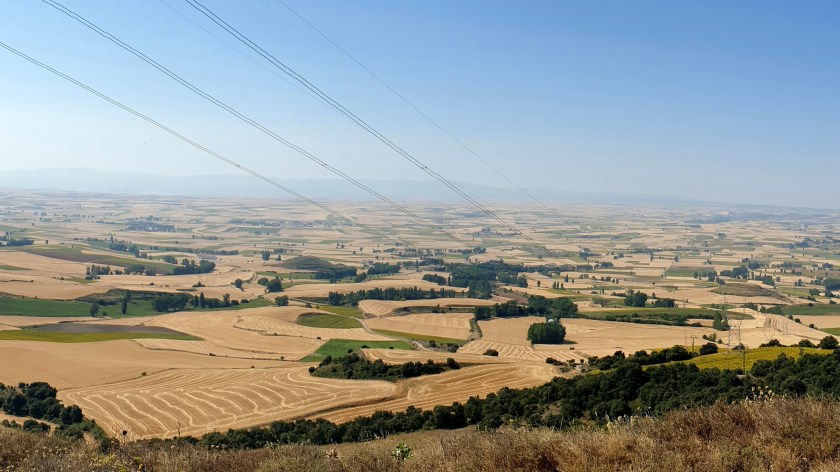
Then the south just over the top. As far as the eye can see there is cultivation with the wheat harvest in full swing.
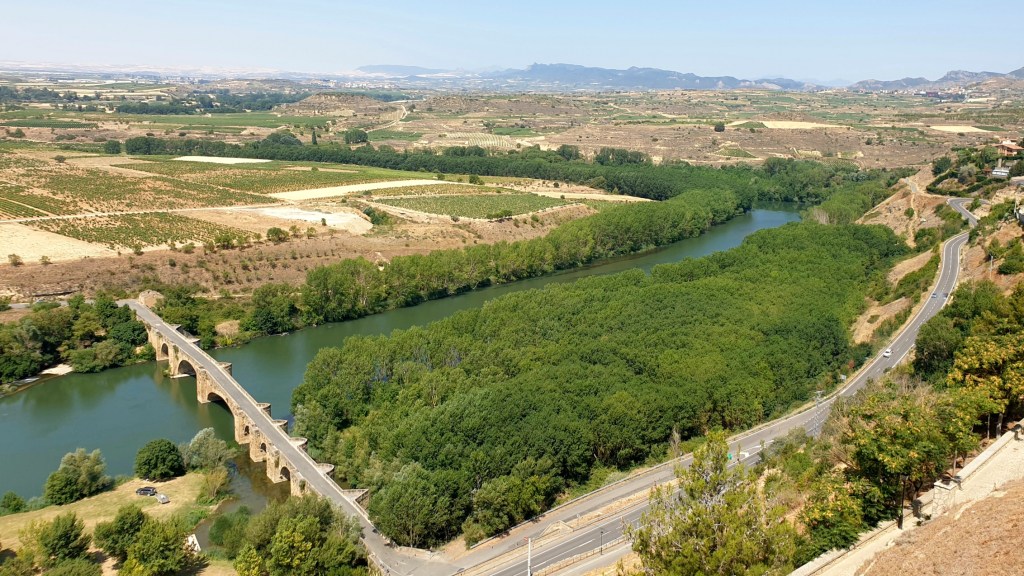
50klms down the N-232 we come to the urban centre of San Vicente de la Sonsierra and it’s walled Castle of San Vicente de la Sonsierra which is a medieval military fortress castle built in the 12th century.
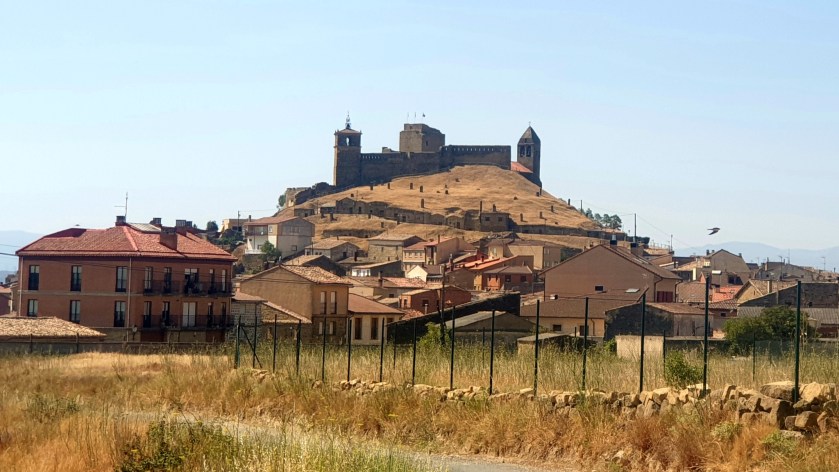
We rode as far as the barriers allowed then climbed to the top of the fortifications and enjoyed the wonderful views.

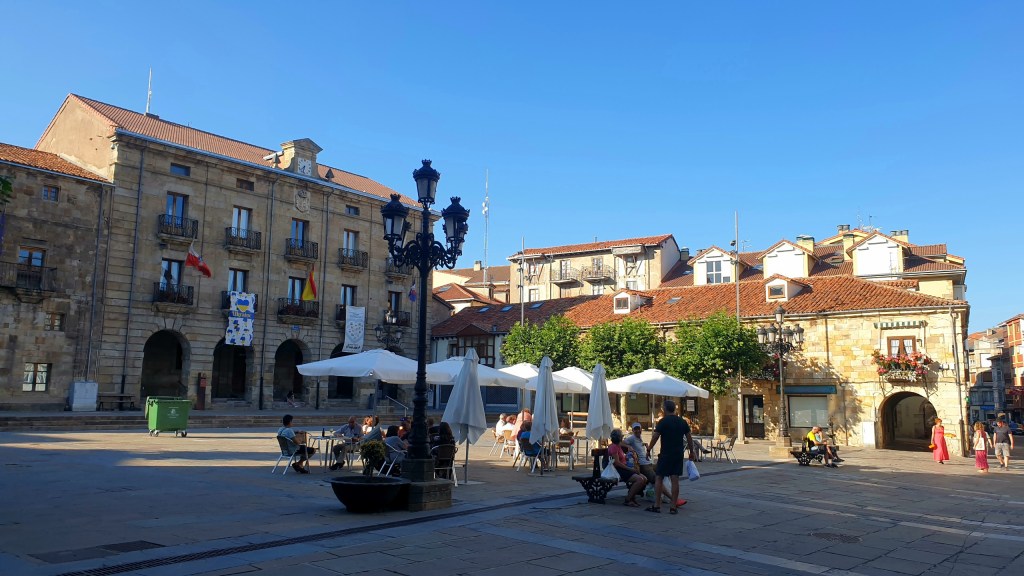
Then sat in the Plaza and indulged in a coffee.

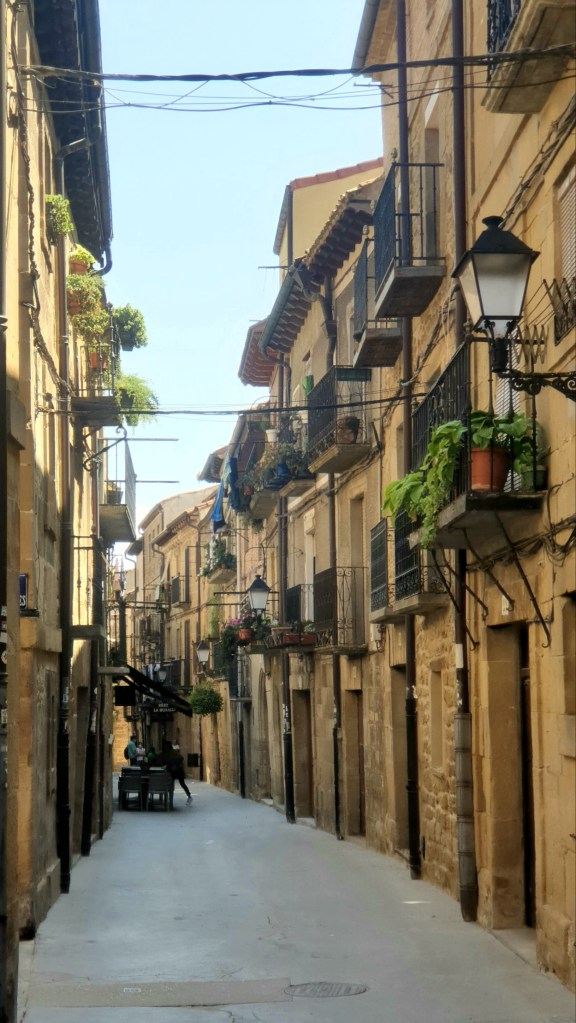
From here it was a mere 20klms to the delightful Laguardia which dates back a long way. It’s a rather small walled hill top town, and as they all are, very popular with the tourists. We enjoyed it as well.

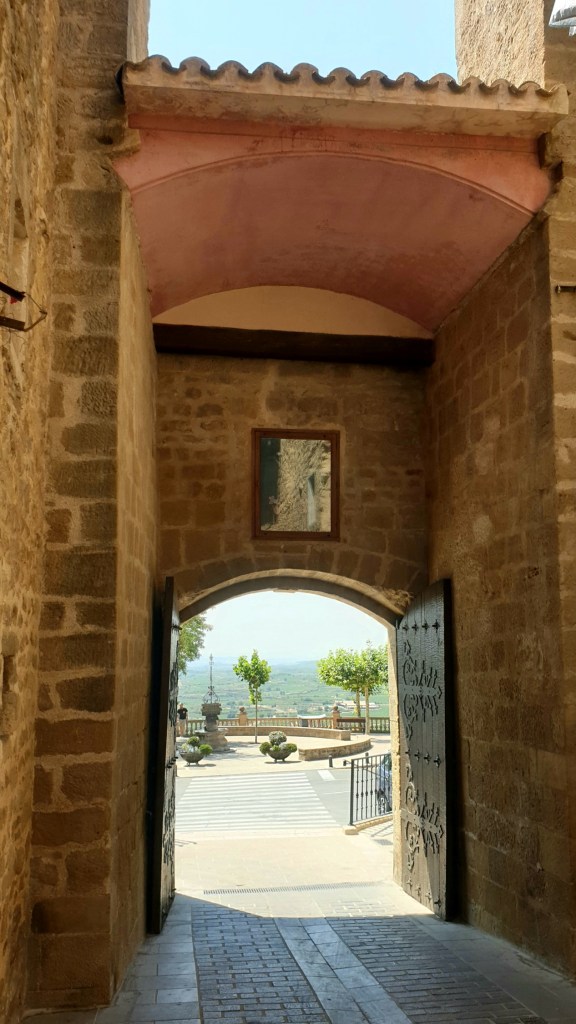
So that’s it for this week folks. I hope you enjoyed the journey.
Wk 9 – NW Spain to Portugal

Week 9 – NW Spain & Portugal

A Coruna to Porto

Mon 11th to Sun 17 July
A Coruna – Cambados – Ourense – Porto

Mon 11 – Wed 13 – A Coruna Lay Days

Just lazing on the beach with this beauty 😘

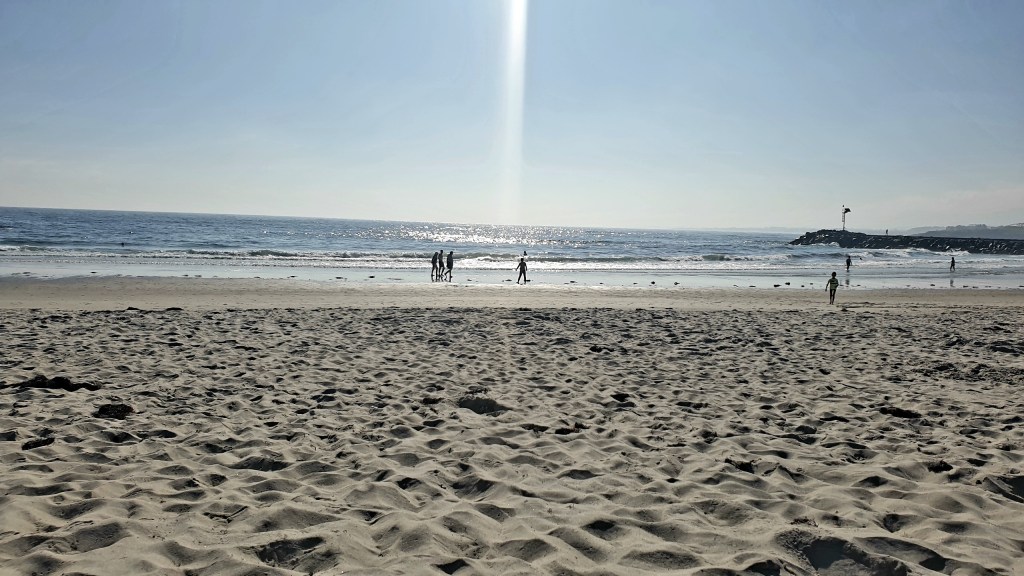
A Coruna Beach before the crowds arrived.
A Coruna Beach – 8pm

Thur 14/7 – A Coruna to Cambados – 150klm

Today was promising to heat up so we hit the road a little earlier than usual, and then spied a JetWash / Carwash so washed the bike. A bike always looks better when its clean and shining, especially a red bike.
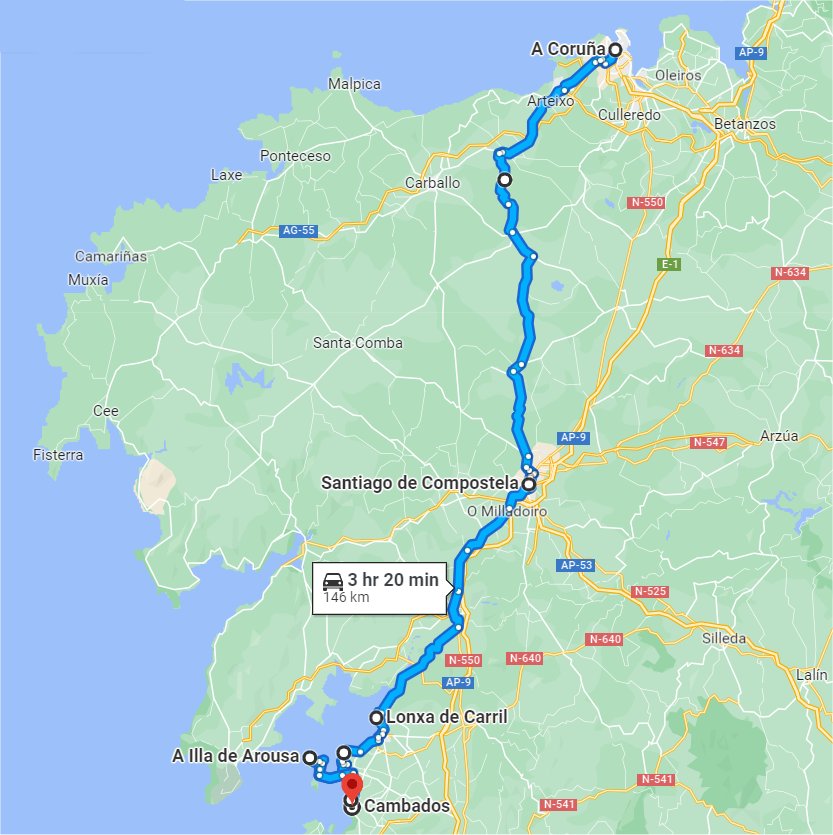
Then it was off to Santiago de Compostela which was our only real stop-off point for today.

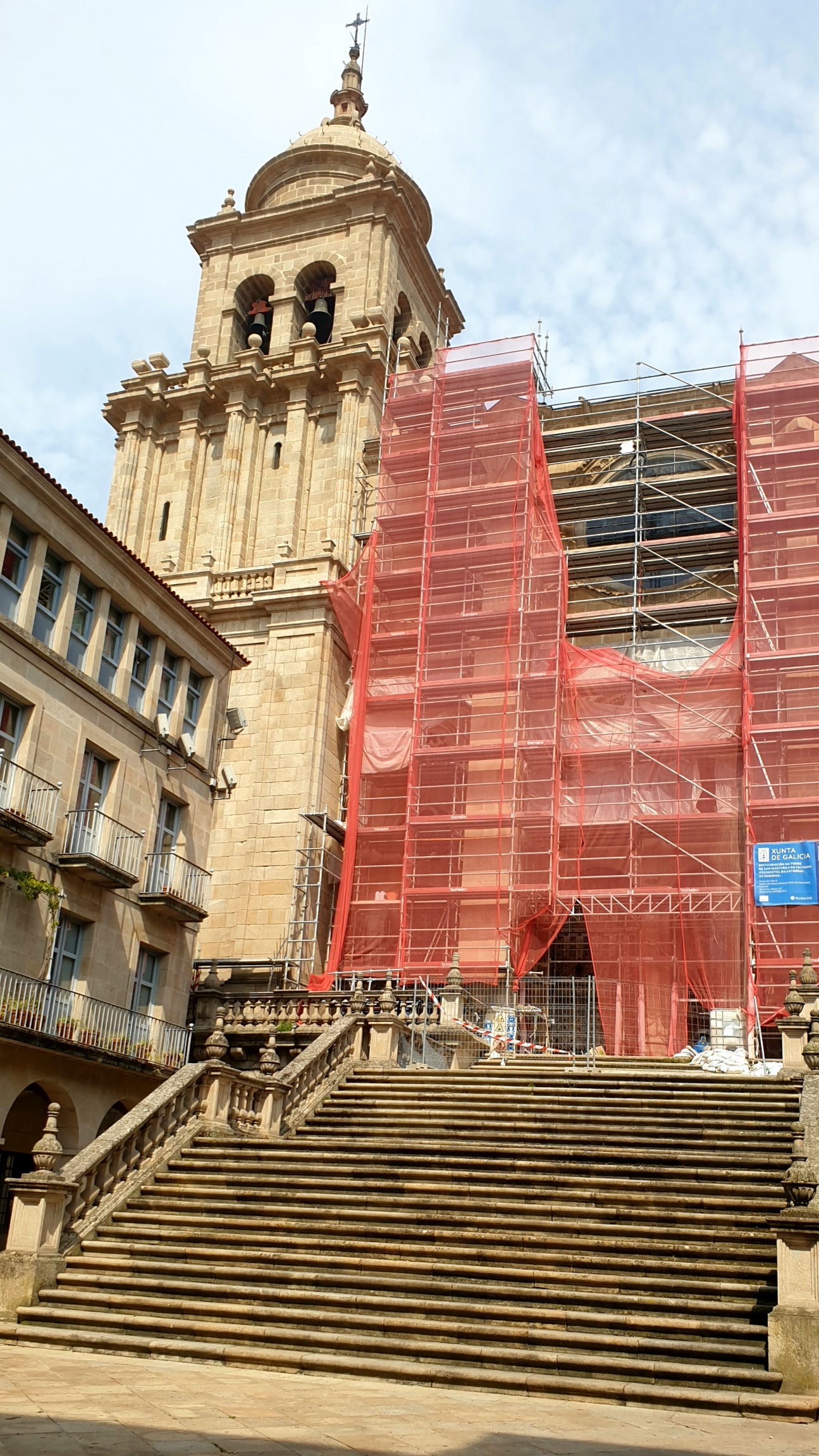
We parked the bike and took a stroll. Had a squiz at the Monastery de San Martino

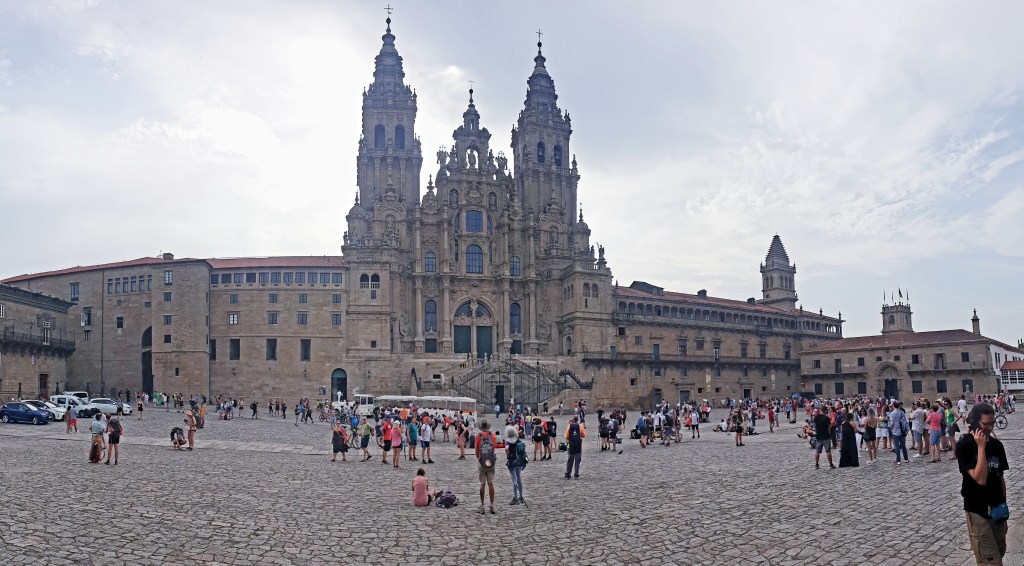
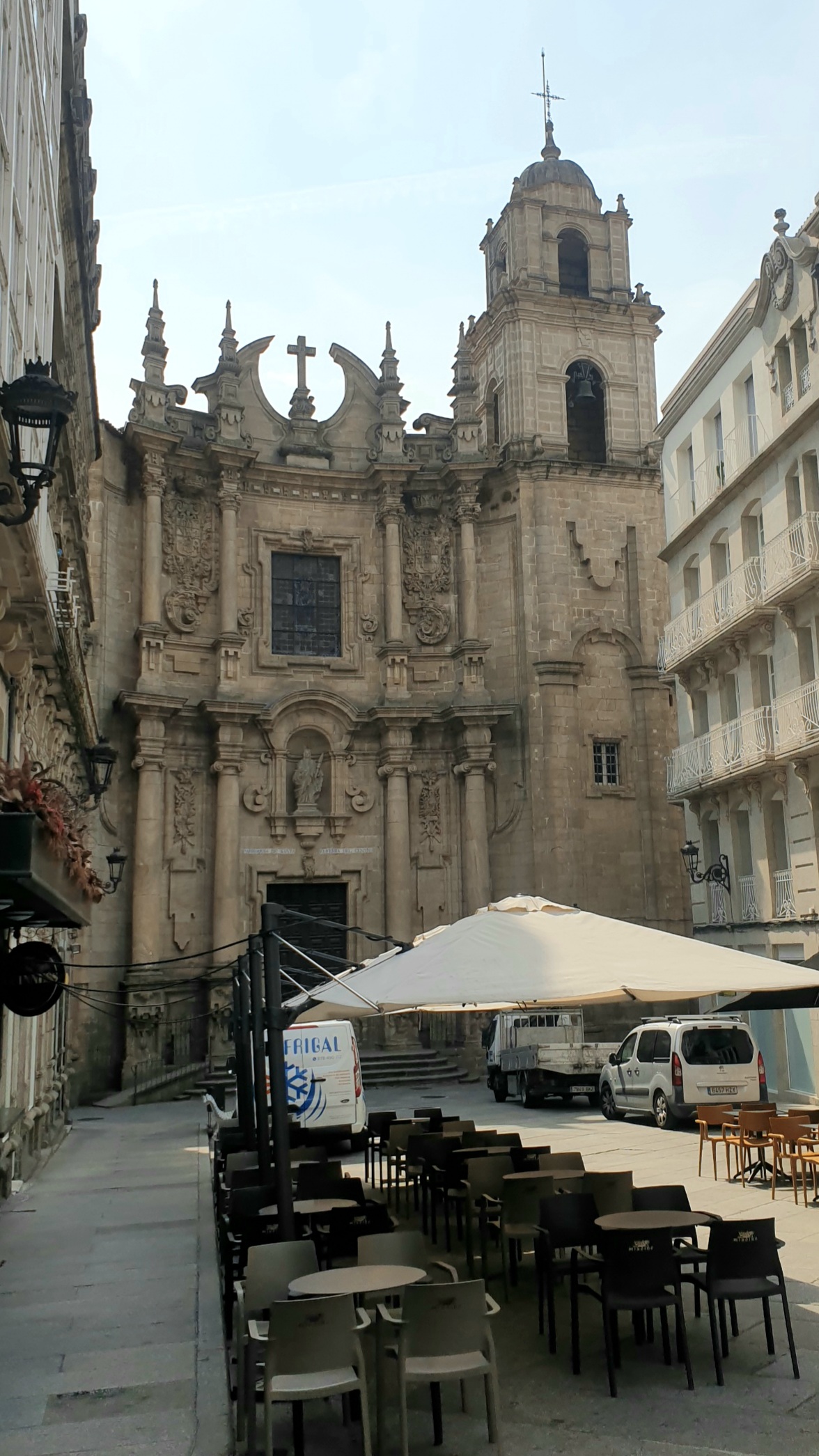
Then just down the hill was the Cathedral Santiago de Compostela with its many hundreds of pilgrims – most of them hard core who’d trekked the many hundreds of kilometres to get there from north, south, east and west.
From the viewpoint of a person of faith, I do hope they find or have found what they are looking for.

Past the Museo da Terra Santa with the Convento de San Francisco de Santiago right next to it.

It was heating up, over 30c and humid so we indulged in a coffee americano and shared a little cake for lunch.

The rest of the day was uneventful as the temp rose to 35c and we followed the coast road south. It is surprisingly built up along here, which of course meant slow travel, which affected our air conditioner, which made for a not too pleasant ride.
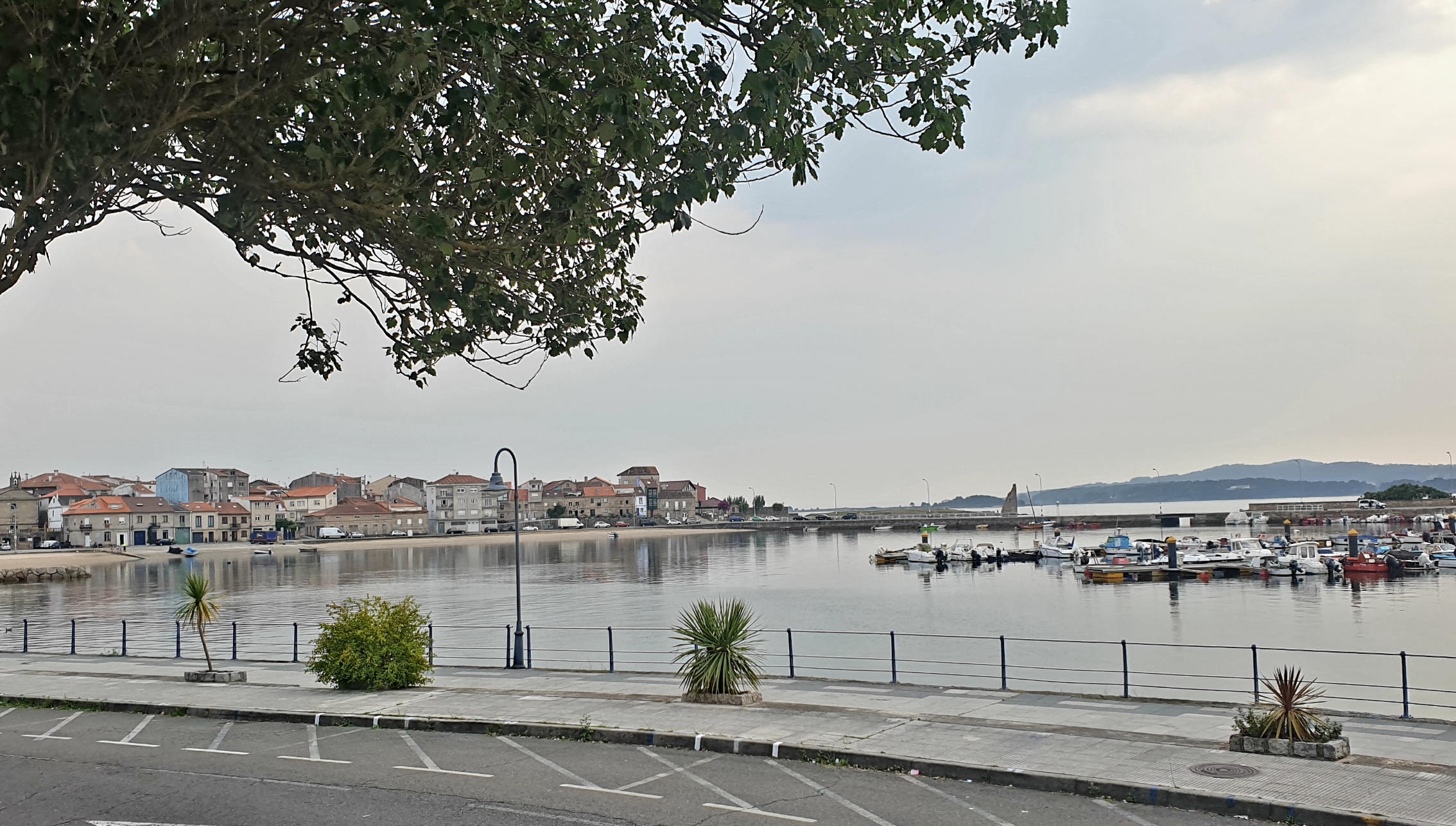
We did a circuit of A Illa de Arousa and then just down the road was Cambados and our very welcome room with soothing shower and a cooling breeze wafting in.

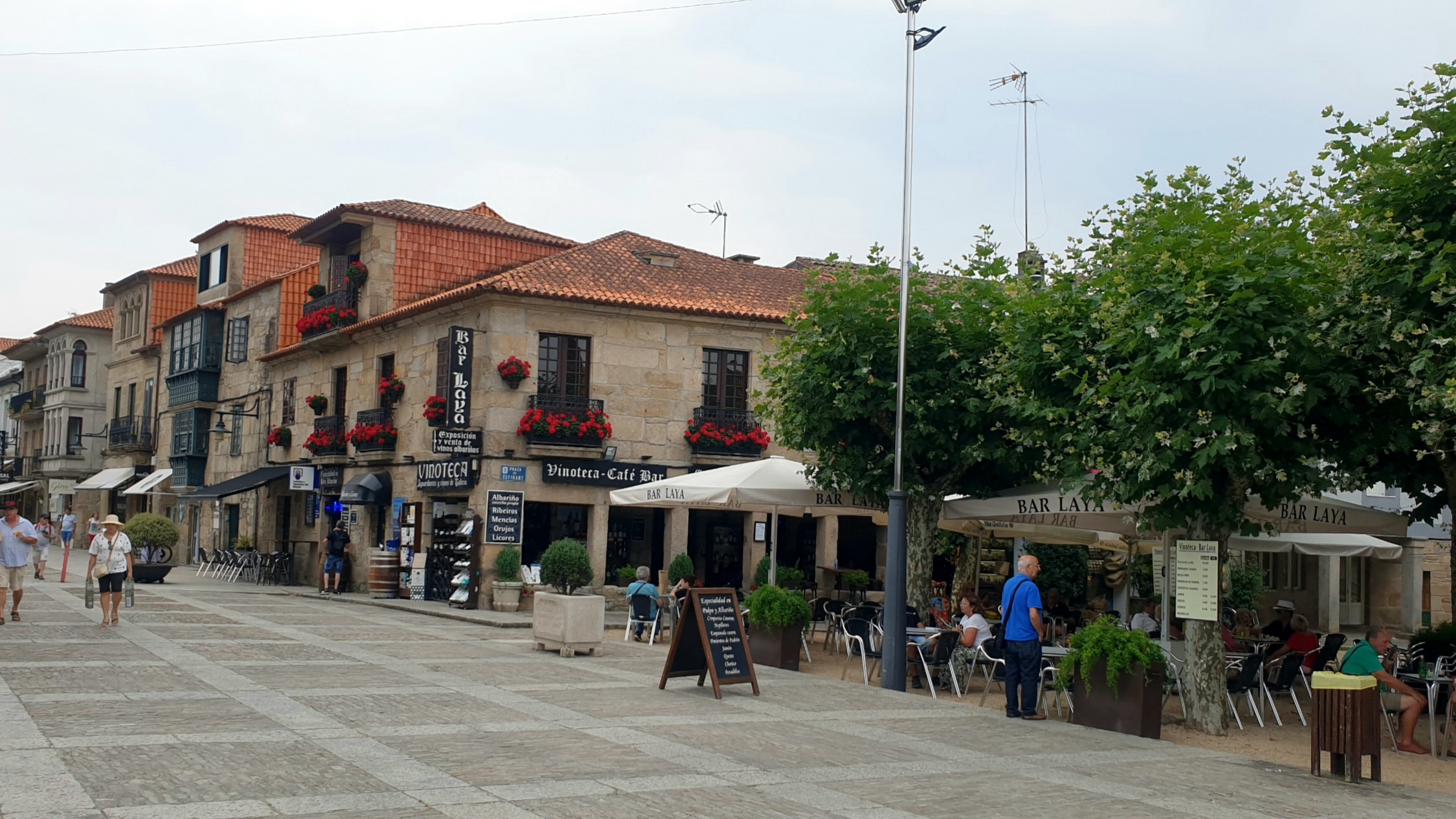
We went for a walk, checked the place out. It has some history from the 16th century, and I dare say a lot earlier than that.

Tomorrow promises to get to 41c, so we’re mentally preparing for that, although tomorrow is Friday so there will be some conciliation.

Fri 15/7 – Cambados to Ourense – 180klm

We’re up and ready to go but the landlord is in no hurry with breakfast so it’s 9am by the time we’re on the road.

However, last night there’d been a storm pass over Cambados, not really enough to cool us there, but it’d given the area east of there a real pasting which was evidenced by all the gutter wash and road litter we encountered as we travised the same area today. But the real score was the lower temps today; we’d been expecting in the order of 40c by midday but it only got to 29c which is a whole lot more bearable. We stopped for a brew – somewhere

As is our/my norm, we were traveling the road less traveled (I’d say hardly seeing another vehicle for 60klms qualifies), and we passed through at least a dozen small villages to small towns. Here’s the thing, how do they survive? Because not one of them had any arable land around them – just scrub and rocks. I was raised on a farm outside a little town called Paparoa in the north of Auckland, New Zealand, and Paparoa was and still is a darn sight smaller than any of the places we rode through today, yet Paparoa is surrounded by a 100 square kilometres of very prosperous farm land. So how/where do they make a living? Just saying.

You want rocks? I’ll give you rocks!

We rocked into Ourense at around 12.30 and found our way to our digs in this like plaza. One of the great advantages of riding a motorcycle is that you just ride straight in, one way lanes mean nothing.

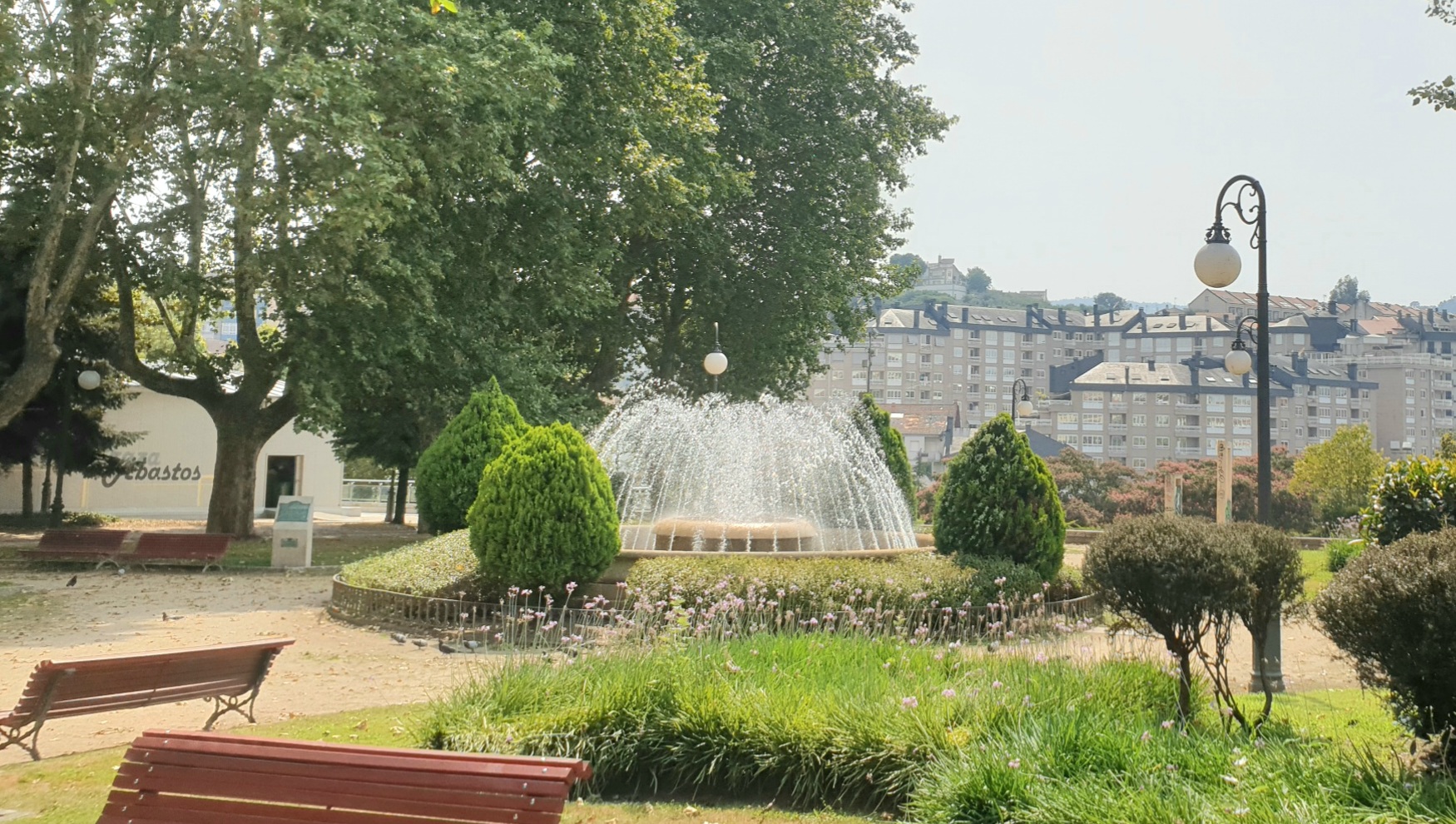
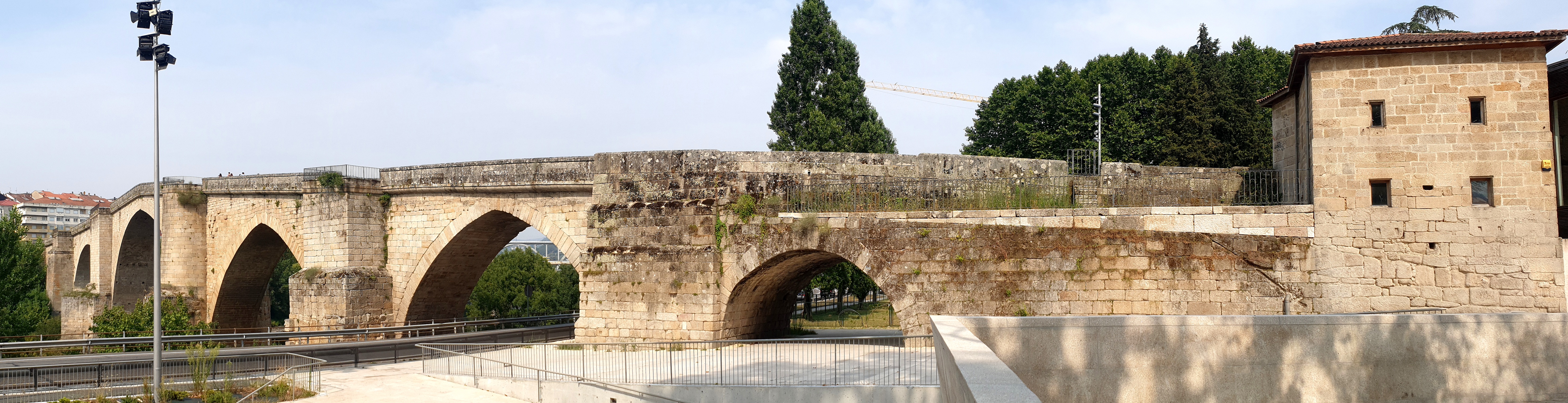
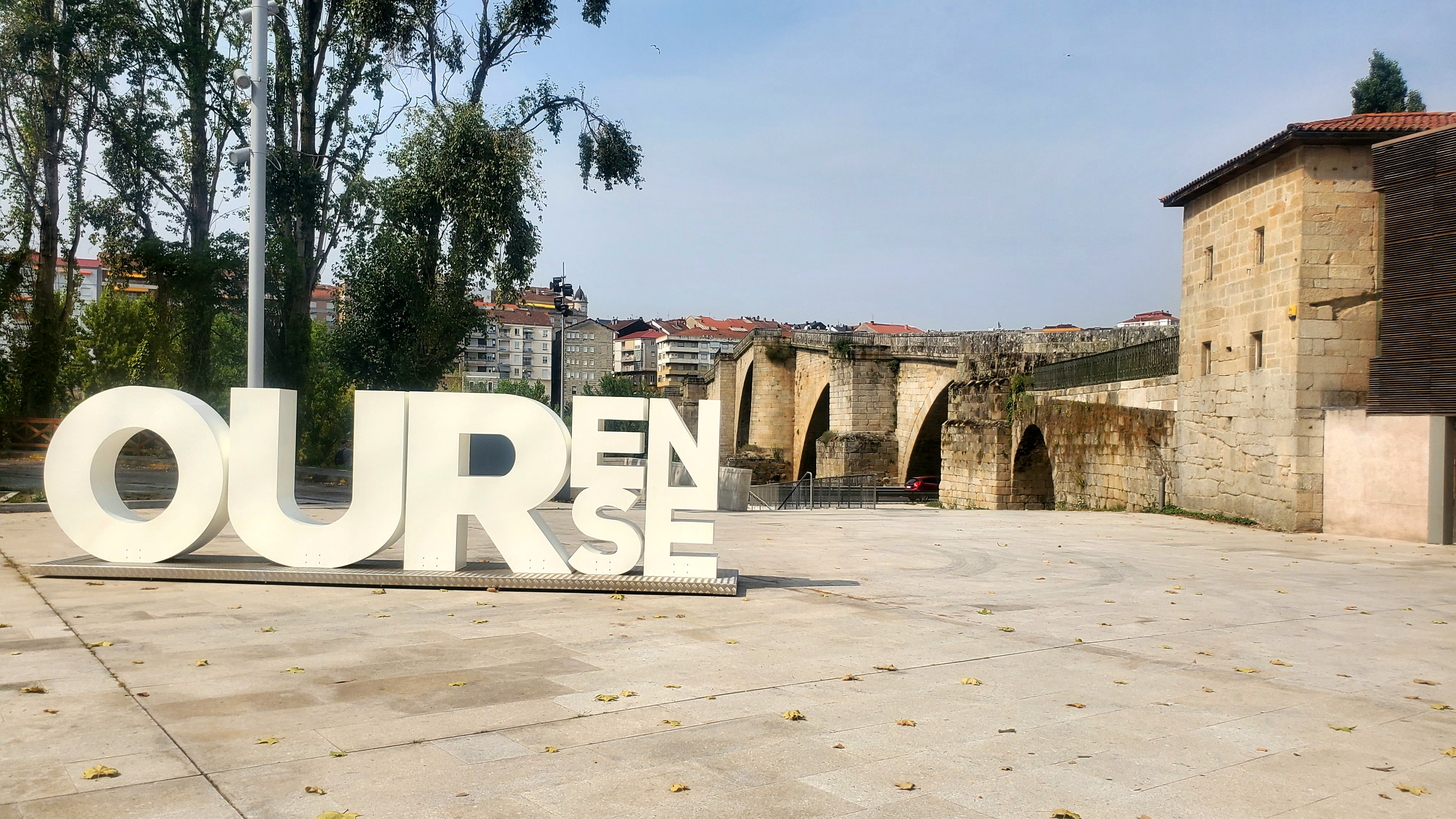
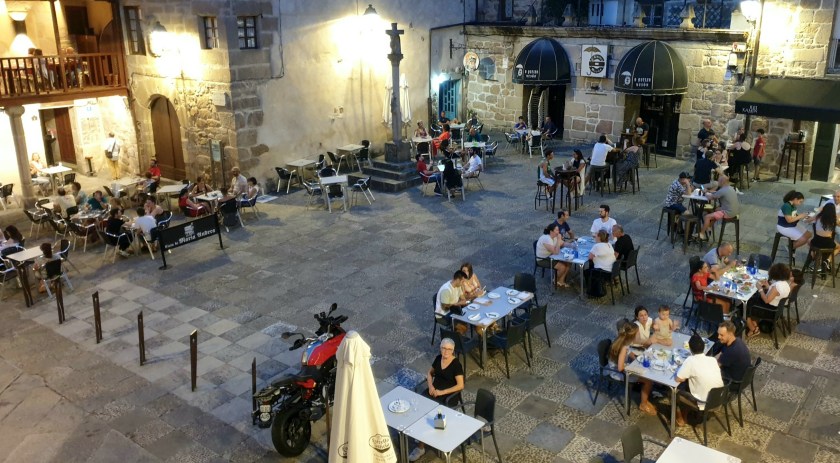
We showered and snoozed a bit then ventured out at 6pm; it was very hot by now. There’s hardly any people in these pics – that’s because no-one else was stupid enough to be wandering around in the heat.

It cooled down about 9pm so we joined the locals in our own private little praza. We left them to it around 11pm – they kept at until 5am, right outside our double glazed window. It was a good thing we had a room with air conditioning.

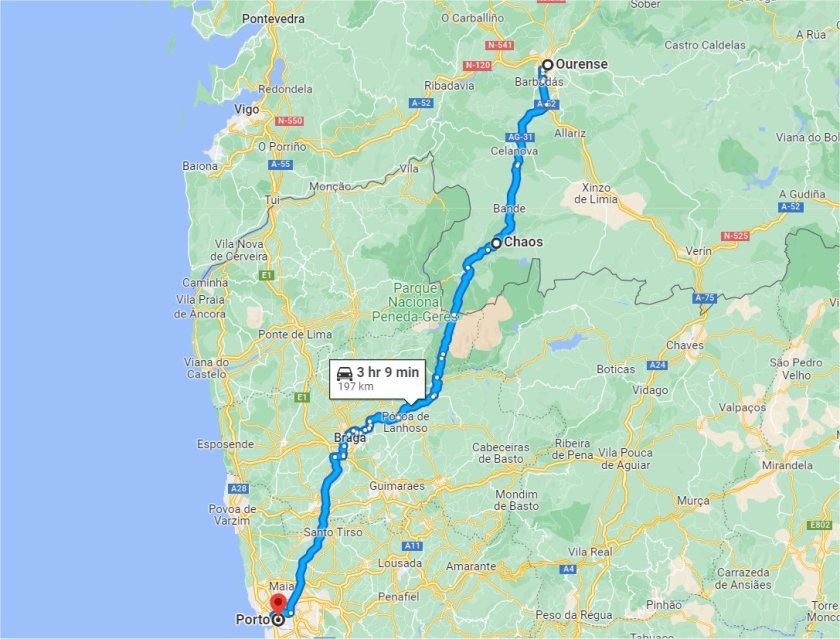
Sat 16/7 – Ourense to Porto – 200klm

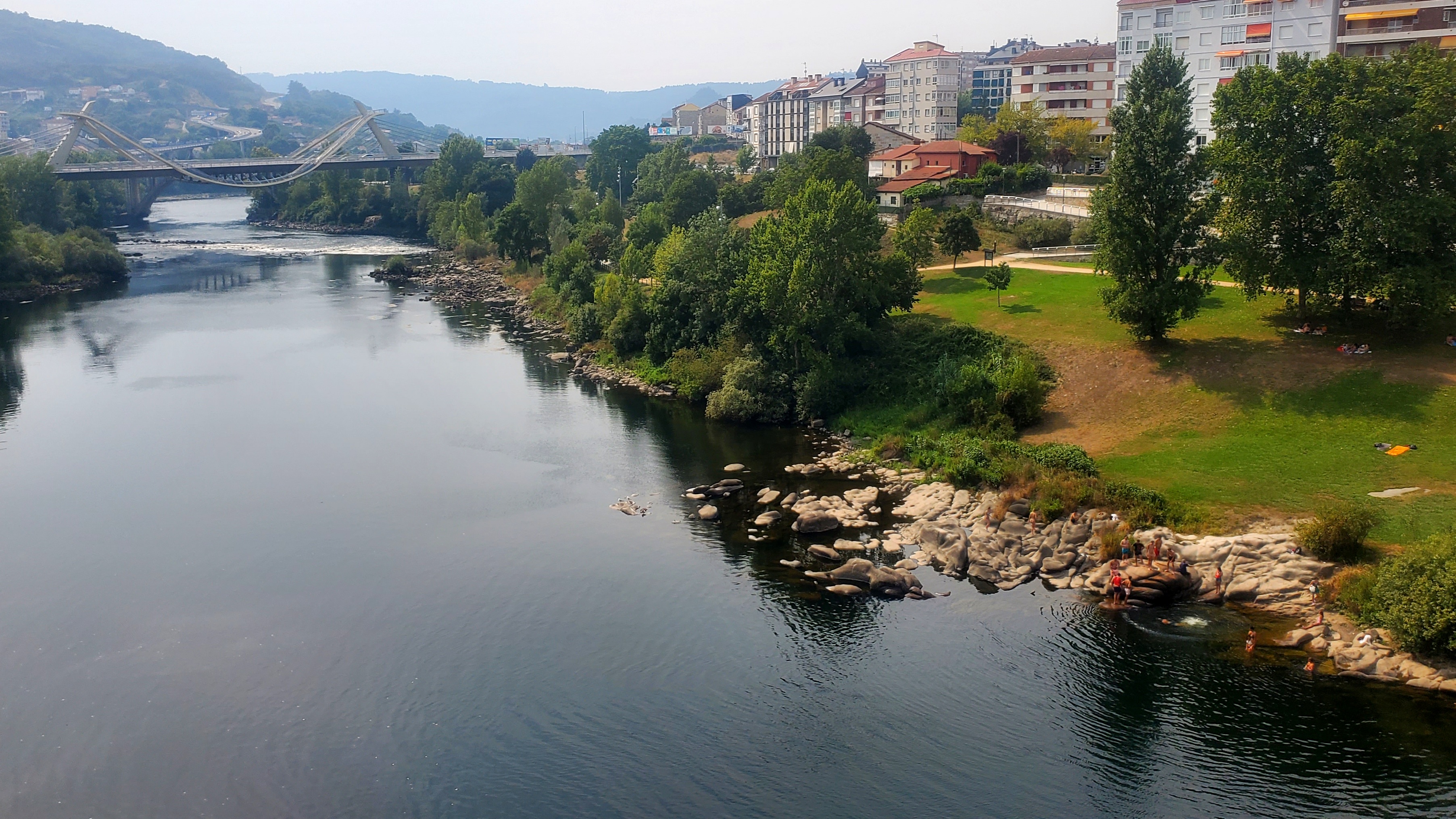
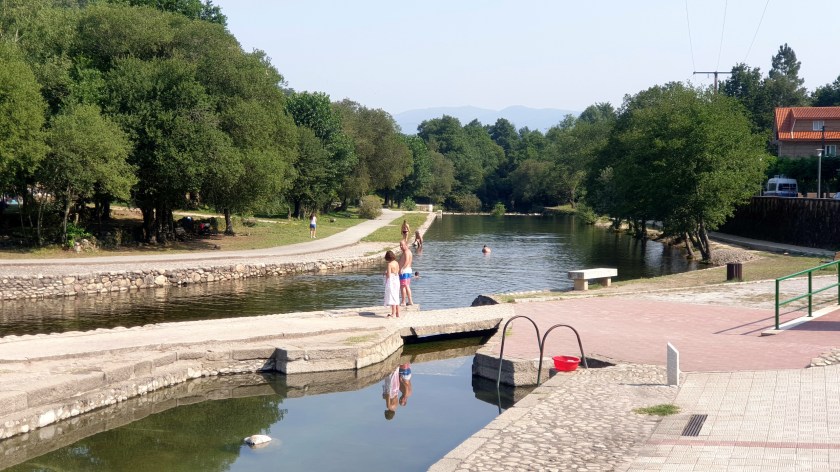
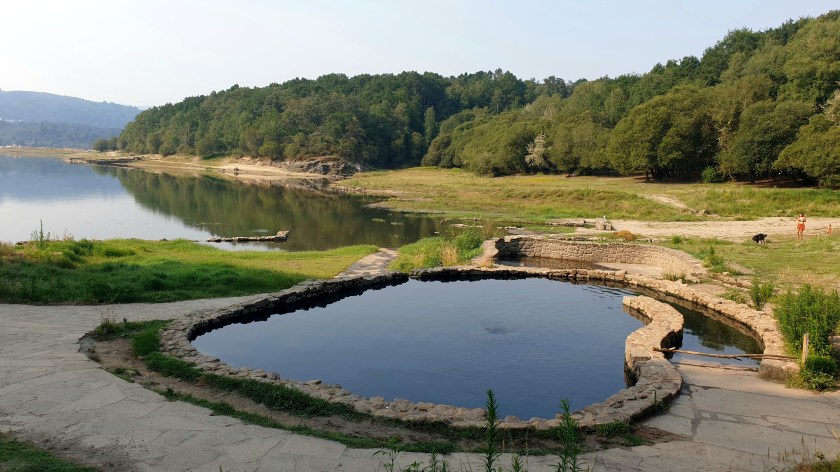
It was pleasant day for a ride so we headed south and west. 50klms down the easy, sweeping and undulating road we came to Roman Caldaria of Bande, an ancient Roman fort by a reservoir with hot springs which are popular for bathing in warm, mineral-rich water. There were quite a number of campers there.

Another 30klms and we stopped at Caldas de Lobios in the village of Bubaces, which is in the Baixa Limia-Xurés Natural Park. It is specifically known for it’s hot springs.

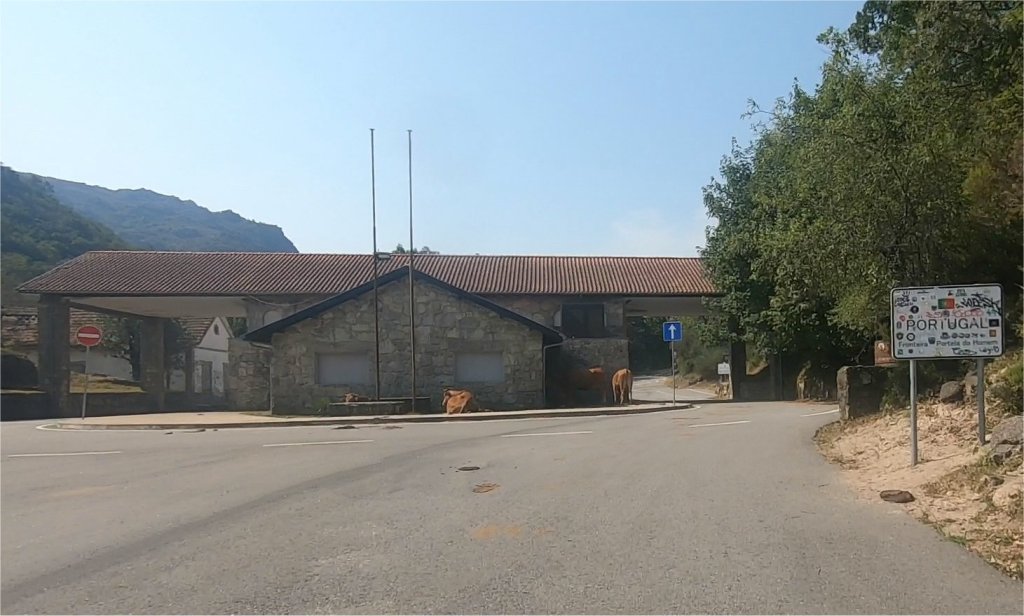
We were pretty much immediately in Portugal – the border guards showed no interest

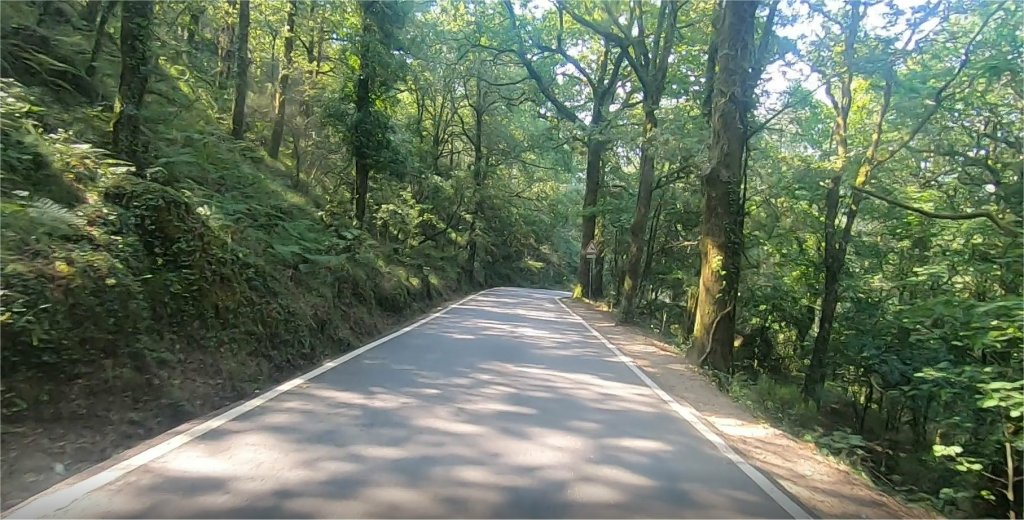
The N308-1 wound us up and down and through the Peneda Gerês National Park with its historic villages and fantastic scenery. The top end of the road was virtually deserted.

We eventually popped out at Vila da Veiga at the top end of the dammed Cavado River which is a large lake that is extremely popular with holiday makers – they’re everywhere. We stopped for a coffee.

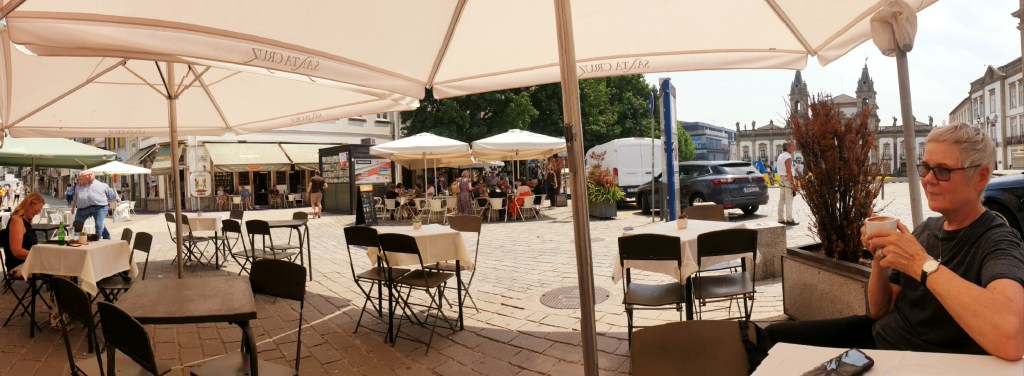
Then continued on to Braga where we stopped for another coffee and some tapas amongst the tourist throng.

It was heating up so we took the sooks way out and hit the freeway for the final 45klms into Porto where we lodged in to our nice little apartment.

Sun 17/7 – Porto Lay Day

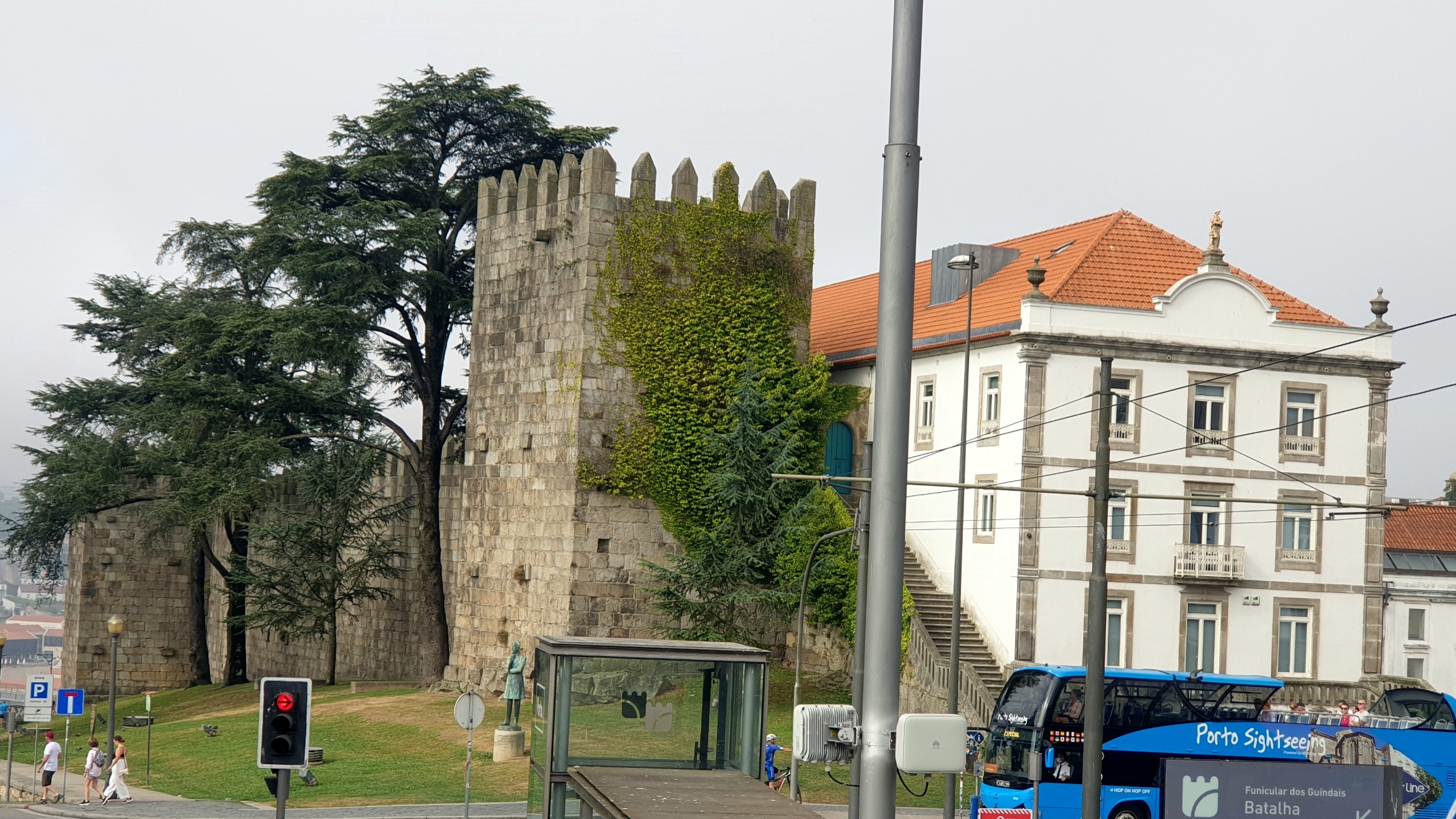
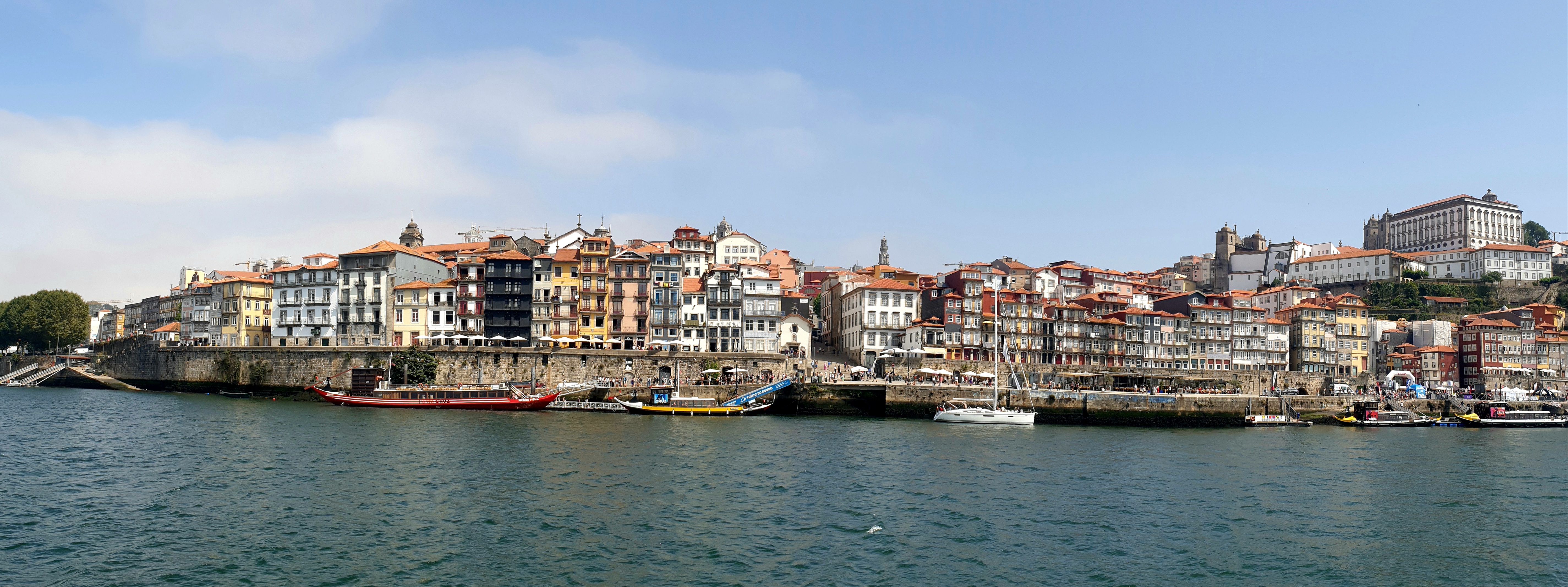
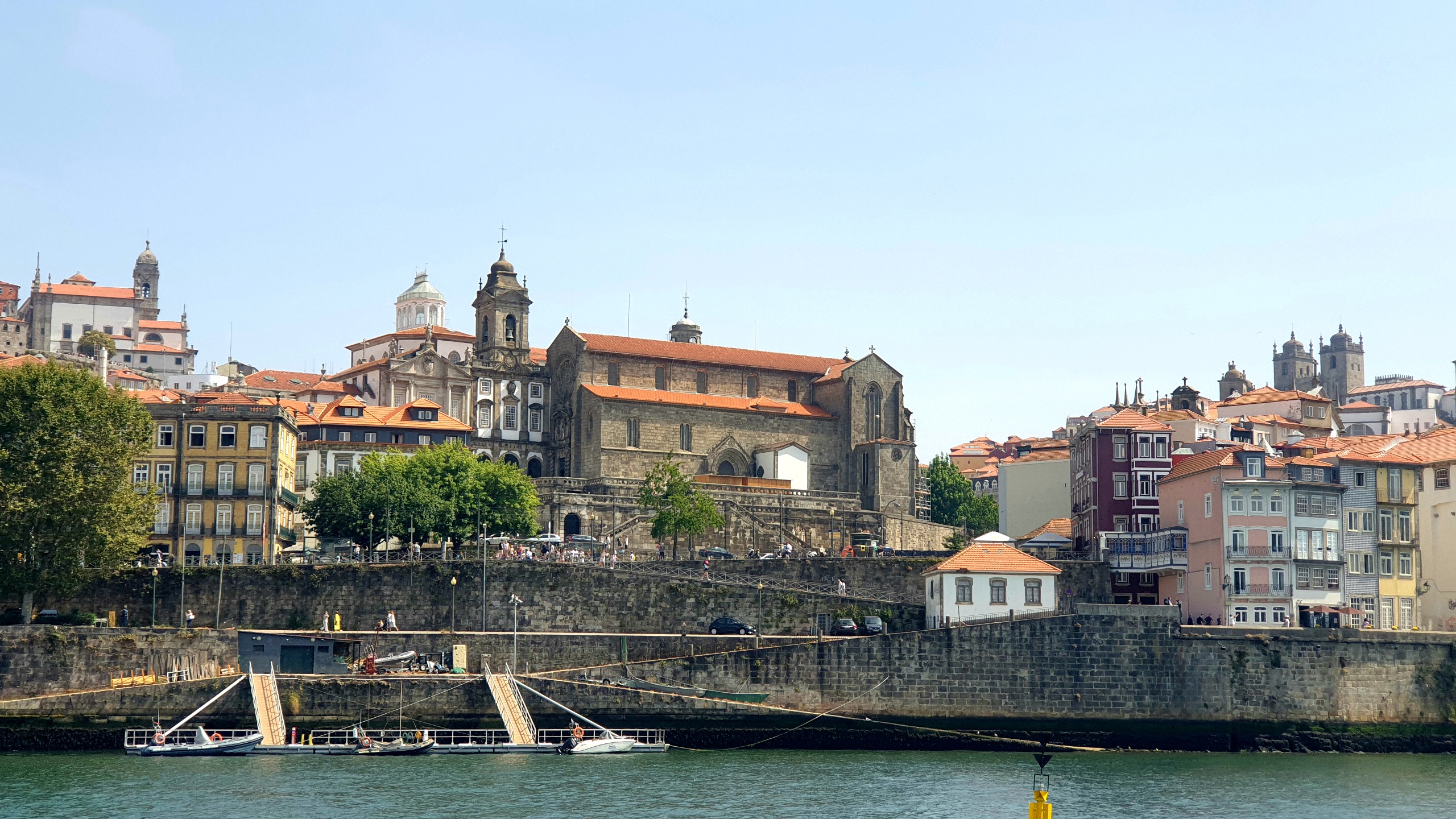
We took 8 hours and saw as much of this wonderful city as we could.
First, a Hop-On-Hop-Off bus trip which I have to say was quite a disappointment in terms of commentary.

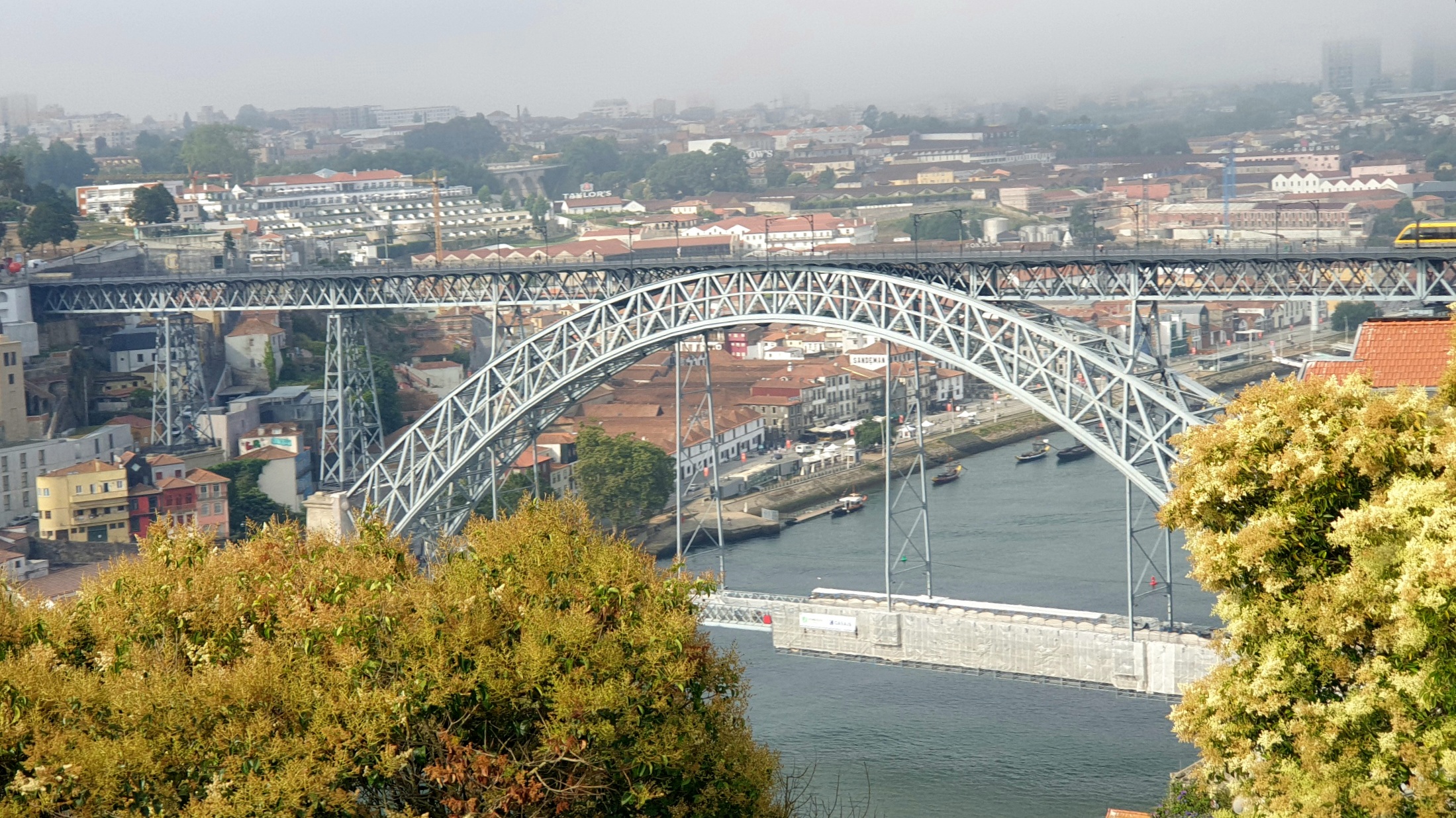
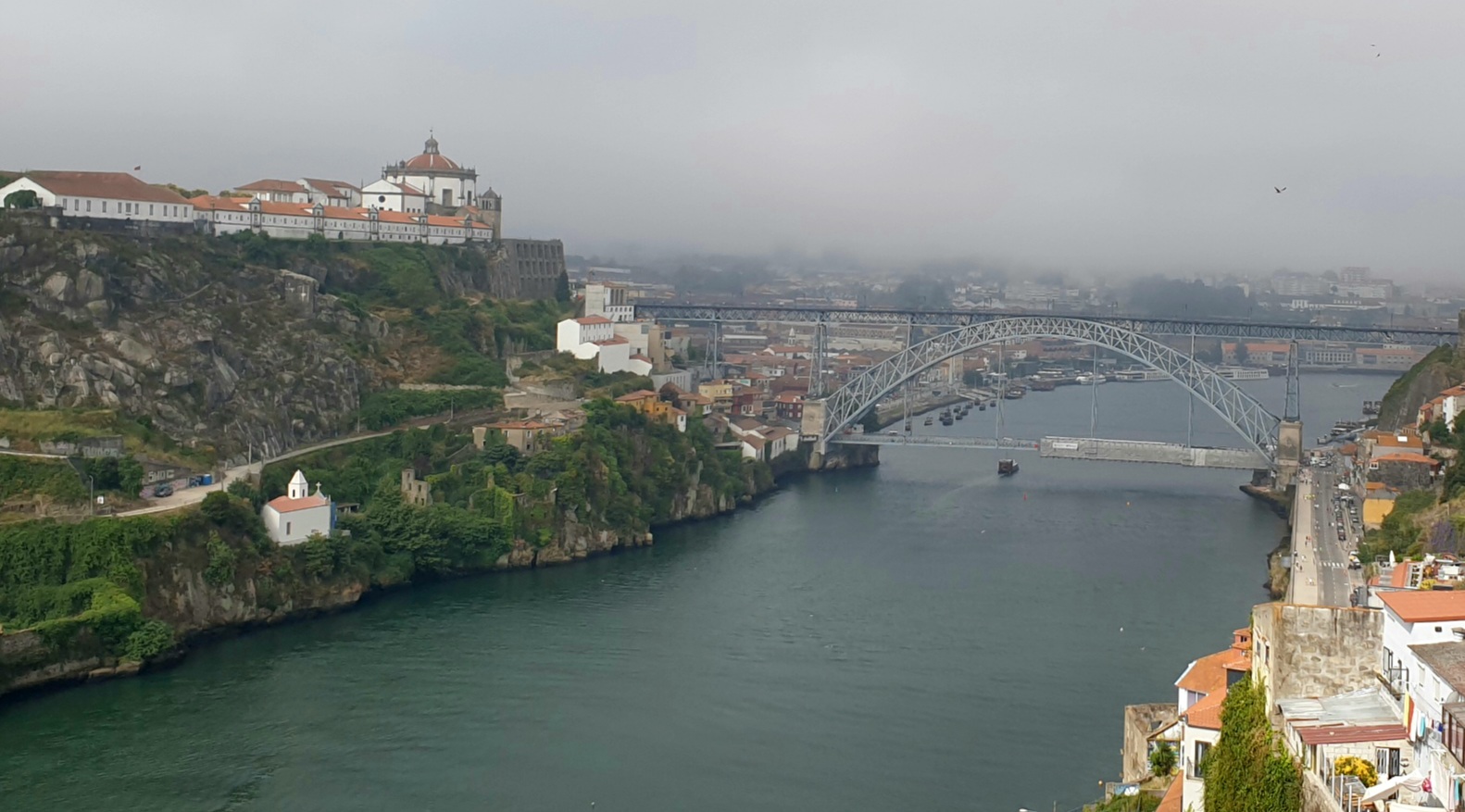
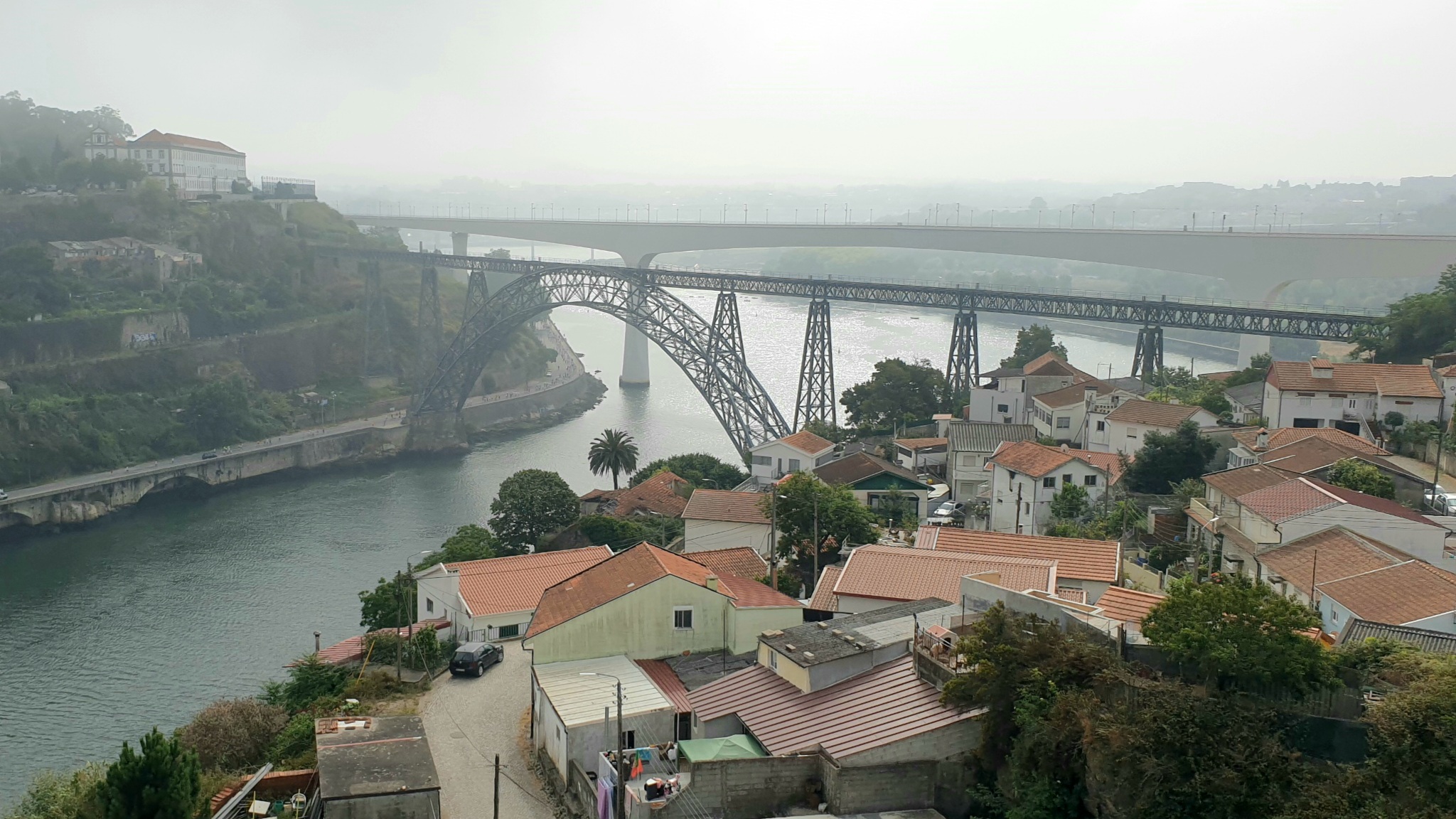
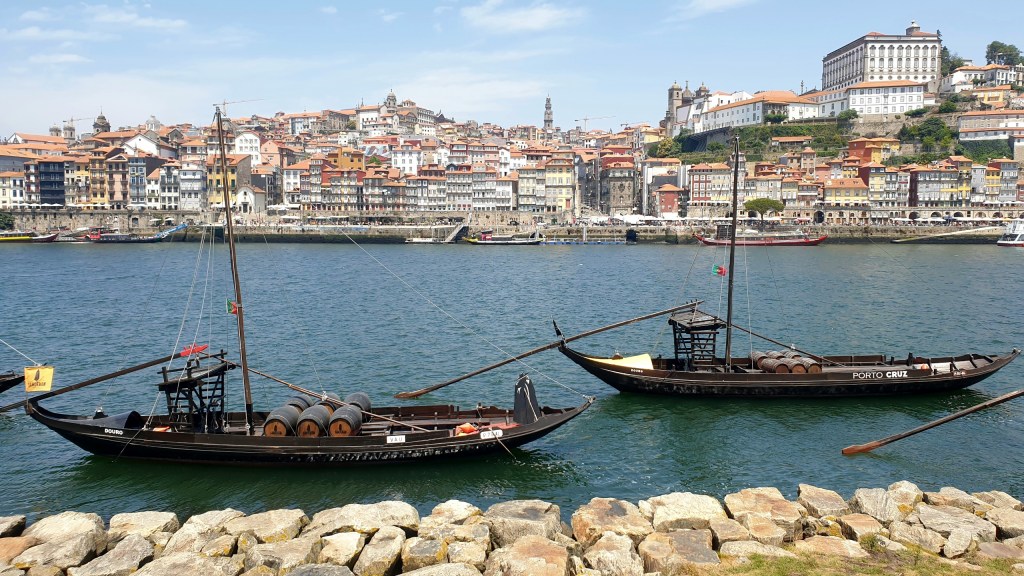
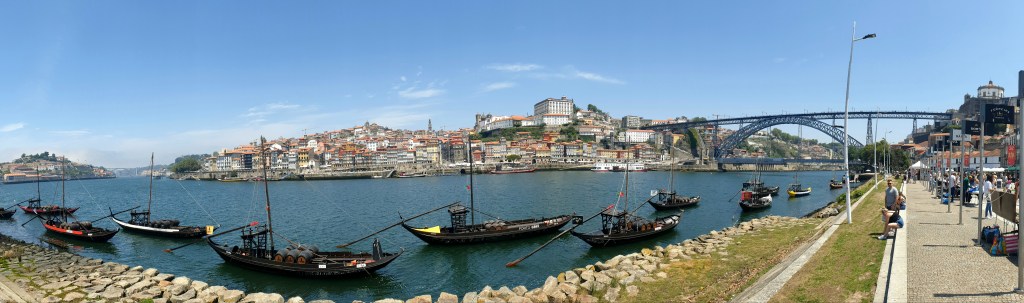
Followed by a River Cruise.

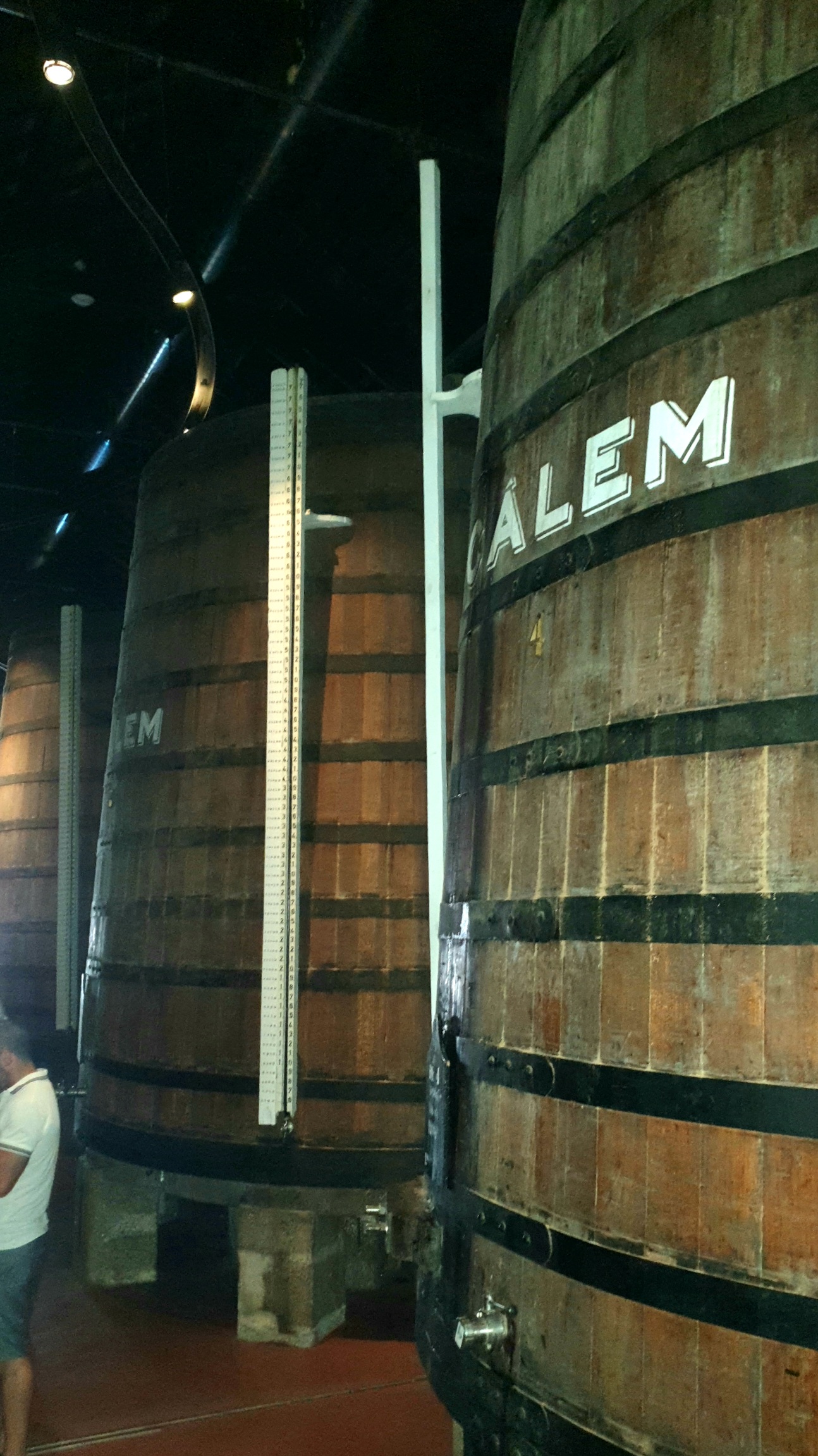
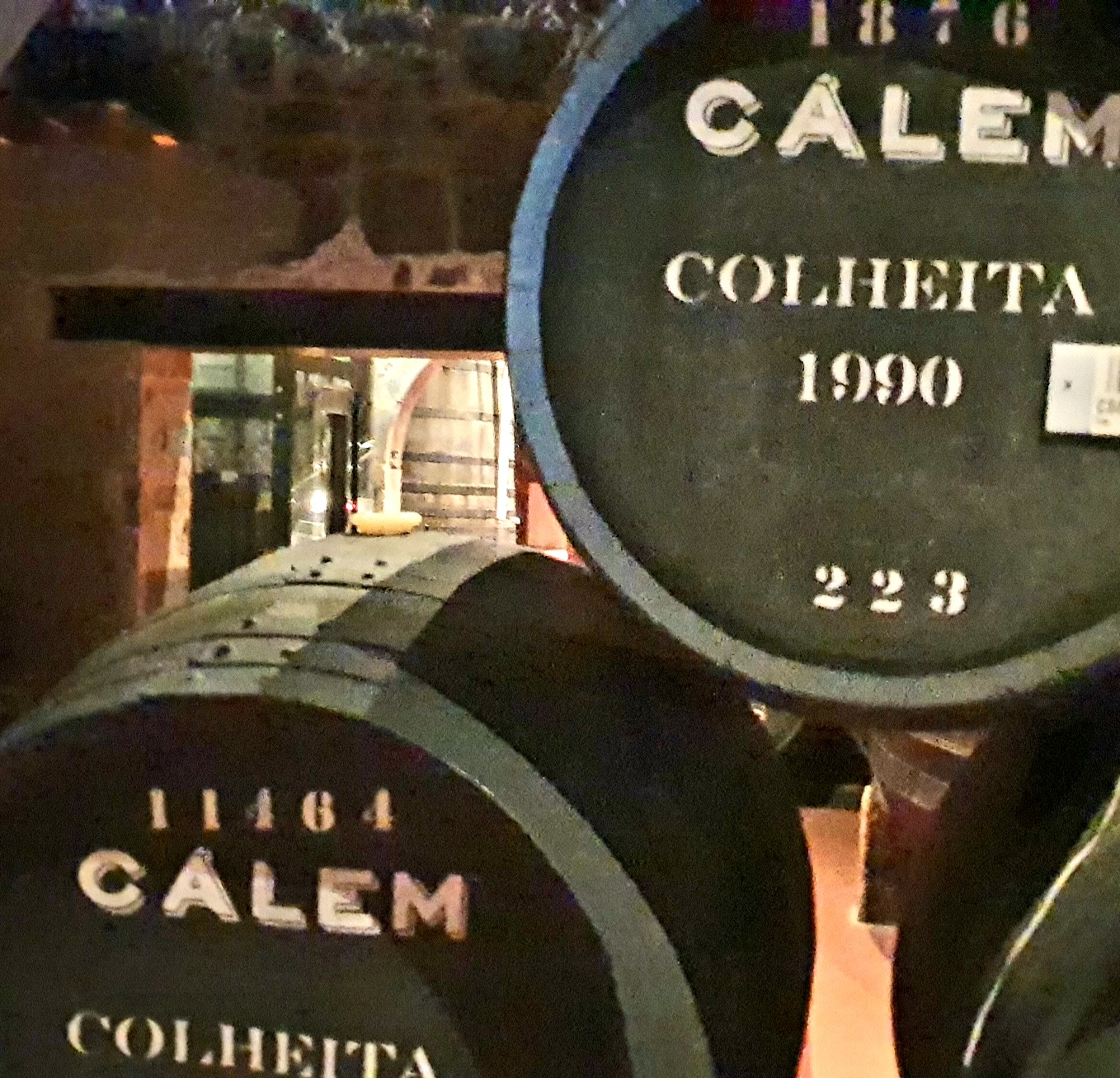
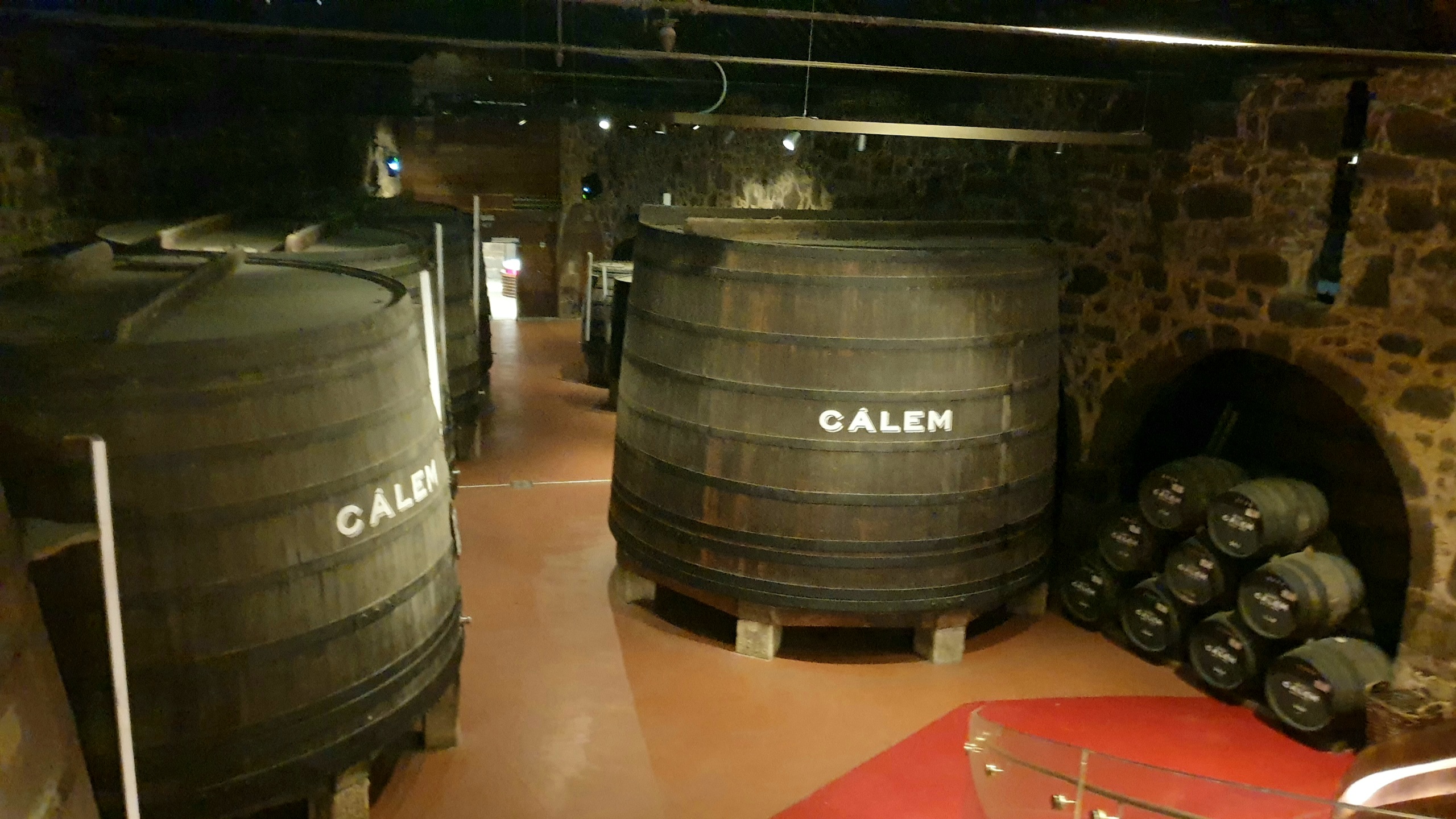
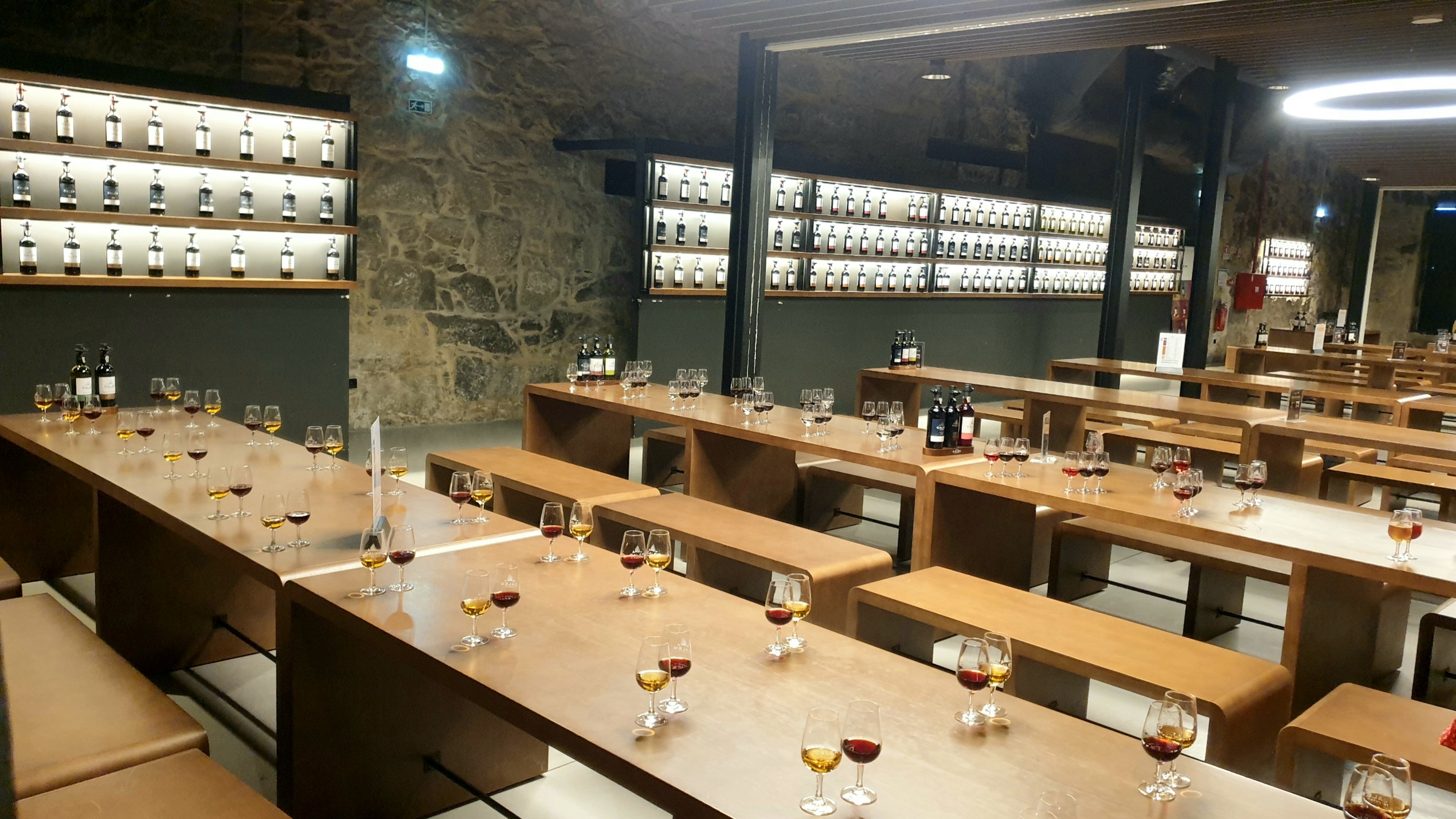
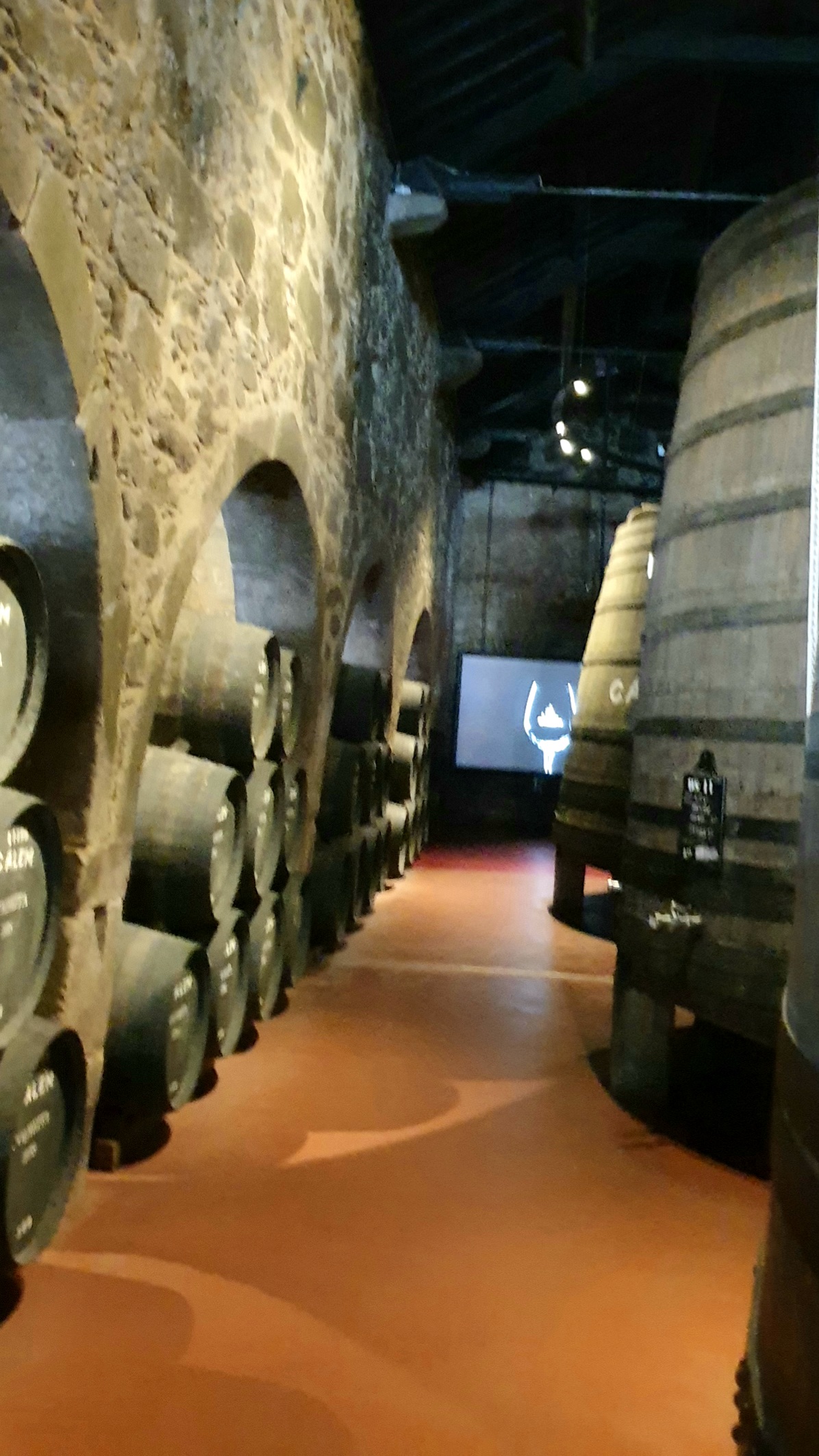
And finished the day with a wine tour.

All for the equivalent of A$45 each. Not too bad.

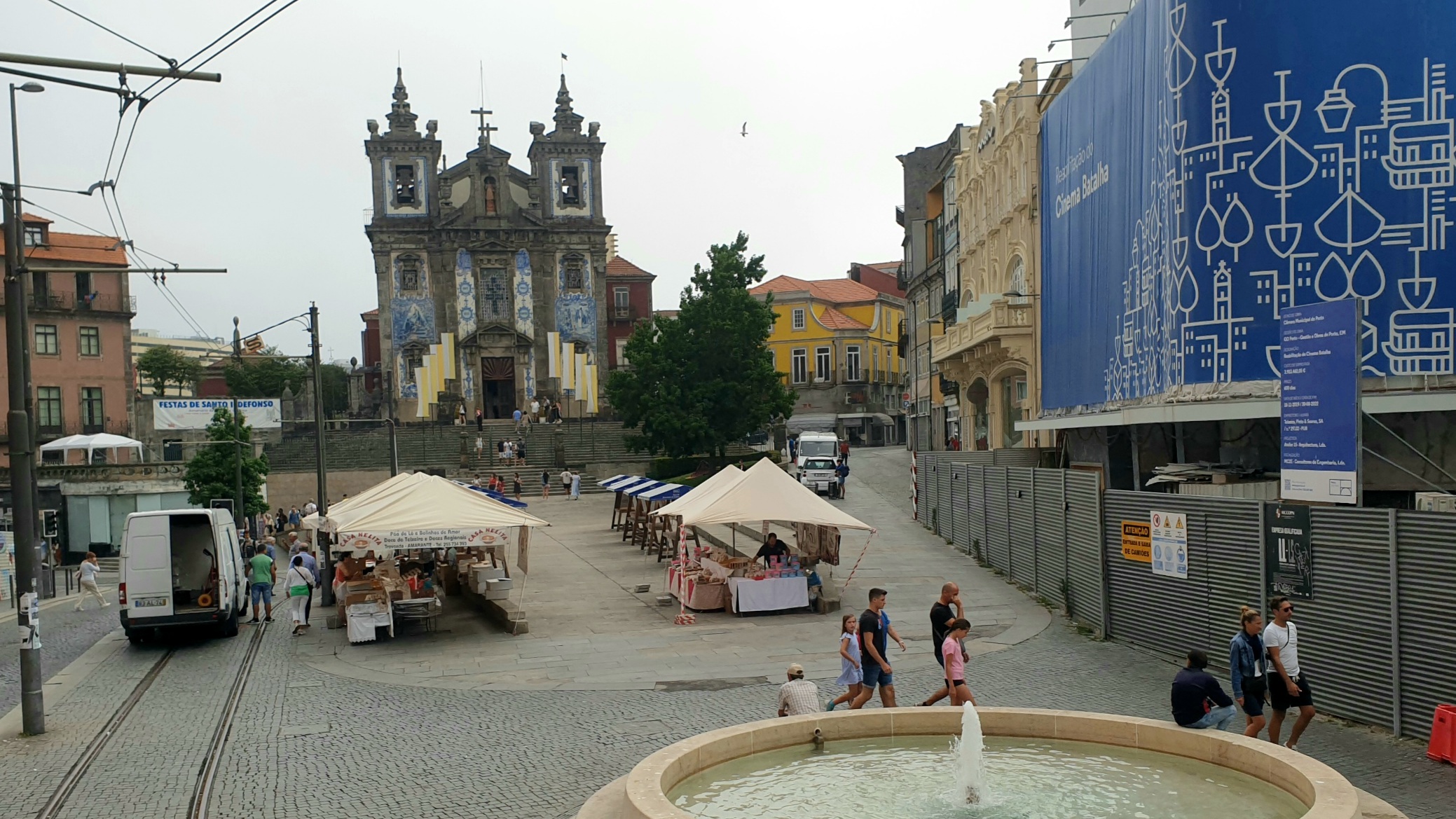
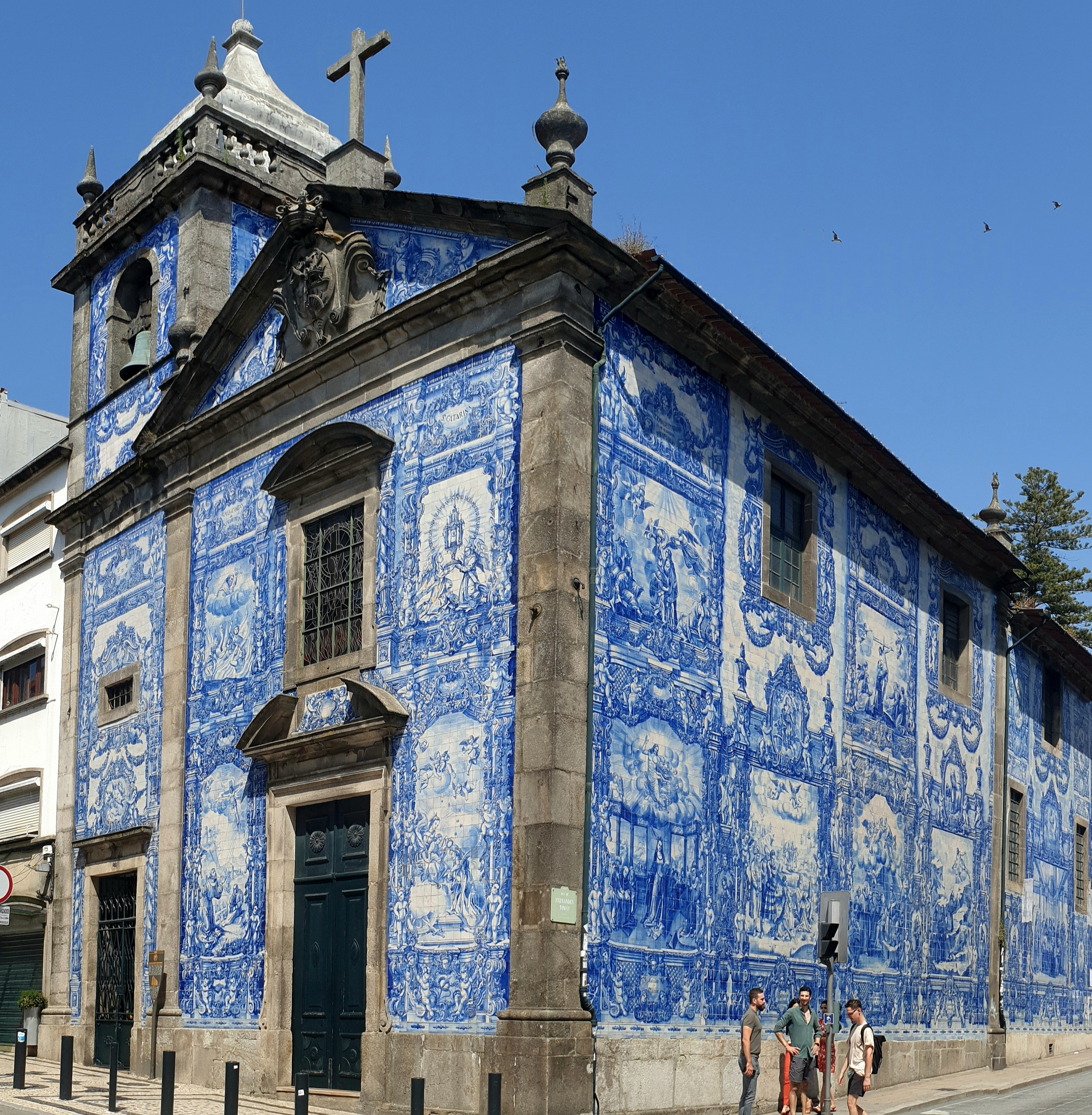
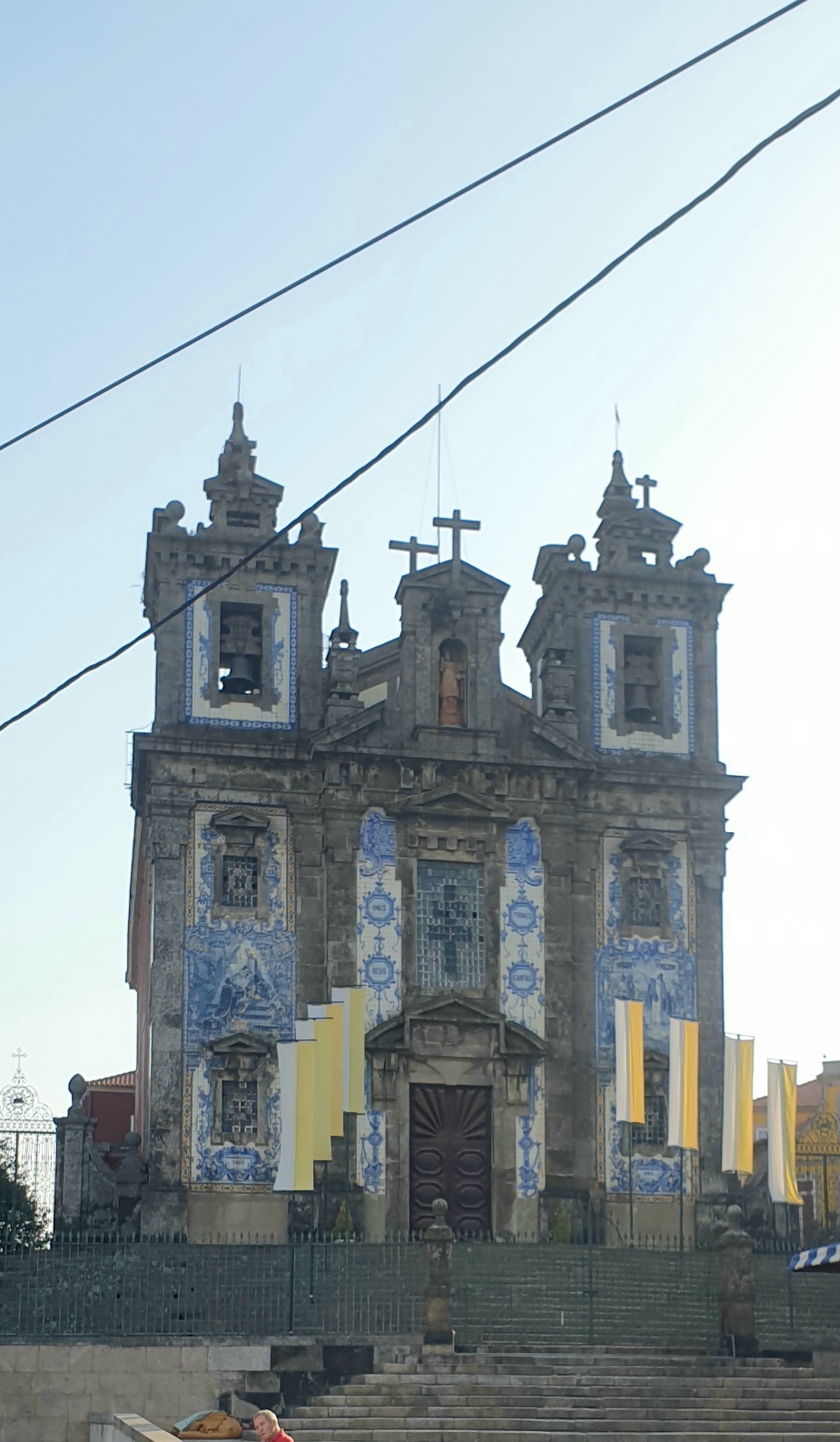
Many of the buildings are adorned with these mosaic tiles.

OK, that’s it for this week. Tomorrow its on to Vila Real.
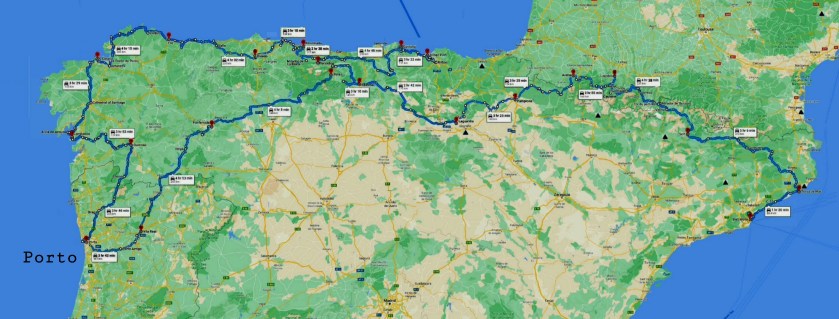
If you’re interested here’s the rest of our projected journey through Spain/Portugal.

Wk 8 – Northern Spain

Santona to A Coruna

Sun 3rd to Mon 11th July
Santona – Poncebos – Ribadsellar – Oviedo – Foz – A Coruna

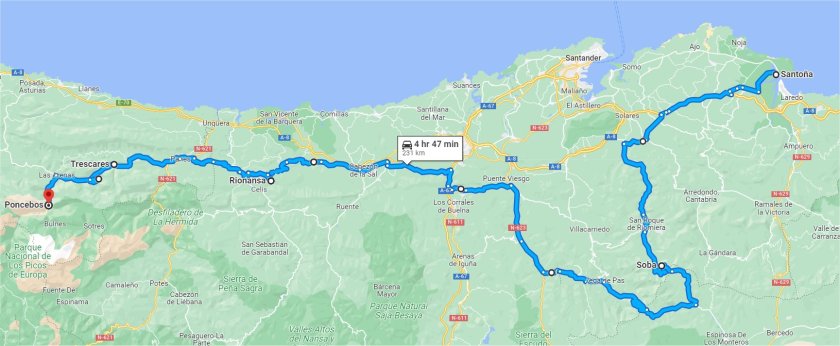
Sun 3rd – Santona to Poncebos – 230klm

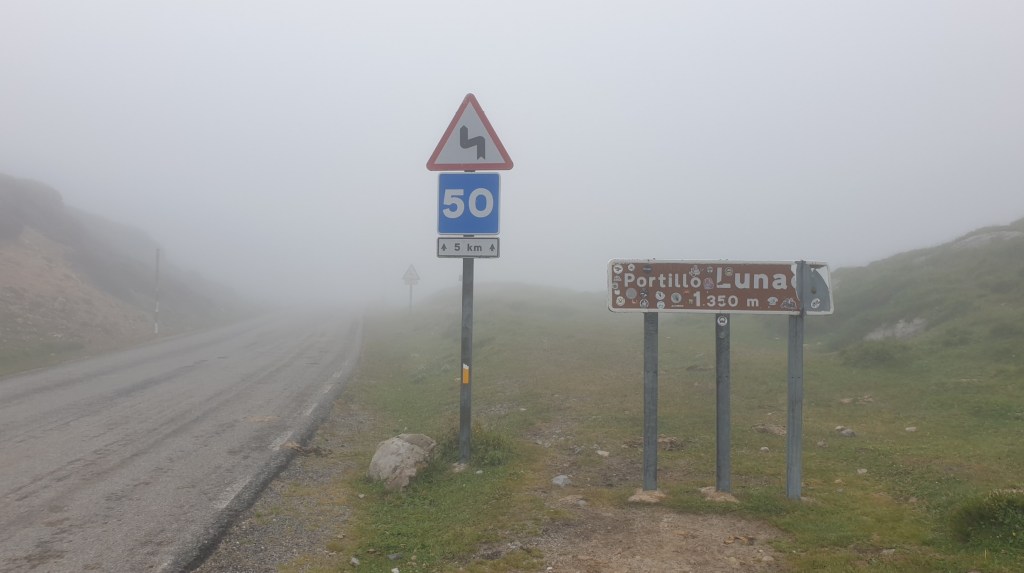
Today was to be a day of high roads and spectacular vistas as we began our traverse of the Northern Cantabrian Mountain Chain which stretches for 330klms across northern Spain. Disappointingly the day didn’t hold much promise as the cloud base was well below the mountain peaks we were going to be crossing.
But Mirador de La Casa del Rey was still below that cloud base.

But just a little ways up the winding narrow road Mirador de Covalruyo was in the clouds, as was the next 75klms with visibility down to 50m at times.
The thing about cloud is that by their very nature they’re wet – no rain just lots of moisture in the air requiring wet weather gear.

We eventually came down into lower altitudes and stopped for a brew at this remote and tiny town.

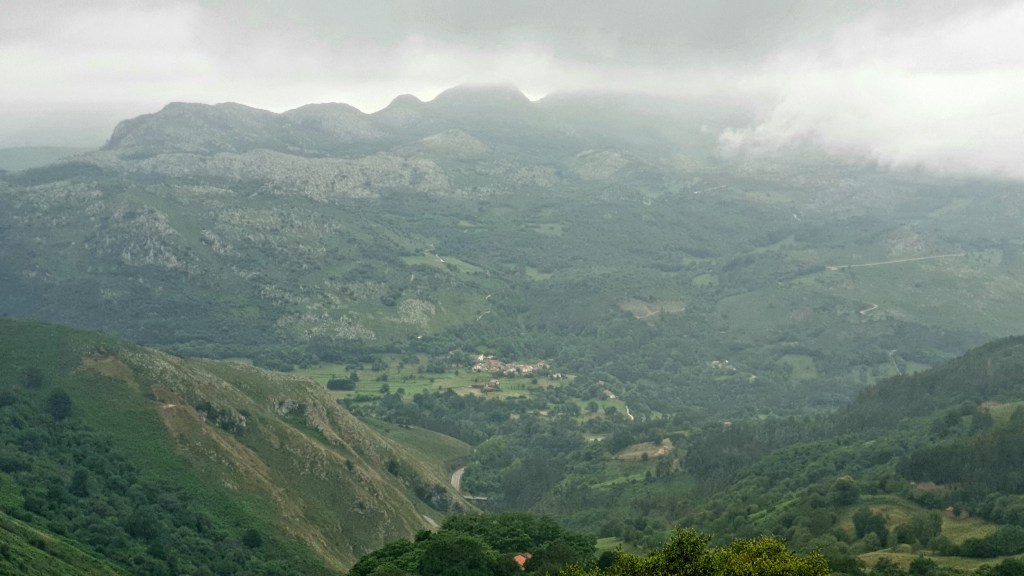
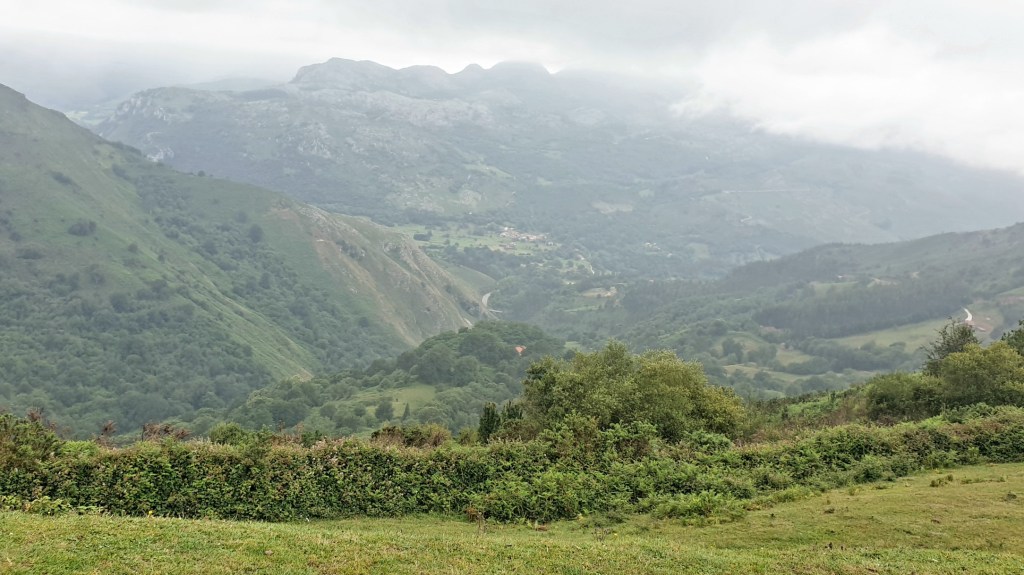
Before heading up in to the high hills again where the cloud hadn’t gotten any more co-operative. Having said that, what we did see was amazing. These pics are actually better than appeared to the naked eye.

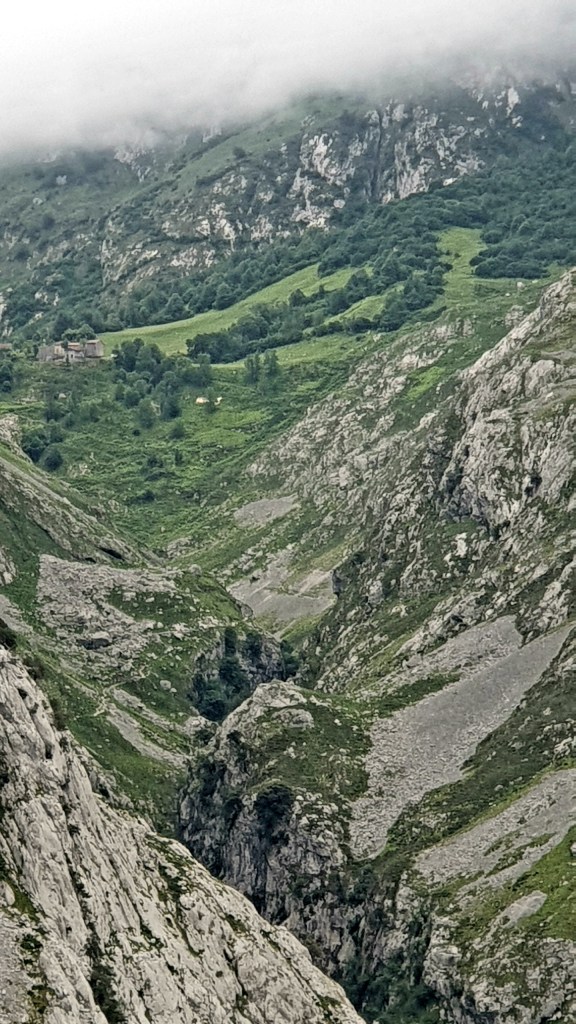
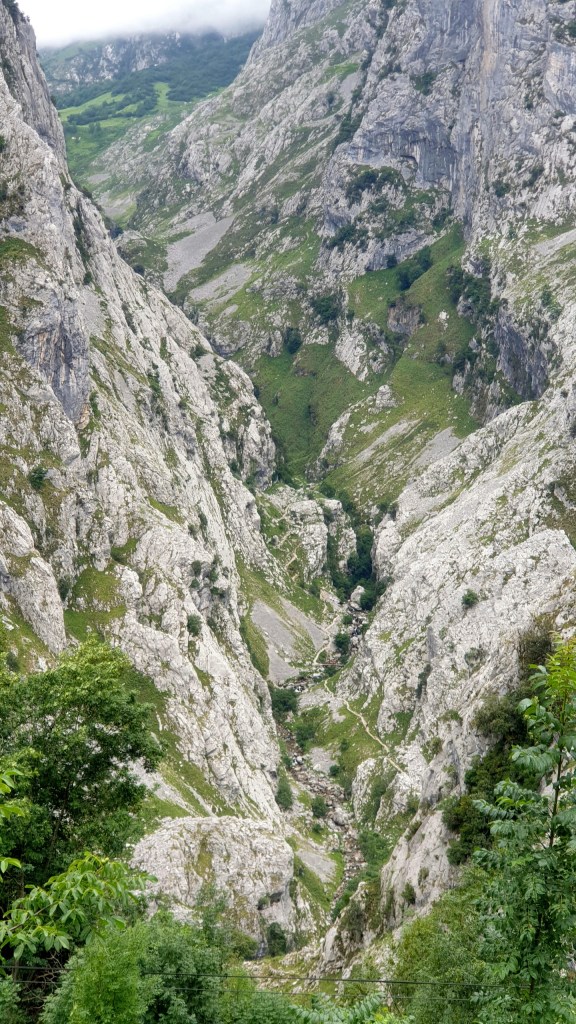
It’s rugged and steep and windy and spectacular, and it never seems to stop. That’s a road way down there which we travelled on our way to Poncebos and into the Picos de Europa National Park

Mon 4/7 – Lay Day – Poncebos

Poncebos is at the beginning of the 11klm Cares Gorge Trail which is one of the most popular trekking paths within the Picos de Europa.

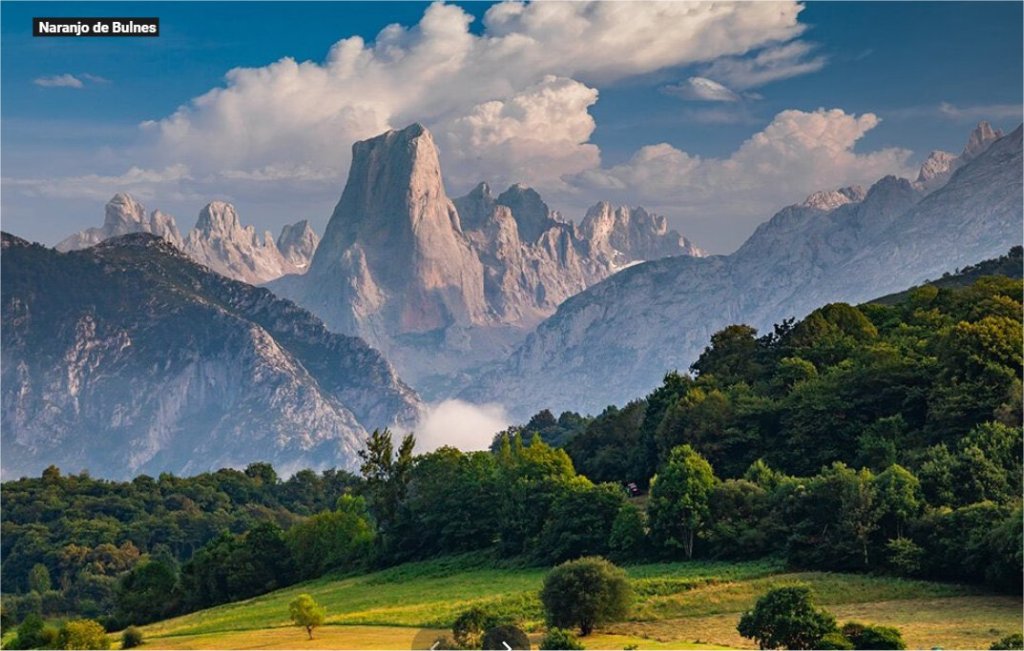
We took a bit of a hike to see if we could capture a view of the famous Naranjo de Bulnes, but once again that cloud beat us. Still, it was good for the cardio. If you look hard enough you can see the hiking tracks in these pics.

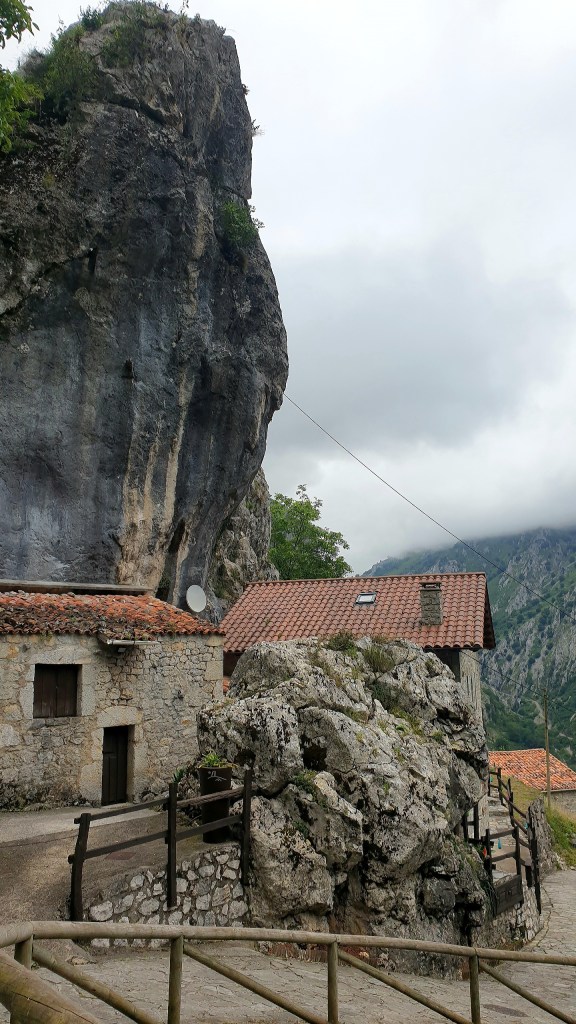
How’d you like to live under this?

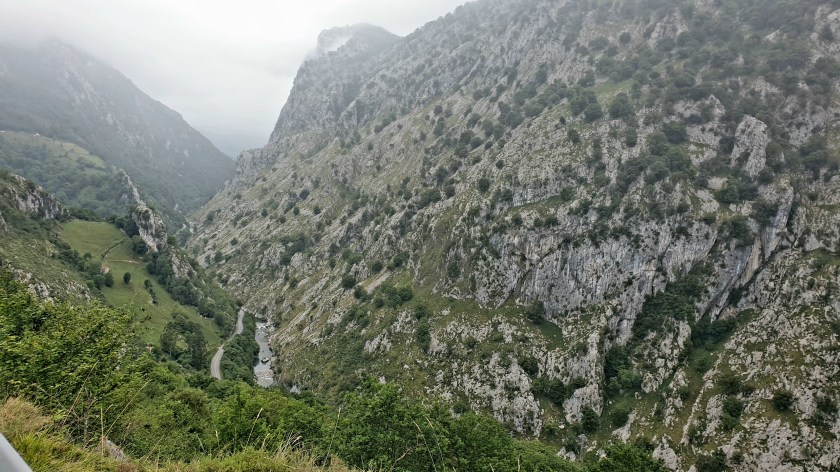
Poncebos was an amazing experience with its incredible and steep gorge walls just ‘there’ literally. It felt like you could reach out and touch them.

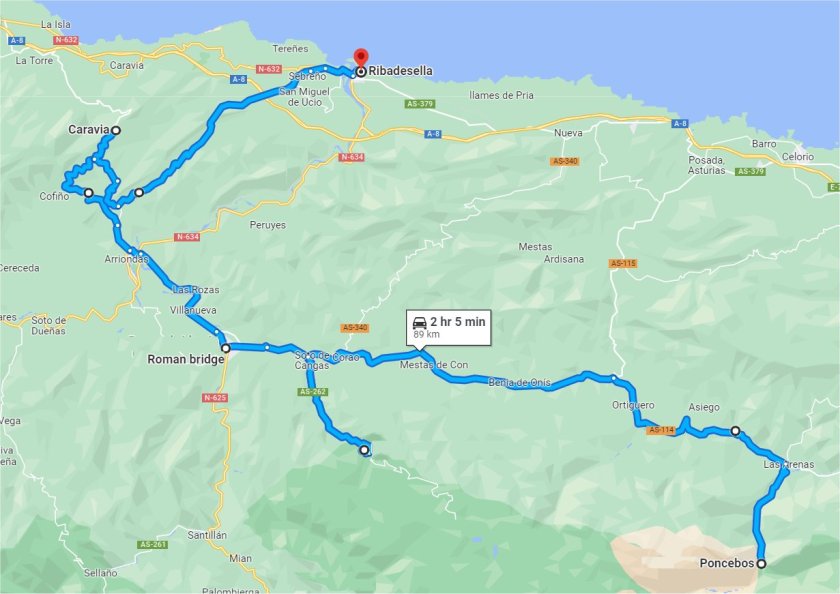
Tue 5/7 – Poncebos to Ribadesella – 90klm

The cloud was still hanging low as we left Poncebos.
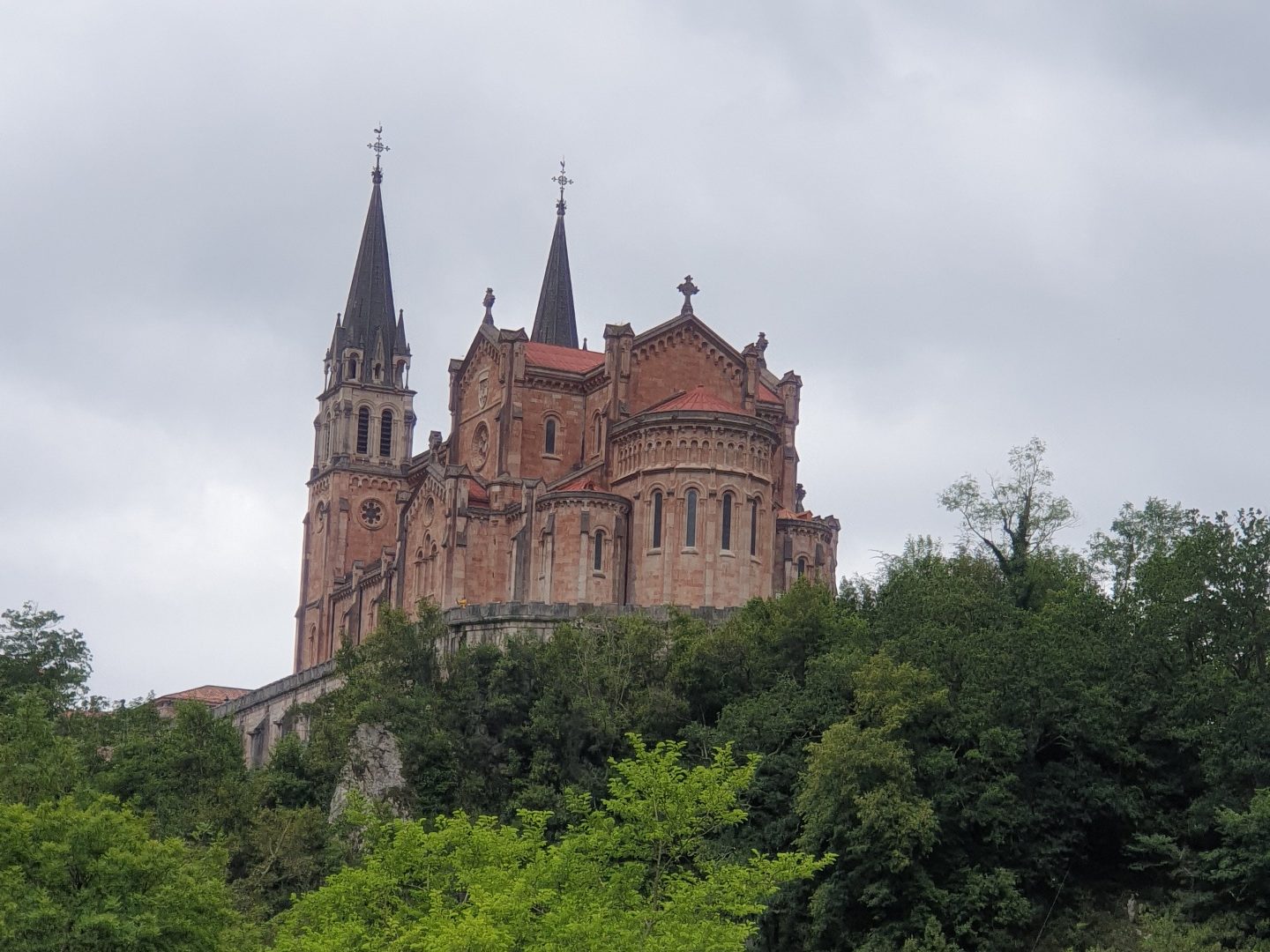
We called in to the historic Sanctuary of Covadonga and Basilica de Santa Maria la Real de Covadonga, built between 1877 and 1901.

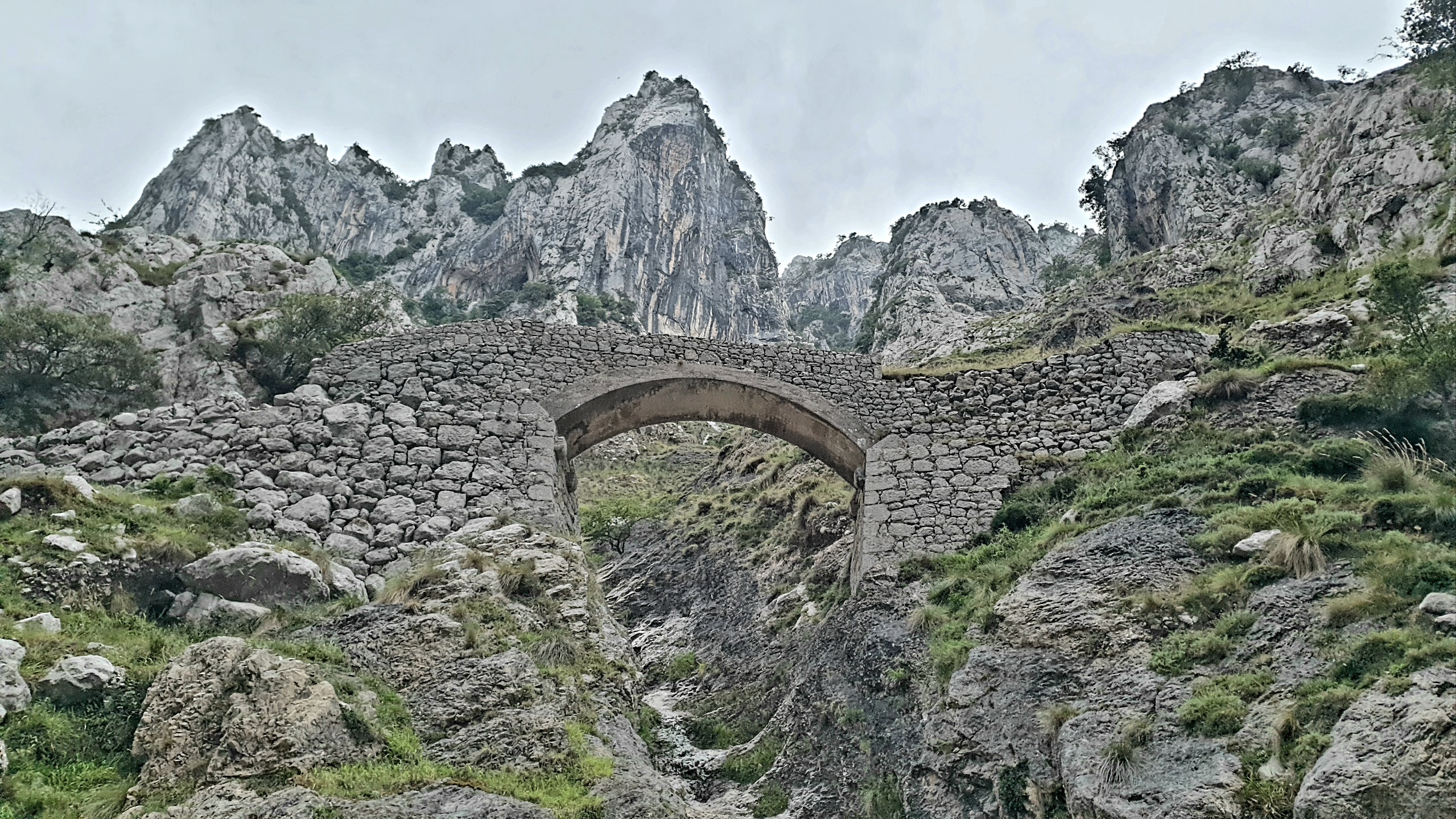
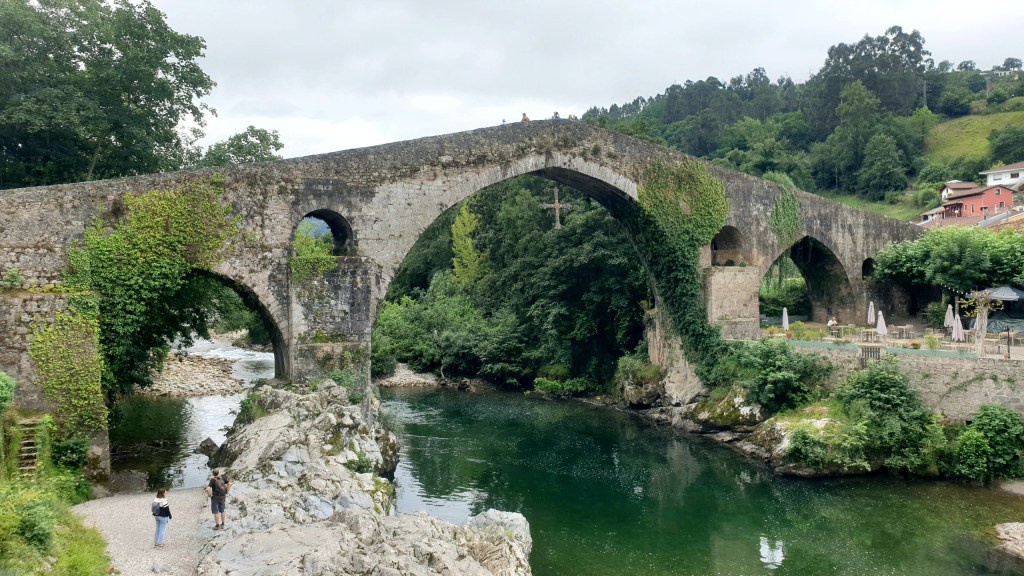
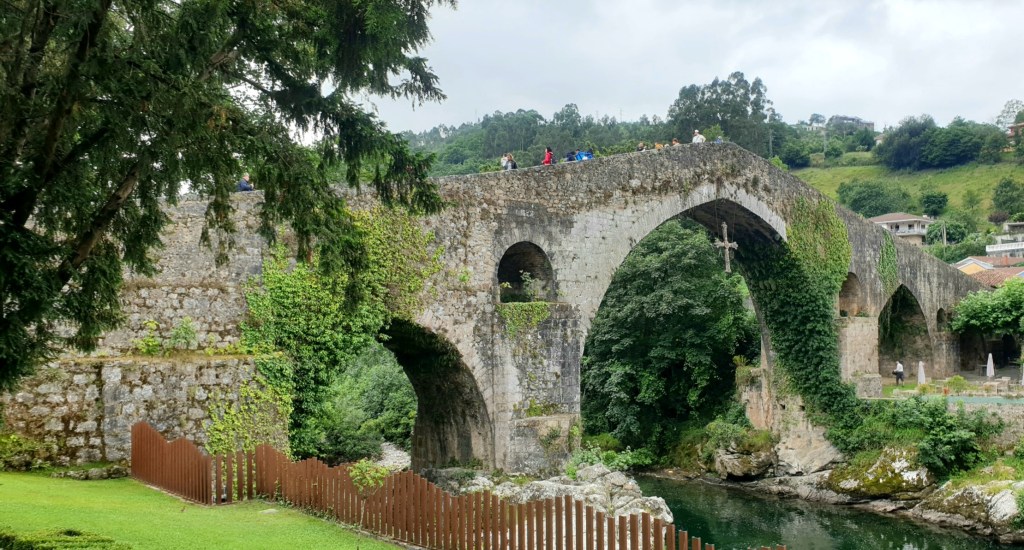
Then on to the Puente Romano de Cangas de Onís, a stone bridge across the Sella River built in the 14th or 15th century. I have no idea why they consider it to be Roman.

Then to Mirador del Fitu via another twisty and narrow road with it’s views north and south.

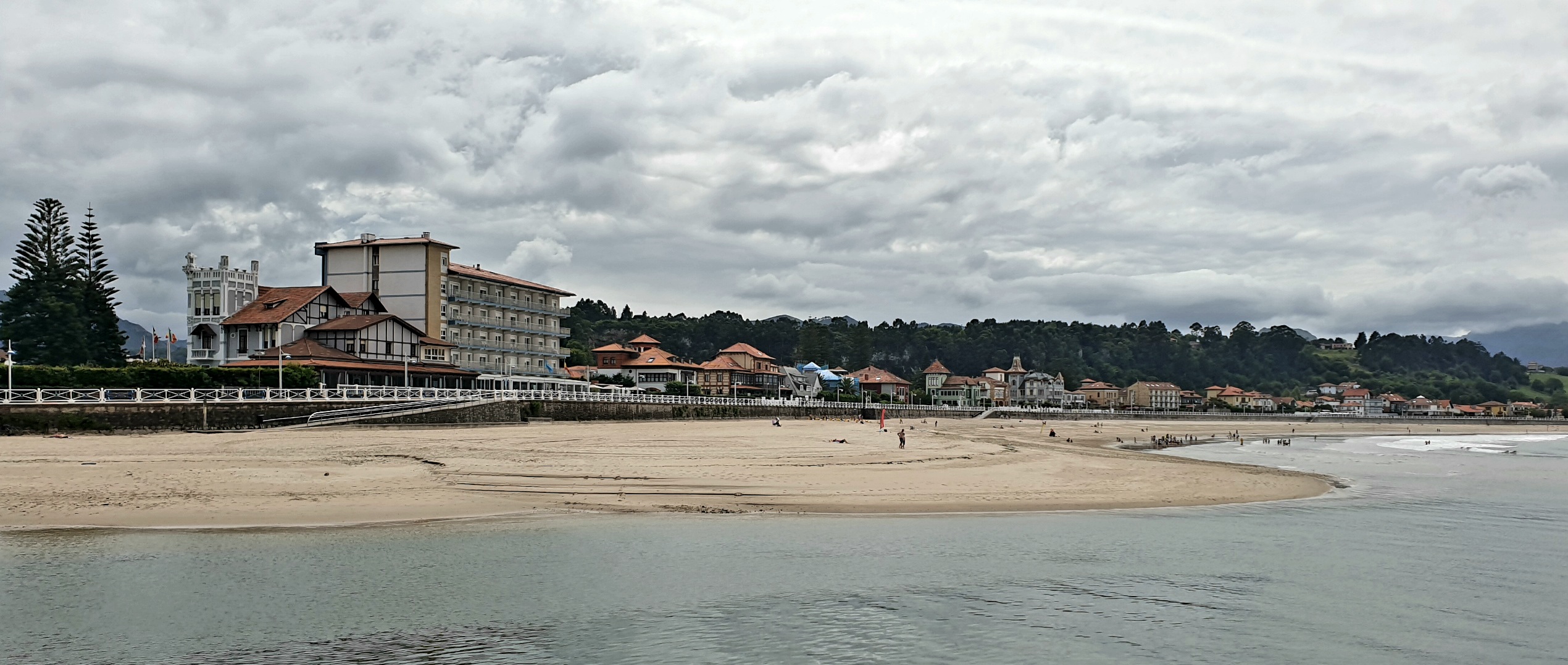
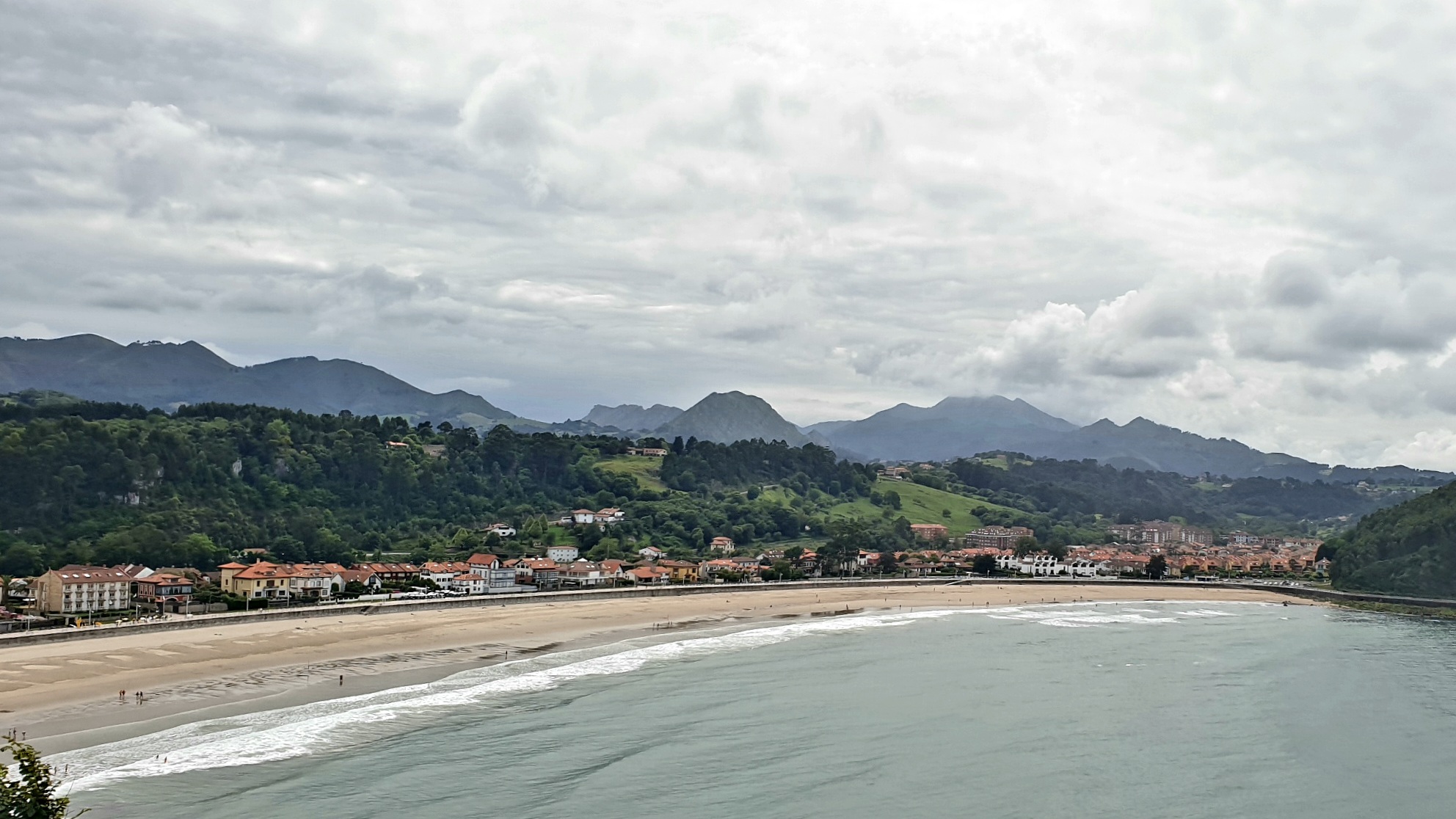
And so to Ribadesella for a 2 night stay and a laze on the beach.

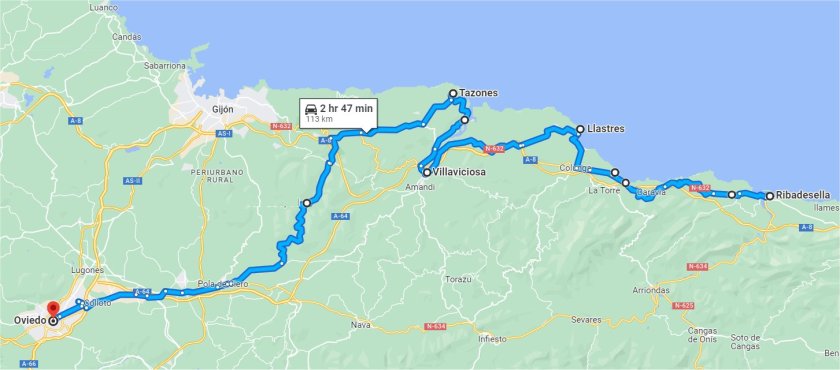
Thur 7/7 – Ribadesella to Oviedo – 120k

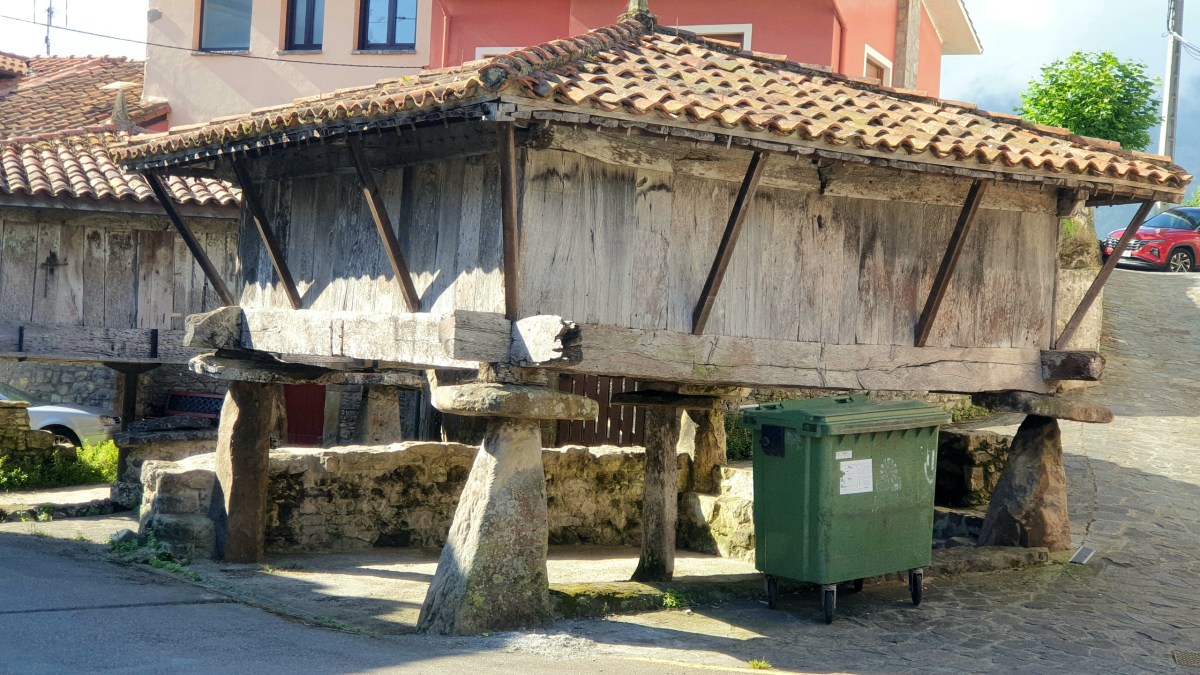
We chased the coast a while and dropped into a few little places. Playa De La Espasa then La Isla where I snapped these traditional Spanish grain storehouses. These things are everywhere, in all states of repair or, usually, disrepair, with many differing styles.

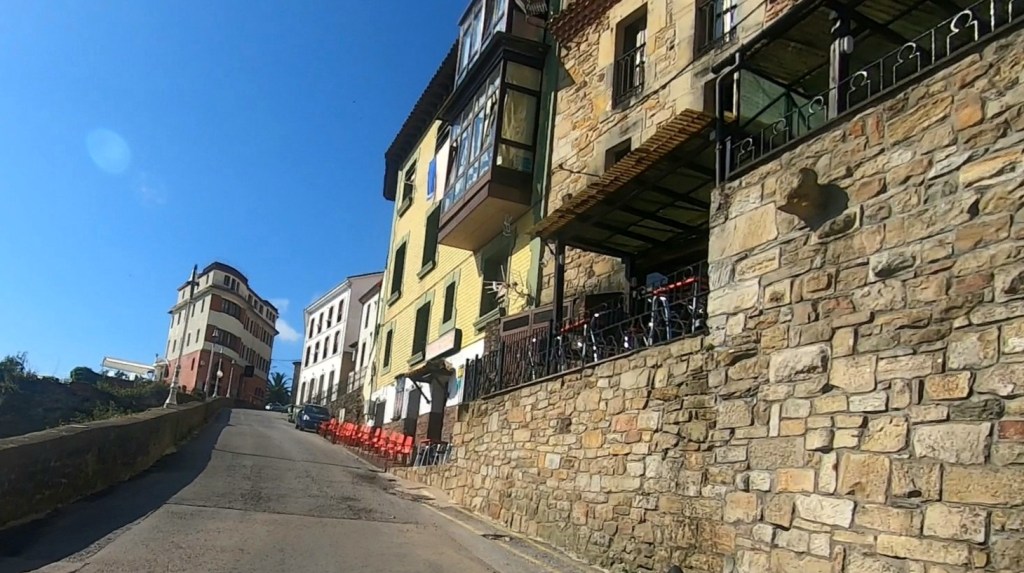
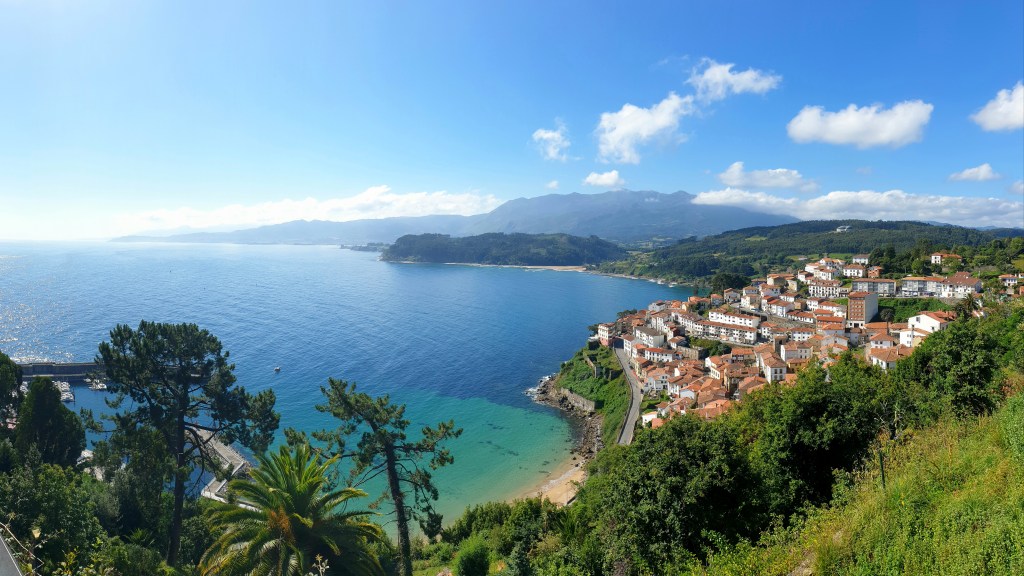
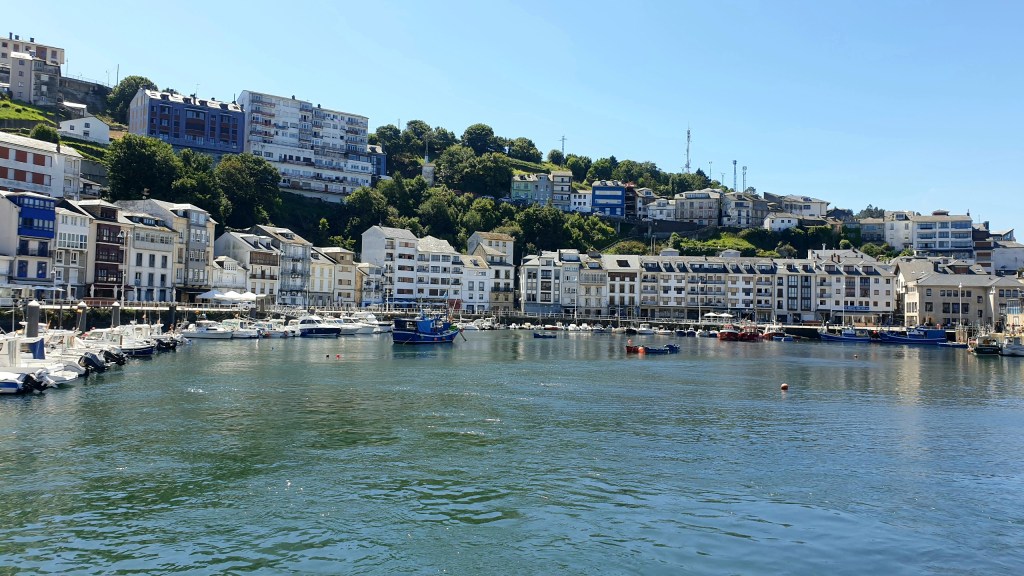
Through San Telmo to Lastres with it’s quaint little harbour and serpentine streets up to the lookout where we stopped for a brew with a view.

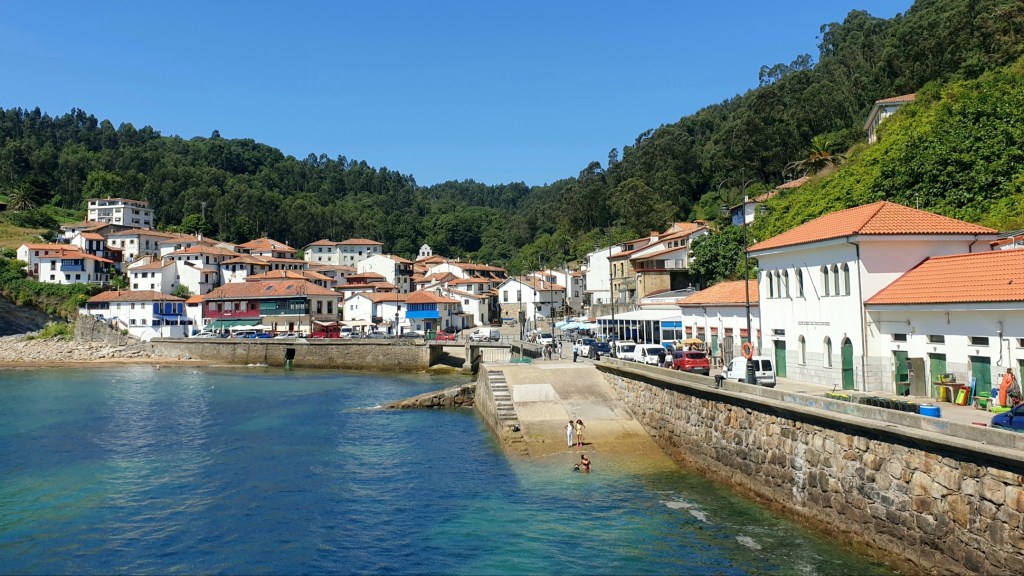
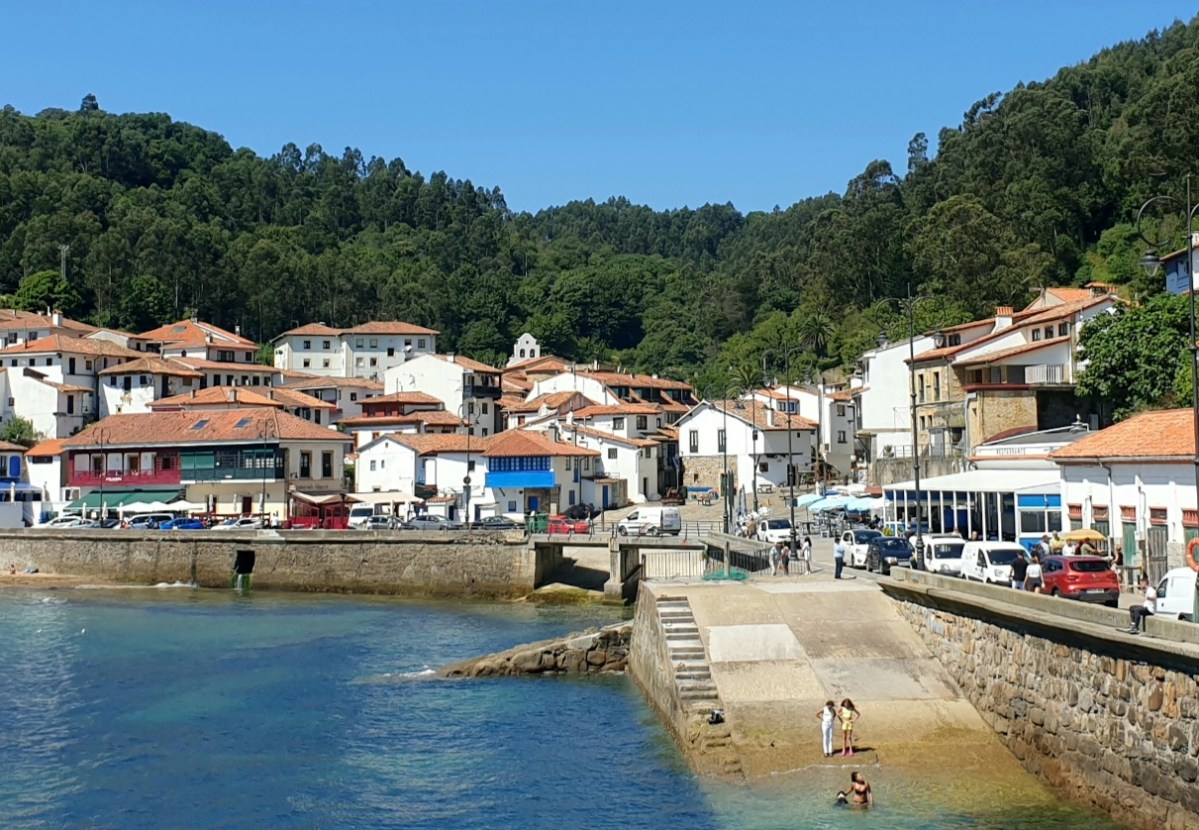
We rode through busy Villaviciosa to Tazones where we stopped for a while and watched a local fisherman selling his morning’s catch which consisted of Sardines and small Ray.

From there it was a straight run through to Oviedo using the AS-331, that took us up and up and over a range. I’d chosen this route on Google Maps as it looked like a reasonable short cut, which it was, but no-one else thought so as we didn’t see another vehicle in it’s entire 20klm length. The surface was fine but it was very narrow and non stop curves, hairpins and short straights. However, we survived the experience through the endless logging plantations – seems like the loggers weren’t working thank goodness.

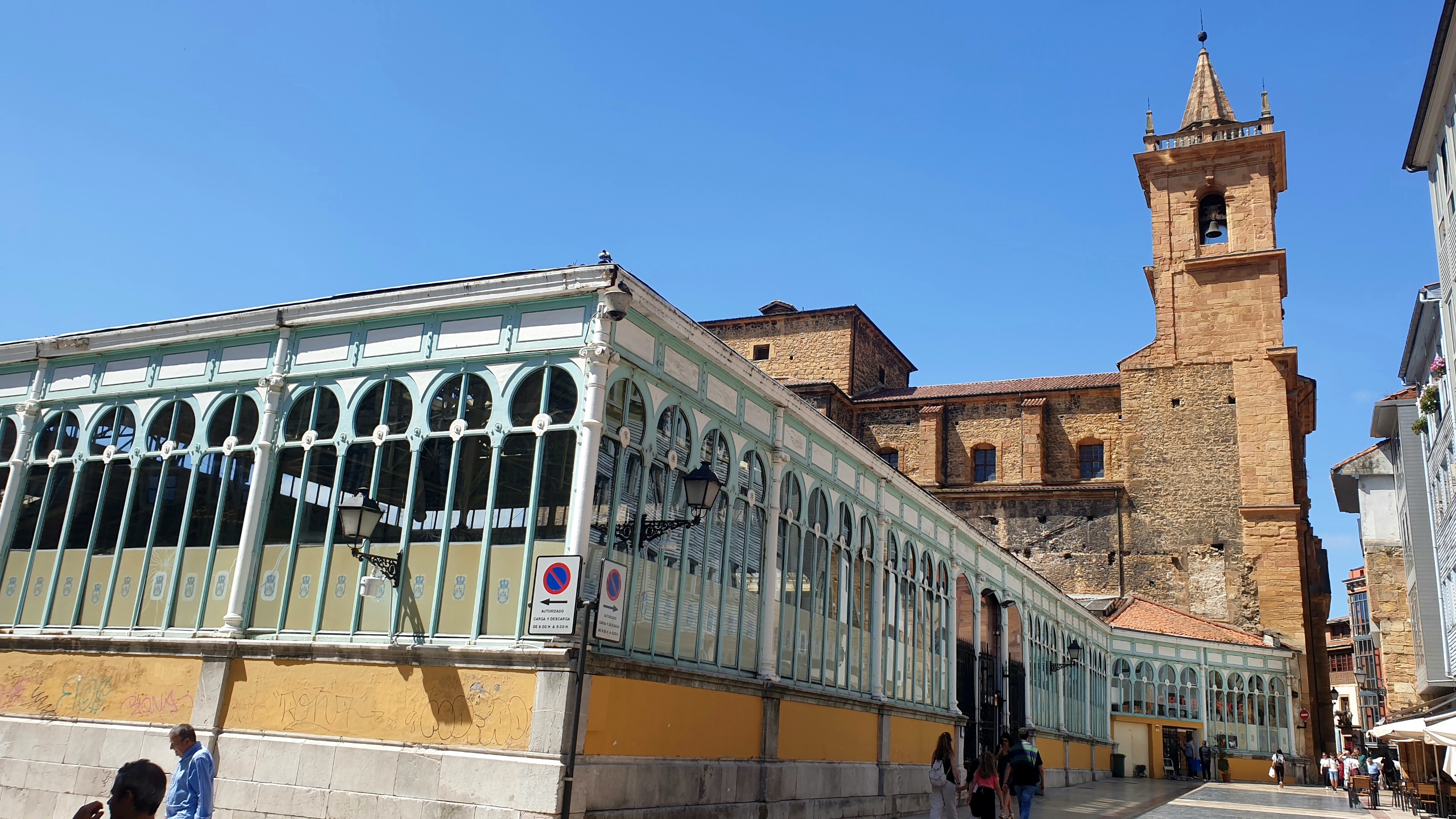
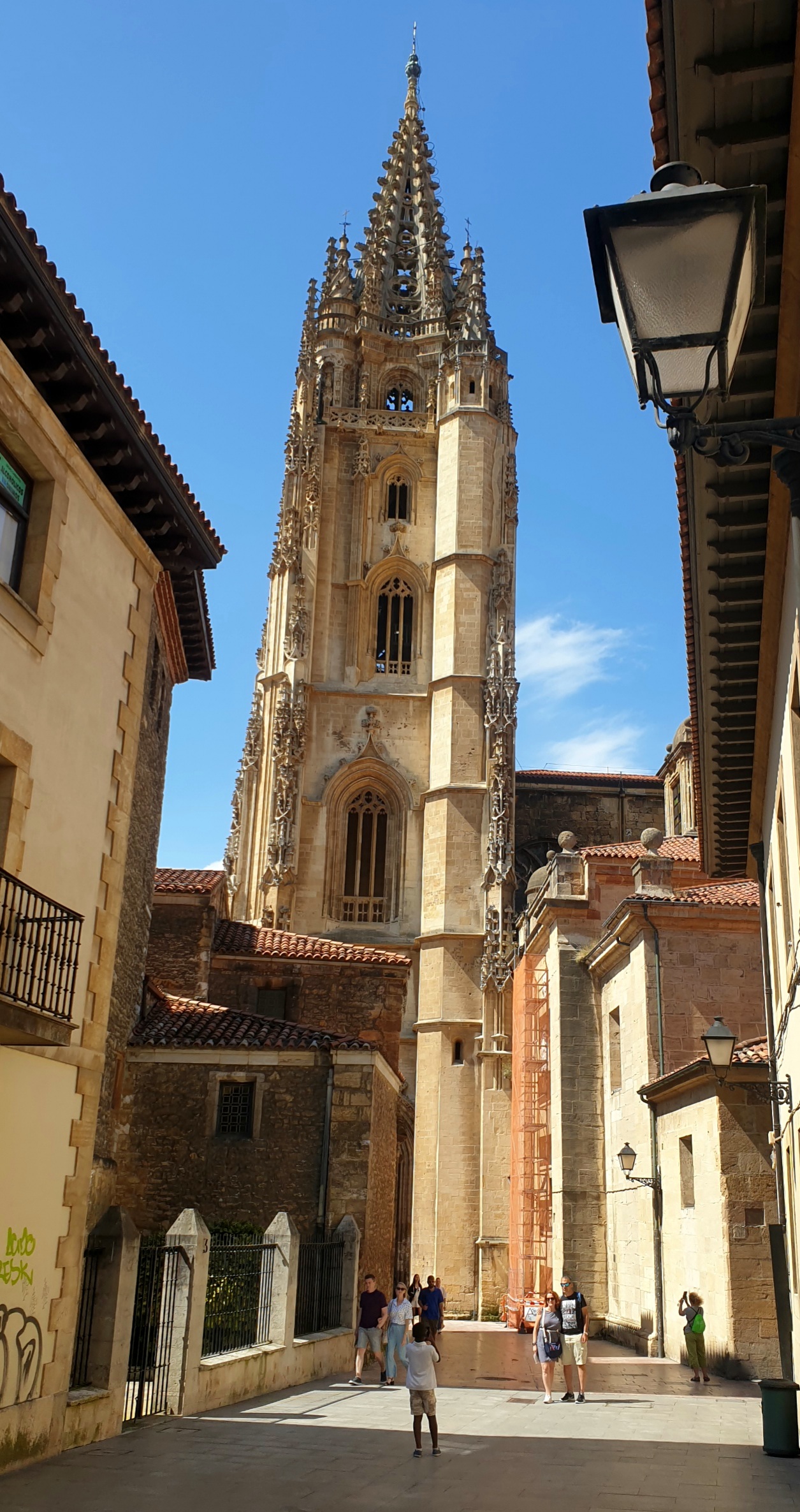
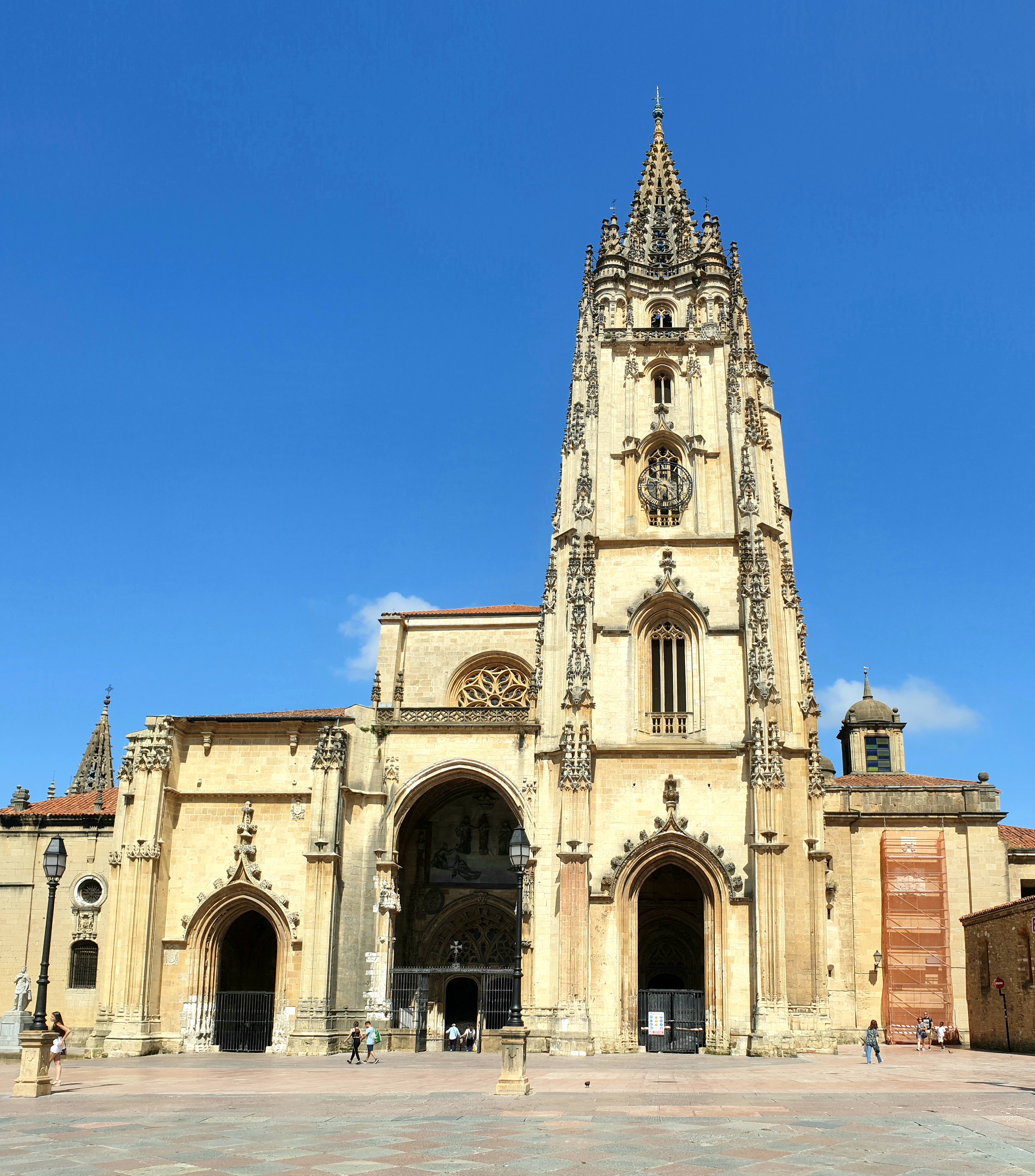
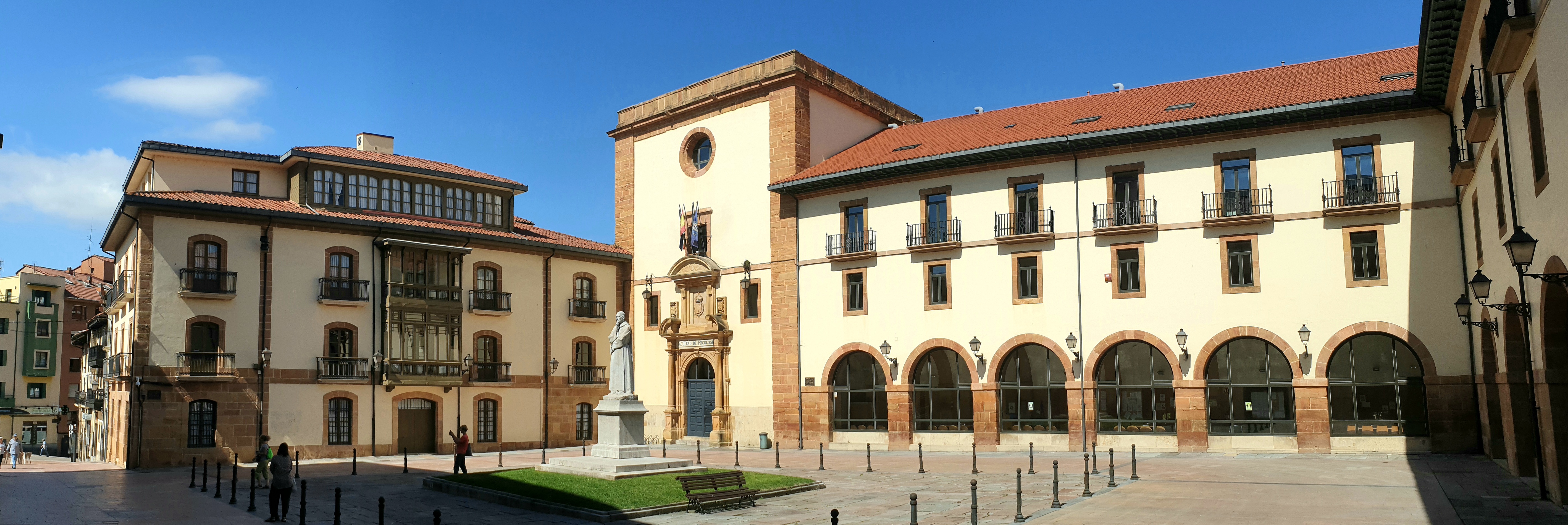
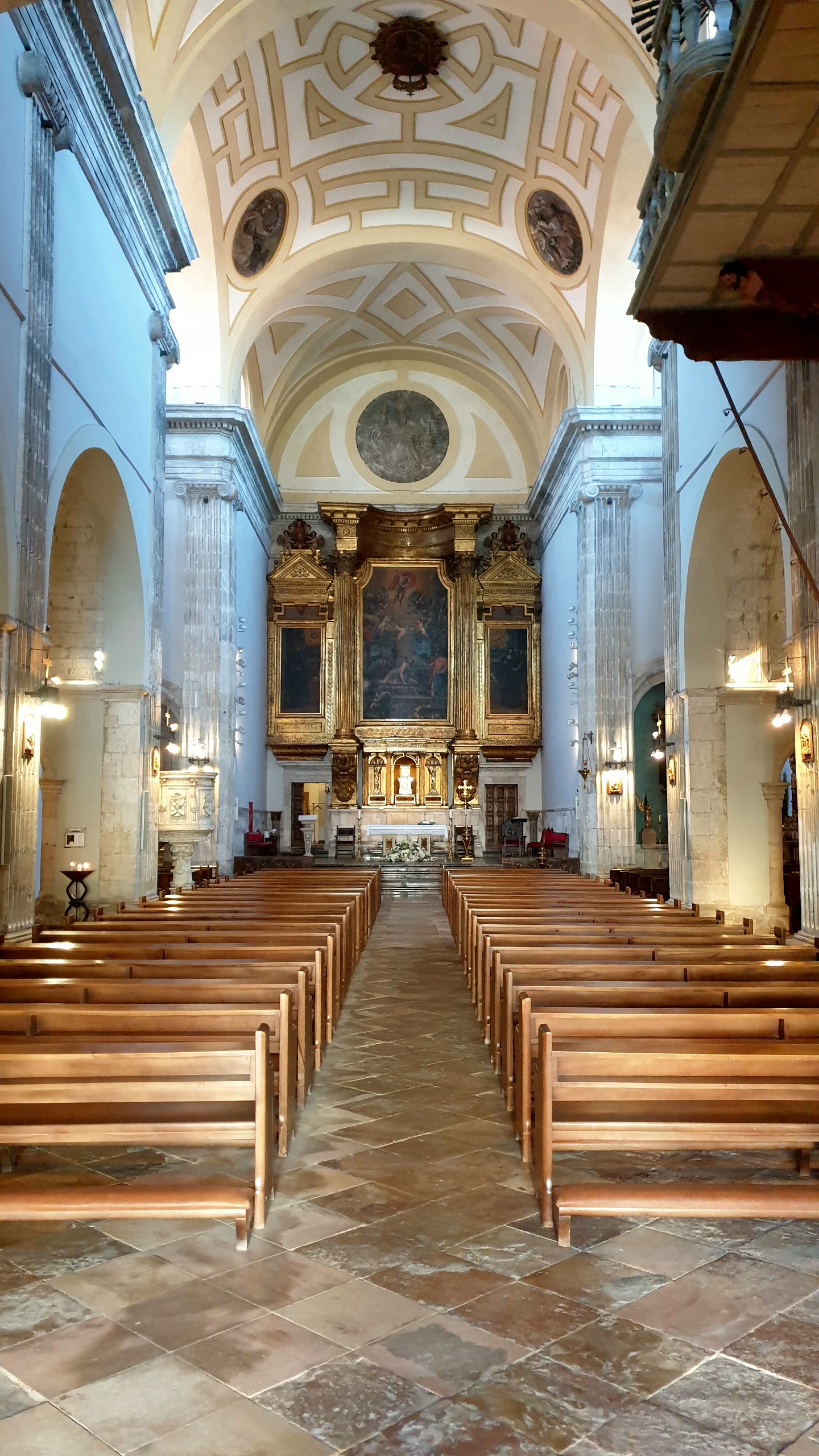
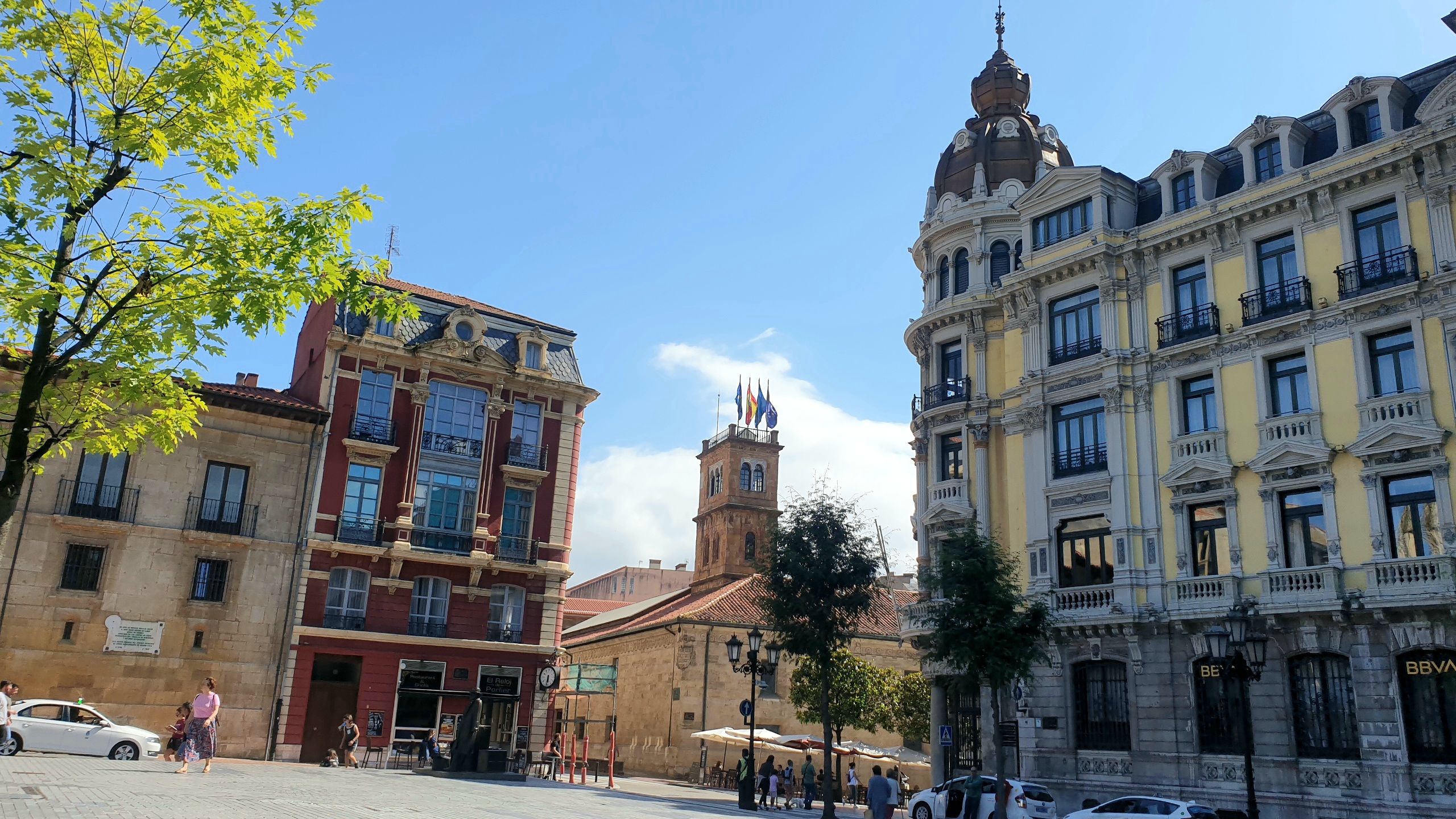
To lovely Oviedo where we had a hotel within 30m of the Old Town and its non stop parade of religious buildings.
This place is smack bang in the middle of the pilgrimage route to Santiago, or Camino de Santiago, of whom we’d seen many on the road. Not my spiritual cup of tea, but it’d be a great walk/hike all the same.

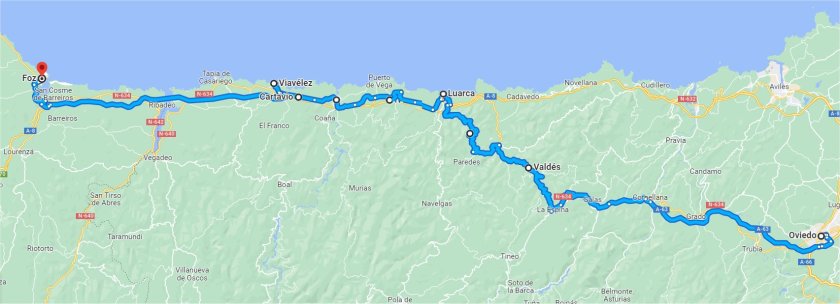
Fri 8/7 – Oviedo to Foz – 180k

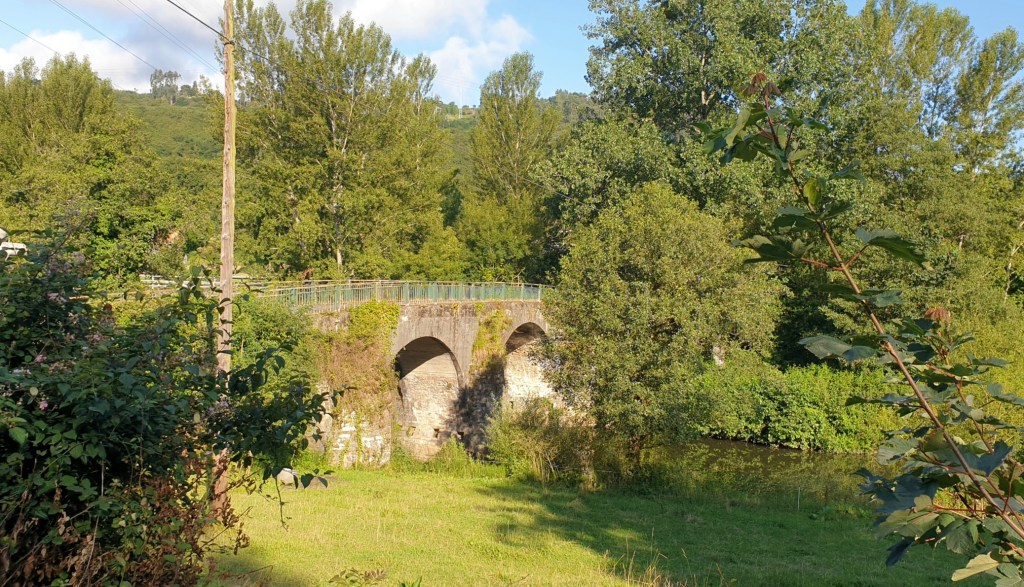
Our first stop was at Ponte Medieval de Gallegos.
Pilgrims on the Camino de Santiago have passed over this bridge for centuries to cross the Nora River. The first written reference to this bridge dates back to 1247. At the entrance of the bridge, there is a sculpture made in concrete by José Luís Fernández in 1982, belonging to a series called “Encuentros”.

Avoiding the offered freeways we followed the AS-371 as it traced the Nora then the Nolan Rivers to Puente medieval de Peñaflo, another Pilgrim crossing of unknown age.

On through Grado’s congested one-way streets to Salas where we bought a A$1.80 coffee and sat on the sidewalk and watched the world go by, and a very quiet and peaceful world it was.

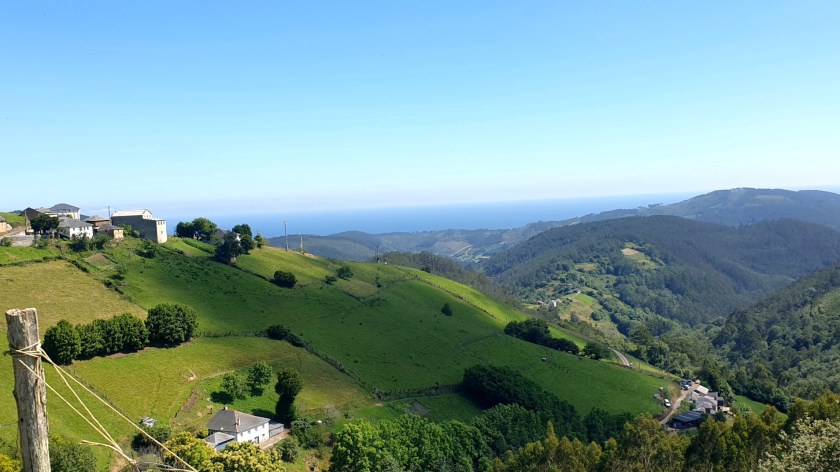
From the AS-351 was a glorious 50klm ride through non-stop twisties through endless bushlands and beautiful countryside as we crossed one range after the other to Fontoria – which has nothing going for except its at the end of the road.

To lovely Luarcra and its little harbour where we sat on a bench and had a brew. We do tend to get some strange looks as we’re sitting there with our flask having a brew, after all coffee is very cheap so why bother. But it’s something we enjoy doing and something we’ve always done on our travels through Europe in the past.

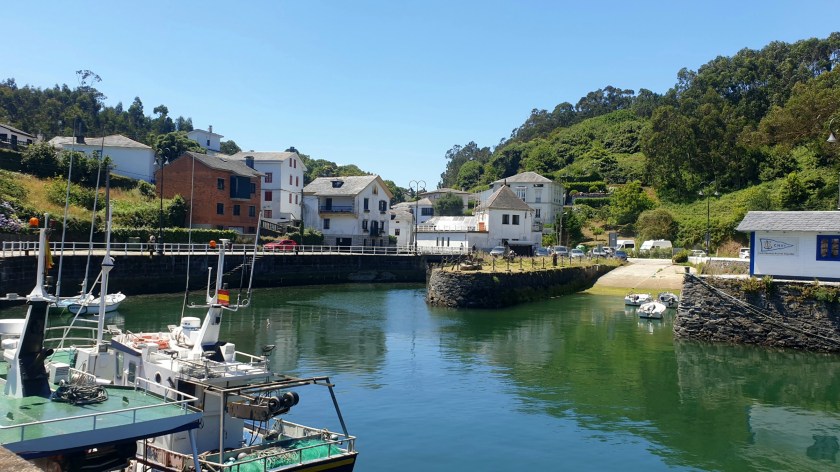
Up the road a ways is tiny Cetárea Viavélez with it’s inevitable quaint harbour. We got chased out of town by an irate local who seemed to think that we shouldn’t have ridden across that bridge to access the view below – or something like that.

The day was warming up and getting to be long so we cruised the final 15k by freeway to Foz where we had a misunderstanding with the landlord (seems it was that sort of day) as our room was supposed to have a balcony with sea views. Seems our interpretation of ‘balcony’ and ‘sea-views’ is different in Spanish. We compromised with free breakfasts for 2 days – not a bad deal really.
It was Friday, so we loosened our belts a notch.

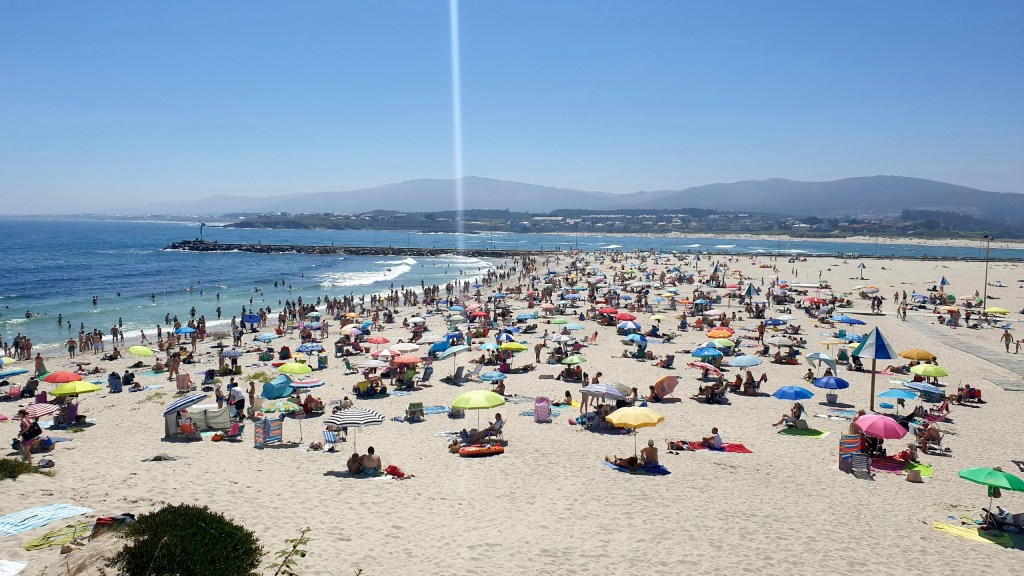
We spent the Saturday on the beach which was quiet when we got there at 9am but packed an hour later. The Atlantic Ocean is cold, believe me.

Sun 10/7 – Foz to A Coruna – 210k

Today is warm, but its Sunday so our free negotiated breakfast isn’t on until 9am which means a later start than we’d prefer. We stock up on fruit to compensate and hit the road. A fuel stop at A$3.10/ltr which is the norm for E5 95 octane – so don’t complain Aussies.

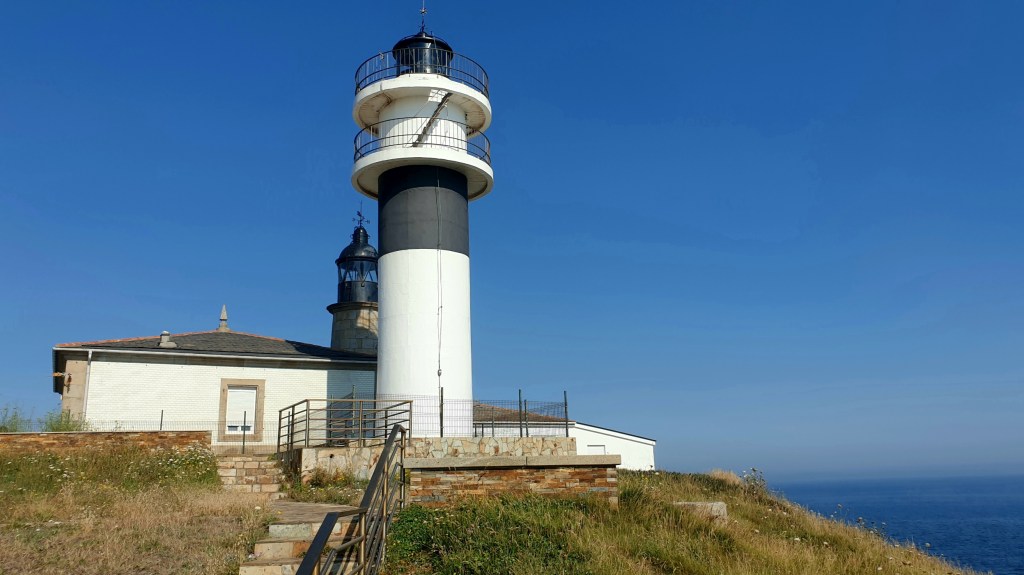
We drive through Burela which is still asleep even though by now its 10.15am, and head for San Cibrao and it’s lighthouse(s) – Faro de Punta Atalaia. Just across the bay is a rather large ALCOA Aluminium smelter.

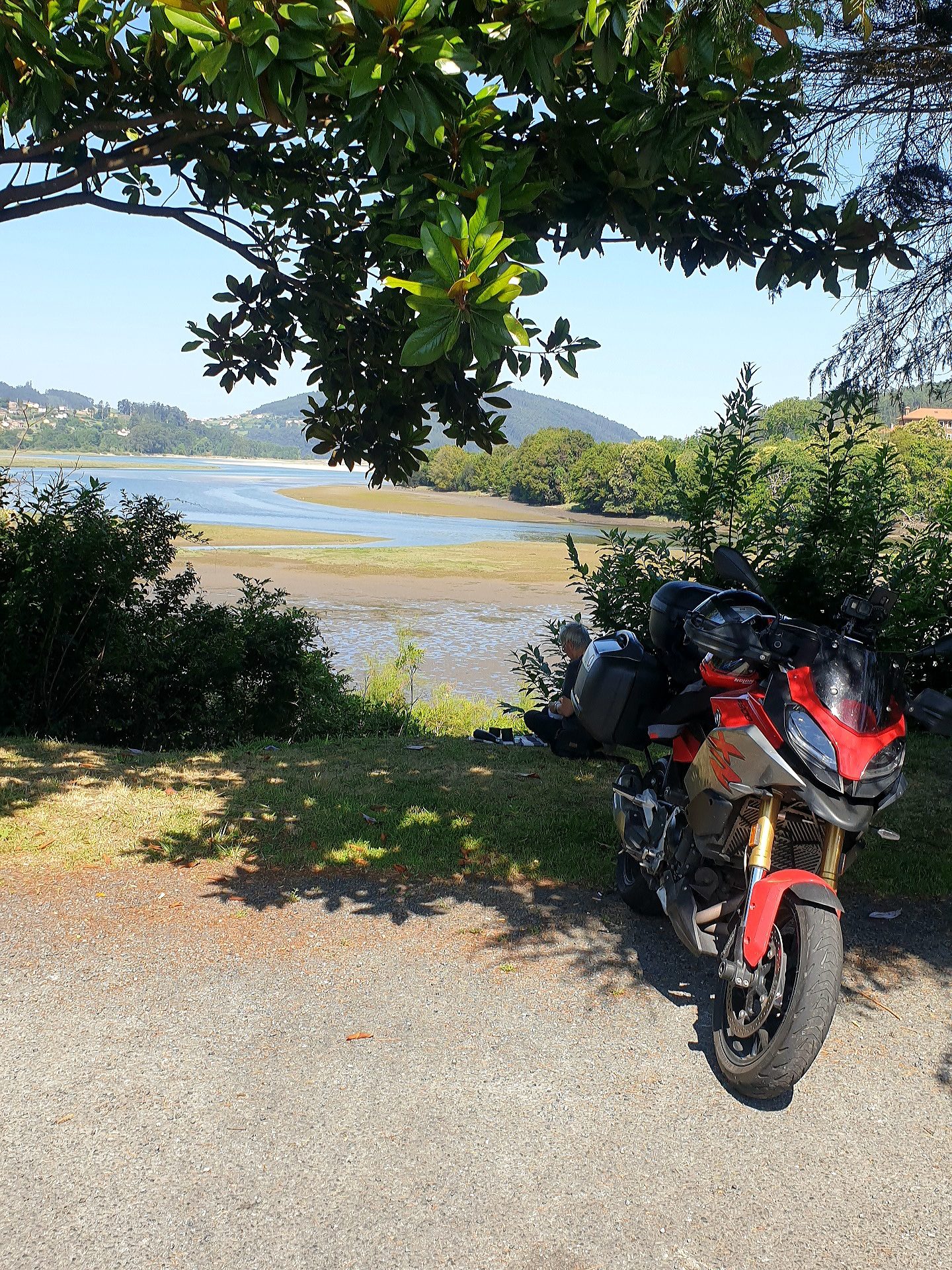
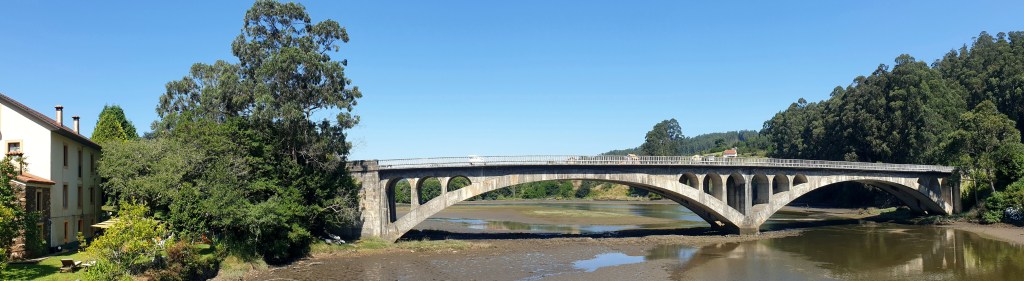
On through Viveiro, Ortigueira and Cedeira then 5k further on we stop for a brew overlooking an estuary and watched the tide come in. Oh, and a bridge of no real history.

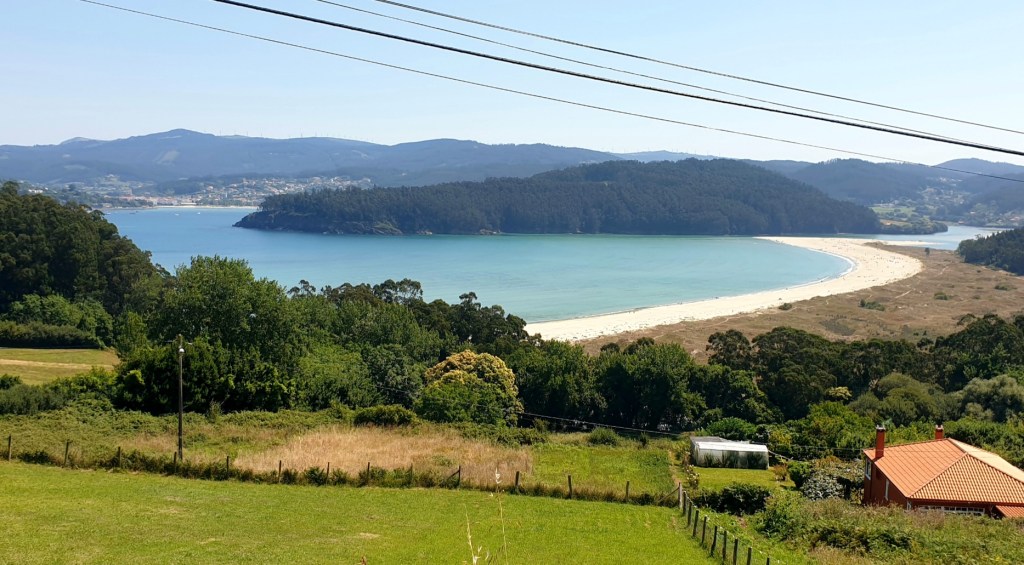
Then its from one bay to the next headland to the next bay and so on, to Ferrol and Pontedeume with all those beautiful bays in between.

To Ponte do Pedrido, a 520m bridge that crosses the Betanzos River. First we crossed it then we took a break in it’s shade.

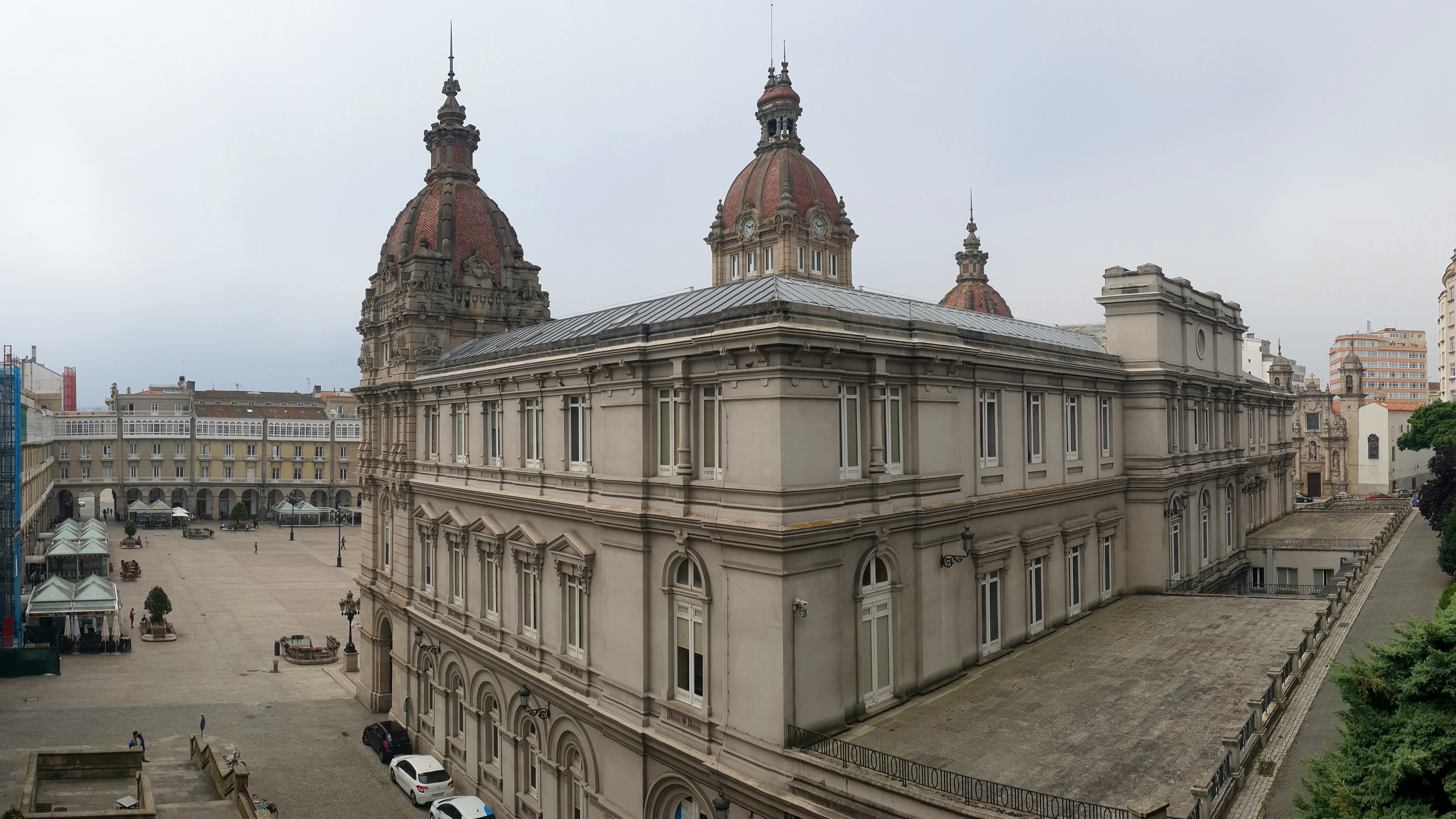
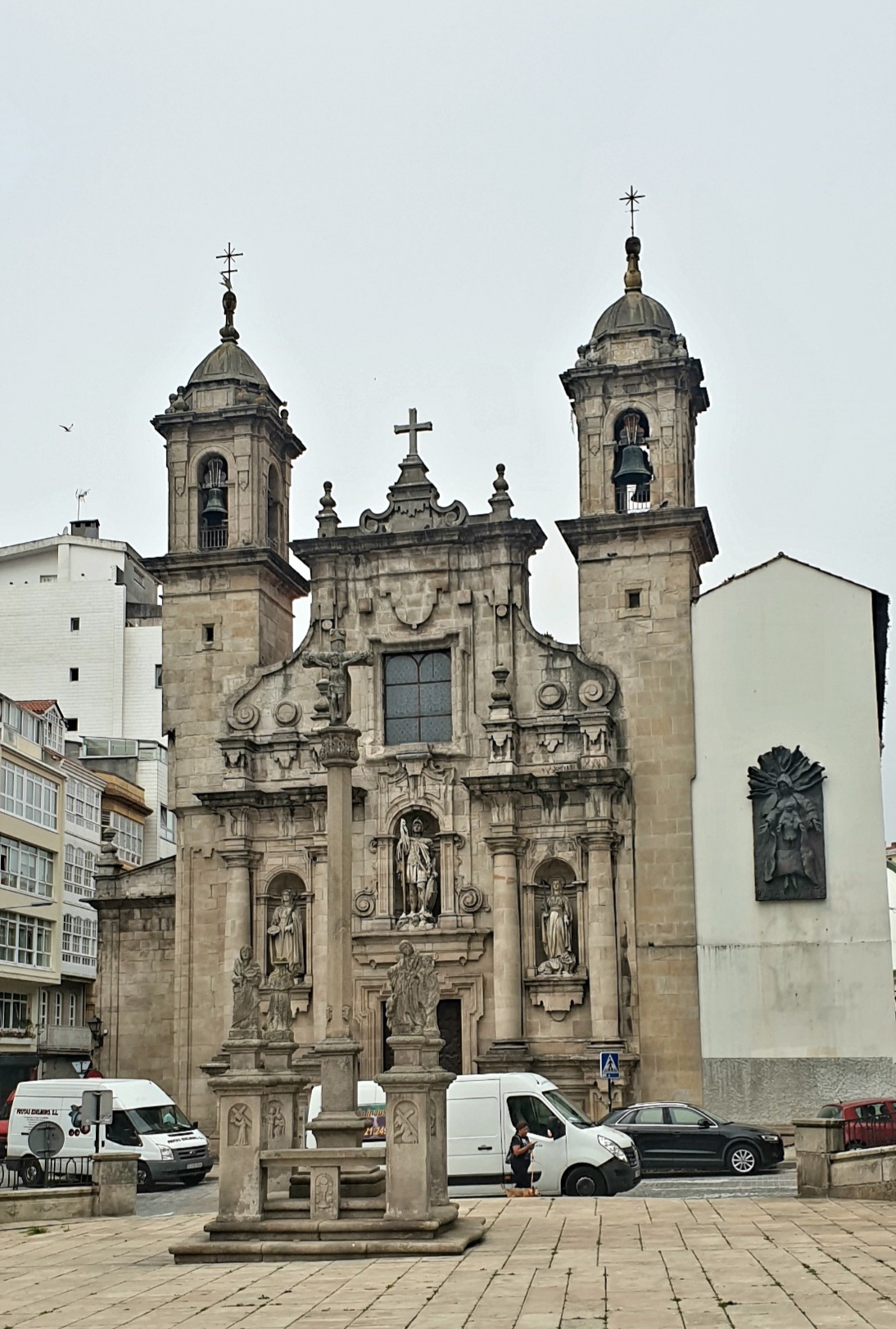
Then it was on to A Coruna where we booked in to our boutique hotel in the middle of town.

Mon 11/7 – A Coruna lay day

We’ll spend 4 nights here in A Coruna – its about time for a rest. We’re half way through our journey and still in love 😃

Wk 7 – Wales to Spain

Week 7 we covered some distance – Wales to Spain

Caernarfon (Wales) to Santona (Spain) – 27 June to 2 July

Mon 27 June to Sat 2 July
Caernarfon – Hay-on-Wye – Bradford-on-Avon – Portsmouth – Bilbao – Santona

Mon 27/6 – Dublin to Caernarfon – 70klm

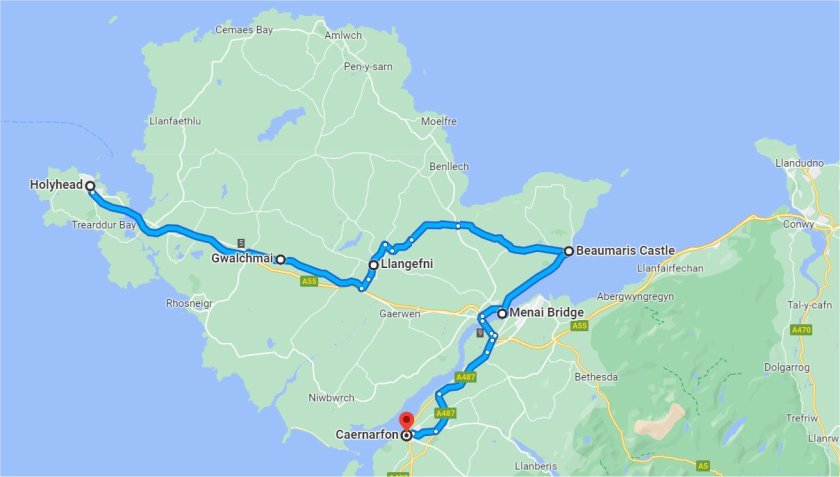
We’re out of our Dublin B&B early to catch the ferry to Holyhead in Wales. It’s an easy 3 hour crossing. We stop in busy little Holyhead for an early lunch then move on. Through Llangefni and on to Beaumaris Castle. Started in 1295 it is famous as the greatest castle never built – hence its squat appearance. It was the last of the royal strongholds created by Edward I in Wales – and perhaps his masterpiece.

The sun is making a rare appearance today as we move for a distant view of two great engineering feats of the early 19th century.
The Menai Suspension bridge, opened in 1826 it was the World’s first iron suspension bridge.
The Britannia Bridge, opened in 1850, is a magnificent prototype box-girder bridge.

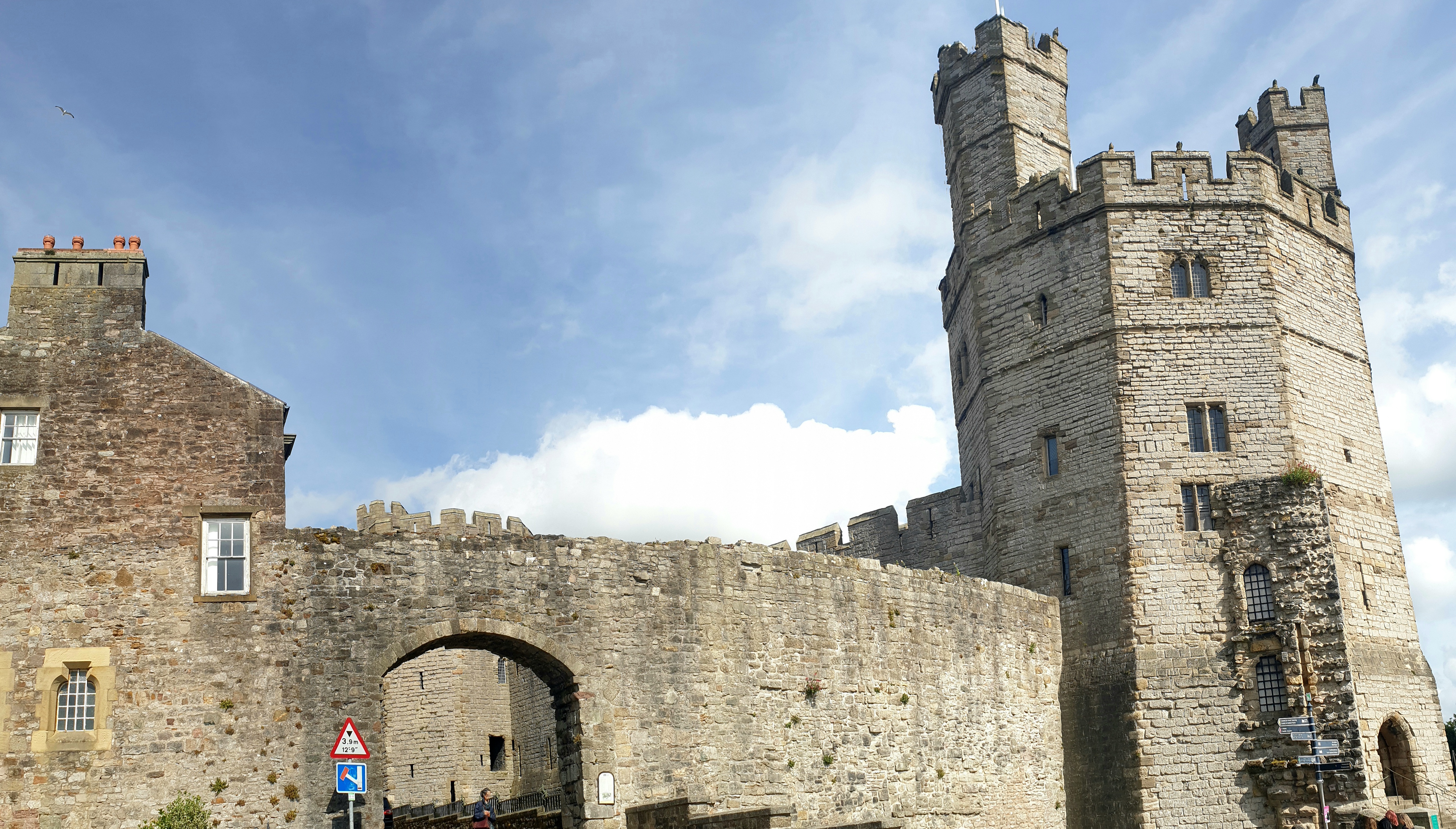
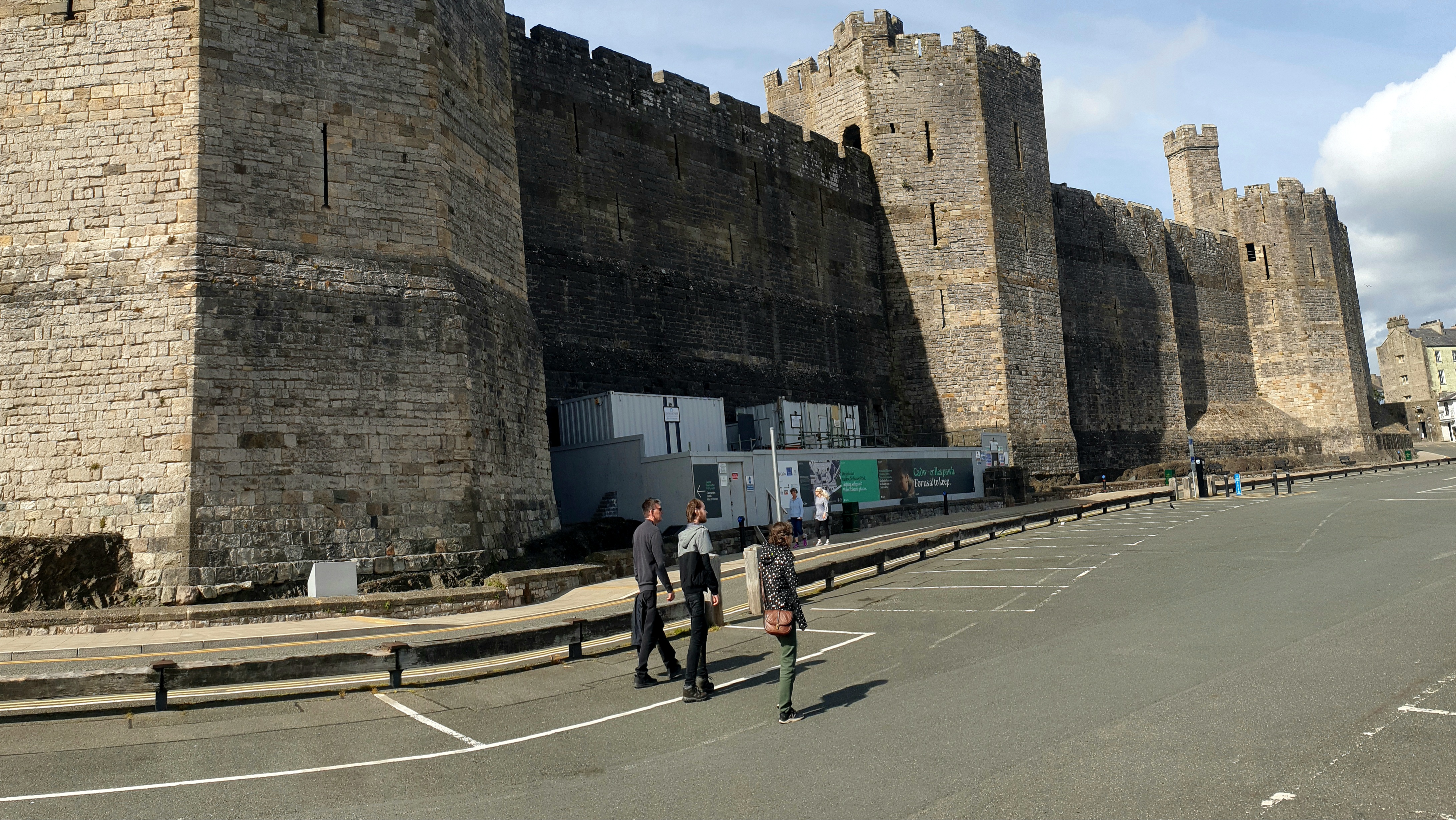
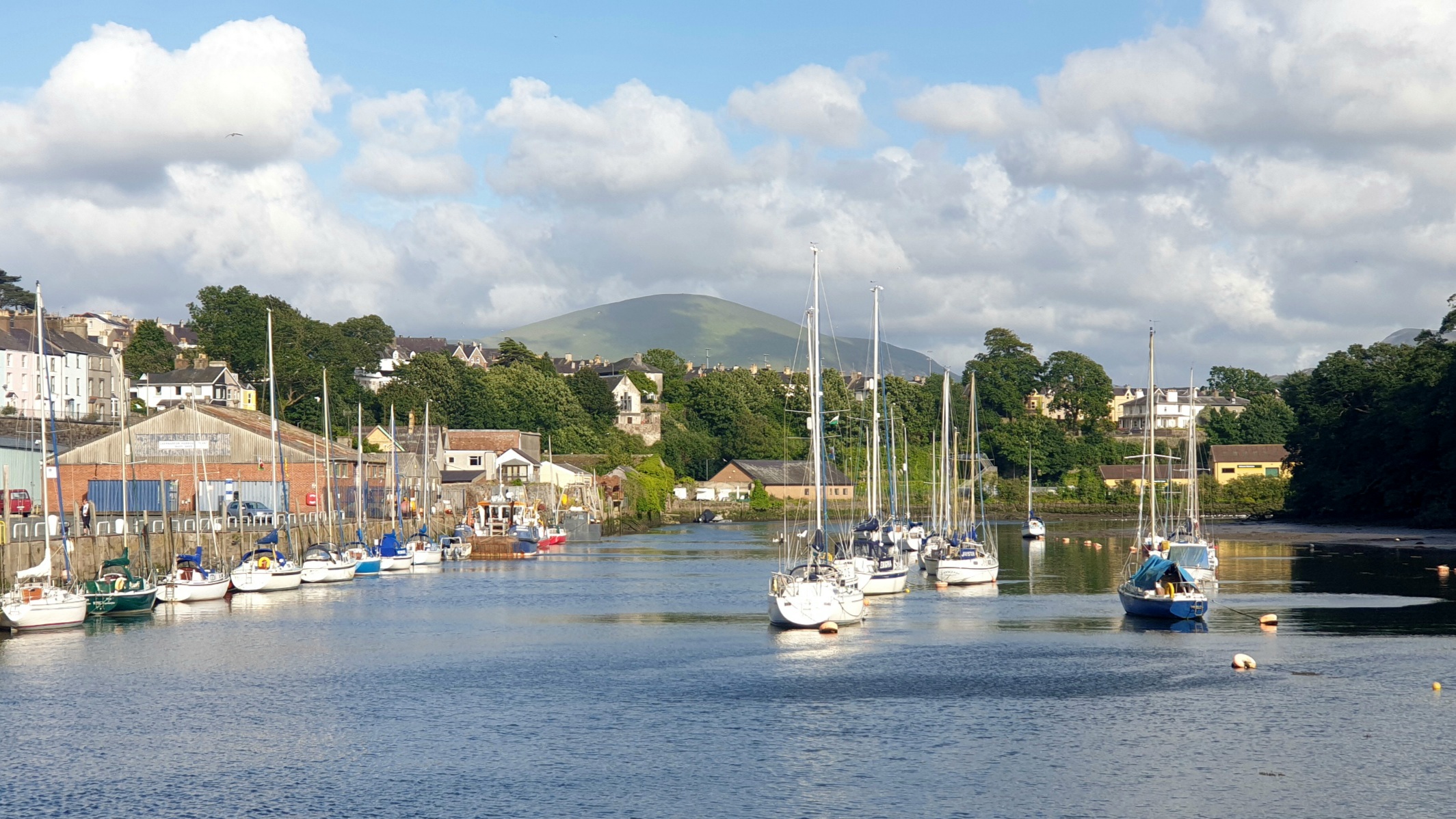
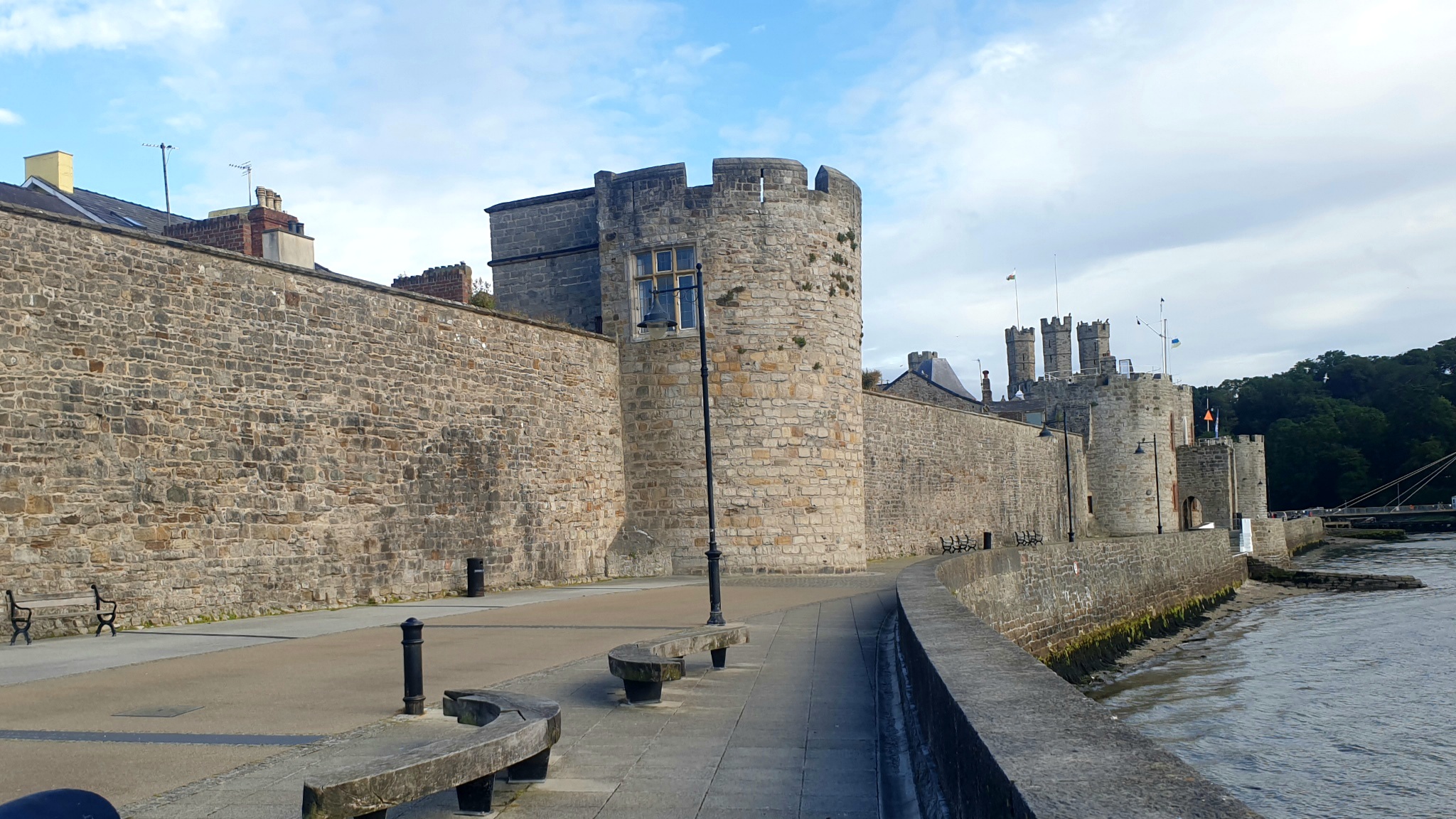
And so to Caernarfon and Totter’s Hostel literally under the walls of the famous Caernarfon Castle. Built in the 13th century it is recognised around the world as one of the greatest buildings of the Middle Ages.

Courtesy of Wikipedia

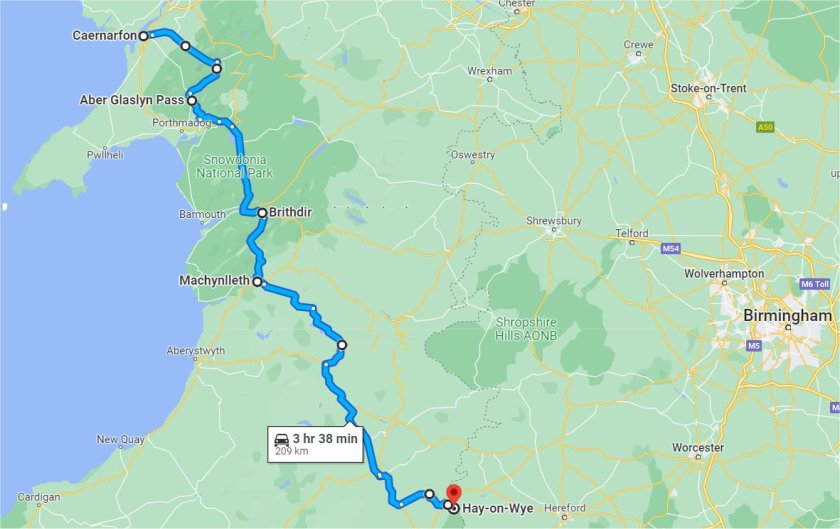
Tues 28/6 – Caernarfon to Hay-on-Wye – 210klm

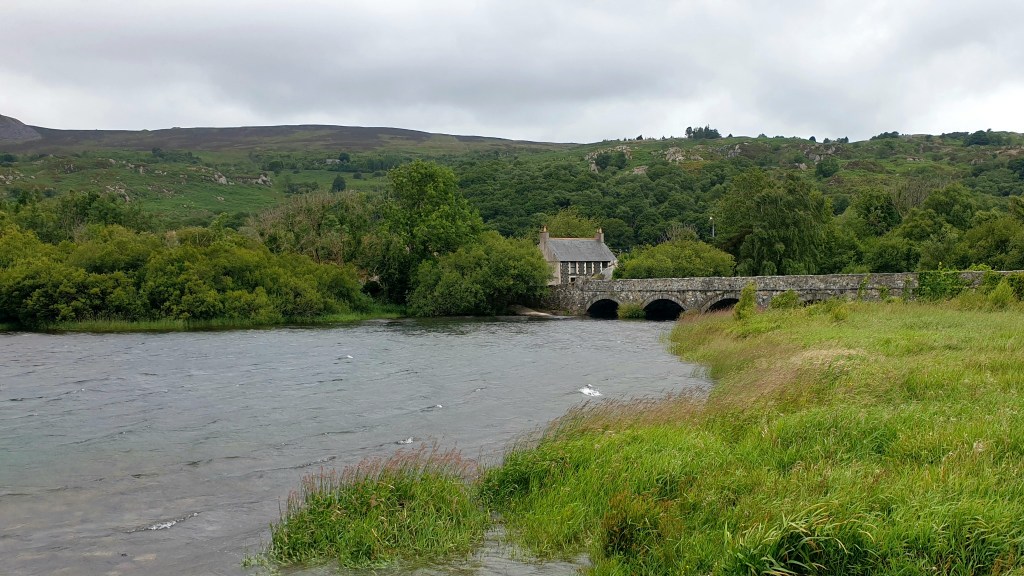
It’s going to rain! We eat our meagre ‘breakfast provided’, climb into our wet pants, fuel up, and head out of town. Stopped for a quick pic of the Pont Pen y Llyn, Brynrefail, a stone bridge built in 1826 to connect the Fachwen slate quarry to the main road from Caernarfon to Llanberis.

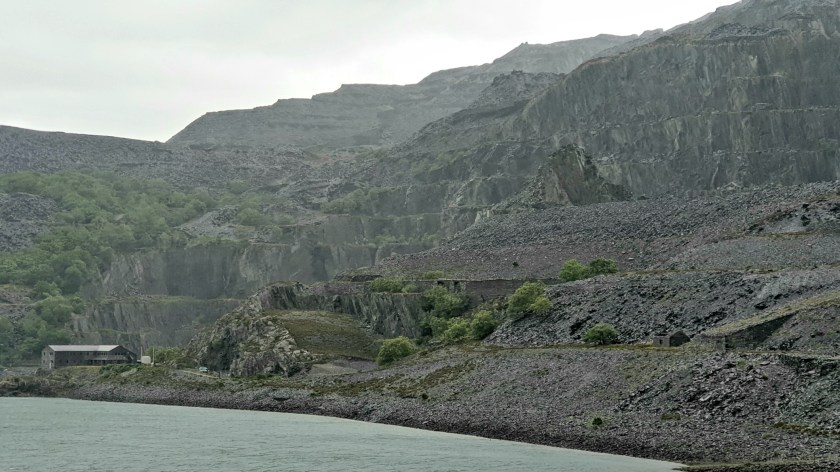
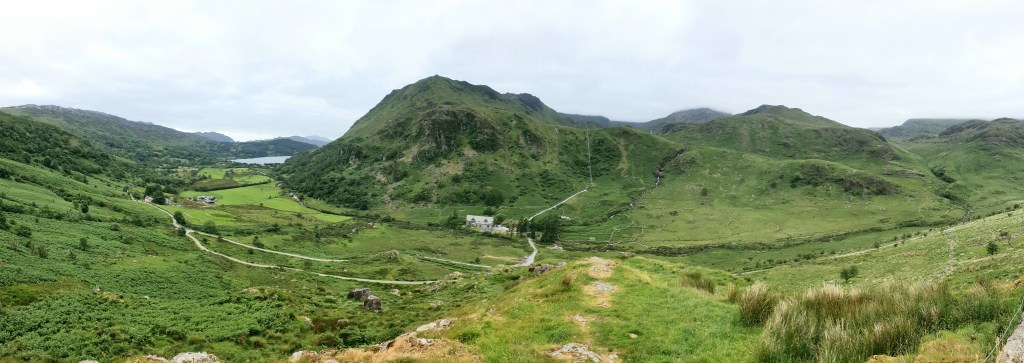
Fachwen slate quarry, hiding in the mist. And across the Llyn (lake) Padarn, on our side, this lonely abode besieged by it’s rocky environment. There are any number of these once habitats that always beg the question (of me anyway) ‘What were the dreams and history of such as this’?

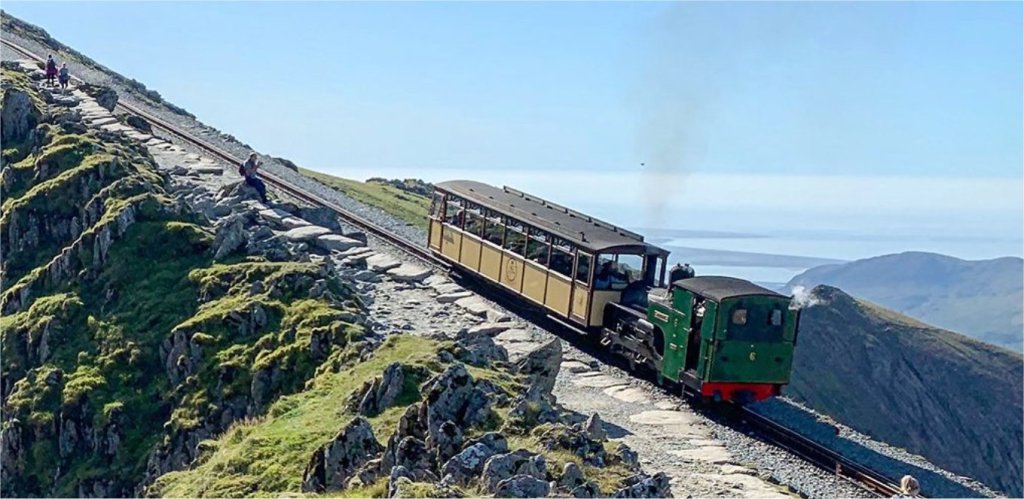
The plan had been to take the Snowdon Mountain Railway to the summit of Mount Snowden, but once again we were thwarted by the inclement weather, and once again there were the numerous busses with their forlorn passengers milling around in the rain.
150 men with picks, shovels and dynamite laid almost eight kilometres of track up this mountain – all in fourteen months around 1895. And this is what Norma missed. She was so disappointed 🤣

Courtesy of Google

Ran in to a bunch of 23 bikes, all from Belgium, at the Lake Gwynant viewpoint. They were quite impressed by our little journey.
To quaint and isolated Pont Aber-Glaslyn over the Aber-Glaslyn Pass. Perhaps built in the 17th century, then extensively rebuilt and widened in 1795. An 1883 guidebook wrote that it “has occupied the artist’s pencil perhaps more than any other”

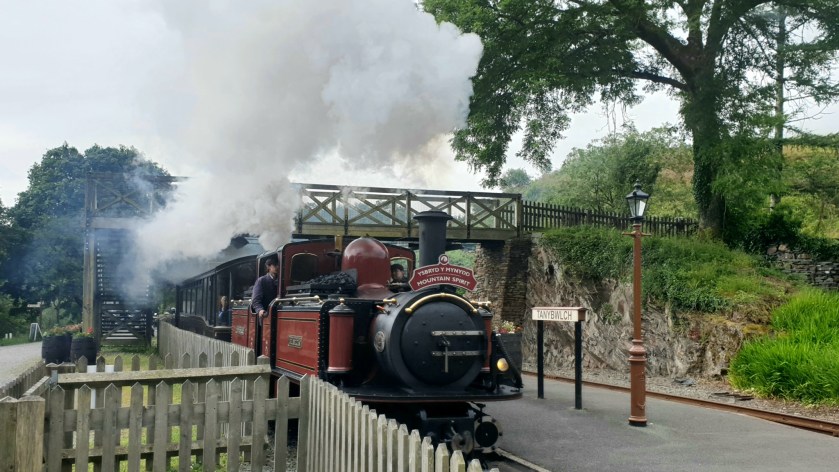
It’s still raining as we skirt the delightful roads to the Tan y Bwlch Station which has a little Café. It was built in 1836 to carry dressed slate.
We stopped for a wee brew (that café looked way expensive) and witnessed the restored steam rail tourist locomotive passing as we sat in a little ‘for picnic use only’ tent out of the rain.

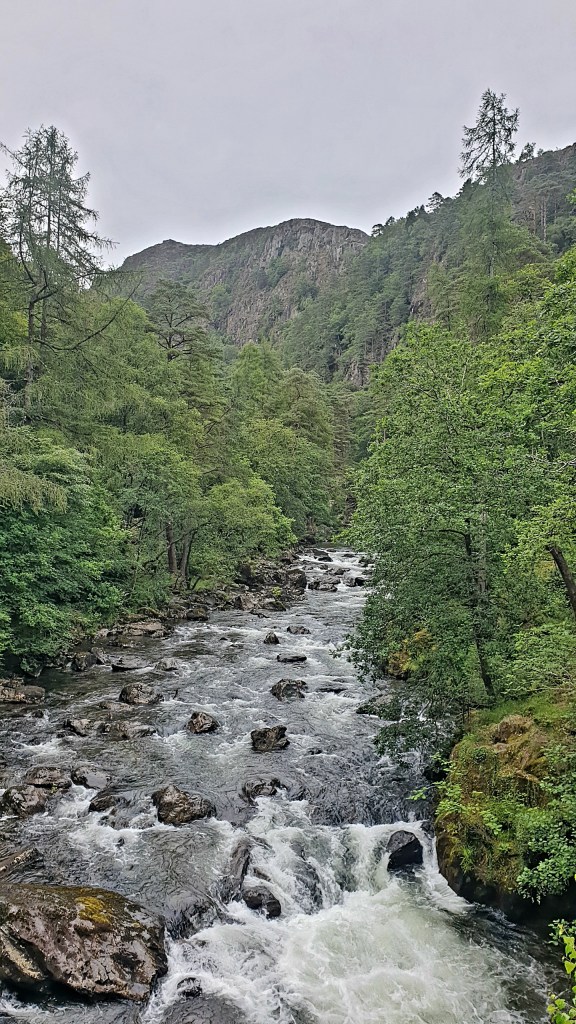
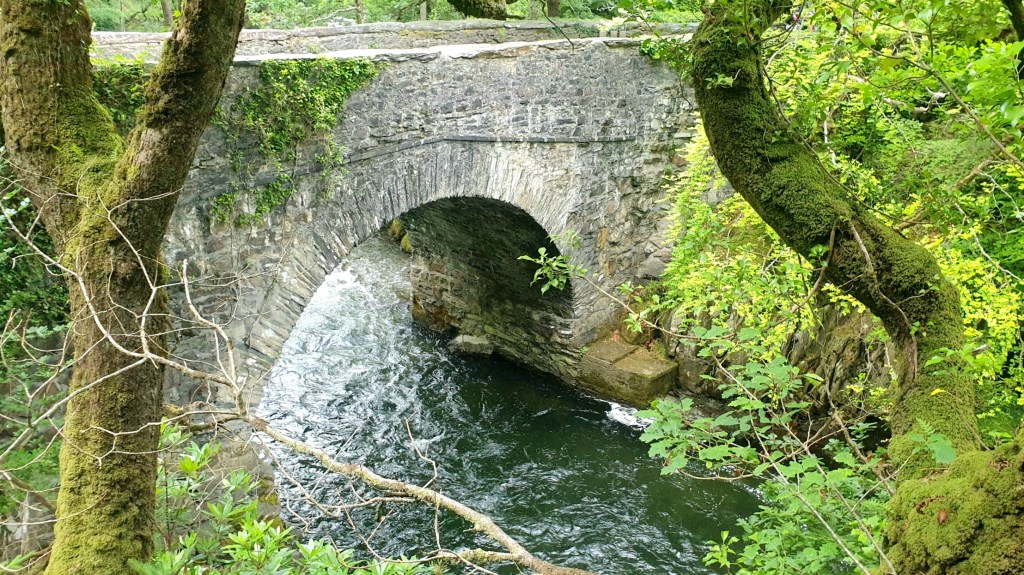
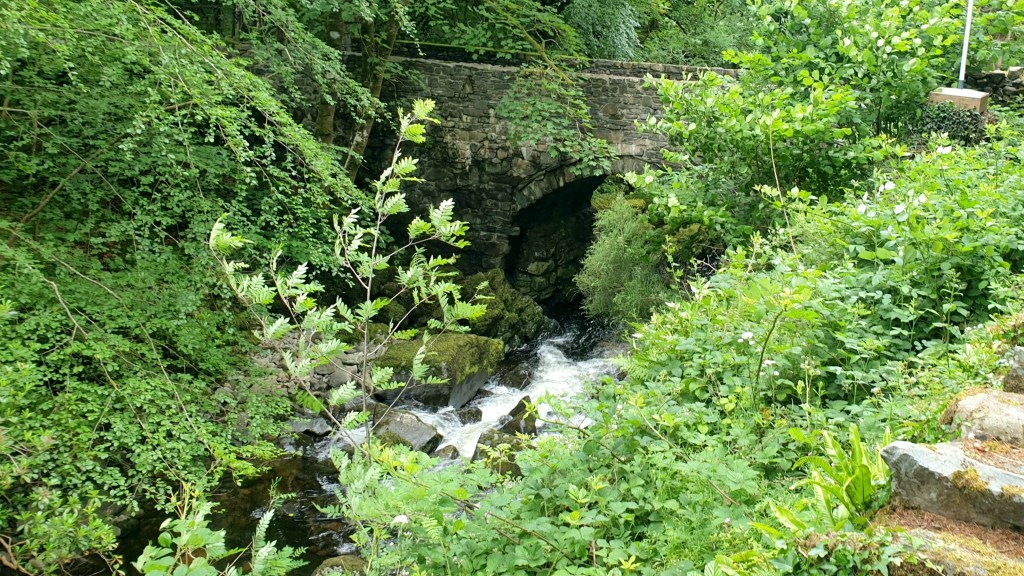
A further 35klm on we took a slight detour to the charming vernacular Pont Helygog, an ancient single-span road bridge called ‘the old bridge’ in 1830 when repairs to the parapets were carried out.

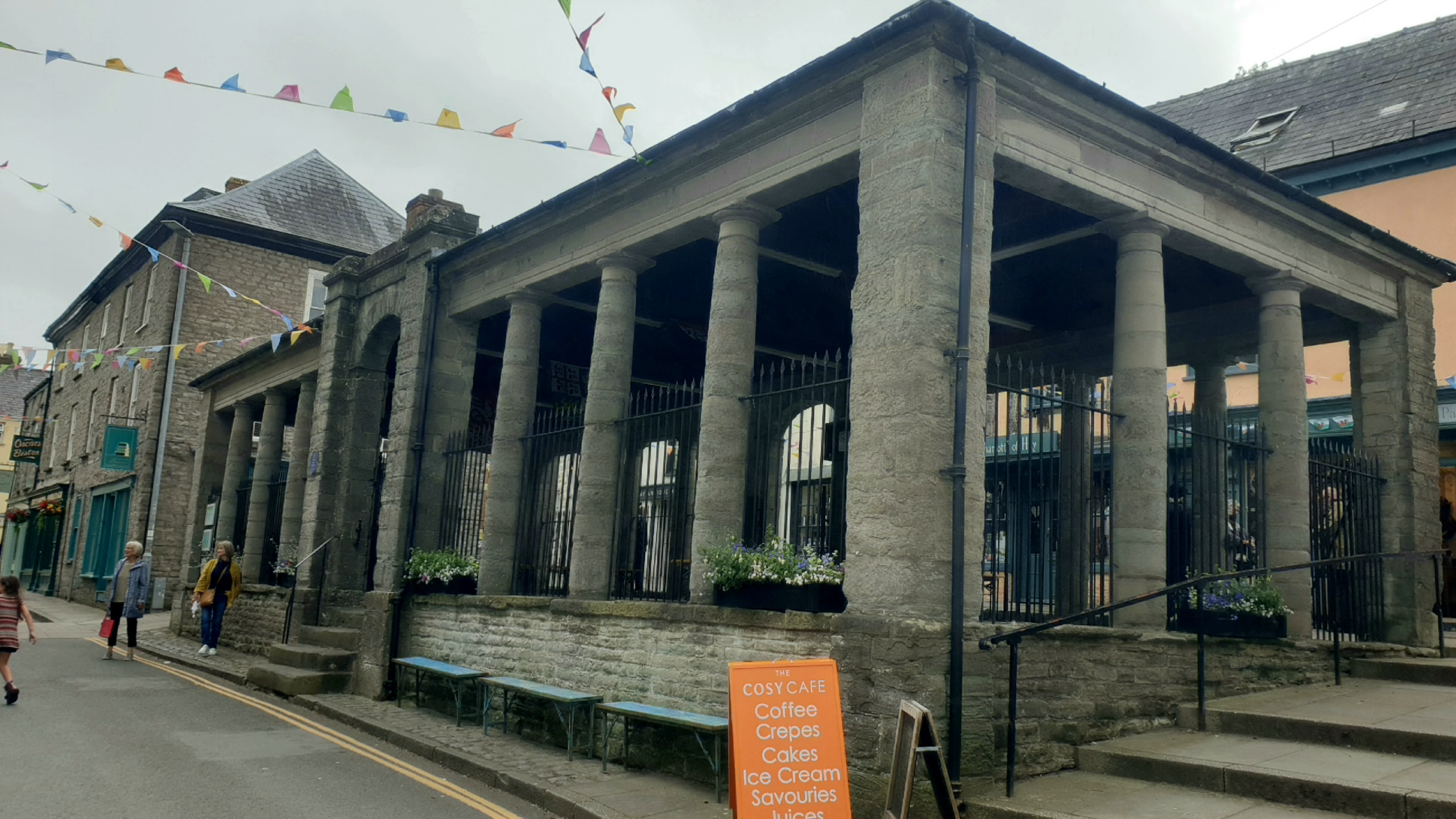
With the weather easing we continued on to Hay-on-Wye which is world renowned for books and bookshops. It has a unique position on the border between England and Wales, and what isn’t a bookshop is either a café or an antique shop. It also has a castle built around 1200.

Wed 29/6 – Hay-on-Wye to Bradford-on-Avon – 200klm

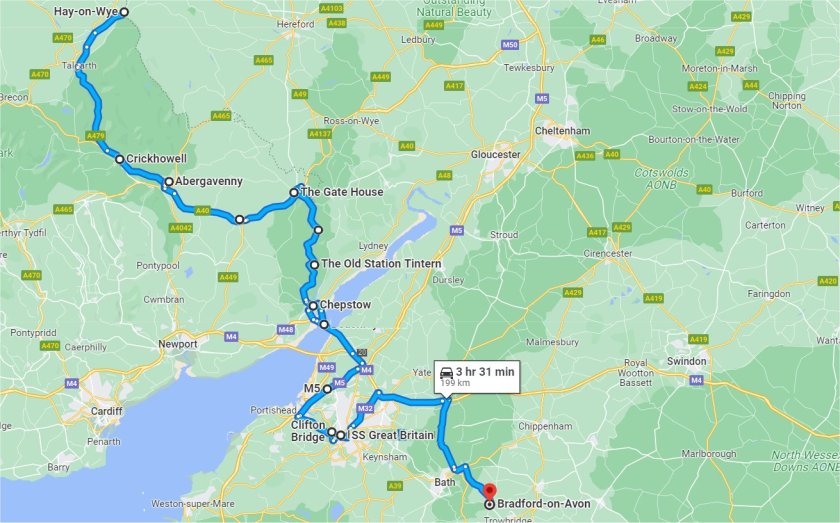
Oh yeah. It’s raining again as we follow the A479 down through the Brecon Beacons National Park, through Talgarth, Crickhowell and Abergavenny to call into Raglan Castle for a quick pic. Built in 1435, the silhouette of Raglan crowns a ridge amid glorious countryside and is said to be the grandest castle ever built by Welshmen. It is impressive there’s no doubt, but they still can’t play Rugby 🤣😘 On that note, we’ve just left Ireland where they were waxing lyrical on their chances of beating the All Blacks – I had to laugh, though silently because they’re a tough looking bunch those Irish. But never tough enough to beat the All Blacks. Nor the English to beat the Wallabies 😃😁

Monnow Bridge, built around 1272, in Monmouth, is the only remaining mediaeval fortified river bridge in Great Britain with its gate tower still standing in place on the bridge.

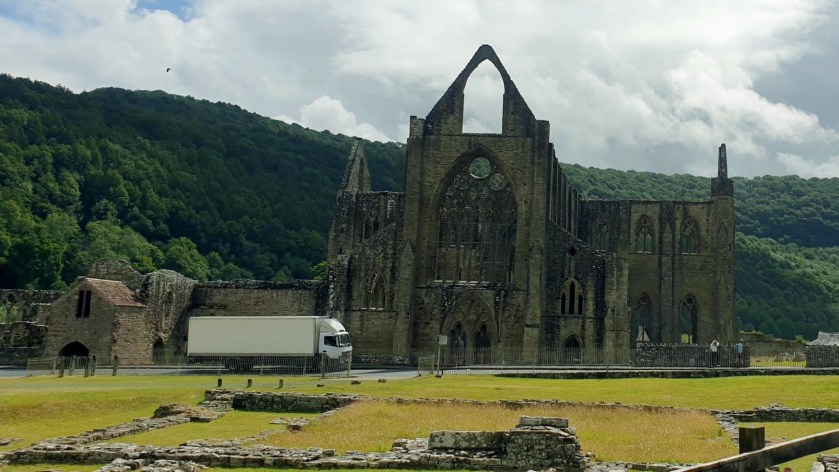
It’s a beautiful 20klm run down through the National Park to Tintern Abbey. Built in 1269 this national icon still stands in roofless splendour on the banks of the River Wye nearly 500 years since its tragic fall from grace at the hands of Henry VIII in 1535. Why is there always a truck parked in the way???
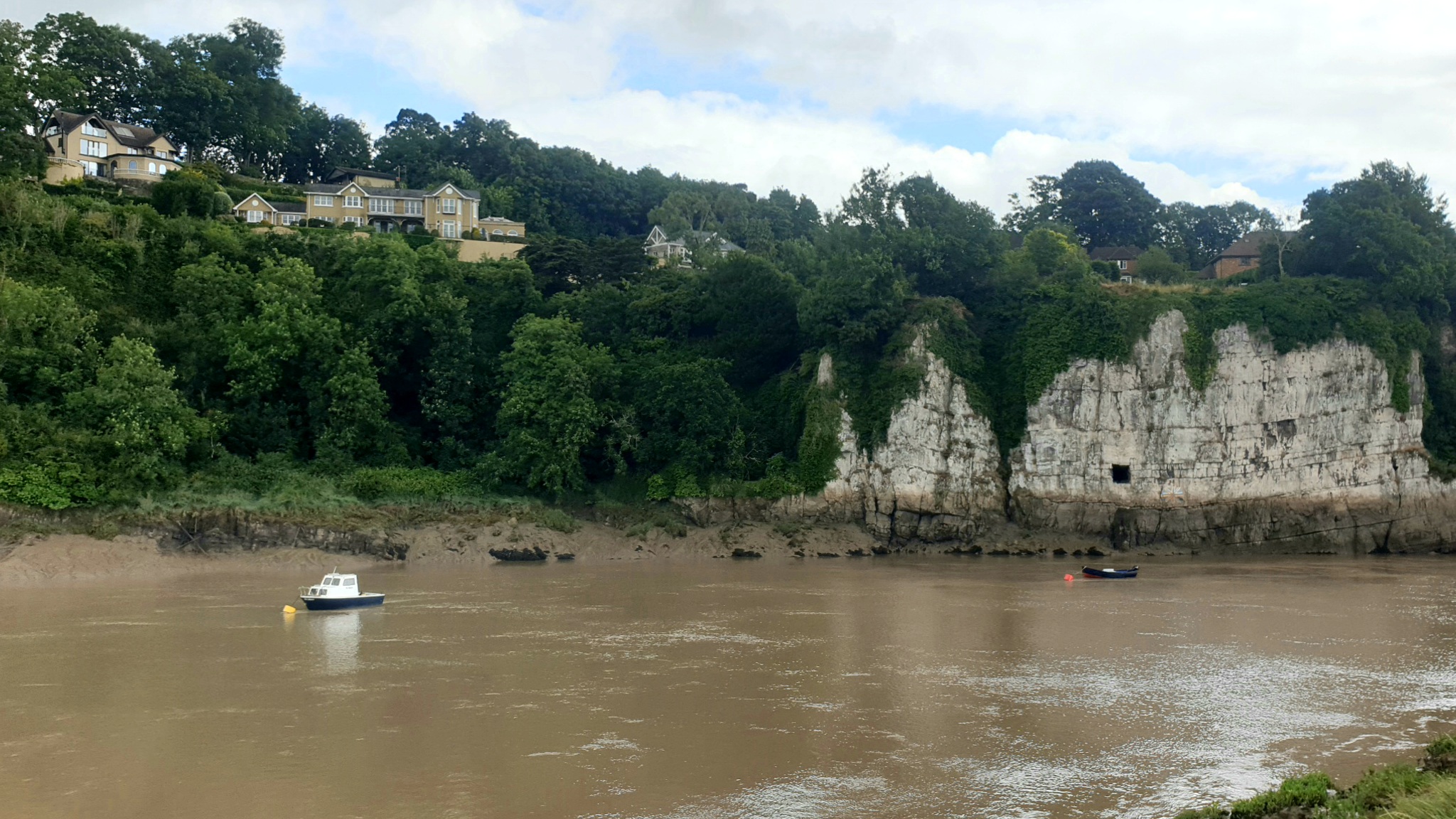
The rain had eased so we stopped at Chepstow for a brew and then it started to rain in real earnest as we detoured to the northern bank of the River Severn for a look at the truly majestic Severn Bridge. Built in the 1960 this thing is 1600m long with a longest span of 988m.
That’s impressive, except when you’ve never crossed it before and it’s driving rain and your GPS (in our case a Samsung S9+) screen is being pelted with rain drops big enough to cause it to open all sorts of programs. It was a nuts ride I tell you.

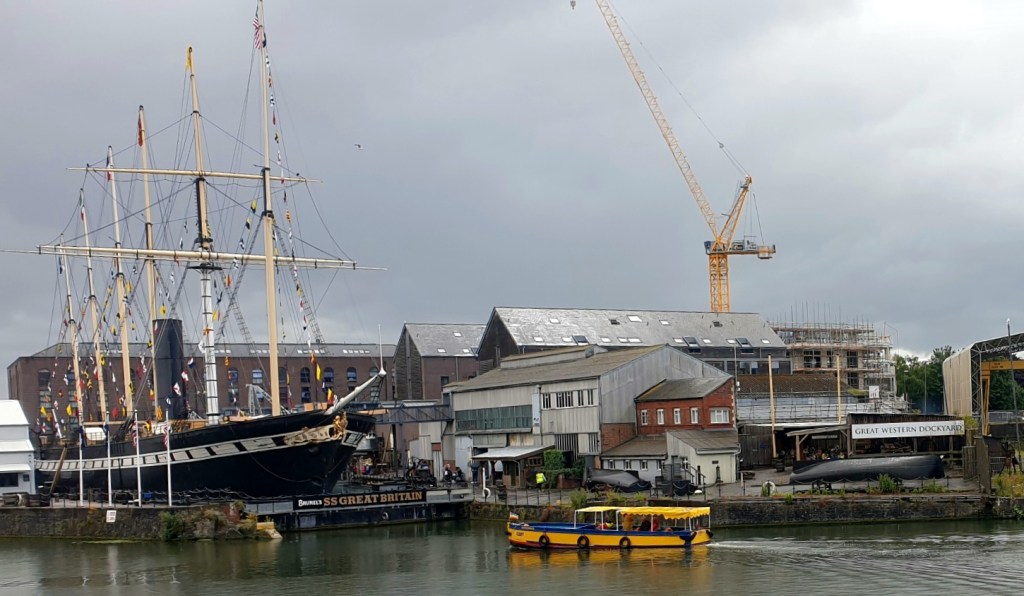
The plan was to pay the toll and cross the famous Clifton Suspension Bridge, which we did, then to ride under said bridge, which we did, then to call in to have a look at Brunel’s mighty SS Great Britain, which we didn’t because there were all sorts of road works happening. That was a disappointment, but by happenstance we spied it across the Cumberland Basin as we were leaving town in the still bucketing downpour. The one consolation being that motorbikes can use bus lanes, and there’s plenty of those.

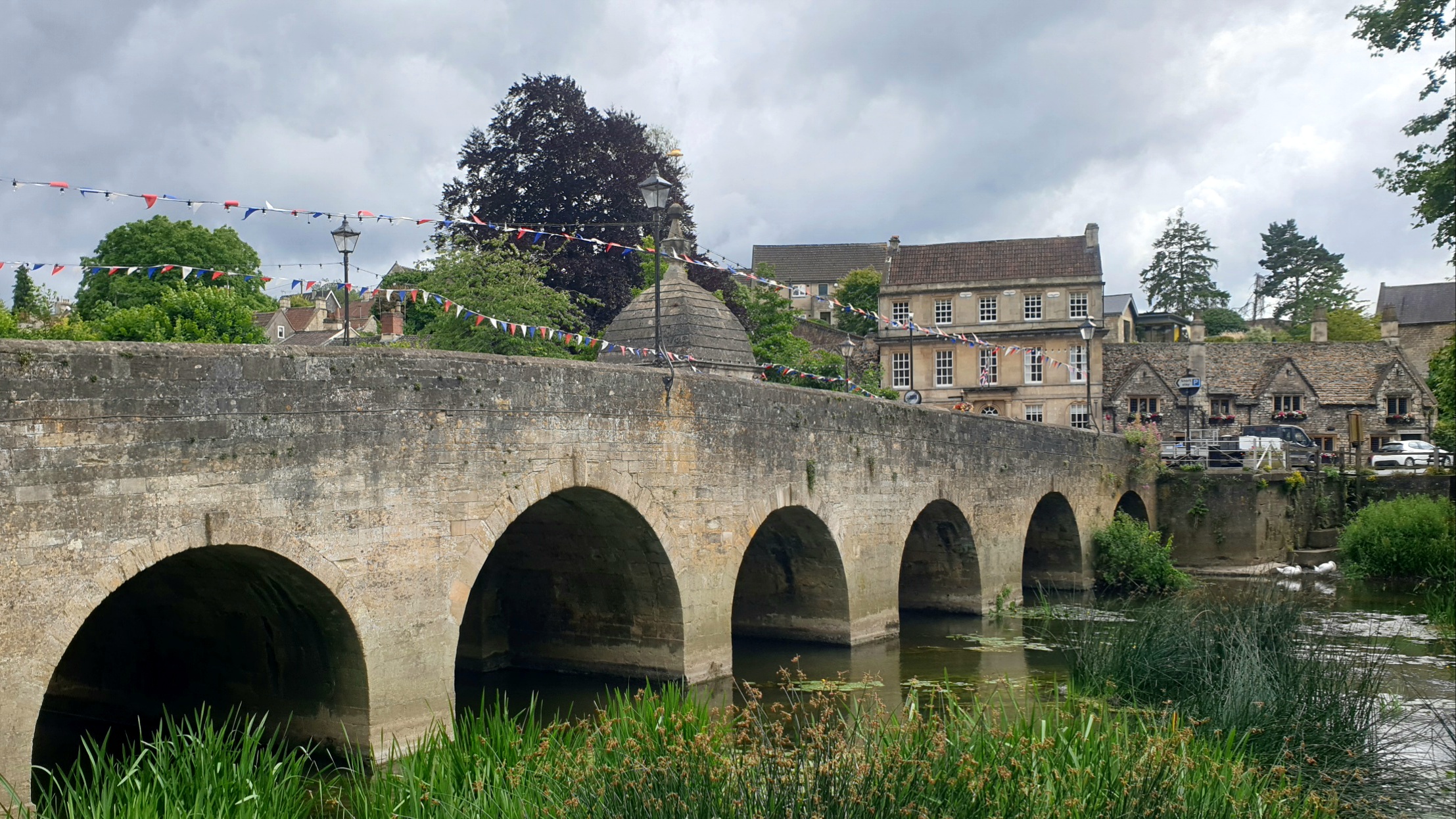
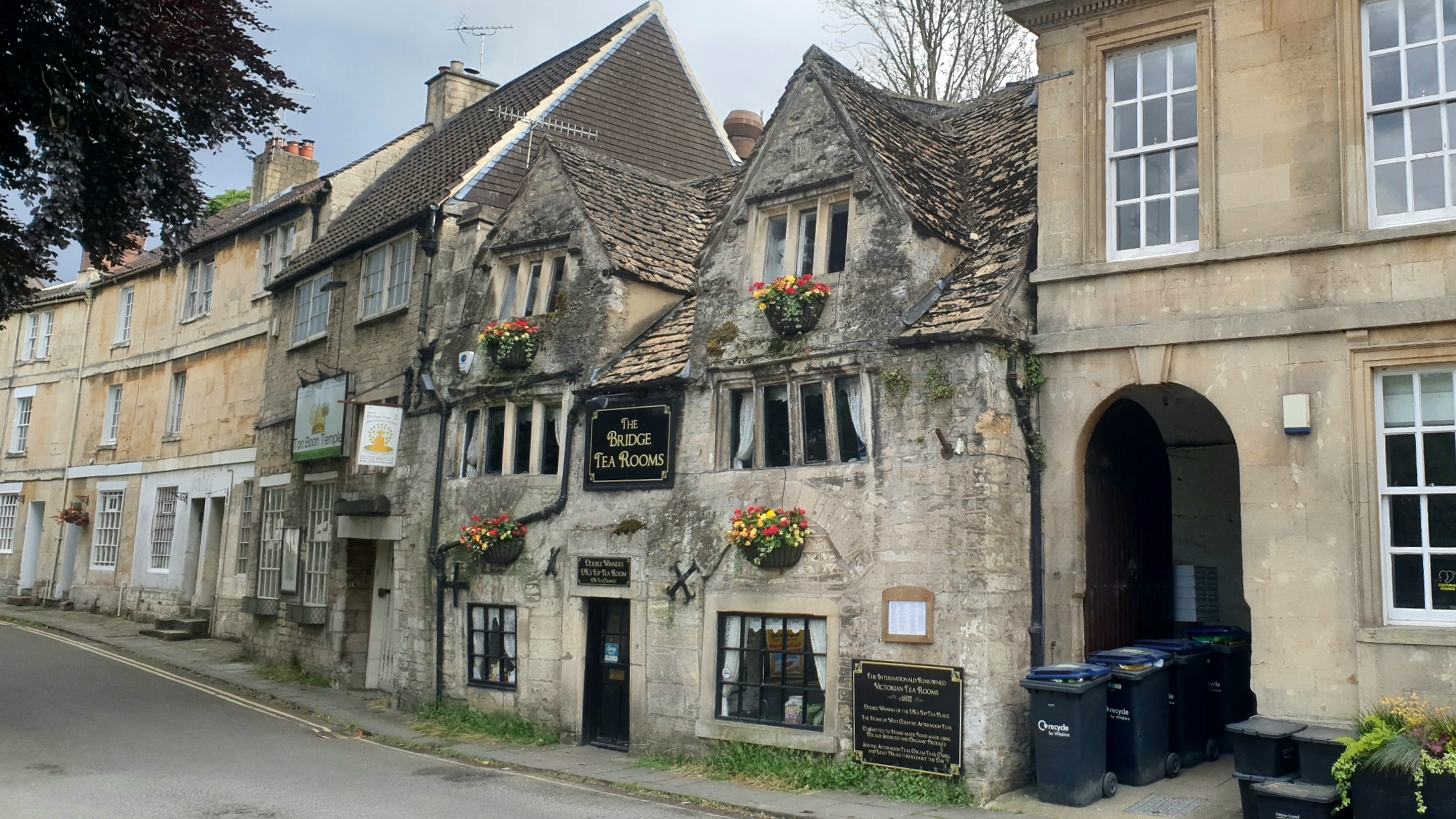
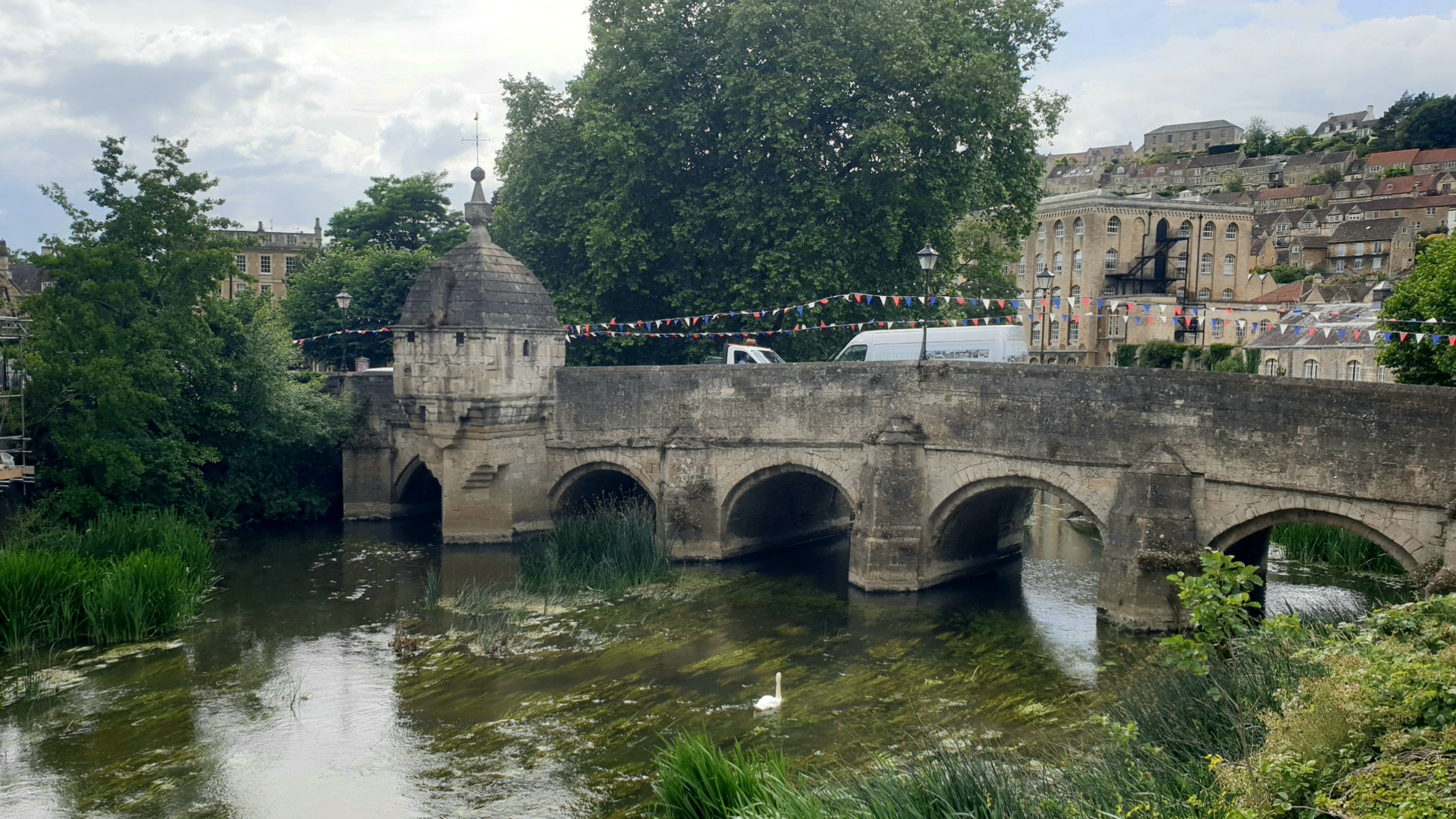
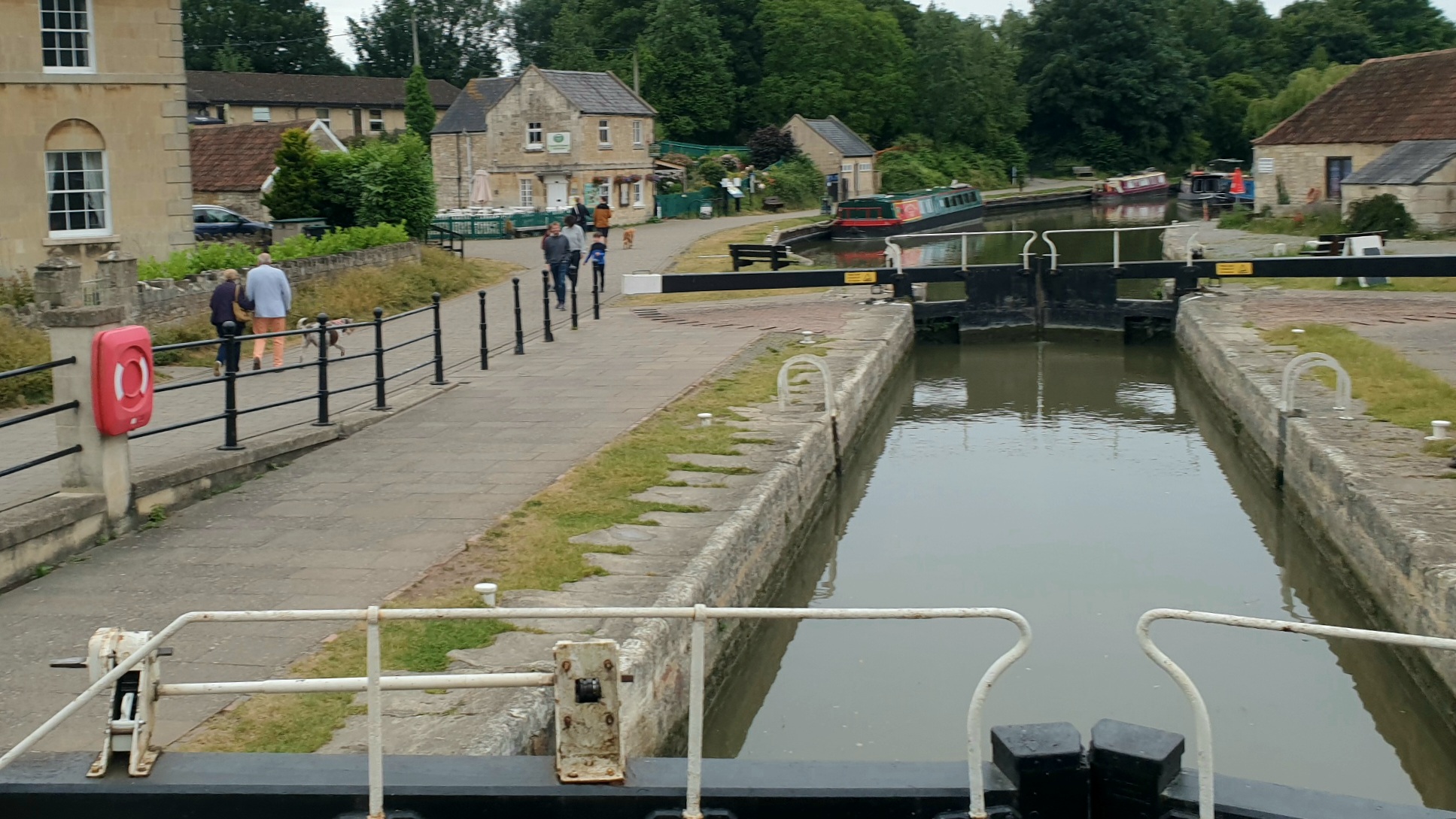
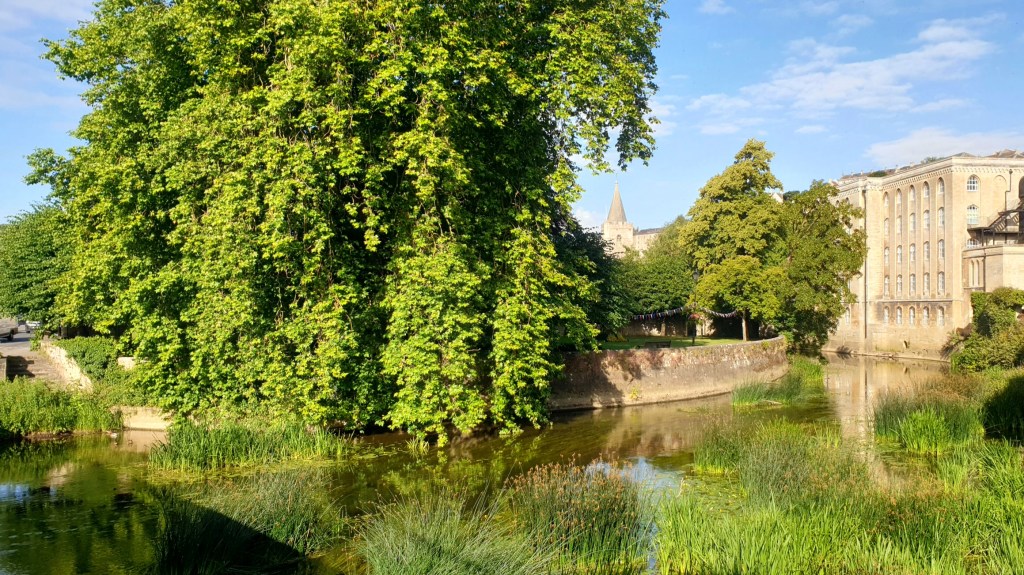
The rain eased for the final 35klm to the magical historic town of Bradford on Avon nestling on the banks of the picturesque River Avon, where else, and lying at the southern edge of the Cotswolds. This place is totally lovely and our pick of romantic stops.

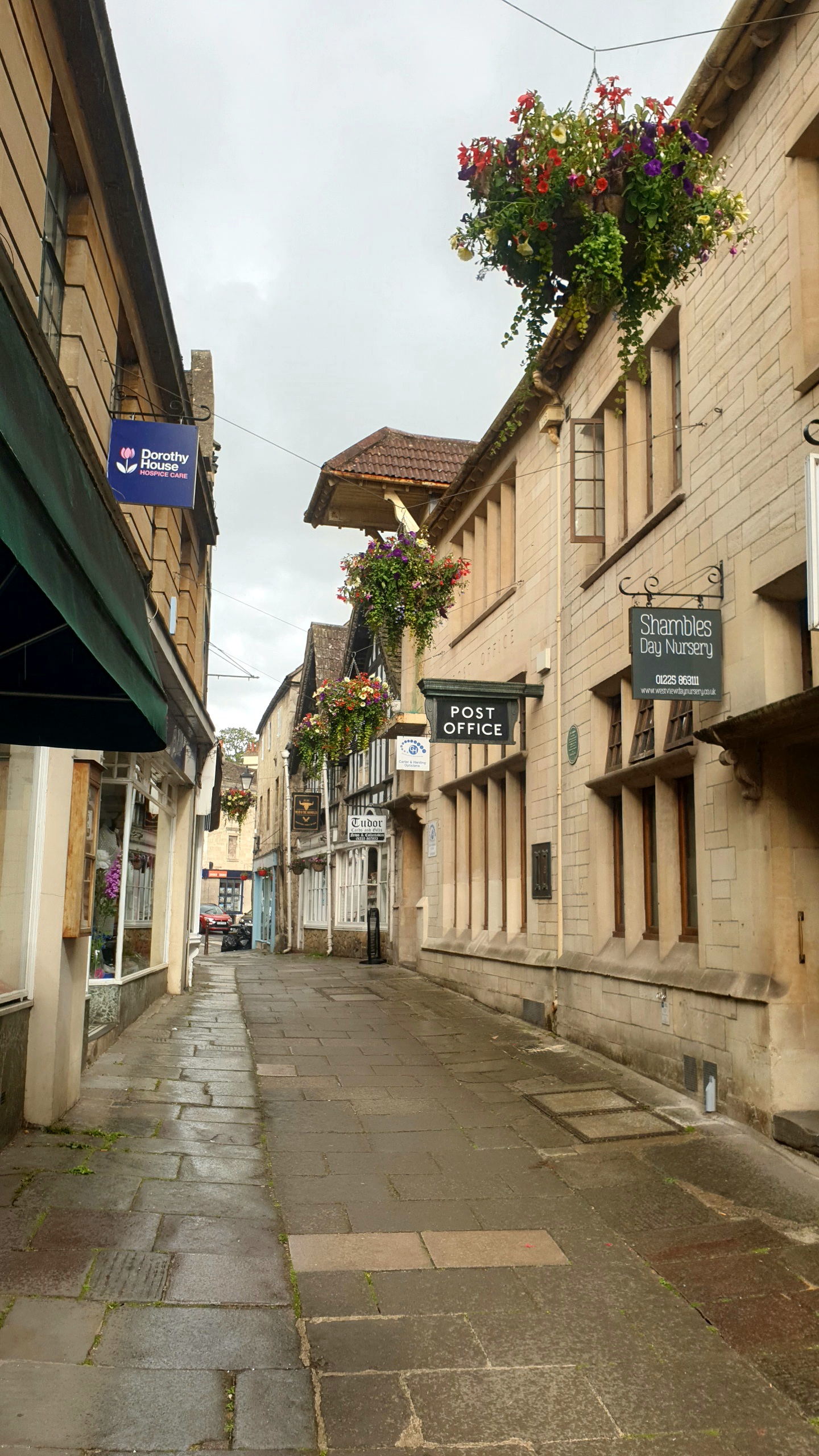
An evening stroll after a delightful Italian meal.

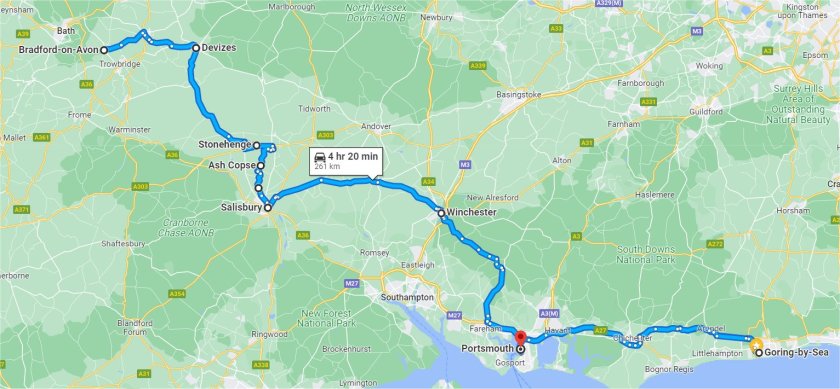
Thur 30/6 – Bradford-on-Avon to Portsmouth (Ferry to Bilbao) – 260klm

It’s looking like fair weather so we take the chance to wash the bike as we leave quaint Bradford-on-Avon – can’t be taking a dirty motorcycle in to Spain, not that they cared.
And then as soon as we’d done washing it the rain began. Seriously?

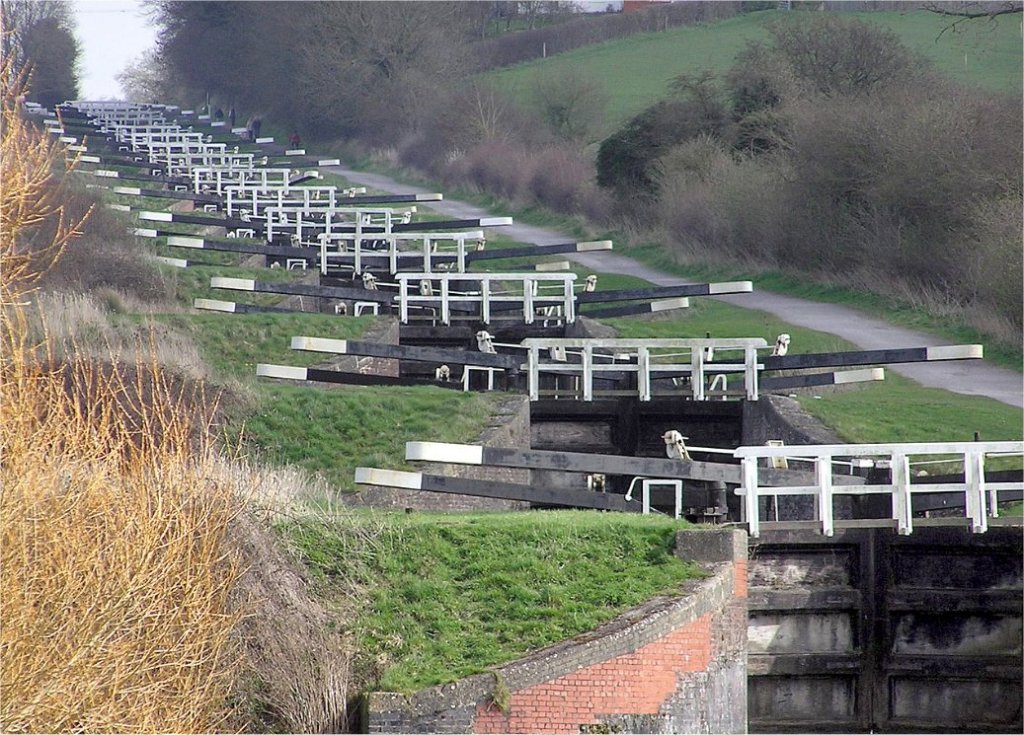
Caen Hill Locks is one of the longest continuous flight of locks in the country – a total of 29 locks with a rise of 237 feet over 2 miles with a 1 in 44 gradient for anyone who’s counting! The locks take 5–6 hours to traverse in a boat.

Passing Stonehenge to our left we took a quick look at Salisbury Cathedral.

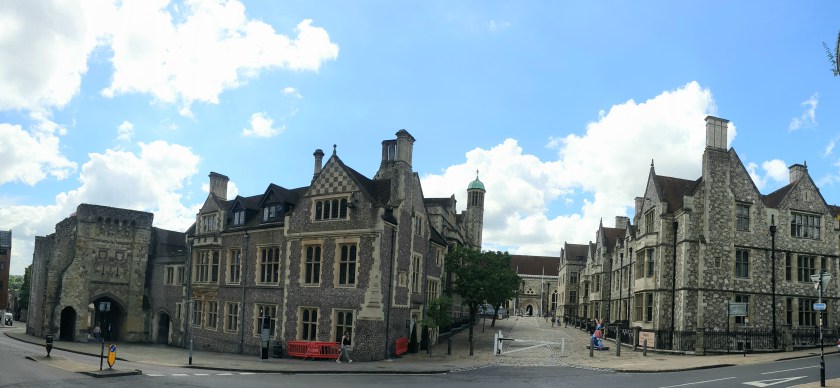
And moved on to Winchester with its city gate and Great Hall

We then skirted around to Goring-on-Sea to have lunch with a couple whom I’d boarded with for 9 months back in 1970. It was good to catch up; none of us are getting any younger.

And so to Portsmouth where we embarked on Brittany Ferries newest ferry for the 36 hour crossing to Bilbao in Spain.
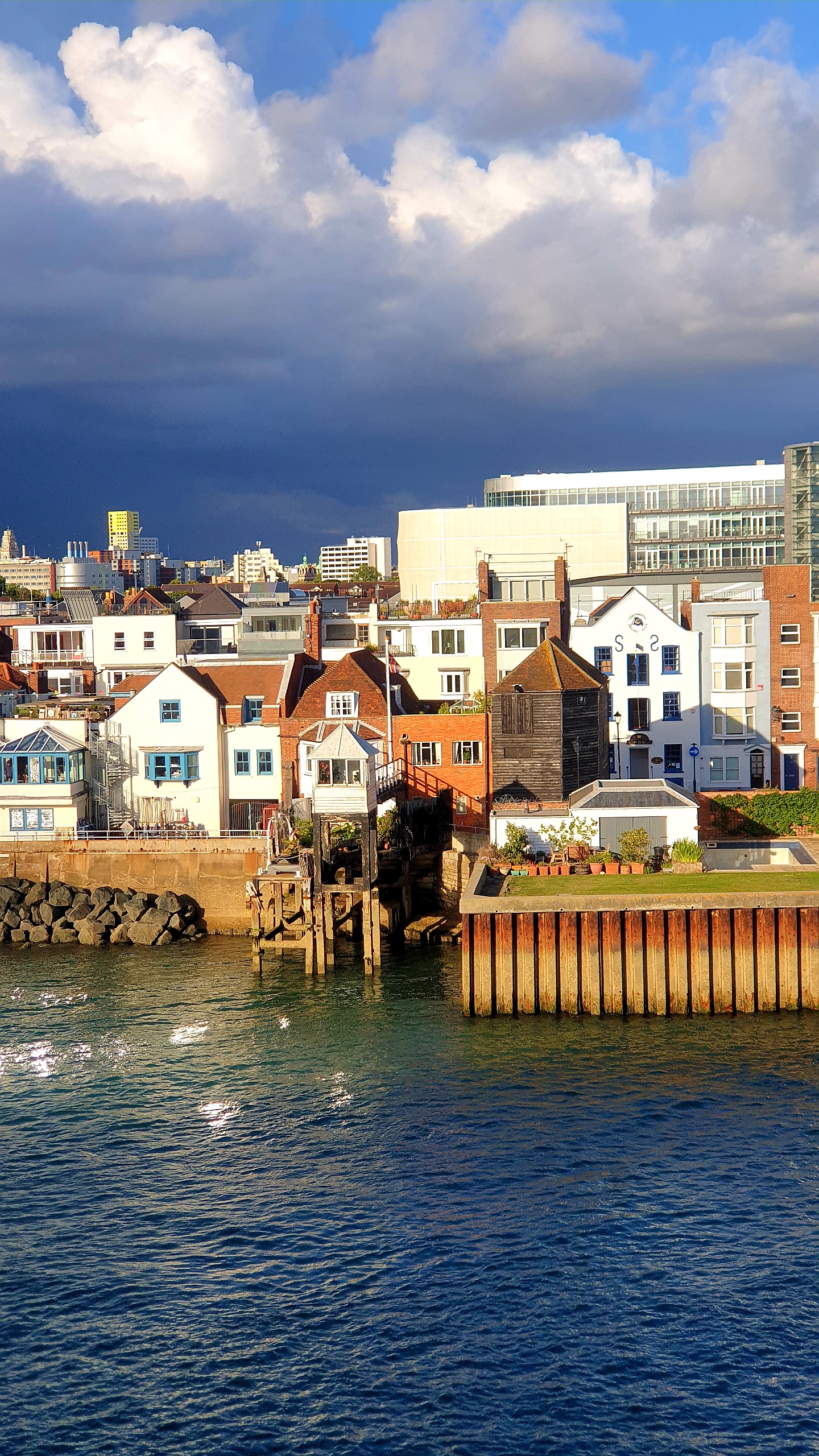
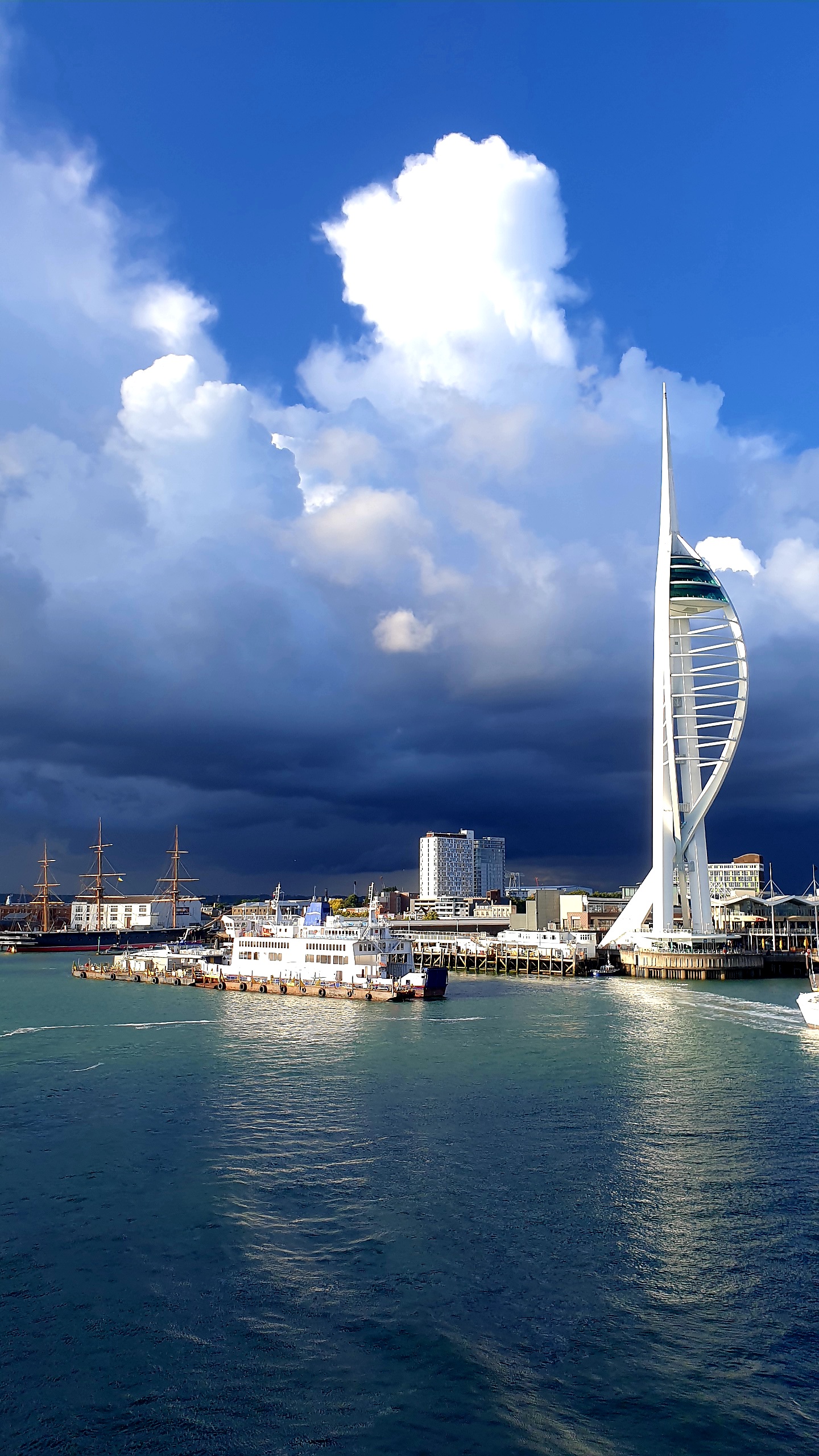
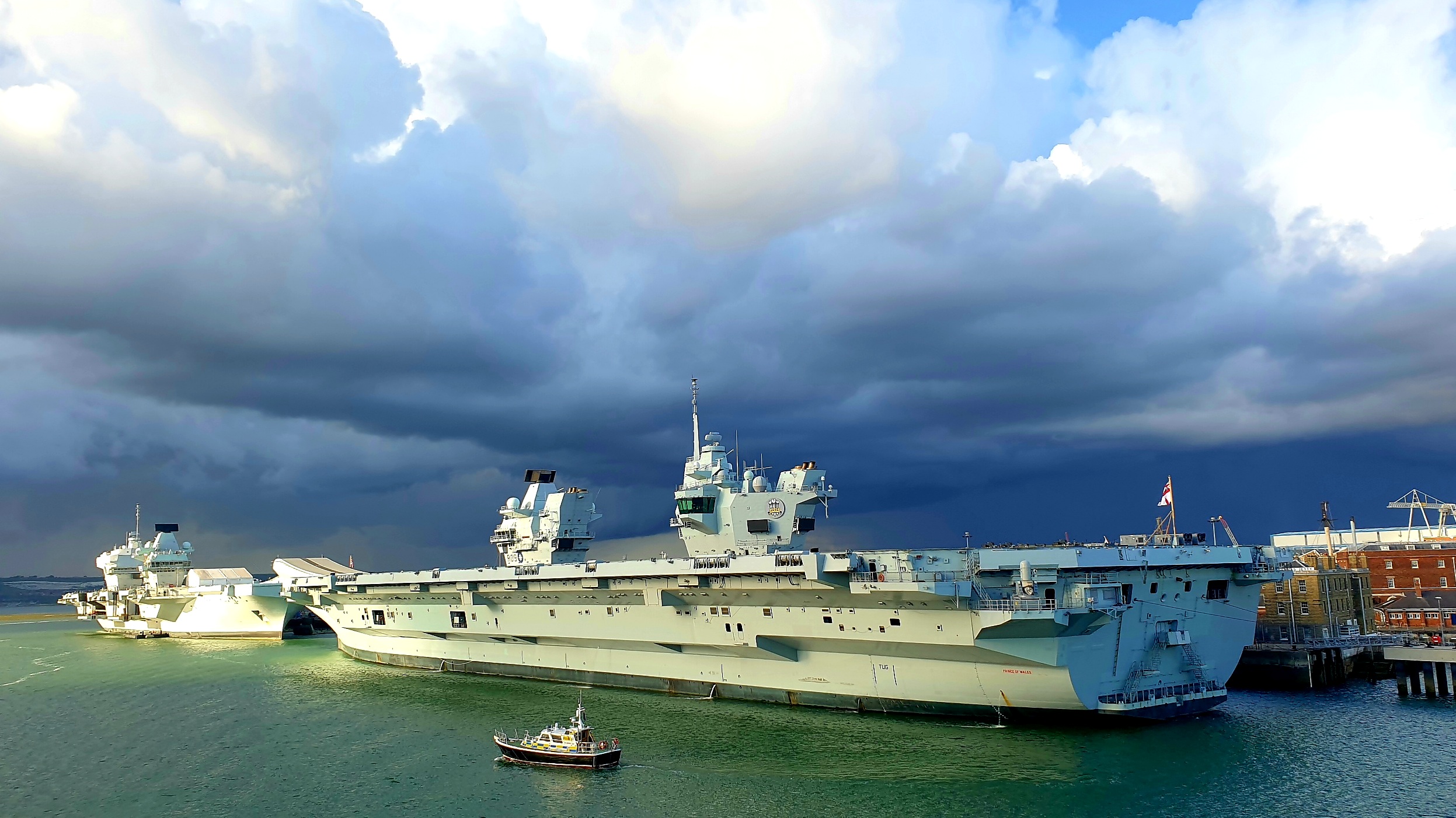
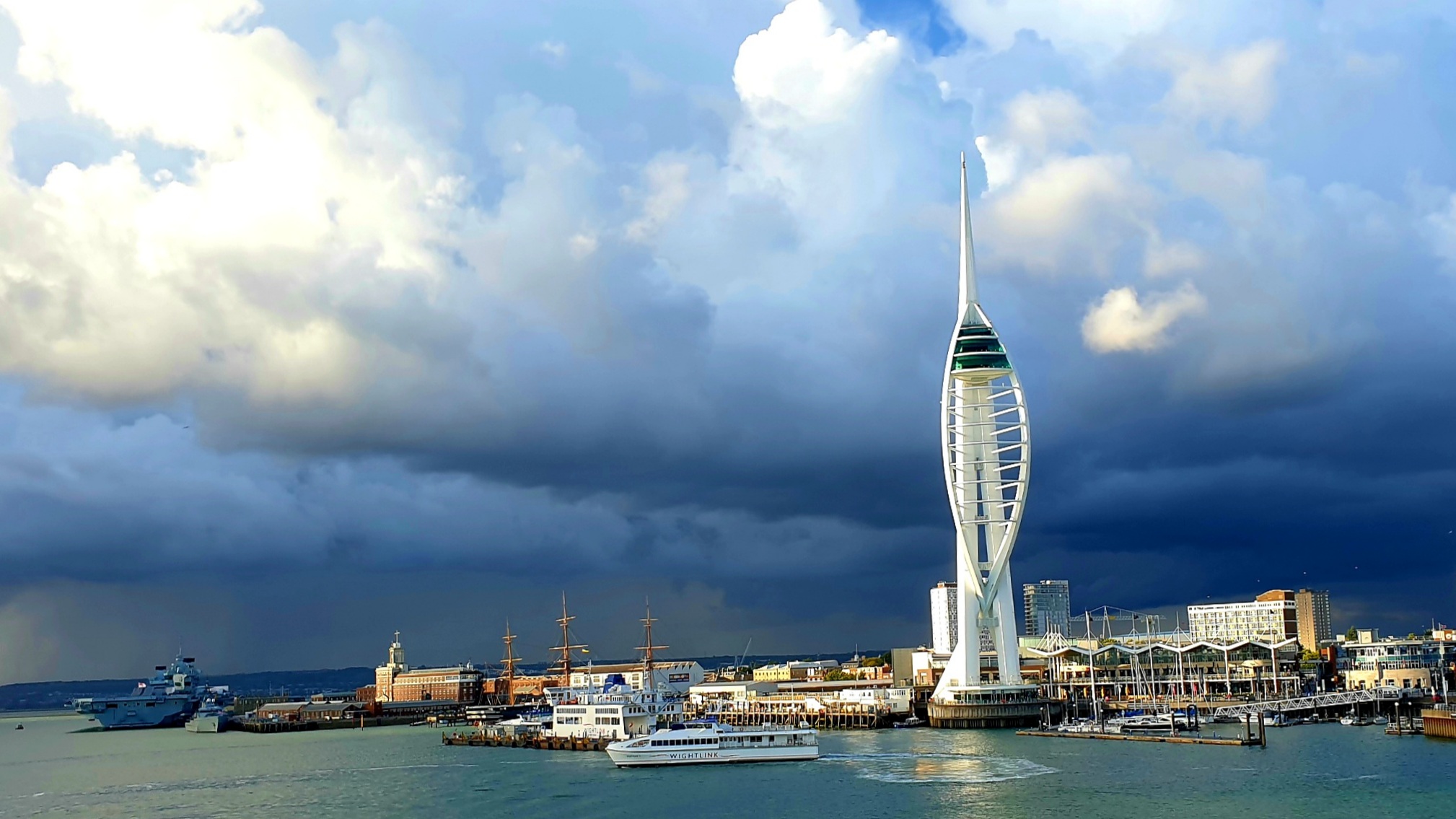
There was real storm brewing behind Portsmouth as we left, but the crossing itself was as calm as a millpond.

So that was England, Scotland, Northern Ireland, Ireland and Wales done for a total of 5550klms in 48 days with 29 ride and 19 lay days. I may appear to be whingeing a lot about the weather but we thoroughly enjoyed ourselves.
Bring on Spain.

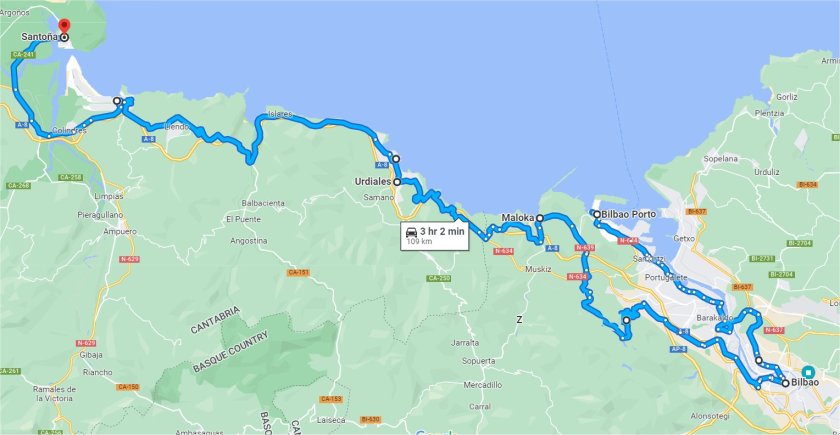
Sat 2/7 – Bilbao to Santona – 110klm

It was a totally uneventful crossing and I’d sprung for a four person outside cabin which allowed us plenty of room. Norma was delighted.
At 8am local we were the very first vehicle to disembark. I’d wondered about how things would go at customs in regards to the bike but they merely took a quick squiz at our passports, stamped them and sent us our way. We headed into Bilbao.
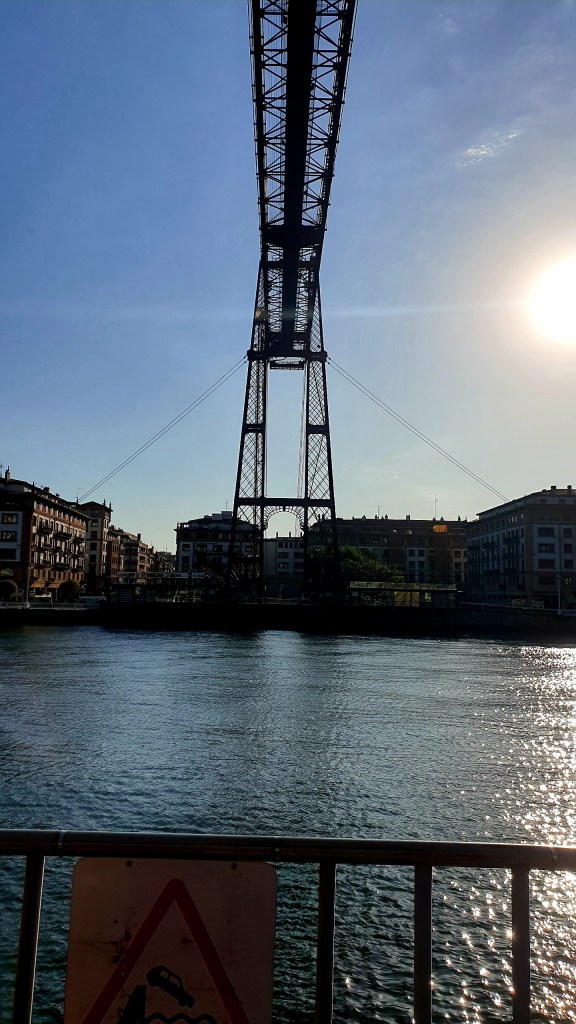
But not to be boring I decided we’d take the Vizcaya Bridge which is a Transporter Bridge that crosses the Estuary of Bilbao. It is the world’s oldest transporter bridge and was built in 1893
A transporter bridge, also known as a ferry bridge or aerial transfer bridge, is a type of movable bridge that carries a segment of roadway across a river.

A word of warning about driving in Bilbao, well 2 words. 1, the speed limit is 30k/hr and 2. there are timed pedestrian crossings about every 50m. It’s a very slow and frustrating process, and very fuel heavy.
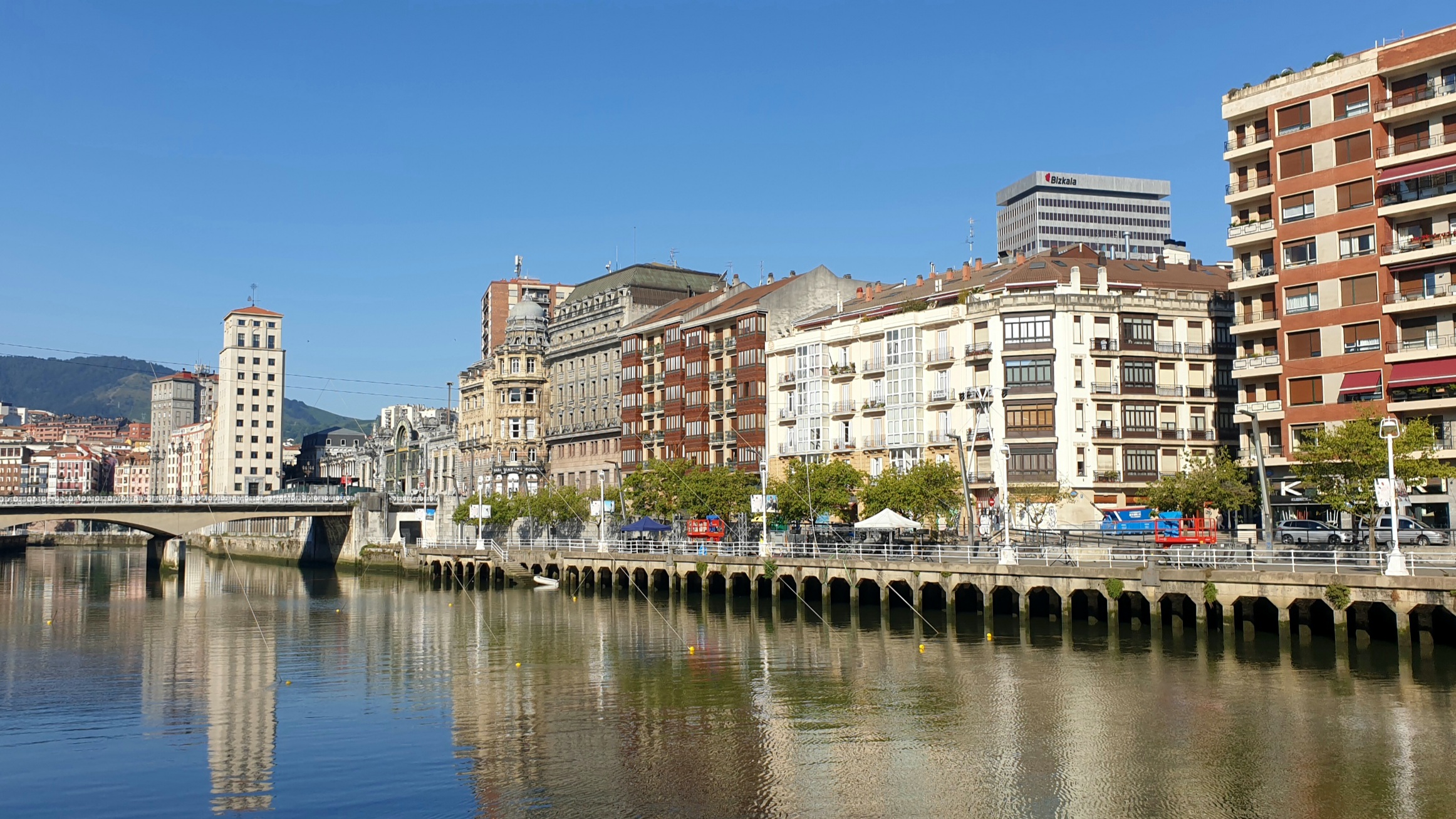
We took a look around the old town.
And headed out of town, slowly.
We took our time to meander the remaining 95klms to Santona.

We had a lovely evening in Santona sitting in the Piazza with what seemed like the town’s entire population enjoying their Saturday night.

See you next week.